
The ships of tomorrow will be lighter, smarter, and run on clean fuel. But they will still be built with steel. This creates a fascinating challenge. How can a centuries-old material evolve to meet the demands of a decarbonized, digitalized maritime future? The answer lies in radical innovations, not just in the steel itself, but in how we design with it, protect it, and even think about its role in a vessel’s lifecycle.
Future innovations in marine steel focus on ultra-high-strength lightweight grades, advanced corrosion-resistant alloys for new fuels, smart steel with embedded sensors for health monitoring, and the integration of green steel production methods to reduce the carbon footprint of shipbuilding from the very first plate.
To appreciate where we are going, we must first understand the foundation. The future is built upon today’s materials and the problems they solve. Let’s start with the basics and then project forward into the next wave of maritime engineering.
What is marine steel?
You see a massive steel plate in a shipyard. It looks like any other steel. But it is not. Marine steel1 is a specialized family of materials engineered for one of the harshest environments on Earth. It must fight constant corrosion from saltwater, withstand immense physical forces from waves and cargo, and do so reliably for 25 years or more. Calling it just "steel" is like calling a submarine a "boat"—it misses the critical engineering inside.
Marine steel1 is a category of structural steel specifically manufactured to meet the strict rules of classification societies (like ABS, DNV) for use in ship hulls and offshore structures. Its key properties include high strength, good toughness at low temperatures, excellent weldability, and defined levels of corrosion resistance for the marine environment.
The term "marine steel" covers a wide range. It is defined by performance under specific, regulated conditions, not just by a single recipe.
The Defining Characteristics of Marine Steel
Marine steel1 is not one thing. It is a set of solutions to the ocean’s challenges. We can break down its defining features.
1. It is Rule-Bound and Certified
This is the most important point. "Marine steel1" must have a passport.
- It is produced according to the technical rules of an organization like the American Bureau of Shipping (ABS), Lloyd’s Register (LR), or Det Norske Veritas (DNV).
- The producing mill is audited and approved by these societies.
- Each batch of steel comes with a Material Test Certificate (MTC)2 that proves it meets the standard. This certificate is checked by the shipyard and the class surveyor.
2. It is Graded for Strength and Application
Marine steel1s are classified into grades. Each grade has a specific job.
- Ordinary Strength Steels (Grade A, B)3: Used for less critical parts.
- High Strength Steels (AH32, AH36, DH36)4: The workhorses of modern shipbuilding. The ‘H’ means high strength. The number (e.g., 36) refers to the minimum yield strength in kgf/mm² (about 355 MPa). These steels allow for thinner, lighter hulls.
- Extra High Strength Steels (EH40, FH46): Used in highly stressed areas to save even more weight.
- Grades for Special Environments: Steels with an ‘L’ suffix (e.g., AH36L) are tested for toughness at low temperatures, crucial for Arctic operations or LNG carriers.
3. It is Engineered for the Marine Environment
The ocean demands specific properties.
- Toughness: Marine steel1 must resist brittle fracture, especially in cold water. The Charpy V-notch impact test5 measures this.
- Weldability: Ships are built by welding thousands of plates and sections. The steel must be easy to weld without forming cracks. This is controlled by limiting the Carbon Equivalent (CE) value.
- Corrosion Consideration: While most hull steel is protected by paint systems, the steel’s inherent composition affects its performance. Special grades like ASTM A6906 offer better resistance to atmospheric corrosion in marine environments.
For us as suppliers, "marine steel" is a promise of traceable, certified performance. When Gulf Metal Solutions orders marine steel plate, they are not buying a commodity. They are buying a guaranteed material property that will pass class inspection. This foundation of certified performance is the platform upon which all future innovations will be built. The future will see new grades, but they will still need to be certified, traceable, and engineered for the sea.
Is 304 or 316 better for saltwater?
This is a common and critical question for fittings, railings, tanks, and components exposed to seawater. The short answer is clear: 316 stainless steel1 is significantly better for saltwater applications than 304. Choosing 304 for direct, sustained saltwater exposure is a common mistake that leads to rapid pitting corrosion and failure. The difference is in a single element: Molybdenum2.
For saltwater environments, 316 stainless steel is superior to 304. The key difference is that 316 contains 2-3% molybdenum (Mo). This addition dramatically increases its resistance to pitting and crevice corrosion caused by chloride ions in seawater, making it the standard choice for marine applications.
The choice between these two workhorse stainless steels is a perfect lesson in material science. It shows how a small change in chemistry creates a big difference in real-world performance.
The Chemistry of Survival: Why Molybdenum2 Matters
To understand why 316 wins, we need to look at what seawater does to steel and how each alloy fights back.
The Enemy: Chloride-Induced Pitting Corrosion
Saltwater is a soup of chloride ions3. These ions are small and aggressive. They can attack the protective oxide layer on stainless steel, especially in areas with low oxygen (like under a deposit or in a tight crevice). Once they break through, they create a small pit. This pit becomes an acidic, concentrated site that corrodes very quickly, leading to perforation.
The Defense: Alloying Elements
Both 304 and 316 are "austenitic" stainless steels. They get general corrosion resistance from Chromium (Cr), which forms the passive oxide layer, and Nickel (Ni), which stabilizes the austenitic structure.
- AISI 304 (Standard Grade): Contains about 18% Cr and 8% Ni. It has good general corrosion resistance but a weakness to chlorides.
- AISI 316 (Marine Grade): Contains about 16-18% Cr, 10-14% Ni, and 2-3% Molybdenum2 (Mo).
Molybdenum2 is the game-changer. It strengthens the passive oxide layer, making it much harder for chloride ions3 to penetrate. It specifically raises the steel’s Pitting Resistance Equivalent Number (PREN)4. PREN is a calculated value: PREN = %Cr + 3.3 x %Mo + 16 x %N.
- A typical 304 has a PREN of ~19.
- A typical 316 has a PREN of ~25-28.
The higher the PREN, the better the resistance to pitting in chloride environments. For cold, flowing seawater, 316 is often sufficient. For warmer, stagnant, or more aggressive conditions (like in a chlorinated ballast tank), even higher grades like 316L (low carbon version) or duplex stainless steels5 (with PREN >35) may be needed.
Practical Application Guide: When to Use Which
| Application Scenario | Recommended Grade | Rationale |
|---|---|---|
| Interior, non-saltwater exposed areas (galley equipment, interior trim) | 304 | Cost-effective, adequate corrosion resistance. |
| Exterior marine hardware (railings, cleats, ladders, exposed fasteners) | 316 / 316L | Direct salt spray and immersion require Mo-containing steel. |
| Sea water piping systems, pumps, valves | 316L or better | Continuous contact with flowing seawater. 316L’s low carbon improves weld corrosion resistance. |
| Ballast tanks, splash zones, hull fittings | 316L, or Duplex (2205) | Harsh, wet, and potentially warm environments demand maximum pitting resistance. |
| Offshore platform components | Duplex Stainless or 6% Mo grades | Extreme chloride exposure and high strength requirements. |
Innovation Connection: The future is not just about choosing 316. It is about developing next-generation coatings and claddings. Imagine a standard AH36 hull plate that has a thin, metallurgically bonded layer of a super-corrosion-resistant alloy (like a high-Mo stainless) on its outer surface. This could dramatically reduce painting needs and maintenance. The principle remains: understanding and defeating chloride attack is a core innovation driver.
What type of steel is used in boats?
The answer depends entirely on the boat’s size, purpose, and construction method. A small aluminum fishing boat, a fiberglass yacht, and a 400-meter container ship use completely different materials. When we talk about "boats" in a commercial or large craft context, we usually mean steel-hulled vessels1. For these, the primary material is not a single "type" but a system of mild and high-strength low-alloy (HSLA) steels2 chosen from a classification society’s approved list.
The main types of steel used in commercial boat and ship hulls are mild steel (like Grade A) and high-strength low-alloy (HSLA) steel (like AH32, AH36, DH36). These are carbon-manganese steels with carefully controlled chemistry for strength, toughness, and weldability. They are always certified to marine classification standards like those from ABS, LR, or DNV.
The steel in a ship is like the skeleton in a body. Different bones have different shapes and strengths. Let’s map the common "bones" to the steel types used.
A Map of Steel in a Typical Commercial Ship
Different parts of a ship face different stresses. Naval architects select steel grades to match.
1. Hull Plating (The Skin)
This is the largest use of steel. It forms the watertight shell.
- Bottom Plating: Takes high water pressure and grounding impact. Often uses thicker plates of Grade A or AH32/AH363.
- Side Shell Plating: Resists wave impact and docking forces. Uses AH32/AH36.
- Deck Plating: Supports cargo and withstands bending forces. Uses AH32/AH36. The upper deck, exposed to weather, might use corrosion-resistant steel (like ASTM A690)4 to reduce maintenance.
2. Structural Members (The Skeleton)
These give the hull its shape and strength.
- Keel, Longitudinal Girders, Stringers: The backbone and main longitudinal strength members. Often use higher-strength grades like DH36 or EH40 because they carry the greatest loads.
- Frames, Bulkheads, Floors: Transverse and vertical supports. Typically use Grade A, B, or AH32.
- Special Sections: Ships use specific rolled steel shapes:
- Bulb Flat Steel: The most common stiffener. Its bulbous edge provides high strength with less weight. Used for frames and longitudinals.
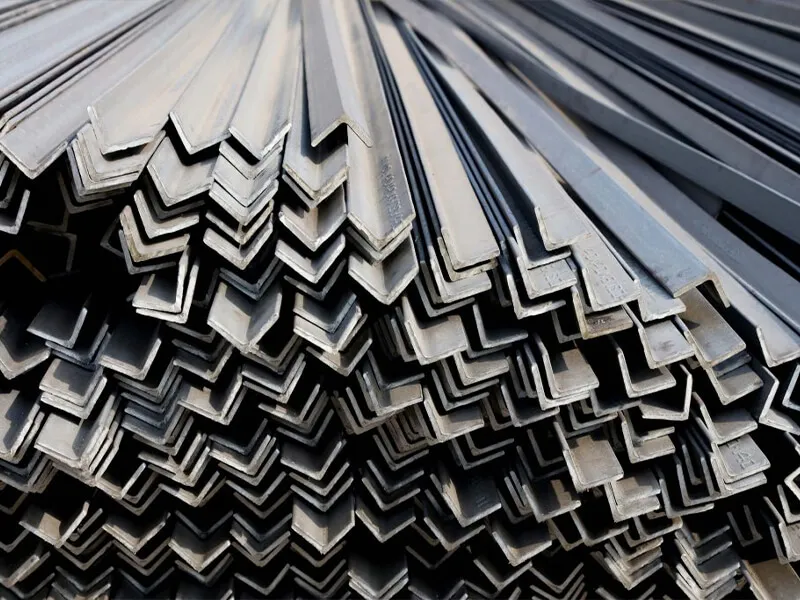
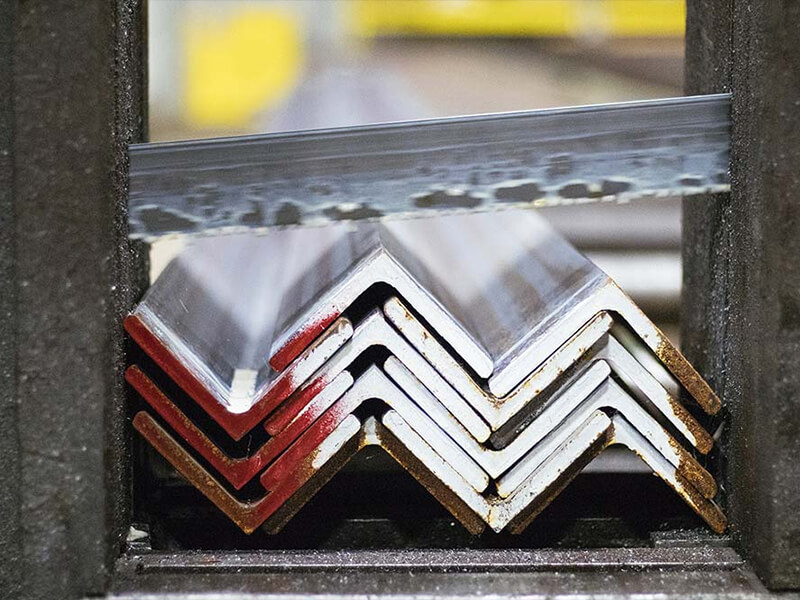
- Angle Steel (L-shaped): Used for brackets, smaller stiffeners, and various structural connections.
- L-shaped Section Steel: Similar to angle but with unequal legs, used in specific structural details.
3. Superstructure and Other Areas
- Superstructure (Bridge, living quarters): Lighter weight is desired here to keep the ship’s center of gravity low. Higher-strength steels (AH36) are used to allow thinner plates. Sometimes aluminum is used for very top parts.
- Tanks (Ballast, Fuel, Cargo): Tank walls are usually hull-grade steel. For chemical tankers or tanks carrying corrosive cargo, stainless steel (316L) or coated special steels are used.
The Innovation Link: The future of steel in boats is about functional grading and hybrid structures5. Instead of using one grade for a whole deck, we might see graded plates where the thickness and strength vary across a single plate, optimized by computer simulation. We might also see more steel-composite sandwiches—a steel skin with a lightweight core—for decks and superstructures, offering immense strength and weight savings. The traditional "type" of steel is evolving into a tailored, multifunctional material system.
What are the 4 types of stainless steel?
Stainless steel is a vast family. For marine professionals, understanding the four main types is crucial for selecting the right material for bolts, tanks, piping, or specialty components. These types are defined by their crystalline microstructure1, which gives them distinct properties. The four primary types are Austenitic2, Ferritic3, Martensitic4, and Duplex5.
The four main types of stainless steel are Austenitic (non-magnetic, excellent corrosion resistance6, e.g., 304, 316), Ferritic3 (magnetic, moderate corrosion resistance, e.g., 430), Martensitic (magnetic, high strength, hardenable, e.g., 410), and Duplex5 (mixed structure, high strength and excellent corrosion resistance, e.g., 2205).
Each type has a different "personality" defined by its alloy recipe and how it is processed. Knowing these personalities helps you match the steel to the job.
The Four Personalities of Stainless Steel
This classification is based on metallurgy, but the practical implications are clear for marine use.
1. Austenitic2 Stainless Steel (The Most Common Marine Type)
- Microstructure: Face-centered cubic. It contains high Nickel (Ni) and Chromium (Cr).
- Key Properties: Non-magnetic. Excellent formability and weldability. Outstanding corrosion resistance6, especially with added Molybdenum (as in 316).
- Common Grades: 304 (18-8 stainless), 316 (marine grade), 321, 347.
- Marine Applications: This is the go-to for most marine corrosion applications: piping, fittings, railings, fasteners (316), tank linings, exhaust manifolds (special grades). Its weldability and toughness make it versatile.
2. Ferritic3 Stainless Steel
- Microstructure: Body-centered cubic. Higher Chromium (Cr), low or no Nickel.
- Key Properties: Magnetic. Moderate corrosion resistance6 (less than austenitic). Good resistance to stress corrosion cracking. Less ductile, harder to weld.
- Common Grades: 430, 409, 439.
- Marine Applications: Used less in critical marine parts. Sometimes used for non-structural trim, decorative elements, or in automotive exhausts. Its lower cost and good oxidation resistance are its advantages.
3. Martensitic4 Stainless Steel
- Microstructure: Body-centered tetragonal. Formed by quenching austenite. Medium Chromium, very low Nickel.
- Key Properties: Magnetic. Can be hardened by heat treatment to very high strength and hardness. Moderate corrosion resistance6 (worse than austenitic or ferritic). Brittle if not tempered correctly.
- Common Grades: 410, 420, 440C.
- Marine Applications: Used where high strength and wear resistance are more important than maximum corrosion resistance6. Examples: ship propeller shafts (often coated), pump shafts, valve stems, cutlery, bearings. It is not typically used in exposed seawater applications without protection.
4. Duplex5 Stainless Steel (The High-Performance Marine Type)
- Microstructure: A 50/50 mix of Austenite and Ferrite grains. High Chromium, moderate Nickel, plus Molybdenum and Nitrogen.
- Key Properties: Magnetic. About twice the yield strength of austenitic steels. Excellent resistance to pitting, crevice, and stress corrosion cracking (very high PREN, often >35). Good weldability with care.
- Common Grades: 2205 (most common), 2507 (super duplex).
- Marine Applications: The premium choice for the most aggressive environments: seawater cooling systems, chemical tanker cargo tanks, offshore platform piping and structural parts, high-pressure risers, propeller shafts for high-performance vessels. Its strength allows for thinner, lighter components.
Future Innovation Link: The future lies in advanced duplex7 and super-austenitic steels. Research is pushing PREN values even higher for use with new, corrosive alternative fuels like ammonia. Another frontier is additive manufacturing (3D printing) with stainless steel powders, allowing for complex, integrated components (like a custom valve body with internal cooling channels) that are impossible to forge or cast. Understanding these four types is the first step to specifying the innovative materials that will build the next generation of marine equipment. For a project contractor, knowing that a duplex grade can replace a heavier carbon steel component with a thinner, maintenance-free alternative is a direct innovation in cost and performance.
Conclusion
The future of marine steel is not about replacing steel. It is about reinventing it. Through smarter alloys, integrated sensors, hybrid structures, and greener production, steel will remain the backbone of maritime industry, but it will be a backbone that is stronger, lighter, and more intelligent than ever before.
-
Explore how the microstructure of stainless steel affects its properties and applications, crucial for informed material choices. ↩ ↩ ↩ ↩ ↩ ↩ ↩ ↩ ↩
-
Explore the unique properties of Austenitic stainless steel, crucial for marine applications and corrosion resistance. ↩ ↩ ↩ ↩ ↩ ↩ ↩ ↩
-
Learn about Ferritic stainless steel’s moderate corrosion resistance and its cost-effective applications in marine environments. ↩ ↩ ↩ ↩ ↩ ↩ ↩
-
Discover the high strength and hardness of Martensitic stainless steel, ideal for specific marine applications. ↩ ↩ ↩ ↩ ↩
-
Understand why Duplex stainless steel is the premium choice for aggressive marine environments due to its strength and corrosion resistance. ↩ ↩ ↩ ↩ ↩ ↩
-
Gain insights into the varying levels of corrosion resistance in stainless steel types, essential for material selection. ↩ ↩ ↩ ↩ ↩ ↩
-
Learn about the innovations in advanced duplex stainless steels and their potential in future marine technologies. ↩