
Steel arrives two weeks late. The whole project falls behind. Shipyards lose money every single day.
Bulb flat steel delivery timing is critical because it is used in the bottom and side stiffeners of most hull blocks. A two-week delay stops block assembly, pushes back keel laying, and triggers penalty clauses. The best way to protect your schedule is to calculate the critical delivery window for each block, build in buffer stock, and lock in mill slots with a blanket order.

I have seen too many shipyards suffer from late steel. Let me walk you through what really happens when delivery slips, how to calculate your safe window, why steel is the real bottleneck, and how to build a timeline that works.
What Happens When Bulb Flat Steel Delivery Is Delayed by Two Weeks?
You think two weeks is nothing. But in shipbuilding, two weeks of delay turns into two months of chaos.
A two-week bulb flat steel delay means the block assembly line stops. Welders sit idle. The dry dock schedule1 shifts. Other blocks cannot fit because the first block is not ready. The ship misses its launch window. Then the owner charges a penalty – often $10,000 to $50,000 per day. I watched a buyer in the Philippines lose $200,000 because his steel arrived 12 days late.
[^2]](https://cnmarinesteel.com/wp-content/uploads/2026/01/Flat-steel-ball113.webp)
Let me show you the domino effect step by step.
I am Zora Guo. I have supplied bulb flat steel to shipyards in Vietnam, Mexico, and Romania. One of my buyers in the Philippines was building a small bulk carrier. He ordered 150 tons of bulb flat steel for the bottom blocks. The supplier promised delivery in 6 weeks. It came in 8 weeks. The buyer thought: “Two weeks, no big deal.” But it was a big deal.
Day 1 to 7 – The first week of delay
The block assembly line is scheduled to start on Monday. The steel is not there. Twenty welders and fitters show up. They have nothing to do. The supervisor pays them anyway. That is $8,000 in idle labor2. The cutting machine sits silent. The material handler moves other steel around to look busy.
Day 8 to 14 – The second week of delay
The shipyard tries to reschedule. But the dry dock is booked for another vessel next month. The only open slot is three months away. The buyer calls the owner. The owner is angry. He threatens to cancel the contract. The penalty clause says: $15,000 per day for late delivery. The buyer starts sweating.
After the steel arrives – The recovery cost
Finally, the steel arrives. But now the shipyard has to rush. Workers do overtime. They work weekends. The welding quality drops. The surveyor finds bad welds. They have to redo them. The overtime cost3 is $20,000. The rework cost is another $15,000. The penalty for late delivery to the owner is $30,000.
Total cost of a two-week delay? Over $70,000. And that does not count the lost reputation4.
The hidden costs most people forget
- Lost dry dock slot – If you miss your slot, the next one might be months away.
- Idle capital – You already paid for the steel. It is sitting on a ship somewhere.
- Rush freight – You might pay for air freight or express sea freight to catch up.
- Contract penalties – Some shipbuilding contracts have penalties of 0.5% of the vessel price per week.
Here is a simple table of delay costs for a medium-sized shipyard:
| Delay length | Idle labor (20 workers) | Overtime to catch up | Penalty risk | Total estimated cost |
|---|---|---|---|---|
| 1 week | $4,000 | $5,000 | $10,000 | $19,000 |
| 2 weeks | $8,000 | $15,000 | $30,000 | $53,000 |
| 4 weeks | $16,000 | $40,000 | $100,000 | $156,000 |
My advice: Treat steel delivery like a critical path item. Do not assume “a few weeks late is fine.” It is not fine. It is expensive.
How to Calculate the Critical Delivery Window for Each Hull Block?
You cannot just order steel and hope it arrives on time. You need to know the exact week when each block needs its bulb flat steel.
The critical delivery window1 is the period between two dates: the earliest date you can store the steel without taking up too much space, and the latest date you can receive it without stopping production. To calculate it, work backwards from the block assembly start date. Subtract the cutting time, the straightening time, and the fit-up time. Then add a buffer of 5 to 10 days5. I use this method with every shipyard buyer.
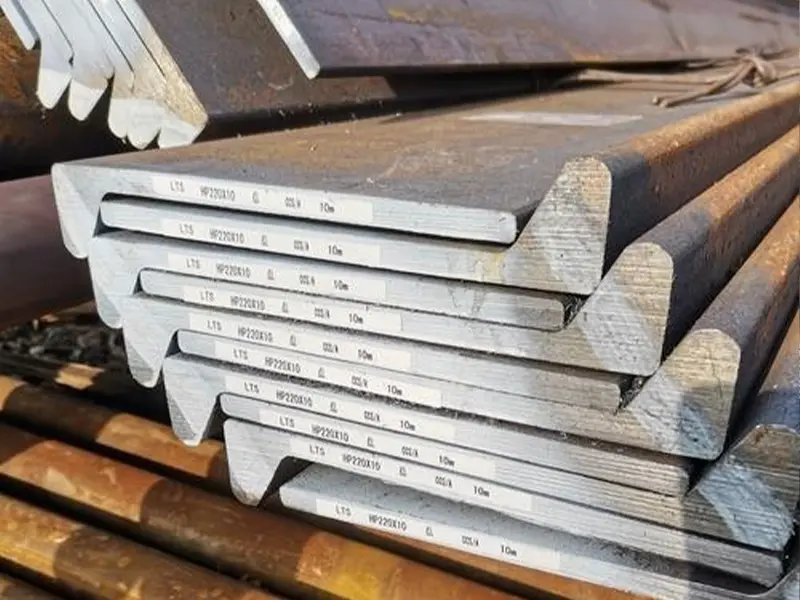
Let me show you the backward scheduling method2.
I am Zora Guo. A buyer in Vietnam once told me: “I need all my steel by the first of the month.” I asked: “Why that date?” He said: “Because that is when the block starts.” But his block start date was the 15th. He had two weeks of cutting and fit-up before the welders touched the steel. He could have received steel on the 10th and still been fine. He was stressing himself and his supplier for no reason.
So here is the right way to calculate.
Step 1 – Find the block assembly start date
This is the date when workers start welding the stiffeners to the plates. Let us say it is June 1.
Step 2 – Work backwards through the pre-assembly steps3
Before welding, you need:
- Cutting the bulb flat steel to length (2 days)
- Straightening any bends (1 day)
- Fit-up (placing the steel on the plate and tack welding) (2 days)
- Quality check (1 day)
Total pre-assembly time = 6 days. So the steel must be in your yard by May 26 (June 1 minus 6 days).
Step 3 – Add unloading and inspection time
When the steel arrives, you need 1 day to unload and 1 day to inspect. So the steel must arrive at your port or yard by May 24.
Step 4 – Add shipping and customs time4
Shipping from China to Vietnam takes about 10 days. Customs clearance takes 2 to 3 days. So the supplier must ship the steel by May 11 (May 24 minus 12 days).
Step 5 – Add a buffer
Things go wrong. A ship is late. Customs is slow. Add a buffer of 5 to 10 days. So the supplier should ship by May 1 to May 6.
That is your critical delivery window: the supplier ships between May 1 and May 6. You receive the steel between May 20 and May 24. You start cutting on May 25. You weld on June 1.
The most common mistake
Shipyards often set the “latest delivery date” as the block start date. That is wrong. You need the steel at least one week before the block start. I have seen buyers order steel with “deliver by June 1” when the block starts June 1. The steel arrives June 1. But it takes 3 days to unload and cut. Now the block starts June 4. The whole schedule slips.
Here is a sample calculation table for a typical hull block:
| Event | Date | Days before block start |
|---|---|---|
| Block assembly start | June 1 | 0 |
| Pre-assembly (cut, fit, tack) | May 25-31 | -6 |
| Unload and inspect | May 24 | -7 |
| Port arrival and customs | May 20-23 | -10 |
| Shipping from China | May 1-10 | -20 to -25 |
So the critical delivery window for the supplier is May 1 to May 10. Any later than May 10, and you risk delaying the block.
I give this calculation to every buyer. One buyer in Saudi Arabia told me: “Now I know why my previous supplier always seemed late. I was asking for delivery too close to the block start.” He adjusted his schedule. Now his blocks start on time.
Why Do Most Shipyard Delays Start with Late Steel, Not Late Labor?
You blame the welders. You blame the crane operator. But look at your stockyard. Is the steel there? Most delays start with an empty rack.
Steel is the first bottleneck in shipbuilding.1 You cannot cut, fit, or weld without steel. Labor can be added with overtime or extra shifts. Steel cannot be rushed once the mill has a production queue. I have seen shipyards add 50 welders overnight. But they could not add a single ton of steel. The delay started 8 weeks earlier when the supplier missed the rolling slot.
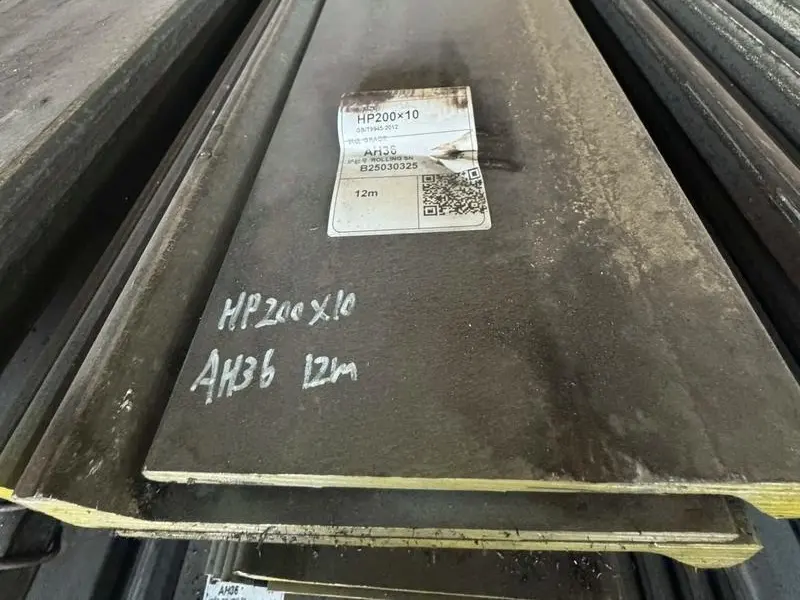
Let me explain why steel is the critical path.
I am Zora Guo. A buyer in Mexico once had a labor shortage. His welders were slow. He hired 10 more welders. The problem got better. Another buyer in Pakistan had a steel shortage. He tried to hire more people. That did nothing. The steel simply was not there. The difference is simple: labor is flexible, steel is not.
Labor can be scaled up and down5
- You can hire temporary welders.
- You can ask for overtime.
- You can shift workers from other projects.
- You can train apprentices to do simple tasks.
Labor has a short lead time. A week of notice is often enough.
Steel has a long, fixed lead time2
- The mill produces steel in rolling campaigns. If you miss your slot, you wait weeks or months.
- The steel must cool, cut, and test. That takes fixed days.
- The ship must be booked. The schedule is fixed.
- Customs clearance takes fixed days.
Steel has a lead time of 6 to 12 weeks from order to arrival. You cannot rush it. You cannot “add more shifts” at the mill. The mill is already running 24/7.
The real story from a Pakistani shipyard3
A buyer in Pakistan ordered bulb flat steel for three hull blocks. He ordered 8 weeks before the block start. That should have been enough. But the supplier did not confirm the mill rolling slot. The mill had a queue of 4 weeks. Then the steel sat at the port for 2 weeks waiting for a vessel. Total lead time became 14 weeks. The steel arrived 6 weeks late. The shipyard had 40 welders sitting idle for 3 weeks. The buyer paid $60,000 in idle labor. Then he paid $40,000 in overtime to catch up. The ship was still 2 weeks late to the owner. The penalty was $30,000.
The buyer blamed his project manager. But the real problem started 8 weeks earlier when the supplier did not lock in a rolling slot.
Why most shipyards miss this
Shipyard managers focus on labor efficiency. They track welding hours and cutting speeds. They do not track steel delivery as a risk. They assume the steel will arrive on time. When it does not, they have no plan B.
You can have the best welders in the world. They cannot weld steel that is not there.
Here is a comparison table:
| Resource | Lead time to increase | Flexibility | Bottleneck risk |
|---|---|---|---|
| Welders | 1-2 weeks (hire temporary) | High | Low |
| Cranes | Already on site | Medium | Medium |
| Steel | 6-12 weeks from order | Very low | Very high |
My rule: Treat steel as the number one risk on your critical path4. Track your supplier’s rolling slot confirmation6. Get weekly updates on production and shipping. And always add a buffer.
How to Build a Realistic Delivery Timeline with Your Bulb Flat Steel Supplier?
You ask a supplier: “How fast can you deliver?” They say: “6 weeks.” But that 6 weeks often turns into 10. Why? Because the supplier only counts the shipping time. You need to understand the full timeline.
A realistic delivery timeline1 has five components: mill rolling slot5 (2-4 weeks), cooling and testing2 (1 week), cutting to length3 (3-5 days), sea freight4 (3-6 weeks depending on destination), and customs clearance6 (3-5 days). Total realistic lead time from order to your yard is 8 to 12 weeks. I share this breakdown with every buyer. The ones who plan for 12 weeks are never late.
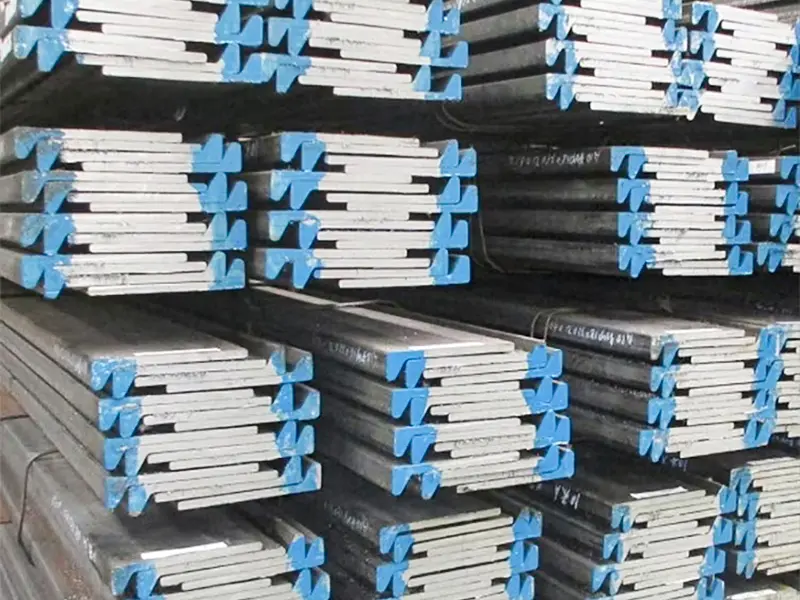
Let me break down each component with real numbers.
I am Zora Guo. A buyer in Qatar once asked me for delivery in 5 weeks. I told him: “That is not realistic.” He said: “Another supplier promised 5 weeks.” I said: “Then they are lying or they have stock.” He went with the other supplier. The steel arrived in 9 weeks. He was late. He came back to me. Now he always asks for the full timeline breakdown.
Component 1 – Mill rolling slot (2 to 6 weeks)
The mill does not produce bulb flat steel every day. They roll in campaigns. If your size is in stock, you can get it in 1 week. If not, you wait for the next campaign. For standard sizes (like 150x12mm), the wait is 2-3 weeks. For non-standard sizes, it can be 6 weeks or more.
Ask your supplier: “Do you have this size in stock at the mill? If not, when is the next rolling campaign?”
Component 2 – Cooling, testing, and certification (1 week)
After rolling, the steel is hot. It needs to cool. Then the mill takes samples and tests them. Then they issue the mill certificate. This takes about 5 to 7 days. Some mills can do it faster, but 1 week is realistic.
Component 3 – Cutting to length and packing (3 to 5 days)
Bulb flat steel comes in long lengths (12m to 18m). You may need shorter pieces. The supplier cuts them. Then they bundle, strap, and wrap for shipping. This takes 3 to 5 days.
Component 4 – Sea freight (3 to 6 weeks)
This depends on your destination. From China:
- Vietnam, Philippines, Thailand: 1 to 2 weeks
- Malaysia, Indonesia: 2 to 3 weeks
- Middle East (Qatar, Saudi Arabia, UAE): 4 to 5 weeks
- Mexico, US West Coast: 5 to 6 weeks
- Europe (Romania, via Black Sea): 5 to 6 weeks
Component 5 – Customs clearance (3 to 5 days)
When the ship arrives, the steel goes through customs. This takes 3 to 5 days in most countries. Sometimes longer if documents are missing.
Total realistic timeline
Add them up:
| Component | Minimum days | Typical days | Maximum days |
|---|---|---|---|
| Mill rolling slot (if in stock) | 7 | 14 | 21 |
| Cooling and testing | 5 | 7 | 10 |
| Cutting and packing | 3 | 4 | 5 |
| Sea freight (Middle East) | 28 | 35 | 42 |
| Customs | 3 | 4 | 5 |
| Total | 46 days (6.5 weeks) | 64 days (9 weeks) | 83 days (12 weeks) |
So the realistic lead time is 9 weeks on average. Never believe a supplier who promises 4 weeks unless they have stock in your local warehouse.
How to build a timeline that works
Step 1 – Work backwards from your block start date – Use the method from the previous section.
Step 2 – Add 2 weeks of buffer – Because things go wrong. The mill is late. The ship is delayed. Customs is slow.
Step 3 – Get weekly updates from your supplier – Ask for a status every Friday: “Is the steel rolled? Is it tested? Has it shipped?”
Step 4 – Order earlier than you think you need – Many shipyards order 8 weeks before the block start. That is too tight. Order 12 to 14 weeks before.
Here is a sample timeline for a shipyard in Saudi Arabia:
| Week before block start | Action |
|---|---|
| Week -14 | Place order with supplier. Confirm mill rolling slot. |
| Week -12 | Steel rolled and cooled. Testing begins. |
| Week -11 | Steel cut and packed. Ship booking confirmed. |
| Week -10 | Steel loaded on vessel. |
| Week -6 | Vessel arrives at Dammam port. |
| Week -5.5 | Customs clearance. Steel delivered to yard. |
| Week -5 | Buffer week. Steel is ready for cutting. |
| Week -4 | Cutting and fit-up begins. |
| Week 0 | Block assembly starts on time. |
I send this timeline to every buyer. One buyer in Romania told me: “Zora, I used your timeline for my last two projects. Both times the steel arrived exactly when you said it would. No surprises.”
Conclusion
A two-week delay costs over $50,000. Calculate your critical window. Treat steel as the real bottleneck. And build a realistic 12-week timeline.
My Personal Insights (from 10+ years in marine steel export)
I am Zora Guo. My team in Liaocheng supplies bulb flat steel to shipyards in Vietnam, Mexico, Qatar, Saudi Arabia, and more. We provide realistic lead time estimates and weekly production updates. We also offer blanket orders to lock in mill rolling slots. Send me an email at sales@chinaexhaustfan.com or visit cnmarinesteel.com. Tell me your block start date and required sizes. I will send you a delivery timeline that works.
-
Understanding a realistic delivery timeline helps you plan better and avoid delays in your projects. ↩ ↩ ↩ ↩
-
Explore the cooling and testing process to understand how it affects delivery times and quality. ↩ ↩ ↩ ↩
-
Discover the cutting process to ensure you receive the correct lengths for your projects. ↩ ↩ ↩ ↩
-
Understanding sea freight factors can help you anticipate delivery times based on your location. ↩ ↩ ↩ ↩
-
Learn about mill rolling slots to ensure your orders are processed efficiently and on time. ↩ ↩ ↩
-
Learn about customs clearance to avoid unexpected delays when your steel arrives. ↩ ↩