
You are an EPC contractor managing a massive offshore platform project. Your material take-off lists hundreds of tons of bulb flat steel. The fabrication schedule is fixed. Delays are not an option. Sourcing this specialized material is not like buying standard beams. It requires a systematic, risk-managed approach from day one of procurement.
EPC contractors source bulb flat steel by first locking in the technical specifications with class society approval. They then qualify suppliers based on mill certifications, production capacity, and track record. Procurement is structured through framework agreements with phased releases, supported by third-party inspection and rigorous logistics planning to ensure material arrives on time and to spec for the fabrication sequence.

For an EPC contractor, procurement is not a separate activity. It is integrated with engineering, construction, and project management. The process starts with a clear understanding of the product itself. Let’s begin with the fundamentals that every contractor’s procurement team must know.
What is a bulb flat1?
Your engineering team hands you a specification sheet. It says "Bulb Flat, 300×12, DH36, as per EN 100672." You need to order this. But do you know what it looks like? Can you explain it to a new supplier? For an EPC contractor3, understanding the product is not optional. It is the basis for every subsequent procurement decision.
A bulb flat1 is a hot-rolled steel profile with a flat web and a rounded bulb on one edge. It is defined by its web height (e.g., 300mm) and thickness (e.g., 12mm). The bulb adds stiffness without adding excess weight. It is produced to international standards and is a primary stiffening component in offshore structures, ship hulls, and wind turbine foundations.
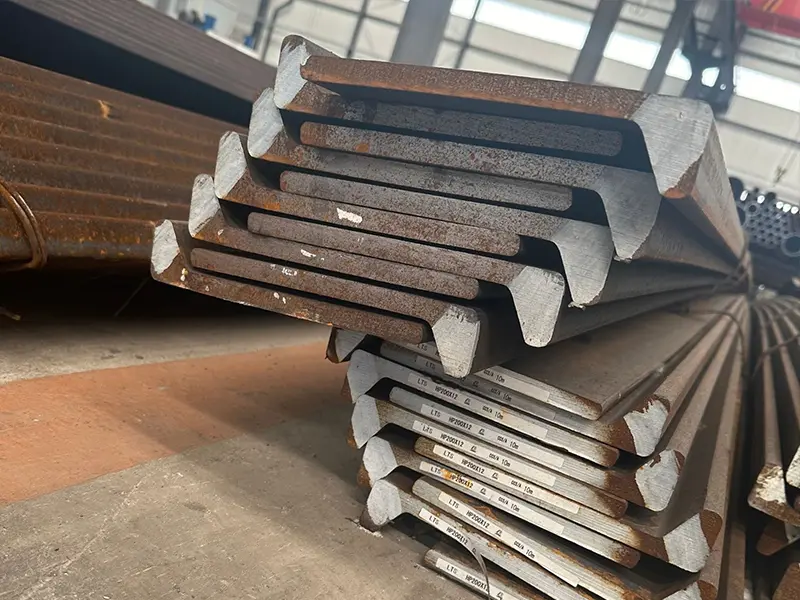
The EPC Contractor’s Technical Primer on Bulb Flats
An EPC contractor3‘s procurement team must be technically literate. Here is what you need to know.
1. The Anatomy and Naming Convention.
- Dimension Format: A bulb flat1 is typically specified as "HP" or "FB" followed by web height and thickness. For example, HP 300×12 means a web height of 300mm and a thickness of 12mm. The bulb dimensions are standardized for each size.
- Standards: Common standards include EN 100672 (European), JIS G 3192 (Japanese), and GB/T 9946 (Chinese). Your project specification will reference one of these. All dimensions, tolerances, and section properties are defined in the standard.
- Steel Grade: The grade (e.g., DH36) defines the material’s mechanical properties. It is separate from the dimensional standard but must be included in the specification.
2. Why This Profile?
The bulb flat1 is an optimized shape. The bulb concentrates material away from the neutral axis of the profile, which maximizes its resistance to bending (its moment of inertia4). This makes it the most efficient rolled section for stiffening large steel plates. An equivalent angle or flat bar would be heavier for the same stiffening effect.
3. The Contractor’s Checklist for Product Definition.
Before issuing an inquiry, your team must have:
- The exact size: Web height and thickness in mm.
- The governing standard: EN, JIS, GB, etc.
- The steel grade5: Including the classification society requirement (e.g., ABS DH36, not just "DH36").
- The required length: Standard mill lengths (usually 12m) and any cutting requirements.
- The total tonnage: Calculated from the length and the theoretical weight per meter from the standard.
My Insight from the Field
A major EPC contractor3 in the Middle East sent us an inquiry for "Bulb Flat, 300mm, Grade DH36." That was it. We had to ask five clarifying questions: Which standard? What thickness? What total length? Which classification society? What is the project timeline? They appreciated our diligence. Their previous supplier had assumed a standard and delivered material that did not match the project’s EN specification. The material was rejected. The delay cost them. This taught me that for EPC contractor3s, the initial product definition6 is a critical control point. A good supplier will ask these questions. A great contractor will have the answers ready in a clear, complete specification package.
What is the use of bulb bar1?
You are walking the fabrication yard. Welders are attaching long steel profiles to massive plate sections. You see the bulb bar1s everywhere. But do you know exactly what function they serve in the final structure? Understanding the use helps you prioritize orders, manage quality, and explain to stakeholders why this material is worth the investment.
A bulb bar1 (bulb flat) is used as a stiffener2. It is welded perpendicularly to steel plates to prevent them from buckling under compressive loads. In offshore structures3, these loads come from water pressure, wave action, and equipment weight. The bulb bar1s create a grid that reinforces the plate, allowing it to be thinner and lighter while maintaining structural integrity.
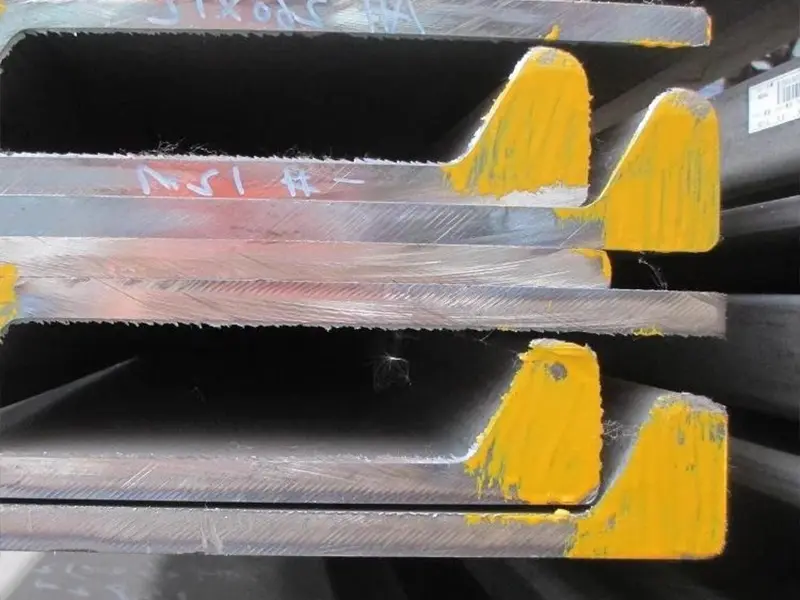
Connecting Use to Project Priorities for EPC Contractors
For an EPC contractor, the "use" dictates everything from welding procedures4 to inspection priorities.
1. Where You Find Bulb Bars in Offshore Structures.
- Jacket Structures (Fixed Platforms): The legs and bracing of a steel jacket are large tubular members. Inside these tubes, ring stiffener2s (which are often bulb flats rolled into circles or curved sections) prevent the tube wall from buckling under deepwater pressure. Bulb flats are also used as external stiffener2s on major structural nodes.
- Decks and Topsides: The deck plates that support equipment and personnel are stiffened with a grid of bulb bar1s running underneath. This allows the deck to be strong enough to support heavy loads without being excessively thick and heavy.
- Helidecks: These critical areas use closely spaced bulb bar1s for maximum stiffness with minimum weight.
- Boat Landings and Risers: Bulb flats are used in the fabrication of these secondary structures.
2. The Fabrication Sequence Implication.
Because bulb bar1s are primary stiffener2s, their installation is on the critical path.
- Phase 1: Plates are cut and prepared.
- Phase 2: Bulb bars are cut to length, and their ends are often "coped" (cut to fit around intersecting stiffener2s).
- Phase 3: Bulb bars are tack-welded into position on the plate.
- Phase 4: Full-strength fillet welds are applied. This is a major welding operation. If bulb bar1s are late, this whole sequence stops.
3. Quality Control Focus.
The use of bulb bar1s dictates where quality control5 efforts must be concentrated.
- Weld Integrity: The fillet weld between the bulb bar1 and the plate is critical. It must have the correct throat thickness and be free of defects. NDT (Non-Destructive Testing) like magnetic particle inspection (MPI) is often focused on these welds.
- Material Traceability: Since bulb bar1s are primary structure, each piece must be traceable to its mill certificate and heat number. This is a class society requirement.
- Dimensional Accuracy: The spacing of bulb bar1s must match the design. Errors here can affect the structural calculations.
My Insight from the Field
We supplied bulb flats for a large offshore platform jacket being built in Qatar. The fabricator was working to a tight schedule. They needed the bulb flats in phased deliveries to match their block erection plan. We coordinated with our mill to roll the specific sizes for the lower jacket legs first, then the upper sections later. This allowed the fabricator to start welding the most critical nodes without waiting for all material. The project manager told us this phased approach, tied directly to the use and fabrication sequence6, was the reason they met their first steel-in-the-water deadline. It reinforced that for EPC contractors, procurement is not just about buying steel; it is about choreographing its arrival to match the construction dance.
What is a bulb plate1?
You are reviewing a sub-contractor’s material requisition. They have listed "Bulb Plate" for a stiffening application. Your internal database also has an old code for "Bulb Plate." This term creates a dangerous ambiguity. For an EPC contractor managing multiple suppliers and sub-contractors, eliminating this ambiguity is essential to prevent costly procurement errors.
"Bulb plate" is an imprecise and outdated term that should be avoided in EPC procurement. It most commonly refers to a bulb flat2 (the stiffener profile). However, it could be misinterpreted. To ensure clarity, EPC contractors must enforce the use of standardized terminology: "bulb flat2" or "bulb bar" for the rolled section, and "steel plate3" for flat sheet material. This precision is a key risk management practice.
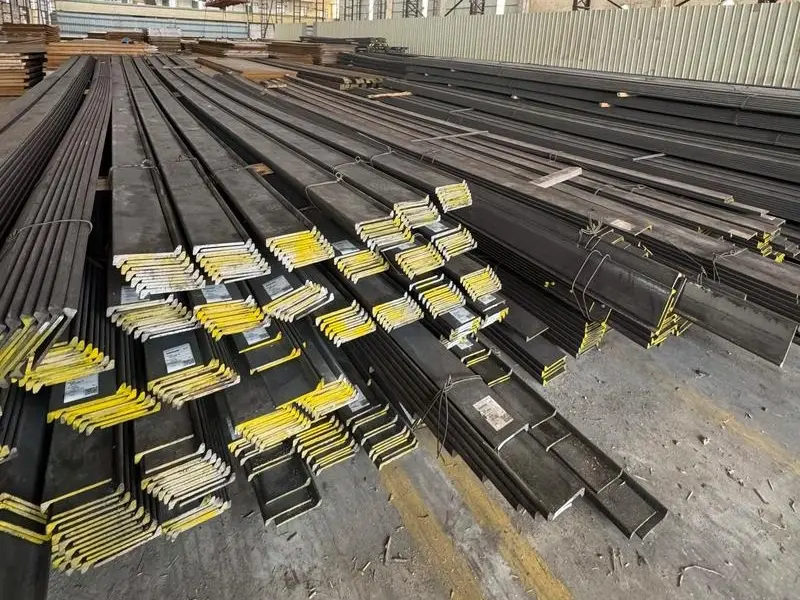
Terminology Control as an EPC Project Management Tool
Large EPC projects involve dozens of engineers, procurement staff, suppliers, and sub-contractors across multiple countries. Terminology control is not pedantry; it is project management.
1. The Risks of Ambiguous Terms.
- Supplier Misinterpretation: A supplier unfamiliar with marine terms might quote for a specialty plate product that does not exist, causing delays while they figure out the error. Or worse, they might deliver a standard flat bar, assuming that is what you meant.
- Internal Confusion: A procurement officer might search the wrong material code in the system. A warehouse worker might store "bulb plate1s" in the plate section instead of with the rolled sections. This leads to picking errors and fabrication delays.
- Contract Disputes: If a sub-contractor’s quote uses "bulb plate1" and your purchase order uses "bulb flat2," and the delivered material is questioned, who is responsible? The ambiguity creates a contractual grey area.
2. The EPC Contractor’s Solution: A Project Material Glossary.
At the start of every major project, the contractor should issue a Material Glossary to all stakeholders.
- Standardized Terms: Define every key material. Example:
- Bulb Flat (or Bulb Bar): Rolled steel section with a flat web and rounded bulb, used for stiffening. Conforming to [Standard XYZ]. Do not use "Bulb Plate."
- Steel Plate: Flat, rolled steel product, width greater than [e.g., 600mm], used for primary structural surfaces.
- Visual Aids: Include simple diagrams. A picture of a bulb flat2 cross-section next to a picture of a steel plate3 eliminates any possible confusion.
- Mandatory Use: Make it a contractual requirement4 that all inquiries, quotations, and purchase orders use the glossary terms.
3. Training and Enforcement.
- Kick-off Meetings: Review the glossary at the project kick-off with all key suppliers.
- RFQ Review: Before sending out a Request for Quotation, review it to ensure no forbidden terms are used.
- Supplier Quote Review: When quotes come in, check them against the glossary. If a supplier uses "bulb plate1," issue a clarification request immediately. Their response (or failure to correct) is a data point on their attention to detail.
My Insight from the Field
A large EPC project in the North Sea had a strict material specification database. A junior engineer, copying from an old project file, entered "Bulb Plate" into the new project’s material take-off. This incorrect term propagated into the RFQ. Several suppliers quoted, but one major European supplier flagged it. They asked, "We assume you mean bulb flat2 per EN 10067. Please confirm." Their question saved the project. The procurement manager corrected the spec before any orders were placed. The supplier who asked the question earned significant goodwill and later won the contract. This experience showed me that terminology vigilance is a competitive advantage. Suppliers who care enough to ask are usually the ones who care enough to deliver correctly.
What is the HS code1 for bulb flat?
Your bulb flat order is ready to ship. The freight forwarder asks for the HS code1. You realize you are not sure. Getting this code wrong can delay your shipment at customs, incur unexpected duties, or even lead to fines. For an EPC contractor2 managing international logistics, knowing the correct HS code1 is a critical part of the procurement process.
The Harmonized System (HS) code for bulb flats3 is typically 7216.33 or within the broader heading 7216 (Angles, shapes and sections of iron or non-alloy steel). Specifically, 7216.33 covers "Angles, shapes and sections, not further worked than hot-rolled, hot-drawn or extruded, of iron or non-alloy steel: U, I or H sections, not further worked than hot-rolled, hot-drawn or extruded, of a height of less than 80 mm or more." However, codes can vary slightly by country, so verification with a customs broker is essential.
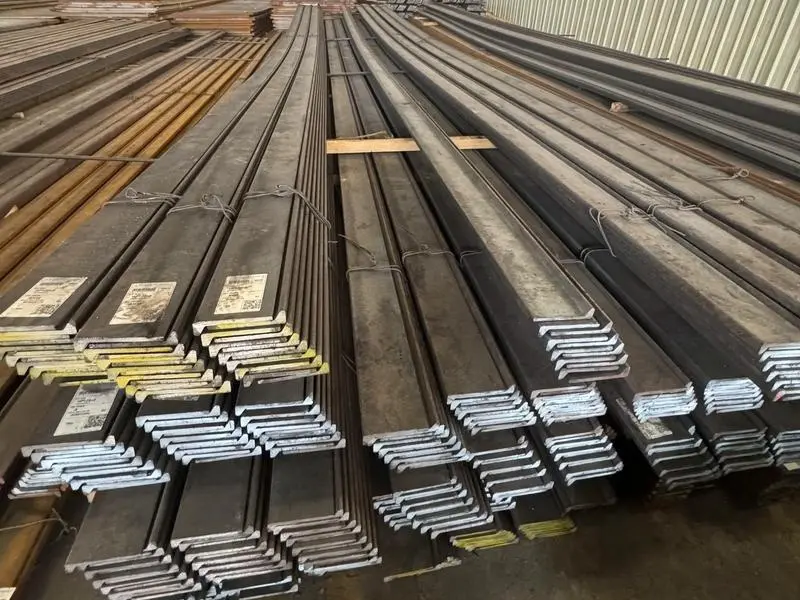
Navigating Customs Classification for EPC Shipments
HS code1s are not just bureaucratic numbers. They have real financial and logistical consequences.
1. Why the HS Code Matters.
- Duty Rates: The HS code1 determines the import duty rate4 in the destination country. A wrong code could mean underpaying (risking penalties) or overpaying (hurting project budget).
- Customs Clearance: Customs authorities use the HS code1 to assess the shipment. An incorrect code can trigger inspections, delays, and holds.
- Trade Agreements: Some countries have preferential trade agreements5 that reduce duties for certain HS code1s from certain origins. Using the correct code ensures you benefit from these agreements if applicable.
- Statistical Tracking: Governments use HS code1 data to track trade flows. Accurate reporting is a legal requirement.
2. Finding the Correct Code for Bulb Flats.
The HS system is hierarchical.
- Chapter 72: Iron and Steel.
- Heading 7216: Angles, shapes and sections of iron or non-alloy steel.
- Subheading 7216.33: U, I or H sections, not further worked than hot-rolled, hot-drawn or extruded, of a height of less than 80 mm or more.
- Note: The description "U, I or H sections" is a bit broad. In practice, customs authorities often classify other rolled sections, including bulb flats3, under this or a related subheading based on their shape and manufacturing process. Some countries have national extensions (e.g., 7216.33.00.10) for specific profiles.
- Alternative: Some may fall under 7216.69 (Other, not further worked than hot-rolled, hot-drawn or extruded) depending on local interpretation.
3. The EPC Contractor’s Best Practice.
- Step 1: Get a Preliminary Ruling. For large projects, engage a customs broker6 or trade consultant to get a preliminary classification ruling7 from the destination country’s customs authority. This provides legal certainty.
- Step 2: Include HS Code in PO. Once confirmed, include the HS code1 in your purchase order and ask the supplier to reference it on all shipping documents. This aligns everyone.
- Step 3: Verify with Supplier. Ask your supplier what HS code1 they typically use for exporting bulb flats3. Their experience with shipments to your country is valuable.
- Step 4: Document. Keep all classification decisions and supporting documentation in your project file in case of future audits.
My Insight from the Field
A client in Romania imported a large quantity of bulb flats3 from us. They had been using an incorrect HS code1 for years, classifying the material as a general "flat product" under a different heading. A new customs broker6 reviewed their imports and flagged the error. The potential back-duties and penalties were significant. We worked with them to provide all past shipping documents and mill certificates to support a re-classification request. Fortunately, they were able to correct the record without major fines. This experience highlighted that for EPC contractor2s, getting the HS code1 right is not just a shipping detail; it is a compliance issue. We now proactively discuss HS code1s with new clients to ensure alignment from the first shipment.
Conclusion
EPC contractors source bulb flat steel through a disciplined process. It requires technical precision in specification, clear terminology, an understanding of structural use, and accurate customs classification to ensure project success.
-
Understanding HS codes is crucial for avoiding customs delays and ensuring compliance with international trade regulations. ↩ ↩ ↩ ↩ ↩ ↩ ↩ ↩ ↩ ↩ ↩ ↩ ↩ ↩ ↩ ↩ ↩ ↩ ↩ ↩ ↩ ↩ ↩ ↩ ↩ ↩ ↩ ↩ ↩ ↩ ↩ ↩ ↩
-
Explore the responsibilities of EPC contractors in managing international logistics and compliance. ↩ ↩ ↩ ↩ ↩ ↩ ↩ ↩ ↩ ↩ ↩ ↩ ↩ ↩
-
Explore the applications of bulb flats in construction to understand their significance in structural engineering. ↩ ↩ ↩ ↩ ↩ ↩ ↩ ↩ ↩ ↩ ↩
-
Discover how HS codes influence import duty rates and how to avoid overpaying or underpaying. ↩ ↩ ↩ ↩
-
Find out how trade agreements can reduce duties and enhance your import strategy. ↩ ↩ ↩
-
Learn how customs brokers can help ensure accurate HS code classification, preventing costly shipping delays. ↩ ↩ ↩ ↩
-
Learn about the importance of obtaining a classification ruling for legal certainty in customs compliance. ↩