
You wait weeks for bulb flat steel. Then the shipment arrives wrong. Your project stops dead.
Integrated supply means one supplier manages mill production, stock, and shipping. This cuts lead time by 2 to 4 weeks and prevents most delays from miscommunication.
You might think buying from separate vendors is normal. But I have seen too many projects get stuck because of it. Let me show you how one supplier changes everything.
How Does One Supplier Coordinating Mill, Stock, and Logistics Cut Procurement Lead Time by Weeks?
A typical buyer calls three separate vendors. One for the steel mill. One for the warehouse. One for the freight. Each one adds waiting days.
One supplier coordinates mill rolling, warehouse stock, and freight. So you skip the back-and-forth. You get one delivery date. That saves 2 to 5 weeks of total lead time.
Why Separate Vendors Create Long Delays?
Let me break down the traditional way. You ask a mill for production. The mill says 8 weeks. Then you find a stockist. But the stockist does not have your size. So you wait for the mill to roll it. Then you book a freight forwarder. The forwarder needs 2 weeks just to give you a rate. Then the steel sits at the port waiting for container space. Each step adds one or two weeks of “quiet time” where no one talks to each other.
Here is a simple table showing the difference:
| Step | Traditional separate vendors | Integrated one supplier |
|---|---|---|
| Mill scheduling | Buyer calls mill, waits for quote | Supplier already has mill slots |
| Stock availability | Buyer checks stockist separately | Supplier owns or reserves stock |
| Transport booking | Buyer finds forwarder, negotiates | Supplier books freight in batch |
| Delay between steps | 3–7 days of silence | Same day handover |
| Total lead time typical | 10–14 weeks | 6–9 weeks |
How Integration Saves Each Week?
In an integrated model, the same person talks to the mill every day. That person also knows what is in the warehouse. And that person books trucks and ships ahead of time. For example, at our company, we work with certified mills in Liaocheng. We keep common sizes of bulb flat steel in our own stock. When a client asks for a project quantity, we check three things in one hour: mill schedule, stock on hand, and shipping availability. Then we give one firm delivery date.
I remember a client from Malaysia. He used to buy from three different suppliers. His lead time was 14 weeks on average. When he switched to our integrated supply, the first order arrived in 8 weeks. The second order came in 7 weeks. He saved nearly a month of waiting. That month let him start his shipbuilding block assembly earlier.
Another point: coordination cuts out the “routing” problem. Normally, the mill sends steel to a warehouse. Then the warehouse sends it to a port. Then the port sends it to a ship. Each transfer adds idle days. With one supplier, the steel moves directly from the mill to the port. Or from the mill to the supplier’s consolidation center. Then straight to the vessel. That removes one or two handling steps. Less handling means less damage too.
So the answer is clear. One supplier coordinating all three parts cuts lead time by weeks because you remove the waiting gaps between separate vendors.
Why Does Integrated Supply Reduce Communication Bottlenecks and Speed Up Problem Resolution?
An email to the mill. Then another to the freight forwarder. Then a call to the stockist. Something always gets lost in the middle.
With integrated supply, you talk to only one person. That person manages all internal teams. So questions get answered in hours, not days. Problems get solved faster.
What Are the Most Common Communication Failures?
I have seen three big bottlenecks in traditional buying. First, the buyer asks the mill for a delivery update. The mill does not reply for three days. Meanwhile, the buyer also needs to know if the warehouse received the steel. But the warehouse says “ask the forwarder.” The forwarder says “ask the mill.” Everyone points fingers.
Second, when something goes wrong, like a certificate is missing, the buyer must call five different people. Each person says “not my problem.” The buyer spends a whole day just finding who is responsible.
Third, language and time zone differences. A buyer in Saudi Arabia talks to a mill in China. Then a forwarder in Dubai. Then a warehouse in another city. Each vendor uses different English skills. Each has different working hours.
Here is a table of these bottlenecks and how integration fixes them:
| Bottleneck | Traditional result | Integrated fix |
|---|---|---|
| Slow mill reply | 3–5 days wait | One rep updates daily |
| Missing certificate blame | No one takes ownership | Supplier owns all documents |
| Time zones and language | Three different contacts | One English-speaking rep |
How Does a Single Contact Person Solve Problems Faster?
When you work with one integrated supplier, you get one export sales representative. That person knows the mill schedule. That person also checks the stock. And that person arranges the shipping. So when you ask “where is my steel?” the rep can give you a real answer in two hours. No need to forward your email to another department.
Take our client Gulf Metal Solutions from Saudi Arabia. Before they found us, they worked with three different Chinese suppliers. One for marine steel plate, one for angle steel, and one for logistics. They told me that every time they asked for an update, the first supplier said “wait, I will ask my colleague.” Then two days later, no reply. Then they had to call again. That cycle repeated for weeks.
When they switched to our integrated supply, I assigned one English-speaking export sales rep. That rep calls the mill every morning. He also checks the warehouse stock every afternoon. When Gulf Metal Solutions asks a question, the rep replies within two hours. If there is a problem, like a surface finish issue, the rep talks directly to the mill’s quality team. No middleman. The problem gets solved in one day instead of one week.
I believe this single point of contact is the real value of integrated supply. It does not just save time. It saves frustration. And for busy project managers, that is worth a lot.
How Can a Single Document and Traceability Chain Simplify Quality Control and Customs Clearance?
One certificate from the mill. One packing list from the warehouse. One bill of lading from the ship. But they do not match. Your cargo gets stuck at customs.
Integrated supply gives you one complete document package. The same reference numbers follow the steel from melt to delivery. That speeds up customs and satisfies inspectors.
Why Do Mismatched Documents Cause So Many Problems?
I have seen shipments held at the port for two weeks just because the heat number on the certificate did not match the number on the packing list. In traditional procurement, the mill gives you a mill test certificate (MTC). The warehouse makes its own packing list with different reference numbers. Then the freight forwarder issues a bill of lading with a third set of numbers. Customs officers see three different numbers for the same steel. They suspect something is wrong. So they stop the cargo.
Quality control inspectors also get confused. An SGS inspector on site needs to trace a specific piece of bulb flat steel back to its original heat. If the numbers do not match, the inspector cannot verify the material. That means you fail the inspection. Then you need to order new tests. That costs time and money.
What Does a Single Traceability Chain Look Like?
In an integrated supply model, we assign one unique reference number to the whole order. That number follows the steel from the mill melt to the final delivery. Here is a simple breakdown:
| Document | Traditional (multiple references) | Integrated (single reference) |
|---|---|---|
| Mill certificate | Heat number A123 | Order reference MAR-2025-001 |
| Packing list | Warehouse batch B456 | Same MAR-2025-001 |
| Bill of lading | Container number C789 | Same MAR-2025-001 |
| Commercial invoice | Different internal code | Same MAR-2025-001 |
How Does That Help Customs and Quality Checks?
When you present one consistent reference number on every document, customs officers can verify everything in minutes. They see the heat number on the MTC. They see the same heat number on the packing list. They match the weight, the size, and the grade. Then they release the cargo.
For quality control, we also support third-party inspections like SGS. The inspector can pick any piece of steel from the shipment. He reads the heat number painted on the steel. Then he checks the MTC with the same number. Then he checks our internal traceability log. Everything matches. So he passes the inspection quickly.
I personally handled an order for a client in Vietnam. They needed 200 tons of bulb flat steel for a bulk carrier. The Vietnamese customs had just tightened their rules. The client was worried about delays. We sent one complete document package with matching numbers for each heat. The customs clearance took only two days. The client later told me that his previous supplier took 10 days for the same clearance. That is a big difference.
So a single document chain is not just nice to have. It is a practical tool to avoid costly stops at the border.
What Project Efficiency Gains Come from Synchronized Phased Deliveries and Flexible Schedule Adjustments?
Your construction speed changes. But steel arrives all at once. Or too late. You pay extra storage or you wait again.
Integrated suppliers hold stock and release it in phases. You can change delivery dates with short notice. That keeps your project cash flow and site space under control.
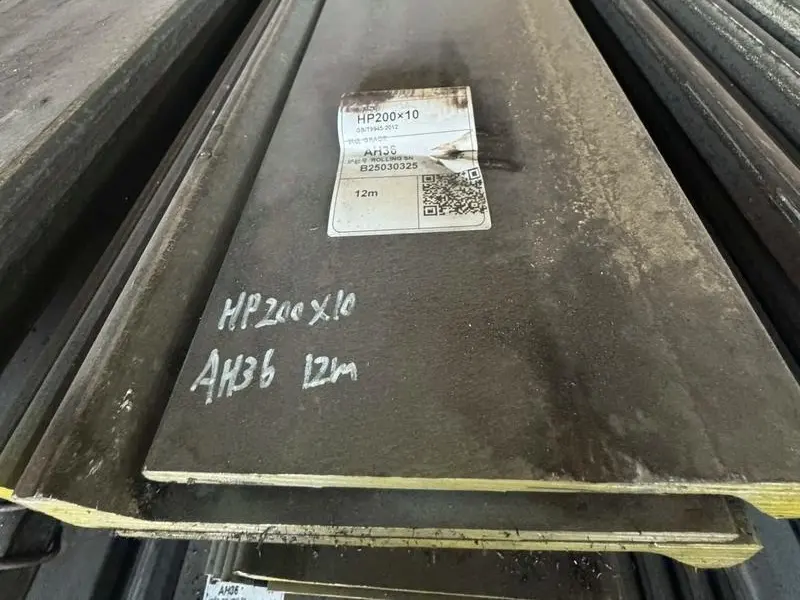
Why Does Bulk Delivery Hurt Project Efficiency?
Many buyers think ordering everything at once is cheaper. But I have seen the hidden costs. First, you need a big storage area. Shipyards often have limited space. If you get 500 tons of bulb flat steel in one week, you need to stack it somewhere. That takes up space that could be used for assembly. Second, you pay for that storage. Either you rent extra yard space, or you pay demurrage charges at the port. Third, your cash flow gets tied up. You pay for all the steel at once, even though you only need the first 20 tons for the first month.
On the other side, if you order just-in-time from separate vendors, you risk delays. One vendor misses the delivery date by a week. Then your whole project stops because you have no steel.
What Are the Gains from Phased Deliveries?
With an integrated supplier, we keep a buffer stock of common bulb flat steel sizes. Then we ship in phases based on your construction schedule. Here is a comparison table:
| Factor | Bulk delivery | Phased delivery from integrated supplier |
|---|---|---|
| Storage space needed | Large, upfront | Small, just enough for current phase |
| Cash flow | Pay 100% early | Pay per phase as steel arrives |
| Risk of project stop | Low if steel arrives, but high if damaged | Low because supplier holds safety stock |
| Flexibility to change | Very hard | You can adjust next phase dates |
How Does Flexible Scheduling Work in Real Projects?
Let me give you an example from our work with a project contractor in Qatar. They were building several oil tankers. The original schedule asked for 100 tons of bulb flat steel per month for five months. But after two months, the shipyard speeded up. They needed 150 tons in month three. In a traditional setup, the buyer would have to call the mill, ask for extra production, wait for a new rolling slot, and then arrange urgent shipping. That would take at least six weeks.
But because we use integrated supply, we had extra stock in our Liaocheng warehouse. The client sent us a new request. We checked the stock. We had enough. Then we scheduled a new shipment for the same month. The client did not have to wait for mill production. He just paid for the extra tons and got the steel in three weeks.
The same flexibility works for delays. If a client in Thailand needs to slow down, we can hold the remaining steel in our warehouse. We do not charge extra storage for the first 30 days. That gives the client breathing room.
This kind of phased and flexible delivery is only possible when the same supplier controls the stock and the shipping. Separate vendors cannot do it because they do not have visibility into each other’s schedules.
Conclusion
Integrated supply cuts lead time, removes communication headaches, simplifies documents, and gives you flexible delivery. Your project runs smoother.