
A floating platform sits in rough seas for 30 years. The wrong steel plate can crack and sink the whole structure.
Marine steel plates for floating structures like FPSOs, semi-submersibles, and jack-up platforms need high-strength grades (AH36, DH36, EH36), good weldability, and extra impact toughness. Splash zones require corrosion allowances and coatings. Critical nodes need ultrasonic testing to find laminations. I have supplied plates for offshore projects in Mexico, Qatar, and Malaysia.
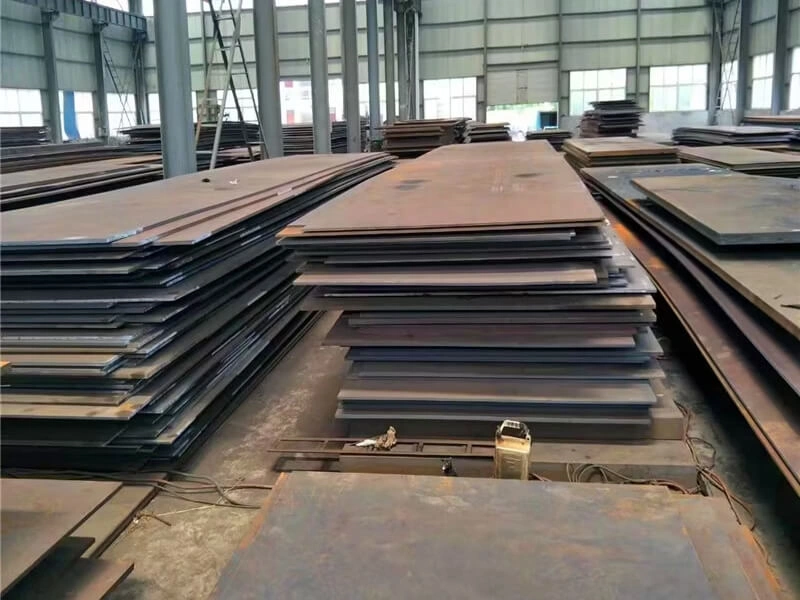
Floating structures are not like ships. They stay in one place for decades. The steel choice is more demanding. Let me walk you through the grades, the selection for different parts, corrosion protection, and tougher testing requirements.
What Steel Grades Work Best for FPSO Hulls and Floating Production Units?
An FPSO (Floating Production Storage and Offloading) vessel sits on the same spot for 20 to 30 years. It does not move much, but waves hit it from all directions.
For FPSO hulls1 and floating production units, use AH362 for most of the hull and deck. For the turret area3 (where the vessel rotates around its mooring), use DH36 or EH36 because of higher fatigue loads. For topside modules (the production equipment), use higher-strength grades like EH40 or EH50 for weight savings. I supplied DH36 plates for an FPSO turret in Brazil. The project required impact toughness4 at -20°C because of deep-water temperatures.
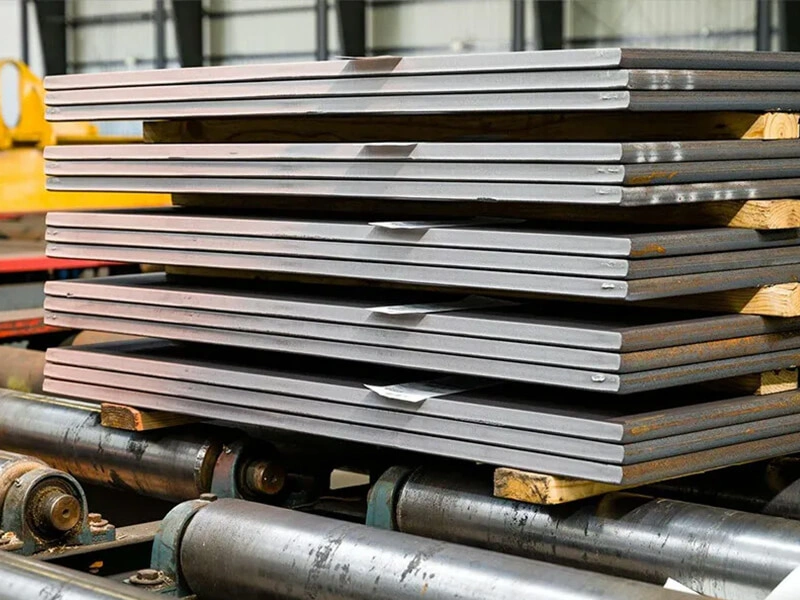
Let me break down the grade selection by zone.
I am Zora Guo. I have supplied marine steel plates for offshore projects in more than 10 countries. A buyer in Mexico once asked for Grade A plates for an FPSO hull. I told him: “That is not allowed. Class rules require high-strength steel for the bottom and side shell of floating production units.” He changed his order to AH36.
Hull bottom and side shell (the main body)
The hull of an FPSO is similar to a tanker. But it never gets a break. Waves hit it constantly. Fatigue is the main risk.
- Recommended grade: AH36 (yield 355 MPa)
- For water depths below 500m and cold currents: DH36 (impact at -20°C)
- Thickness: 15mm to 40mm depending on design
Turret and mooring area
The turret is the most stressed part. The vessel rotates around it. The mooring chains pull from below.
- Recommended grade: DH36 or EH36
- Impact toughness: 34J at -20°C or -40°C
- Thickness: 25mm to 60mm (thick plates)
- Extra requirement: Ultrasonic testing (UT) on 100% of the plate area (no laminations allowed)
Topside modules (production decks and equipment supports)
The topside holds heavy equipment. Weight is critical. Using higher-strength steel allows thinner plates.
- Recommended grade: EH40 (yield 390 MPa) or EH50 (yield 490 MPa)
- Impact toughness: 34J at -20°C or -40°C
- Thickness: 6mm to 20mm
Deck and helideck
The deck needs good weldability for attaching equipment.
- Recommended grade: AH36 or DH36
- Thickness: 10mm to 25mm
Here is a quick reference table for FPSO steel grades:
| Zone | Grade | Impact temperature | Typical thickness (mm) |
|---|---|---|---|
| Hull bottom | AH36 or DH36 | 0°C or -20°C | 15-40 |
| Turret | DH36 or EH36 | -20°C or -40°C | 25-60 |
| Side shell | AH36 | 0°C | 12-25 |
| Topside modules | EH40 or EH50 | -20°C | 6-20 |
| Deck | AH36 or DH36 | 0°C or -20°C | 10-25 |
I remember a buyer in Malaysia who built an FPSO for deep-water operation. The class society required DH36 for the turret with UT on every square meter. We supplied the plates with full traceability. The project passed inspection with no issues.
How to Choose Marine Steel Plates for Offshore Platform Decks, Legs, and Bracing?
Fixed platforms sit on the seabed. Jack-up platforms have legs that go up and down. Each part needs a different steel plate.
For platform decks, use AH361 for main beams and Grade A for non-structural floors. For legs on jack-up rigs, use high-strength grades like EH362 or EH40 because the legs take huge compression and bending. For bracing3 (the X-bars between legs), use AH36 or DH36 with good fatigue resistance4. I supplied EH36 plates for jack-up legs5 in Qatar. The legs were 80mm thick – the thickest I have ever shipped.
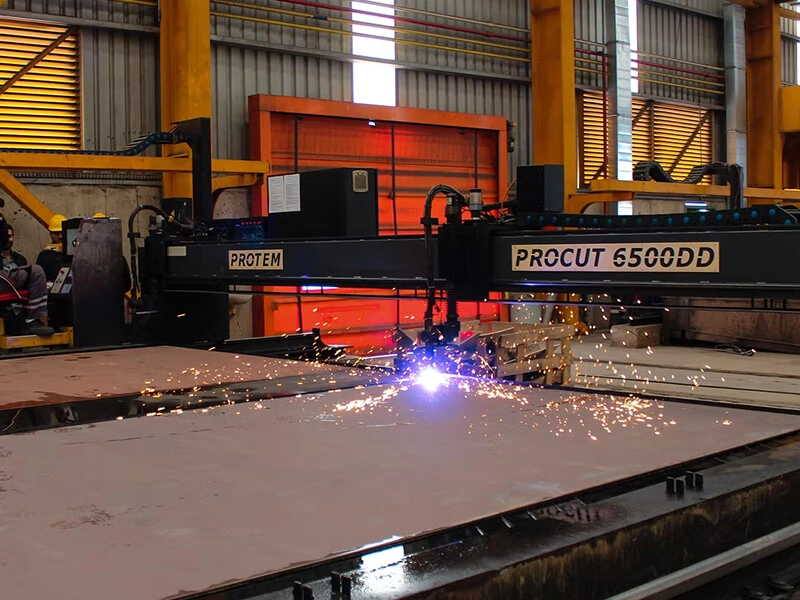
Let me go zone by zone.
I am Zora Guo. A buyer in Saudi Arabia was building a fixed platform for an oil field. He asked me: “Do I need high-strength steel for the bracing?” I looked at the water depth (60m) and the wave height. I recommended AH36 for the main legs and DH36 for the bracing because of fatigue from wave action.
Platform decks
The deck holds drilling equipment, living quarters, and helipads. It is similar to a building structure but with wave-induced motion.
- Main beams and girders: AH36 (thickness 15-30mm)
- Floor plates and grating supports: Grade A (thickness 6-12mm)
- Helideck support structure: DH36 (impact toughness for cold nights)
Jack-up legs (the tall truss legs that go up and down)
Jack-up legs are the most demanding. They are long trusses that go through the water and into the seabed. They take compression, bending, and impact from waves.
- Grade: EH36 or EH40 (yield 355-390 MPa)
- Thickness: 40mm to 100mm (very thick)
- Impact toughness: 34J at -20°C minimum, often -40°C for North Sea
- Extra requirement: Through-thickness testing (Z-direction) to avoid lamellar tearing
Bracing (diagonal bars between legs)
Bracing stops the legs from buckling. It takes tension and compression as waves hit the platform.
- Grade: AH36 or DH36
- Thickness: 20mm to 40mm
- Fatigue is the main concern. Use plates with good surface quality and no laminations.
Piles and pile sleeves (for fixed platforms)
Fixed platforms are held to the seabed by piles (long steel tubes driven into the ground). The pile sleeves are welded to the platform legs.
- Grade: AH36 or DH36
- Thickness: 25mm to 50mm
- Weldability is critical because piles are welded underwater.
Here is a summary table for platform components:
| Component | Typical grade | Thickness range (mm) | Special requirement |
|---|---|---|---|
| Deck main beams | AH36 | 15-30 | Good weldability6 |
| Deck floor plates | Grade A | 6-12 | Low cost |
| Jack-up legs (truss) | EH36/EH40 | 40-100 | Through-thickness testing |
| Bracing | AH36/DH36 | 20-40 | Fatigue resistance |
| Piles and sleeves | AH36/DH36 | 25-50 | Weldability for underwater welding |
I once supplied 80mm EH36 plates for jack-up legs going to a rig in Qatar. The plates were so thick that each one weighed 8 tons. The mill had to use a special rolling process. We did ultrasonic testing on every square centimeter. No laminations were found. The legs are still working after 5 years.
What Corrosion Protection and Thickness Allowances Are Needed for Splash Zones?
The splash zone1 is the worst place. Waves wet the steel, then air dries it. Salt crystals form. Corrosion happens very fast.
In the splash zone, steel corrodes 3 to 5 times faster than fully submerged steel. Class societies require a thickness allowance of 3mm to 6mm extra on top of the design thickness. You also need a coating system2 (epoxy or polyurethane) plus cathodic protection3. I have seen splash zone corrosion eat through a 15mm plate in 8 years because the owner did not add the allowance. The repair cost was $500,000.

Let me explain how to protect your steel.
I am Zora Guo. A buyer in the Philippines had a small platform. He did not add any thickness allowance for the splash zone. After 10 years, the platform legs had deep pits. Some pits were 8mm deep. The legs were unsafe. He had to install steel collars around the damaged area. That cost him more than the original platform.
What is the splash zone?
The splash zone is the area of a platform leg or hull that goes from the lowest wave trough to the highest wave crest, plus a margin. Typically, it is from 2m below mean water level to 5m above. In rough seas, it can be 10m high.
Corrosion rate in different zones
| Zone | Typical corrosion rate4 (mm per year) | Protection needed |
|---|---|---|
| Atmospheric (above splash) | 0.1 – 0.2 | Paint coating |
| Splash zone | 0.5 – 1.0 | Thickness allowance + heavy coating |
| Tidal zone | 0.3 – 0.5 | Coating + cathodic protection |
| Fully submerged | 0.1 – 0.2 | Cathodic protection (sacrificial anodes) |
| Buried in seabed | 0.05 – 0.1 | None (low oxygen) |
A 0.5mm per year corrosion rate means a 15mm plate will lose 5mm in 10 years. That is a 33% loss of thickness. The plate becomes weak.
Thickness allowance
Class societies like DNV and ABS require a corrosion allowance5 for the splash zone. The allowance is added to the structural design thickness.
For a platform designed to last 20 years:
- Design thickness for strength: 15mm
- Corrosion allowance: 4mm (0.2mm per year x 20 years)
- Total nominal thickness: 19mm
Some owners add even more allowance for safety.
Coating systems for splash zone
A simple paint is not enough. You need a multi-layer system:
- Surface preparation – Blast cleaning to SA 2.5 (near-white metal)
- Primer – Zinc-rich epoxy, 50-75 microns
- Intermediate coat – High-build epoxy, 150-200 microns
- Top coat – Polyurethane or glass flake epoxy, 100-150 microns
Total dry film thickness: 300-400 microns (much thicker than normal marine paint)
Cathodic protection
Even with coating and allowance, you need sacrificial anodes (zinc or aluminum) attached to the structure. They corrode instead of the steel. Anodes in the splash zone need to be replaced every 5 to 10 years.
Inspection and maintenance
- Inspect the splash zone every 2-3 years using divers or ROVs.
- Measure remaining thickness with an ultrasonic gauge.
- If thickness is below the minimum, add a welded patch or a steel collar.
Here is a simple checklist for your platform design:
| Item | Requirement |
|---|---|
| Splash zone height | From -2m to +5m above mean water level |
| Corrosion allowance | 3-6mm extra thickness |
| Coating system | Zinc epoxy + high-build epoxy + top coat (300-400 microns) |
| Cathodic protection | Sacrificial anodes within 1m of splash zone |
| Inspection frequency | Every 2-3 years |
I always advise my buyers: “Do not save money on the splash zone. That is where your platform will fail first.”
Why Do Floating Structures Require Stricter Impact Toughness and Ultrasonic Testing?
A ship moves through waves. A floating structure stays still and takes wave hits from all sides. The fatigue loading is higher. The risk of brittle fracture1 is also higher.
Floating structures require stricter impact toughness2 because they operate in the same location for decades. North Sea platforms need EH36 with Charpy impact3 of 34J at -40°C. Ultrasonic testing (UT) is required on 100% of plates thicker than 20mm in critical nodes (turret, leg-to-brace connections). Laminations that are acceptable in a ship hull are not allowed in a floating platform. I supplied UT-tested plates for a semi-submersible in Malaysia. The class society rejected 5% of the plates from another supplier because of small laminations4.
[^5] for floating structures](https://cnmarinesteel.com/wp-content/uploads/2026/01/Marine-steel-plate-32.webp)
Let me explain the higher standards.
I am Zora Guo. A buyer in Vietnam was building a jack-up rig for the South China Sea. He ordered AH36 plates with standard UT (10% sample). The class society said no. They required 100% UT on all plates thicker than 20mm. The buyer had to reorder from a mill that could do full UT. That added 2 weeks and 5% cost. But it was necessary.
Why impact toughness is stricter
Floating structures face two problems:
- Long-term fatigue – Waves hit the same spot millions of times over 20-30 years. A small crack can grow into a big failure.
- Low temperatures – In the North Sea or deep water, the steel can be near freezing. Brittle fracture is a real risk.
Class society rules for floating structures (DNV-OS-C1016, ABS Offshore Rules) require:
- For fixed platforms in warm waters: AH36 (0°C impact)
- For floating production units in moderate climates: DH36 (-20°C impact)
- For North Sea, Arctic, or deep-water: EH36 or EH40 (-40°C impact)
Some projects require CTOD (Crack Tip Opening Displacement) testing. This is a more advanced test for thick plates in very cold conditions. CTOD ensures that even if a crack exists, it will not run far.
Why ultrasonic testing (UT) is stricter
Laminations are internal separations in the steel plate. In a ship hull, small laminations are allowed (up to 10mm diameter) because the stress is lower. In a floating platform, especially at welded nodes (where legs meet bracing), any lamination can cause a crack to start.
For offshore structures, the UT requirements are:
- 100% of plate area for thickness >20mm in primary structure (legs, turret, chord members)
- No laminations allowed in the weld zone (a 50mm band around each edge)
- Any lamination larger than 5mm is a reject
For comparison:
- Shipbuilding UT: sample 10-20%, accept laminations up to 10mm
- Offshore UT: 100% inspection, reject laminations >5mm
Extra testing for thick plates
Plates over 40mm thick (common in jack-up legs) also need through-thickness testing7 (Z-direction). This tests the steel’s ability to resist pulling apart through its thickness. Minimum reduction of area is 25% for Z25 grade, 35% for Z35.
How to specify the right testing
When you order marine steel plates for floating structures, write this in your purchase order:
- “Impact toughness: 34J at -40°C for EH36 grade”
- “Ultrasonic testing: 100% of plate area, acceptance per ASTM A578 Level C (no laminations larger than 3mm)”
- “Through-thickness testing: Z35 grade required for plates >40mm”
Here is a comparison table:
| Requirement | Standard shipbuilding | Floating structures (offshore) |
|---|---|---|
| Impact test temperature | 0°C (AH36) | -20°C to -40°C (DH36/EH36) |
| UT coverage | 10-20% sample | 100% for plates >20mm |
| Lamination acceptance | Up to 10mm | None >5mm |
| Through-thickness testing | Not required | Z35 for plates >40mm |
I recently supplied EH36 plates for a semi-submersible platform in Malaysia. The mill did 100% UT and provided Z35 certification. The class society approved every plate. The buyer told me: “Zora, your steel is the only batch that passed inspection on the first try.”
Conclusion
Use high-strength grades (AH36, DH36, EH36) with extra impact toughness. Add corrosion allowance in splash zones. Require 100% UT for thick plates.
My Personal Insights (from 10+ years in marine steel export)
I am Zora Guo. My team in Liaocheng supplies marine steel plates for FPSOs, jack-up rigs, and fixed platforms. We provide EN 10204 Type 3.2 certificates with Charpy impact at -20°C or -40°C. We also arrange 100% UT and Z35 testing. Send me an email at sales@chinaexhaustfan.com or visit cnmarinesteel.com. Tell me your platform type, water depth, and operating temperature. I will send you a steel specification and a delivery quote.
-
Learn about brittle fracture mechanisms and prevention strategies to enhance the safety of floating structures. ↩ ↩ ↩ ↩
-
Understanding impact toughness is crucial for ensuring the safety and longevity of floating structures in harsh environments. ↩ ↩ ↩ ↩
-
Discover the importance of Charpy impact testing in assessing the toughness of materials used in offshore platforms. ↩ ↩ ↩ ↩
-
Understanding laminations helps in recognizing potential risks in steel quality for floating structures. ↩ ↩ ↩ ↩
-
Explore how ultrasonic testing ensures the integrity of marine structures, preventing failures due to hidden defects. ↩ ↩
-
Familiarize yourself with DNV-OS-C101 standards to ensure compliance and safety in floating structure design. ↩ ↩
-
Learn about through-thickness testing and its role in ensuring the reliability of thick steel plates in marine applications. ↩