
Your ship’s hull flexes in rough seas. Cracks start near the corners. That is a dangerous sign.
Marine L‑shaped steel adds stiffness to the hull. Its 90‑degree shape resists bending and twisting. It spreads loads across decks and bulkheads. This keeps the whole structure stable for decades.
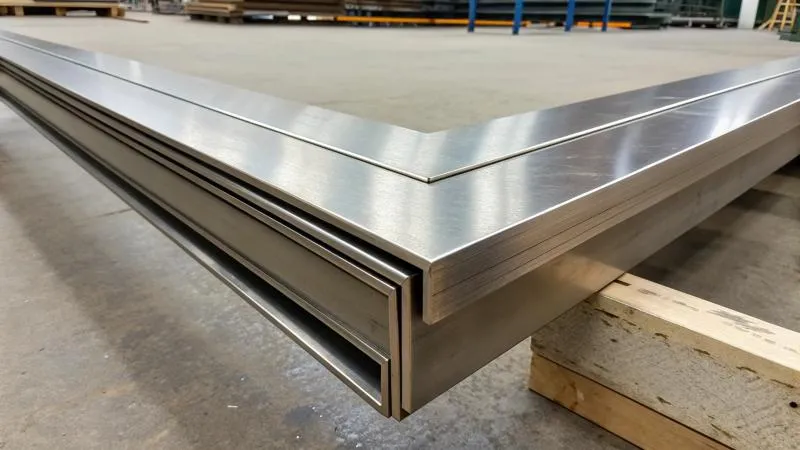
I have supplied L‑shaped section steel to shipbuilders for more than ten years. I have seen how the right profile makes a hull strong. I have also seen cheap steel fail. Let me walk you through four questions. Each one explains why L‑steel is so good at keeping ships safe and stiff.
How Does the 90‑Degree Shape of L‑Steel Resist Bending and Twisting in Ship Hulls?
A flat plate bends when you push it from the side. An L‑shape does not. Why? Because the two legs work together.
The 90‑degree shape creates a high moment of inertia. That means it takes a lot of force to bend or twist it. The vertical leg stops sideways movement. The horizontal leg stops up‑and‑down movement. Together, they lock the steel in place.
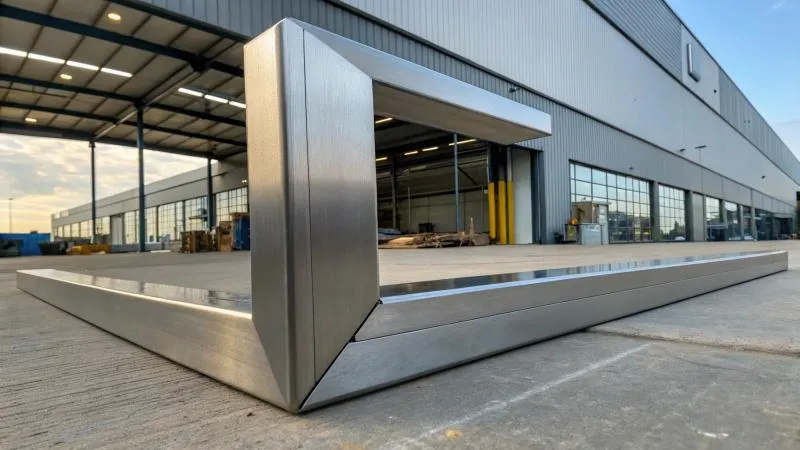
Let me give you a real example. A few years ago, a customer in Vietnam built a small cargo ship. He used flat plates for the side stiffeners. After six months at sea, the plates bowed inward. The hull looked like it had a dent. He called me and asked for L‑shaped steel instead. We replaced the flat plates with L 150x90x10 mm sections. The problem never came back.
So why does the L shape work so well? I will break it down.
Three reasons the 90‑degree shape resists bending and twisting
| Property | What it means | How L‑steel uses it |
|---|---|---|
| Moment of inertia | Resistance to bending | The two legs spread material far from the neutral axis |
| Torsional constant | Resistance to twisting | The corner adds stiffness that a flat bar does not have |
| Section modulus | Strength per unit weight | L‑steel gives more strength than a flat plate of the same weight |
Think of a piece of paper. A flat sheet bends easily. But fold it into an L shape. Now it is much harder to bend. That is the same idea with steel. The 90‑degree angle creates a structural shape. Forces try to bend the steel. But the two legs support each other. The vertical leg pulls. The horizontal leg pushes. They work as a team.
In a ship hull, waves push against the side. That force wants to bend the steel inward. Without L‑shaped stiffeners, the hull plates would oilcan. That means they pop in and out. That movement creates fatigue cracks. L‑steel stops that movement.
Another point is the corner radius. A good L‑shaped section has a smooth inner corner. That corner distributes stress. A sharp corner would concentrate force. That leads to cracks. So the shape itself is smart. It is not just a bent plate. It is rolled as one piece. The grain of the steel follows the shape. That makes it even stronger.
I always tell my customers: “If you want a stiff hull, use L‑shaped steel for your longitudinals and frames.” Do not try to save money with flat bars. You will pay more in repairs later.
What Role Do L‑Sections Play in Distributing Loads Between Decks, Bulkheads, and Frames?
You put a heavy container on the deck. The deck tries to sag. That force goes somewhere. Where? Into the bulkheads and frames.
L‑sections act as load paths. They catch the force from the deck and send it down to the bottom of the ship. They also take force from the side and spread it to the bulkheads. Without these connections, the hull would break at the joints.

I remember a repair job in the Philippines. An old tanker had cracks near the deck‑to‑bulkhead joint. The original design used small flat bars as connectors. Those bars bent over time. The load had nowhere to go. So the crack grew. We replaced the flat bars with L 120x80x8 mm sections. The cracks stopped spreading. The owner told me the ship felt more solid in rough weather.
So how does L‑steel distribute loads? Let me show you.
Three load paths that L‑sections create
| Connection point | Force direction | How L‑steel helps |
|---|---|---|
| Deck to side frame | Vertical downward | L‑steel web carries shear force from deck to frame |
| Bulkhead to bottom | Horizontal and twisting | Flange of L‑steel resists rotation and keeps bulkhead straight |
| Longitudinal to transverse frame | Crossing directions | L‑steel bracket (often cut from same section) transfers load around corners |
In simple terms, think of the ship as a skeleton. The L‑sections are the bones that connect the ribs. When you step on the deck, your weight goes down. The deck plate bends a little. But the L‑section under the deck catches that bend. It turns the downward force into a pulling force along its length. That pull goes to the nearest bulkhead. The bulkhead spreads it to the bottom. This happens in milliseconds. And it happens thousands of times during a ship’s life.
A bad design uses point connections. A small weld here. A small bracket there. The load concentrates in one spot. That spot cracks. A good design uses continuous L‑sections. They run from one bulkhead to the next. The load spreads evenly.
Another role is alignment. L‑sections have a natural 90‑degree corner. That corner fits perfectly into the corner between a deck and a bulkhead. You do not need to guess the angle. It is already correct. This saves welding time and reduces errors.
I also want to mention the flange width. A wider flange spreads the load over a larger area. For heavy loads, use a larger L‑section. For light loads, a smaller one is fine. I help my customers choose the right size based on their ship’s class rules. ABS, DNV, and LR all have tables for minimum L‑section dimensions.
So L‑steel is not just a stiffener. It is a load‑sharing network. One piece connects to the next. The whole hull works together.
How Do Proper Connection Details (Brackets, Sniped Ends) Prevent Local Cracking and Maintain Stability?
You weld an L‑shaped beam to a bulkhead. The weld ends in a sharp corner. That sharp corner cracks after 10,000 waves.
Proper connection details mean you cut the end of the L‑section at a slope (sniped end) and use soft brackets. This removes the stress concentration. The crack does not start. The connection stays stable for the life of the ship.
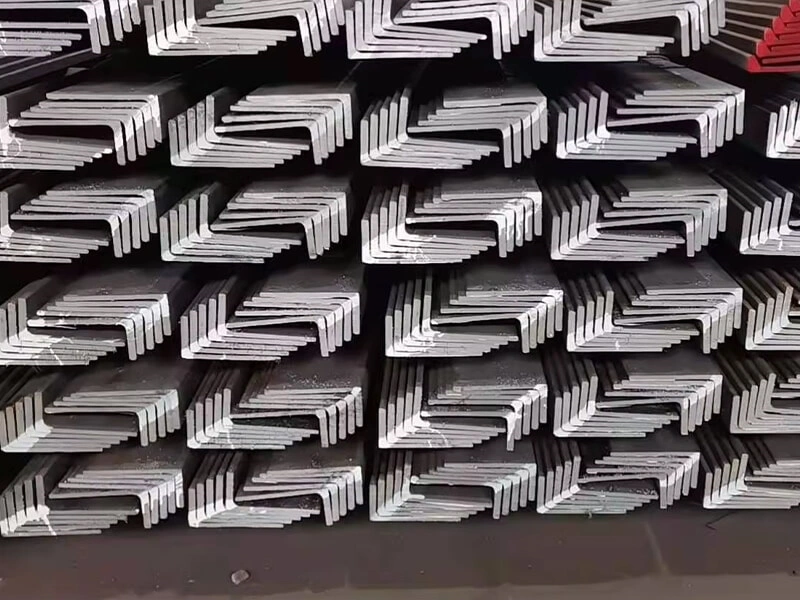
I saw a failure in a Mexican fishing boat. The builder welded L‑sections directly to the bulkhead. No snipped ends. No brackets. After 18 months, every weld had a crack. The boat was leaking. The repair cost more than the original steel. The builder called me and asked for help. I sent him a drawing of how to snip the ends. He fixed the remaining L‑sections before they cracked.
So what is a snipped end? You cut the end of the L‑section at a 45‑degree or 60‑degree angle. You do not leave it square. A square end creates a hard spot. The weld starts and stops at that hard spot. That is where cracks begin. A snipped end makes the weld end gradually. No hard spot. No crack.
Three connection details that prevent cracking
| Detail | What it looks like | Why it works |
|---|---|---|
| Sniped end | The L‑section end is cut at an angle | Stress flows smoothly around the corner |
| Soft bracket | A small triangular plate between L‑section and bulkhead | Spreads the load over a larger area |
| Continuous weld with run‑off tabs | Weld starts and ends on a small piece of scrap steel | No weld crater on the actual structure |
Brackets are another simple fix. A bracket is a small piece of steel plate. It looks like a triangle. You weld it into the corner between the L‑section and the bulkhead. That bracket takes some of the load. It reduces the load on the main weld. Brackets are cheap. They take ten minutes to cut and fit. But they double the life of the connection.
I also recommend a specific weld type. Do not use a single‑pass fillet weld for heavy loads. Use a double‑sided fillet weld. Weld both sides of the L‑section leg. That gives you twice the weld throat. The load spreads more evenly.
Now let me talk about a mistake I see often. Some builders think a bigger L‑section solves all problems. They use L 200×200 when L 100×100 is enough. But the big section still has poor connection details. It still cracks. Size does not fix bad welding. Good details fix bad welding.
A good rule of thumb: the snipped end should be at least one and a half times the leg length. For example, if the L‑section leg is 100 mm, the snipped end should be 150 mm long. That gives a gentle slope.
I also suggest using a soft toe grinding tool. After welding, grind the weld ends smooth. Remove any notches. A notch as small as 1 mm can start a crack; studies on weld fatigue and burr grinding show measurable reductions in fatigue life from small notches and benefits from toe grinding and peening [55][12]. Grinding takes two minutes per connection. It is cheap insurance.
So remember: the L‑section itself is strong. But the connection is the weak link. Pay attention to snipped ends, brackets, and weld quality. These small details keep your hull stable for decades.
Why Is L‑Shaped Steel’s High Strength‑to‑Weight Ratio Critical for Long‑Term Hull Stiffness?
A heavy ship carries less cargo. A weak ship breaks. You need both light and strong. That is the strength‑to‑weight ratio.
L‑shaped steel has a high strength‑to‑weight ratio because its shape puts material where it works hardest. The flange takes tension. The web takes shear. The corner resists twisting. This means you use less steel to get the same stiffness. The ship is lighter. It stays stiff for longer without sagging.
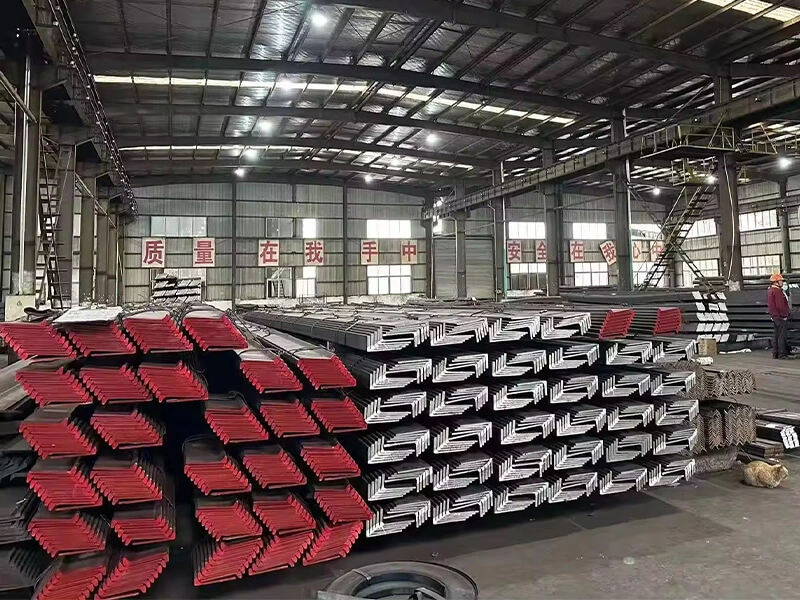
I worked with a customer in Romania who built river barges. He used heavy flat bars for stiffeners. His barges were strong but heavy. Each barge carried 10% less cargo because the steel weighed too much. He switched to L‑shaped sections of the same weight per meter. The stiffness went up by 40%. The barge got lighter. He could carry more cargo. He made more money.
So why is the strength‑to‑weight ratio so important for long‑term stiffness? Let me explain.
What high strength‑to‑weight gives you over time
| Benefit | Short‑term effect | Long‑term effect |
|---|---|---|
| Less deadweight | Ship sits higher in water | Less hull stress in rough seas |
| More cargo capacity | More revenue per trip | Ship pays for itself faster |
| Lower center of gravity | More stable in turns | Less rolling means less fatigue |
| Smaller welding volume | Faster construction | Fewer weld‑related cracks later |
Stiffness is not just about the first day. It is about year ten. A heavy hull sags over time. The weight of the steel itself pulls the hull down. That sag creates stress. The stress creates cracks. A light hull made from high‑strength L‑sections does not sag as much. The steel is thinner but shaped better. It holds its shape.
Another way to see it is the moment of inertia per kilogram. A flat plate has a low moment of inertia for its weight. An L‑section has a high moment of inertia for the same weight. That means the L‑section is more efficient. You get more stiffness for the same money.
I compare it to a human bone. A bone is hollow. It is light but strong. The shape matters more than the amount of material. L‑steel is the same. The 90‑degree shape gives you stiffness without extra tons.
Let me give you numbers. A flat bar 100 mm wide and 10 mm thick weighs about 7.8 kg per meter Steel weight calculator. Its moment of inertia is very low. An L‑section 100x100x10 mm weighs about 15 kg per meter. That is twice the weight. But its moment of inertia is about ten times higher. So for only twice the weight, you get ten times the stiffness. That is a good trade.
For long‑term hull stiffness, you also need corrosion allowance. L‑steel usually comes with a corrosion allowance. That means the flange and web are slightly thicker than the minimum. Over time, rust eats away some steel. But the L‑shape still works because the extra thickness is built in. Flat bars often do not have this allowance. They rust thin and then bend.
I always recommend ordering L‑shaped steel with a 2 mm corrosion allowance on all surfaces. That adds about 10% to the weight. But it doubles the life of the stiffener. In harsh environments like oil tankers, that is critical.
So the high strength‑to‑weight ratio of L‑steel is not a marketing claim. It is a real engineering benefit. It makes your ship lighter, stiffer, and longer‑lasting.
Conclusion
Marine L‑shaped steel resists bending, spreads loads, and keeps ships stiff for decades. Choose good connections and the right size.