
Visiting an offshore platform construction site in Qatar showed me how marine steel plates withstand extreme ocean forces. The material selection directly impacts platform safety.
Marine steel plates form the primary structural components of offshore platforms, providing strength, corrosion resistance, and durability. These specialized plates serve in jacket legs, deck structures, module supports, and splash zones where they withstand harsh marine environments and dynamic loading conditions for decades.
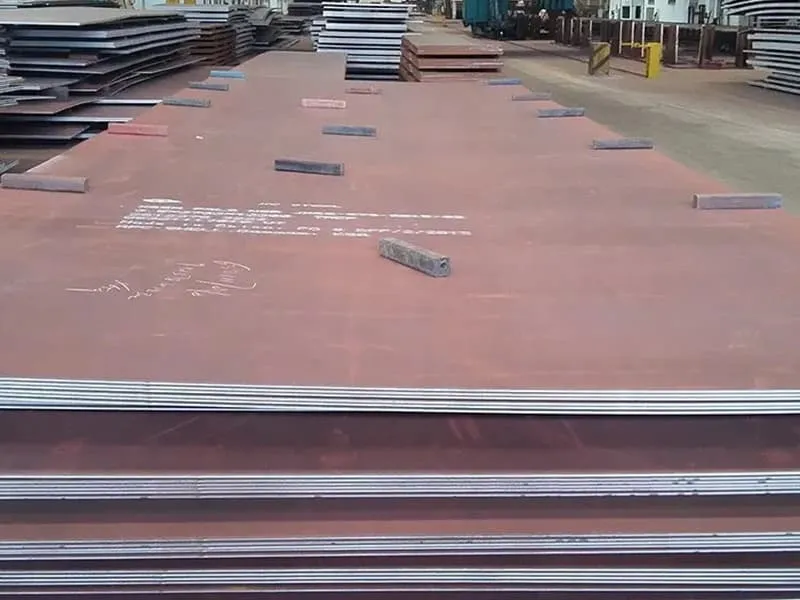
Offshore platforms demand the highest quality marine steel. Understanding their applications helps ensure proper material selection for these critical structures.
What is a marine plate1?
A platform contractor from Saudi Arabia confused marine plate1s with regular structural steel. This misunderstanding could have compromised their entire project.
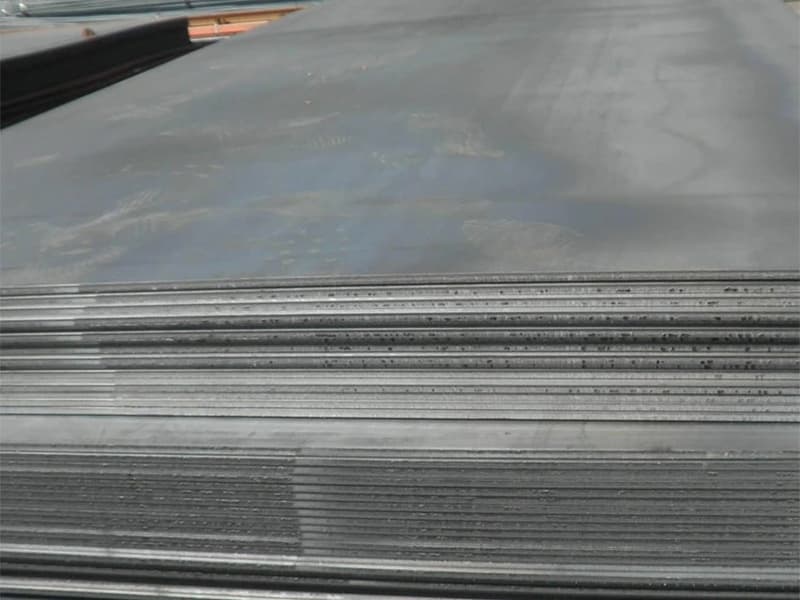
A marine plate1 is specialized steel designed for shipbuilding and offshore structures, featuring enhanced corrosion resistance2, controlled mechanical properties3, and classification society certification4. These plates undergo rigorous testing to ensure performance in saltwater environments and withstand dynamic marine loading conditions.
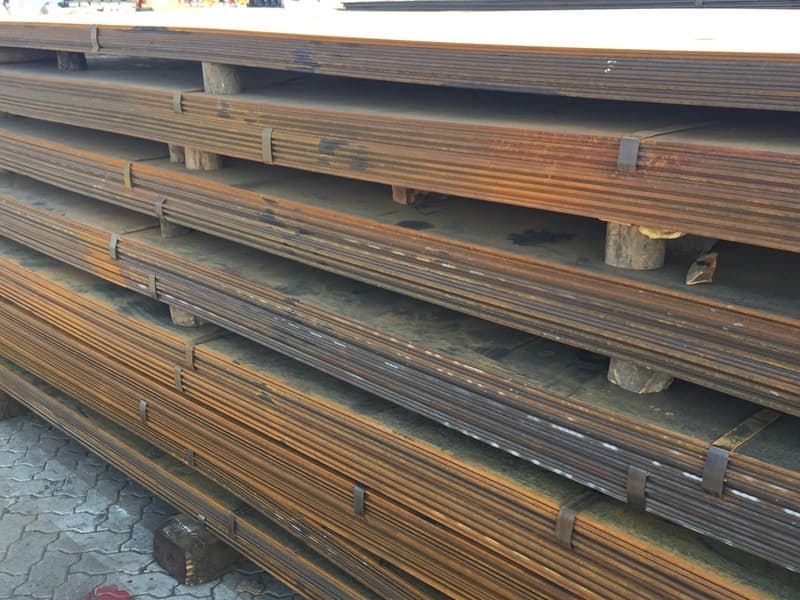
Understanding Marine Plate Specifications
Marine plates differ significantly from conventional structural steel. Their unique properties make them suitable for the demanding marine environment.
Specialized Chemical Composition
Marine plates contain carefully controlled chemical elements. The composition enhances corrosion resistance2 and mechanical properties3. Copper and chromium additions improve atmospheric corrosion resistance2. Carbon content stays low to ensure good weldability. Phosphorus and sulfur levels remain minimal to prevent embrittlement. This balanced composition creates optimal performance characteristics.
Enhanced Mechanical Properties
Marine plates offer superior mechanical properties3 compared to standard steel. Yield strength typically ranges from 235 MPa to 690 MPa depending on grade. Tensile strength maintains adequate safety margins above yield values. Elongation ensures good formability during fabrication. Impact toughness remains high at service temperatures. These properties ensure structural integrity under marine conditions.
Classification Society Certification
Marine plates require approval from recognized classification societies. American Bureau of Shipping (ABS) sets standards for marine applications. Det Norske Veritas (DNV) provides rules for offshore structures. Lloyd’s Register (LR) certifies materials for marine service. These organizations verify that the steel meets specific requirements through rigorous testing and mill audits.
Manufacturing Process Control
Marine plate production involves strict process controls. Thermomechanical controlled processing creates fine grain structures. Accelerated cooling enhances strength and toughness. Normalizing heat treatment ensures property uniformity. Each production step undergoes quality verification. The entire process maintains traceability from raw materials to finished plates.
Marine Plate Key Features
| Feature | Requirement | Benefit |
|---|---|---|
| Corrosion Resistance | Enhanced composition | Longer service life |
| Mechanical Properties | Controlled strength and toughness | Structural reliability |
| Weldability | Low carbon equivalent | Easy fabrication |
| Certification | Classification society approval | Quality assurance |
| Traceability | Complete documentation | Quality control |
We supply certified marine plate1s to offshore projects across Southeast Asia and the Middle East. Our clients in Malaysia and Qatar rely on these specialized materials for their critical marine structures.
What materials are used in offshore structures?
An engineering firm from Mexico planned their first offshore platform. Material selection became their primary concern for project success.
Offshore structures primarily use marine grade steel plates1 (AH36, DH36, EH36), high-strength steel grades2 (420 MPa, 460 MPa), corrosion-resistant alloys, stainless steel components, and specialized coatings. Material selection depends on structural location, environmental conditions, and design life requirements for each platform section.
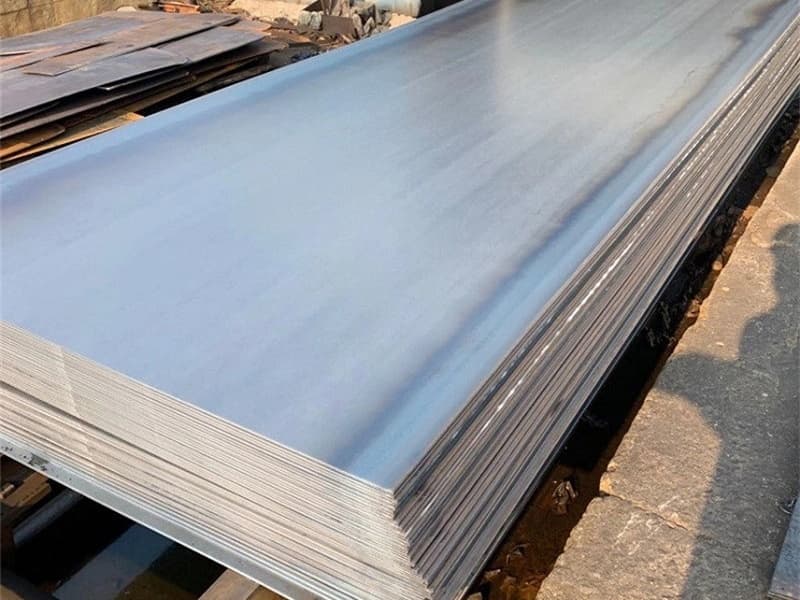
Comprehensive Offshore Material Selection
Offshore platforms utilize various materials optimized for different structural zones and environmental exposures. Each material serves specific purposes based on its properties and cost-effectiveness.
Primary Structural Steel
The main platform structure uses marine grade steel plates1. These plates form the jacket legs, braces, and deck beams. AH36 serves in temperate waters with moderate environmental conditions. DH36 provides better toughness for colder operating areas. EH36 offers maximum toughness for arctic environments. The selection depends on the platform’s geographical location and water temperature.
High-Strength Steel Applications
High-strength steels reduce weight in critical areas. Grades with 420 MPa and 460 MPa yield strength allow lighter sections. These steels maintain good weldability despite higher strength. They often serve in deck structures and crane pedestals. The weight reduction lowers fabrication and installation costs while maintaining structural capacity.
Corrosion Protection Systems
Offshore structures employ multiple corrosion protection methods. Sacrificial anodes provide cathodic protection below water. Protective coatings prevent corrosion in atmospheric zones. Corrosion allowances account for metal loss over the design life. Stainless steel components serve in critical areas. These systems work together to ensure long-term durability.
Specialized Materials
Certain platform areas require specialized materials3. Stainless steel serves in mechanical components and fasteners. Copper-nickel alloys work in seawater piping systems. Non-ferrous materials appear in electrical systems. Composites and plastics serve in secondary structures. Each material selection considers both performance and life-cycle cost.
Material Selection Criteria
Material choice involves balancing multiple factors. Mechanical properties must meet design requirements. Fabrication characteristics affect construction costs. Corrosion resistance determines maintenance needs. Availability influences project scheduling. Cost considerations include both initial and long-term expenses.
Offshore Structure Material Applications
| Platform Zone | Primary Materials | Alternative Materials | Key Considerations |
|---|---|---|---|
| Jacket Structure | DH36, EH36 | Higher strength grades | Fatigue resistance, toughness |
| Deck Structure | AH36, DH36 | High-strength steel | Weight optimization |
| Splash Zone | EH36 with extra protection | Corrosion-resistant alloy | Maximum corrosion protection |
| Atmospheric Zone | AH36 with coating | Weathering steel | Maintenance access |
| Subsea | DH36, EH36 | Special subsea grades | Cathodic protection |
We provide material selection guidance to offshore projects in Thailand and Philippines. Our experience helps clients optimize their material choices for both performance and economy.
What is the purpose of a steel plate?
A new engineer from Romania asked why we use plates instead of other steel forms. The answer lies in their unique structural advantages.
Steel plates provide flat, wide surfaces for structural applications, distributing loads efficiently and creating rigid connections. They serve as primary load-bearing elements1 in offshore platforms, ship hulls, and industrial structures while offering flexibility in fabrication and customization for specific project requirements.
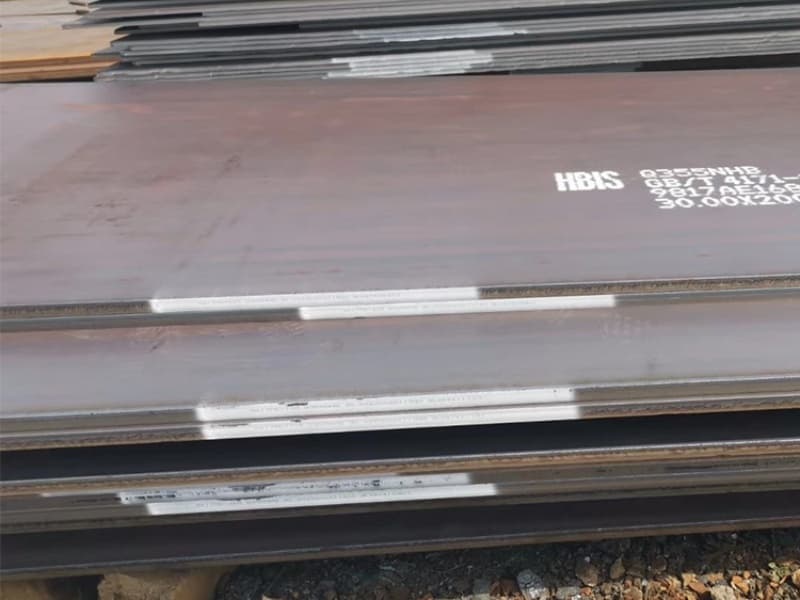
The Multifunctional Role of Steel Plates
Steel plates serve multiple purposes in offshore structures, from basic structural elements to specialized applications. Their versatility makes them indispensable in marine construction2.
Primary Structural Functions
Steel plates form the main load-carrying members in offshore platforms. They work as flanges for large girders and beams. Plates serve as web members in built-up sections. They create diaphragms that transfer loads between structural elements. Their flat surfaces provide ideal connection points for other members. This structural efficiency makes them fundamental to platform design.
Shell and Surface Applications
Plates create continuous surfaces in offshore structures. They form the outer shell of buoyancy tanks and chambers. Plates serve as deck surfaces for equipment placement. They create bulkheads that compartmentalize structures. Their smooth surfaces facilitate coating application and maintenance. These applications leverage the plate’s two-dimensional characteristics.
Fabrication and Manufacturing Flexibility
Steel plates offer unparalleled fabrication flexibility3. They can be cut to any shape using modern techniques. Plates bend and form into complex curves for special applications. They weld together to create larger assemblies. Machining operations create precise connection details. This adaptability supports innovative structural designs.
Customization and Optimization
Plates allow customization for specific project needs4. Thickness can vary to match stress requirements. Material grades can change based on environmental conditions. Surface treatments address specific corrosion challenges. Cutting patterns optimize material usage. This customization minimizes weight while maximizing performance.
Load Distribution Characteristics
The planar nature of plates enables efficient load distribution. They spread concentrated loads over larger areas. Plates transfer stresses smoothly between connected members. They resist buckling through their inherent stiffness. Their continuity prevents stress concentrations at connections. These characteristics enhance structural reliability.
Steel Plate Functional Applications
| Function | Typical Application | Plate Thickness | Key Benefit |
|---|---|---|---|
| Primary Structure | Jacket legs, deck beams | 20-100mm | High strength |
| Shell Plating | Buoyancy tanks, hulls | 10-40mm | Watertight integrity |
| Connection Elements | Gussets, stiffeners | 15-50mm | Load transfer |
| Special Components | Crane platforms, helipads | 30-80mm | Impact resistance |
| Reinforcement | Local strengthening | 10-30mm | Stress distribution |
Our clients in Pakistan and Myanmar utilize steel plates5 for various offshore applications. We help them select the right plate specifications for each structural purpose.
What is the difference between EH36 and DH36 steel?
A platform designer from Saudi Arabia needed to choose between EH36 and DH36 for their new project. The temperature requirements dictated their selection.
EH36 and DH36 steel differ primarily in impact test temperatures1 and toughness requirements. EH36 undergoes Charpy V-notch testing at -40°C while DH36 tests at -20°C, making EH36 suitable for arctic operations and DH36 ideal for temperate waters, with both maintaining 355 MPa minimum yield strength.
Detailed EH36 vs DH36 Analysis
Understanding the differences between EH36 and DH36 helps optimize material selection for specific environmental conditions and project requirements.
Impact Toughness Requirements
The fundamental difference lies in impact test temperatures1. DH36 requires minimum 34 joules at -20°C test temperature. EH36 demands the same energy absorption but at -40°C. This lower temperature capability makes EH36 suitable for colder environments. The enhanced toughness prevents brittle fracture in low-temperature service. This difference directly affects the steel’s application range.
Chemical Composition Variations2
EH36 typically has tighter composition controls than DH36. Carbon content may be slightly lower in EH36 for better toughness. Manganese levels might adjust to enhance low-temperature properties. Micro-alloying elements like niobium and vanadium help refine grain structure. Sulfur and phosphorus limits remain very low in both grades. These compositional differences support the varying toughness requirements.
Manufacturing Process Differences3
EH36 often requires more stringent processing than DH36. Controlled rolling parameters may be tighter for EH36. Accelerated cooling rates might be optimized for better toughness. Heat treatment practices could differ between the grades. More rigorous testing ensures EH36 meets its tougher requirements. These process variations justify the typically higher cost of EH36.
Application Environment Considerations4
DH36 serves well in most offshore environments except the coldest regions. It works for platforms in the Gulf of Mexico, Southeast Asia, and Middle East. EH36 becomes necessary for arctic and subarctic operations. These include platforms in the North Sea, Alaska, and Russian Arctic. The selection depends on the minimum service temperature expected.
Cost and Availability Factors5
DH36 generally costs less than EH36 due to simpler production requirements. DH36 has wider availability from more mills worldwide. EH36 may have longer lead times due to specialized production. The price difference typically ranges from 10-20% depending on market conditions. Projects balance performance needs with budget constraints.
EH36 vs DH36 Comprehensive Comparison
| Parameter | DH36 Steel | EH36 Steel | Significance |
|---|---|---|---|
| Impact Test Temperature | -20°C | -40°C | Service temperature range |
| Minimum Impact Energy6 | 34 joules | 34 joules | Fracture resistance |
| Typical Carbon Content | 0.16-0.18% | 0.14-0.16% | Weldability, toughness |
| Production Cost | Lower | Higher | Project budget |
| Common Applications | Temperate waters | Arctic operations | Geographical suitability |
| Availability | Wider | More limited | Sourcing flexibility |
We help clients in Vietnam and Romania select between these grades based on their specific project locations and environmental conditions. Proper selection ensures both safety and cost-effectiveness.
Conclusion
Marine steel plates provide the foundation for safe and durable offshore platforms. Understanding plate specifications and applications ensures optimal material selection for each project requirement.
-
Understanding impact test temperatures is crucial for selecting the right steel for specific environmental conditions. ↩ ↩ ↩ ↩ ↩ ↩ ↩ ↩ ↩
-
Exploring chemical composition helps in understanding the performance differences and suitability for various applications. ↩ ↩ ↩ ↩ ↩ ↩
-
Learning about manufacturing processes can reveal why one steel grade may be more suitable or cost-effective than the other. ↩ ↩ ↩ ↩ ↩ ↩
-
This resource will help you understand which steel is best suited for specific environmental conditions. ↩ ↩ ↩
-
Understanding cost and availability is essential for making informed decisions in project budgeting. ↩ ↩
-
Knowing the minimum impact energy is vital for assessing the fracture resistance of these steel grades. ↩