
Are you sourcing structural steel for offshore platforms? The wrong material choice can lead to catastrophic failures and massive cost overruns. Offshore engineering demands more from every component, especially from foundational elements like bulb flats.
Offshore wind farms and oil & gas platforms are massively increasing bulb flat steel consumption. These projects use bulb flats as critical stiffeners for foundation jackets, transition pieces, and floating structures. The steel must withstand extreme ocean forces, making its strength and corrosion resistance paramount for long-term durability and safety.
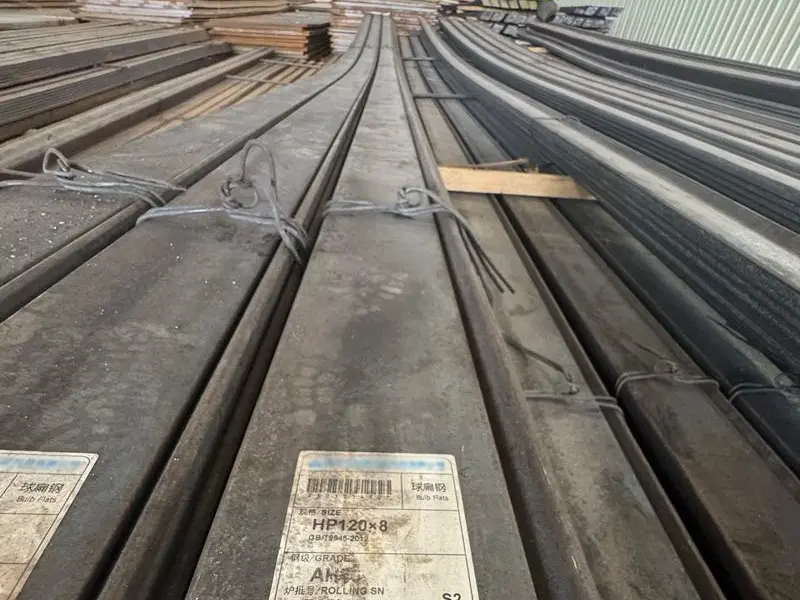
The connection between offshore growth and bulb flat demand is clear, but to truly grasp its importance, we need to start with the basics. Many procurement managers use these terms every day without fully understanding their technical definitions and specific applications. This knowledge gap can lead to costly specification errors. Let’s build a solid foundation by clearly defining what bulb flats, flat steel, and bulb bars are, and what they are made of.
What are bulb flats1 used for?
Do you think bulb flats1 are only for ship hulls? That’s a common misconception that limits their potential in your projects. In offshore construction, their role is even more critical and varied.
Bulb flats are primarily used as longitudinal stiffeners. They are welded to plates to prevent buckling under heavy loads. In offshore projects, they reinforce the legs of jacket foundations, strengthen the walls of monopiles, and add rigidity to floating platform pontoons and decks.
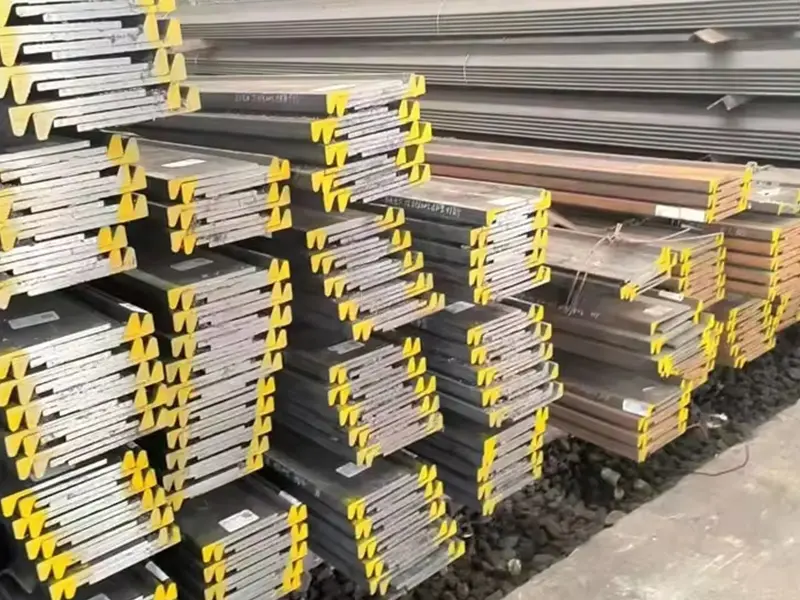
The Multifunctional Backbone of Offshore Structures
Calling bulb flats1 just "stiffeners" is like calling a ship’s engine just a "motor." It’s true, but it misses the depth of their engineering purpose. In the hostile offshore environment, every element has a multi-faceted job.
First, let’s talk about load distribution2. Offshore structures face constant, dynamic forces: waves, wind, and currents. A flat steel plate by itself would bend and flex under this pressure. By welding a bulb flat perpendicular to the plate, you create a "T" shape with a thickened edge (the bulb). This shape dramatically increases the section’s moment of inertia. In simple terms, it makes the assembly much harder to bend. The bulb flat takes the localized stress and spreads it along its length and into the connected structure. This prevents stress concentration at any single point, which is a common cause of fatigue cracks.
Second, consider their role in fatigue resistance3. Offshore structures are designed for 25-30 years of non-stop operation. They endure millions of stress cycles from waves. The weld between the bulb flat and the plate is a critical point. A high-quality bulb flat with consistent dimensions and a clean surface ensures a smoother, stronger weld. A poor-quality bulb flat with surface defects or uneven thickness can create a weak spot in the weld. This weak spot becomes the starting point for a fatigue crack. I’ve seen inspection reports where project delays were caused by having to grind out and re-weld entire sections due to poor-quality stiffeners. The cost of rework far exceeded any initial savings on the steel.
Third, bulb flats1 contribute to structural integrity4 and safety. In a jacket foundation5 (the lattice structure that supports an offshore wind turbine or platform), the legs are made of large-diameter tubular steel. Bulb flats are often welded internally or externally along the length of these legs. They act like the ribs in a human body, providing internal support against collapsing under the enormous weight of the turbine and the lateral push of the sea. Without them, the tubes could buckle.
Here is a breakdown of specific offshore applications:
| Offshore Structure Component | How Bulb Flats Are Used | Primary Function |
|---|---|---|
| Jacket Foundation Legs | Welded longitudinally inside or outside the large tubes. | Prevent buckling under axial and bending loads from the turbine and waves. |
| Transition Piece (between foundation and turbine) | Used to stiffen the cylindrical walls and internal platforms. | Resist hydrostatic pressure and provide mounting points for internal equipment. |
| Floating Platform Hull/Pontoons | Attached to deck plates and inner hull walls. | Increase bending and shear strength for the entire floating unit. |
| Module Support Beams on Platforms | Used as built-up beams or stiffeners for deck plates. | Support heavy equipment loads (like transformers or cranes) and distribute weight. |
Understanding these uses explains why offshore project specifications are so strict. They don’t just order "bulb flats1." They order "SBU 300 x 12 to EN 10249-2, with normalized delivery and full traceability." Every detail matters. This is why our clients, like fabricators in the Middle East, value our support for third-party inspection. They need the confidence that the bulb flats1 they receive will perform as engineered for decades.
What is a flat steel1?
When an offshore project specifies "flat steel1," are you sure you know what they need? Confusing plates with sheets or misunderstanding the grade can derail a multi-million dollar project before it even starts.
Flat steel is a broad category for steel products with a rectangular cross-section where the width is significantly greater than the thickness. It is produced by rolling and includes plates (thicker, typically over 3mm) and sheets (thinner). In offshore engineering, "flat steel1" almost always refers to thick, high-strength steel plates.
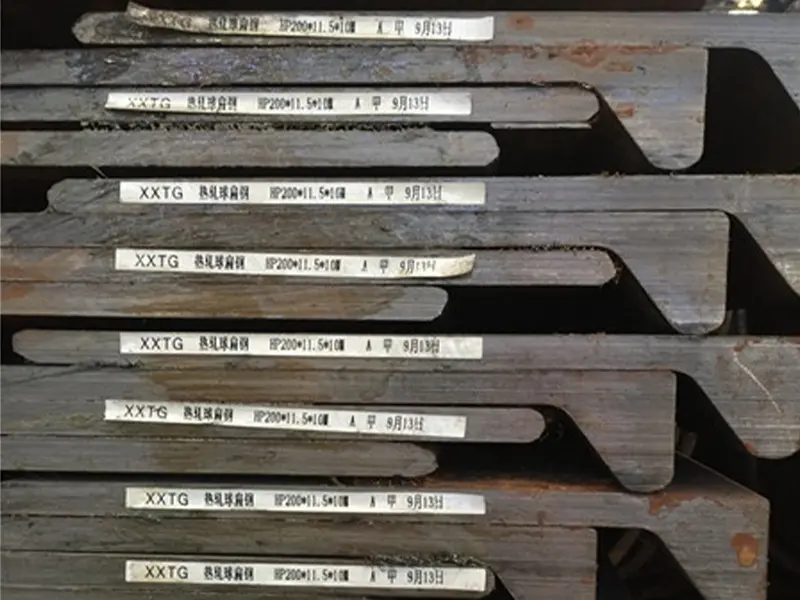
Flat Steel in Offshore Context: More Than Just a Shape
In an office, "flat steel1" might be a generic term. On an offshore project site, it is a precise instruction with life-or-death implications. The definition matters because it dictates the production process, properties, and ultimate application.
Let’s break down the production journey. Offshore-grade plates start as a continuously cast slab. This slab is reheated to over 1100°C and passed through a series of rolling stands. This hot-rolling process2 breaks down the coarse internal structure of the slab, creating a finer, tougher grain structure. For the most critical applications, plates undergo further treatment like normalizing3. Normalizing involves reheating the plate to a specific temperature and then letting it cool in air. This process relieves internal stresses from rolling and further refines the grain, giving the steel much better toughness, especially in cold ocean environments. Trying to use an "as-rolled" plate where a normalized one is specified is a serious error.
Now, consider the key properties for offshore use. These plates are not just strong; they are engineered for a specific cocktail of challenges:
- Strength: They have high yield strength4 (e.g., 355 MPa, 420 MPa) to handle massive structural loads.
- Toughness: They must absorb impact energy without shattering, even at low temperatures. This is measured by Charpy V-notch tests at temperatures like -20°C or -40°C.
- Weldability: The steel’s chemical composition (particularly low Carbon Equivalent value) must allow it to be welded easily without forming brittle zones in the heat-affected area.
- Through-Thickness Properties (Z-direction): For plates that will experience tensile stress perpendicular to their surface (like at stiffener connections), they must have a guaranteed level of ductility in the thickness direction to resist lamellar tearing.
The specification is everything. A typical offshore plate order will look like this: "Plate 50mm x 2500mm x 12000mm, Grade S355G8+N, according to EN 10225, with CEV ≤ 0.43, with full set of MTCs (Mill Test Certificates5)." Every part of that string of numbers and letters is critical. S355 is the yield strength. G8 indicates the toughness grade. "+N" means normalized. EN 10225 is the European standard for weldable structural steel for fixed offshore structures.
This level of detail is why partnerships matter. A general steel trader cannot reliably source this. You need a supplier with long-term cooperation with certified mills that regularly produce to these specialized standards. When our team gets such an inquiry, we don’t just quote a price. We first confirm the mill can meet the exact specification and lead time. This upfront diligence is what builds trust with serious offshore contractors.
What is a bulb bar1?
Have you heard the term "bulb bar1" and wondered if it’s the same as a "bulb flat2"? Mixing up these terms in a technical discussion or purchase order can cause confusion and delays. The difference is important for precise communication.
A bulb bar is essentially another name for a bulb flat. It is a steel bar with a distinctive cross-section: one side is flat, and the other has a thickened, rounded protrusion (the bulb). The term "bar" emphasizes its long, narrow form factor used as a linear stiffening element.
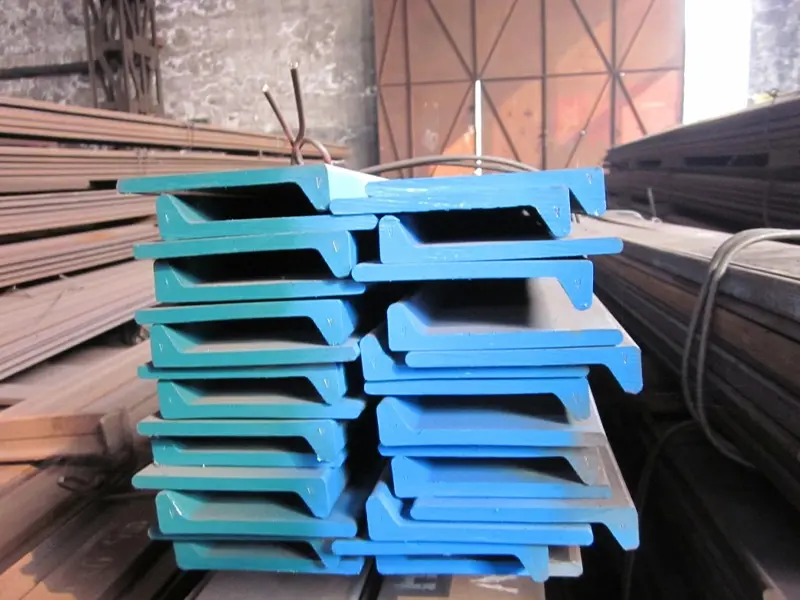
Bulb Bar vs. Bulb Flat: Terminology, Standards, and Precision
In practice, "bulb bar1" and "bulb flat2" are often used interchangeably. However, subtle differences in usage can signal different contexts or standards. Understanding this helps you speak the same language as engineers and procurement officers globally.
The core physical identity is the same. It is a long product with a "T" shape where the top of the T is rounded into a bulb. The flat part is called the "web," and the bulb is called the "flange." The unique benefit is that it provides the stiffening effect of a T-bar but is a single, rolled section. This makes it lighter and often more cost-effective than fabricating a T-bar from a plate and a flat bar.
Where the terms can differ is in regional standards3 and sizing. In European standards (like EN 10249), you will typically see the term "bulb flat2" used with designations like "FB" or specific codes. In some other regions or older specification4s, "bulb bar1" might be more common. The more important factor than the name is the designation system. A proper specification4 will not just say "bulb bar1." It will say something like "SBU 240 x 10," where:
- SBU might stand for "Ship Building Unit" or simply identify it as a bulb flat2.
- 240 is the total height in millimeters (from the bottom of the web to the top of the bulb).
- 10 is the web thickness in millimeters.
The dimensional tolerances5 are critical for offshore use. The height, web thickness, bulb asymmetry, and straightness must all be within tight limits. This ensures consistent welding and predictable performance. A bulb bar1 that is not straight will create gaps during fitting, requiring excessive force to align, which can introduce residual stresses.
Finally, let’s talk about material grades6. Bulb bars for offshore use are made from the same high-quality steels as the plates they are welded to. Common grades include S235, S275, S355, and higher, with specified toughness levels. They must be supplied with the same traceability and certification as the main plates. It is a mistake to source high-grade plates and then use a lower-grade, uncertified bulb bar1 as a stiffener. The weak link will fail.
As a supplier, I make it a point to clarify terminology with clients. When a new client from Mexico asked for "bulb bar1s for a port project," we sent them a detailed table of our available sizes with standard designations and asked for their specific technical drawing or standard requirement. This prevented a mismatch between what they thought they were ordering and what they would receive. Clear communication about the product is the first step to a successful delivery.
What is the material of a bulb?
Do you assume the bulb is just extra steel? The material composition and quality of the bulb itself are the defining factors that separate a high-performance stiffener from a potential point of failure.
The bulb is an integral part of the steel bar, made from the same monolithic piece of steel as the web. It is not a separate attachment. The material is typically high-strength, low-alloy (HSLA) carbon steel1, often grades like S355, with enhanced properties for toughness and weldability to meet marine and offshore standards.
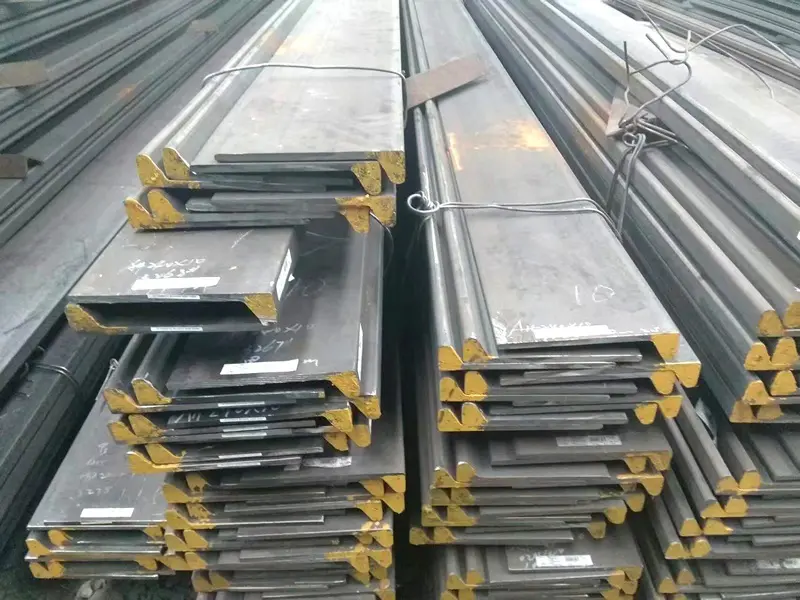
The Heart of the Matter: Metallurgy and Quality of the Bulb
The bulb is not an add-on; it is the feature that gives this product its name and function. Therefore, the material quality and integrity of the bulb are non-negotiable. Let’s examine what "material" really means in this context.
First, it is about monolithic construction2. A true hot-rolled bulb flat is formed from a single billet of steel. The rolling process shapes the billet, stretching and forming the metal to create the bulb and web in one piece. This ensures the grain structure flows continuously from the web into the bulb. There is no weld or joint that could be a weak point. This is a key advantage over fabricated alternatives.
Second, we must talk about steel grade and chemistry3. The material is not just "steel." For offshore use, it is precisely engineered HSLA steel. The chemical composition is carefully controlled:
- Carbon (C): Provides strength, but too much harms weldability and toughness. Levels are kept moderate.
- Manganese (Mn): Increases strength and hardenability, and improves hot-rolling properties.
- Microalloys (Niobium, Vanadium, Titanium): Added in small amounts to refine the grain structure during rolling, significantly boosting strength and toughness without heavy carbon use.
- Low levels of impurities (Sulfur, Phosphorus): These are strictly limited as they can create inclusions that weaken the steel, especially in the through-thickness direction.
This specific chemistry leads to the required mechanical properties. After rolling and any heat treatment, the steel must pass tests:
- Tensile Test: Confirms yield strength, tensile strength, and elongation.
- Charpy Impact Test4: Proves the steel’s toughness at low service temperatures by measuring the energy absorbed when a notched sample is broken.
- Bend Test: Verifies the steel’s ductility by bending it around a mandate without cracking.
Third, the internal soundness of the bulb is vital. The bulb is the thickest part of the cross-section. During solidification and rolling, internal defects like porosity or segregation can form. Reputable mills use advanced continuous casting and rolling controls to minimize this. For critical offshore orders, additional Non-Destructive Testing (NDT)5 like ultrasonic testing of the bulb area might be specified to ensure it is free of harmful internal flaws.
The table below contrasts standard commercial bulb flat material with offshore-grade material6:
| Material Aspect | Standard Commercial Grade | Offshore Project Grade |
|---|---|---|
| Primary Standard | General structural standards (e.g., generic ASTM). | Specific marine/offshore standards (e.g., EN 10249, ABS, DNV). |
| Key Focus | Meets basic dimensional and strength requirements. | Guaranteed toughness at low temperature, weldability, and certified traceability. |
| Certification | May have a generic mill certificate. | Must have full, heat-specific MTCs traceable to the melt. Often requires 3rd party inspection. |
| Common Issue | Inconsistent toughness; higher impurity levels possible. | Stringent chemical and mechanical property limits ensure consistency and performance. |
In my work, the material question is the most important. When we promise S355J2+N bulb flats, we are promising a specific chemical recipe and a set of mechanical property guarantees7. We back this up by providing the MTCs and supporting third-party verification. This gives project engineers the confidence to sign off on the material. It turns a simple steel bar into a certified, reliable engineering component.
Conclusion
Offshore projects don’t just use more bulb flat steel; they demand a higher grade of it. Success depends on understanding the product’s precise role, specification, and material science.
-
Explore this link to understand the benefits and applications of HSLA steel in various industries. ↩ ↩ ↩ ↩ ↩ ↩ ↩ ↩ ↩ ↩ ↩ ↩ ↩ ↩ ↩ ↩ ↩ ↩ ↩
-
Learn about monolithic construction and its advantages in creating strong, durable steel components. ↩ ↩ ↩ ↩ ↩ ↩ ↩
-
Discover how different steel grades and their chemical compositions impact strength and durability. ↩ ↩ ↩ ↩
-
Understand the importance of the Charpy Impact Test in evaluating the toughness of materials. ↩ ↩ ↩ ↩ ↩
-
Explore various NDT methods and their role in ensuring the integrity of materials without causing damage. ↩ ↩ ↩ ↩
-
Learn about the specific standards and properties that make offshore-grade materials suitable for marine applications. ↩ ↩
-
Discover the importance of mechanical property guarantees in ensuring the reliability of steel components. ↩