
Shipbuilding is coming back fast. But many buyers still miss the signs of rising steel demand.
The recovery in shipbuilding directly increases marine angle steel consumption because more newbuild orders mean more framing, stiffening, and structural work. Containerships, tankers, and bulk carriers all need large quantities of angle bars.
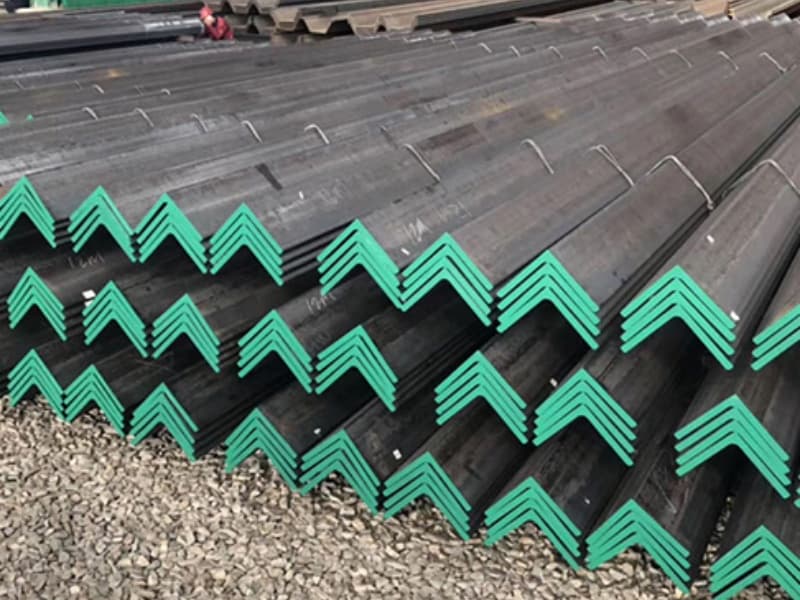
I have seen this cycle before. When order books fill up, steel becomes tight. Prices go up. Lead times stretch. If you are a buyer or a distributor, you need to understand what is coming. Let me walk you through the details.
Which Vessel Segments – Containerships, Tankers, or Bulk Carriers – Are Driving the Post‑Recovery Demand for Angle Steel?
You might think all ship types use the same amount of angle steel. That is not true. Some segments consume much more.
Containerships and bulk carriers are the biggest drivers of marine angle steel demand right now, because they have large internal structures with many frames and stiffeners. Tankers follow closely but use slightly less per vessel.

Let me break down the numbers. I work with shipyards in Vietnam and the Philippines. They tell me exactly how much angle steel goes into each vessel type. The differences are large.
Angle Steel Consumption by Vessel Type
| Vessel Type | Average Marine Angle Steel per Vessel (tons) | Main Usage Areas |
|---|---|---|
| Containership (large) | 800 – 1,200 | Cell guides, hatch covers, inner bottom framing |
| Bulk Carrier (large) | 700 – 1,000 | Hopper tanks, side frames, transverse bulkheads |
| Tanker (large) | 500 – 800 | Longitudinal bulkheads, stringers, web frames |
| Small cargo | 200 – 400 | General framing and stiffening |
Why containerships lead the demand
Containerships have a lot of cell guides. These are vertical tracks that hold containers. Each cell guide needs many angle bars. A large containership can have thousands of cell guides. That adds up quickly. I spoke to a fabricator in Malaysia last month. He said his containership projects use three times more angle steel than tankers of the same length.
Bulk carriers are a close second
Bulk carriers have large cargo holds. Each hold needs hopper tanks and side frames. These are made from heavy angle steel. The angles are often larger sizes like L120x12 or L150x15. That means more steel weight per meter. So even if the total length of angle is similar, the tonnage is higher.
Tankers are different
Tankers use more plate than angle. Their structure is smoother with fewer internal frames. But they still need angle steel for stiffeners and stringers. The demand is steady but not as explosive as containerships.
What about smaller vessels?
Small cargo ships and fishing vessels use less angle steel per unit. But there are many of them. In markets like Myanmar and Thailand, small shipbuilders are busy. Their total consumption adds up. I have seen a single yard in Myanmar use 200 tons of angle steel per month just for small coastal vessels.
My observation from recent orders
Since early 2024, most of my bulk inquiries for marine angle steel have come from containership and bulk carrier projects. Tanker inquiries are up too, but not as much. If you are a wholesaler, focus on stocking sizes popular for containerships. That is where the real volume is right now.
How Does the Surge in Newbuild Orders Translate Into Higher Tonnage Consumption of Marine Angle Bars?
You see news about shipyards being fully booked. But does that really mean more angle steel? Or is it just the same amount spread out?
A surge in newbuild orders directly increases angle steel tonnage because more ships need more framing. But the increase is not linear. Larger ships and higher design complexity push tonnage up even faster.
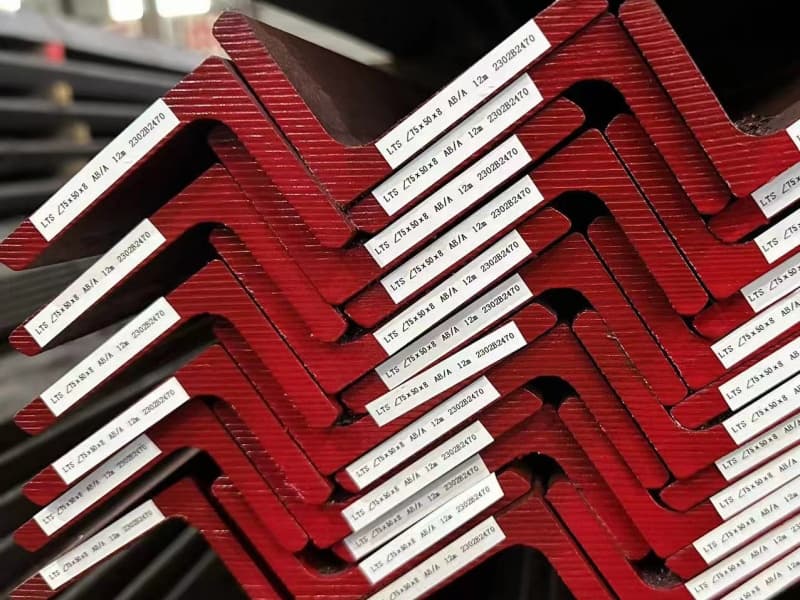
Let me give you a real example. A customer in Qatar came to me in 2023. He was buying 500 tons of marine angle steel per quarter. By mid-2024, his orders jumped to 800 tons per quarter. His shipyard had won four new bulk carrier contracts. That is a 60% increase. And he told me his yard was still not at full capacity.
From Order to Steel: The Flow
| Step | Impact on Angle Steel Demand |
|---|---|
| New order signed | Engineering begins, material lists are prepared |
| Steel cutting starts | Immediate consumption of small to medium angles |
| Block assembly | High consumption of large angles for framing |
| Dry dock assembly | Steady consumption until delivery |
Why tonnage grows faster than ship count
First, ships are getting bigger. A 2024 containership is much larger than a 2015 model. Bigger ships need more steel for the same type of structure. Second, designs are more complex. Modern ships have double hulls, stronger frames, and additional stiffening for environmental regulations. That all adds angle steel.
A hidden factor: scrap and waste
When shipyards rush, their cutting efficiency often drops. They waste more material. I have seen waste rates go from 5% to 10% during busy periods. That means they need to order more angle steel to get the same number of finished parts. So the actual consumption at the mill level increases even more than the shipyard’s theoretical need.
My personal experience with a Thai shipyard
In early 2025, a regular customer in Thailand called me. He said: “Zora, our order book doubled. We need triple the angle steel. Why? Because we are also replacing our old stock and training new workers who make mistakes.” That is a real surge. He went from 300 tons per month to 900 tons per month. And he was not alone.
What this means for you as a buyer
If you are a distributor or project contractor, do not wait for your current stock to run low. The surge in newbuild orders means mills are busy. Lead times are getting longer. You should order ahead. I tell my customers to plan for at least 20% higher consumption than their historical average. That buffer keeps their projects running.
Why Are Shipyards Using More High‑Strength Angle Steel Grades (AH32/DH36) as Order Books Fill Up?
Regular mild steel angle (A36) has been the standard for years. But now I see a shift. More buyers ask for AH32 and DH36. Why the change?
Shipyards are switching to high‑strength steel grades because they allow thinner sections and lighter ships. That saves steel weight and increases cargo capacity. With order books full, yards want to optimize every ship’s profitability.
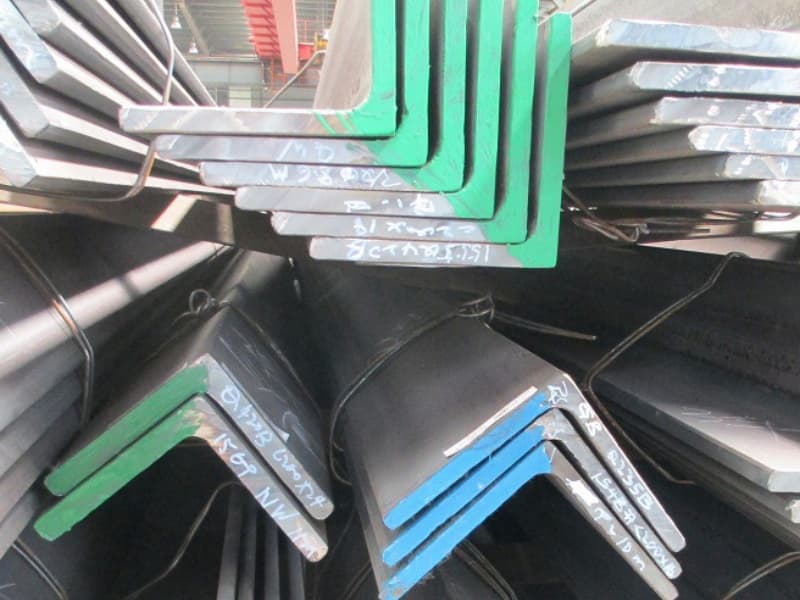
Let me explain the math. A high‑strength angle like AH32 has a higher yield strength. You can use a smaller or thinner angle to do the same job. For example, an L100x10 in mild steel might be replaced by an L90x9 in AH32. That saves about 19% in weight. For a whole ship, that saving can be hundreds of tons.
Mild Steel vs. High‑Strength: A Quick Comparison
| Property | A36 (Mild) | AH32 | DH36 |
|---|---|---|---|
| Yield strength (MPa) | 235 | 315 | 355 |
| Typical usage | Non-critical framing | Hull structure, lower holds | Main strength members |
| Cost per ton | Baseline | +5-8% | +8-12% |
| Weight saving potential | None | 10-15% | 15-20% |
Why busy shipyards love high‑strength grades
When shipyards are busy, every crane lift and every welding hour counts. Lighter steel means easier handling. It also means faster welding because thinner sections need fewer passes. A shipyard owner in Romania told me: “We switched to AH32 for all internal framing. Our welding time dropped by 12%. That let us take one more project per year.”
The catch: availability
High‑strength angles are not as common as mild steel. Many mills run AH32 and DH36 in separate campaigns. When demand surges, these grades sell out first. I have seen lead times for AH32 stretch to four months, while A36 is still two months. So if you need high‑strength, order early.
A trend I am watching
More classification societies are pushing for higher strength steels in key areas. That means even if a yard wants to use A36, the rules say no. So the recovery is forcing a grade migration. I expect AH32 and DH36 to become the new normal for main structures within three years. As a buyer, you should get familiar with these grades now.
My advice to wholesalers
Stock both mild and high‑strength. But increase your high‑strength inventory. In the last six months, 60% of my new customer inquiries asked for AH32 or DH36. Two years ago, that number was only 20%. The shift is real. Do not get caught with only A36 on your shelf.
How Do Longer Lead Times and Mill Capacity Constraints During Recovery Impact Angle Steel Availability and Pricing?
You place an order. The mill says eight weeks. Then they say ten weeks. Then twelve. Your project is waiting. Sound familiar?
Longer lead times and mill capacity constraints reduce availability and push prices up. When demand rises faster than production, every buyer competes for limited mill slots. That competition drives prices higher, especially for popular sizes and grades.

I have seen this before in 2021 and again now. Mills cannot just turn on extra capacity. Making marine angle steel requires specific rolling schedules. A mill might produce L100x10 only once per month. If that slot is full, you wait another month. That is the reality.
Typical Lead Time Changes During Recovery
| Period | Mild Steel (A36) | High-Strength (AH32/DH36) |
|---|---|---|
| Normal market | 4-6 weeks | 6-8 weeks |
| Early recovery | 6-8 weeks | 8-10 weeks |
| Peak recovery | 8-12 weeks | 12-16 weeks |
Why prices become volatile
Steel pricing is not just about raw materials. It is about capacity utilization. When mills are at 95% capacity or more, they can pick and choose orders. They prioritize large, repeat customers. They add premiums for rush orders. I have seen spot prices jump 15% in one month just because all mill slots were full.
The role of Chinese mills
China is the largest producer of marine angle steel. Mills in Liaocheng and other cities have been running near full capacity since late 2024. But they face their own constraints: environmental limits, electricity costs, and labor availability. So even Chinese supply is not unlimited. I work with mills that have long‑term partnerships. They give us priority. But even then, we must plan ahead.
A real example from my desk
Last quarter, a customer in Pakistan needed 500 tons of L120x12 in DH36. Normal lead time would be eight weeks. But all mills were booked. The earliest slot was 14 weeks. The customer had to pay a 12% premium to get moved to a 10‑week slot. That extra cost went straight into his project budget. He told me: “Next time I will order six months early.”
How you can protect yourself
First, forecast your needs for the next six months. Do not wait until the last moment. Second, build strategic stock. Keep at least two months of consumption in your warehouse. Third, work with a supplier who has direct mill relationships. At [Company Name], we secure rolling slots months in advance. That lets us offer shorter lead times than the market average.
My final warning
I do not see capacity catching up anytime soon. Shipbuilding recovery is still early. Many new yards are starting up in Vietnam, India, and the Middle East. That means demand will keep growing. Lead times will stay long. Prices will stay high. The buyers who plan ahead will win. The ones who order “just in time” will pay more or wait longer.
Conclusion
Shipbuilding recovery means more angle steel demand, especially from containerships and high‑strength grades. Plan ahead to avoid long lead times and high prices.