
Your marine steel plate looks fine to you. But a major shipyard might reject it. Do you know why?
Major shipyards enforce strict acceptance criteria on dimensional tolerances, surface quality, mechanical properties, and full traceability. Plates that fail any of these checks are rejected, even if they came from a certified mill.
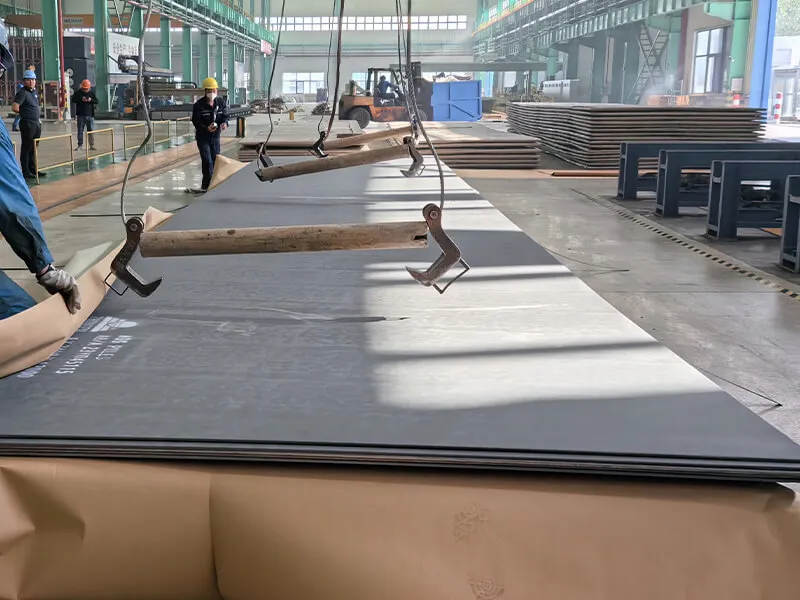
I have shipped thousands of tons of marine steel plate to shipyards in Vietnam, Qatar, and Saudi Arabia. Every time, the buyer sends me their acceptance checklist. The list is long. But if you understand it, you can avoid costly rejections. Let me walk you through the four main areas that shipyards check.
What Dimensional Tolerances (Thickness, Flatness, Length) Do Major Shipyards Enforce for Marine Steel Plates?
You order a 20mm plate. It arrives at 19.5mm. Is that okay? For most shipyards, the answer is no. They will reject it.
Major shipyards follow strict dimensional tolerances based on class society rules (ABS, DNV, LR, or CCS). Typical tolerances are: thickness ±0.3mm for plates under 20mm, flatness within 4mm per meter, and length/cutting tolerance of +0mm / -3mm.
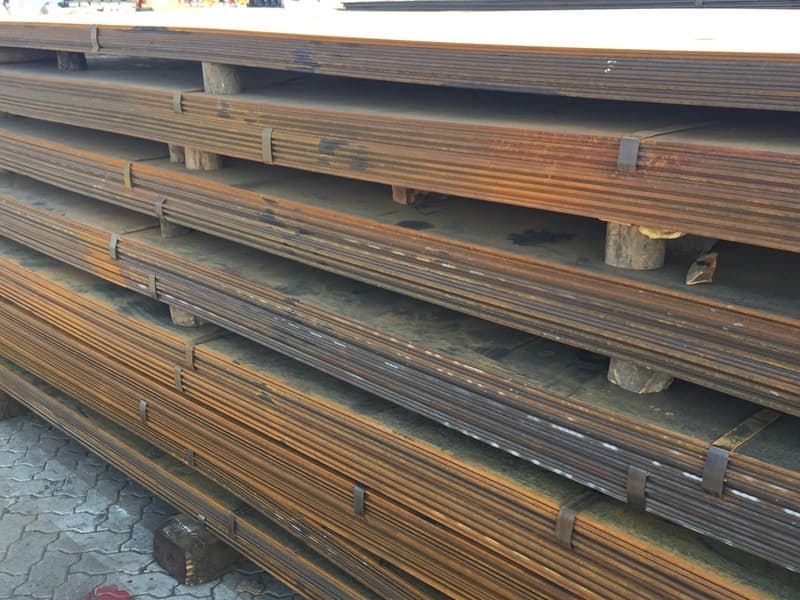
Let me break down each dimension. I learned these numbers from years of dealing with shipyard inspectors.
Thickness Tolerance
Most shipyards use standard ASTM A6 or EN 10029 tolerances. But class societies add extra rules.
| Plate Thickness (mm) | Allowed Under Tolerance (mm) | Allowed Over Tolerance (mm) |
|---|---|---|
| 5 to 16 | -0.3 | +0.5 |
| 16 to 25 | -0.4 | +0.6 |
| 25 to 40 | -0.5 | +0.7 |
| 40 to 60 | -0.6 | +0.8 |
Why this matters
A plate that is too thin cannot meet the design strength. A plate that is too thick adds extra weight. Shipyards will reject both. I had a customer in Malaysia who received 25mm plates that measured 24.2mm. The whole container was rejected. He lost three weeks and paid return shipping.
My advice
Ask your mill for a thickness report before shipping. Use third-party inspection. At [Company Name], we offer SGS inspection at the loading port. That way you know the tolerances before the plates leave China.
Flatness Tolerance
Flatness is about how much the plate bends or twists. Shipyards put plates on automated cutting tables. If a plate is not flat, the machine cannot cut straight.
The typical rule is 4mm per meter of length. For a 12m plate, that means total bow cannot exceed 48mm. For high-strength grades, some yards require even tighter: 3mm per meter.
A common problem
Plates cool unevenly at the mill. That causes warping. You cannot see it easily until you lay the plate on a flat surface. I always recommend buyers to specify “flatness per class society” in their purchase order. That puts the responsibility on the mill.
Length and Width Tolerances
Shipyards order plates cut to specific sizes. They do not want to trim extra material. The standard tolerance is +0mm / -3mm for length and width. That means a plate cannot be shorter than ordered. It can be slightly longer, but not more than 3mm.
What I see in real orders
A project in the Philippines needed 10,000 plates cut to 6,000mm x 2,000mm. Their previous supplier sent plates at 5,995mm. That is 5mm short. The yard could not use them. They had to weld extra strips. That cost time and money. Now they only buy from suppliers who guarantee positive tolerance (0 to +3mm).
Quick checklist for buyers
- Always write thickness, flatness, and length tolerances into your contract.
- Ask for mill test reports that include dimensional checks.
- Use a third-party inspector to measure random plates before shipment.
How Do Shipyards Inspect Surface Quality and Reject Defects Like Laminations, Scabs, or Edge Cracks?
You see a small dark spot on a plate. Is it just dirt? Or is it a lamination that will split during welding? Shipyards do not guess. They test.
Shipyards inspect surface quality visually and with non-destructive testing (NDT). They reject plates with laminations, scabs, edge cracks, or deep pitting. Any defect that affects strength or welding is a fast rejection.
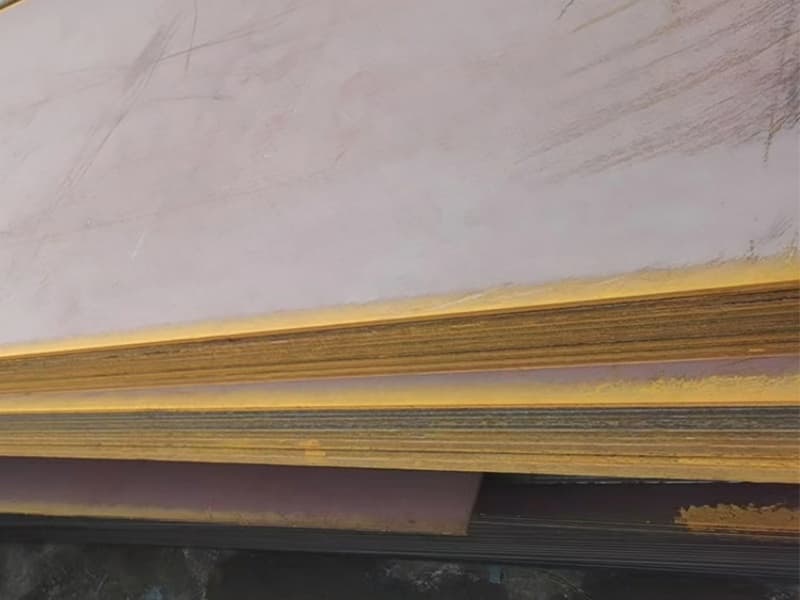
Let me explain the most common defects and how shipyards catch them.
Common Surface Defects That Trigger Rejection
| Defect | Description | How Shipyards Detect |
|---|---|---|
| Laminations | Internal separations parallel to surface | Ultrasonic testing (UT) |
| Scabs | Patches of loose or folded metal | Visual inspection |
| Edge cracks | Cracks on plate edges, often from shearing | Visual + dye penetrant |
| Pitting | Deep holes from corrosion or mill scale | Visual + depth gauge |
| Rolled-in scale | Mill scale embedded into surface | Visual and grinding test |
A real rejection story
A customer in Romania ordered 500 tons of marine plate. At the yard, the inspector found scabs on 15% of the plates. The scabs were small but deep. They could not be ground out without reducing thickness below tolerance. The whole shipment was rejected. The buyer lost $120,000. The supplier had not done proper surface inspection before shipping.
How you can avoid this
First, require the mill to perform a 100% visual inspection. Second, ask for photos or a video of the plate surfaces before packing. Third, use a third-party company like SGS or Bureau Veritas. They will flag defects before the plates leave the factory. At Company Name, we do this for every marine plate order. It costs a little extra, but it saves big rejections.
Laminations: The Hidden Killer
Laminations are internal. You cannot see them with your eyes. But during welding or cutting, the layers separate. That creates a weak spot.
Shipyards use ultrasonic testing (UT) to find laminations. They scan the entire plate or just specific zones, depending on the class rules. ABS rules, for example, require UT for plates over 40mm or for critical areas like the keel.
The standard acceptance
No lamination larger than 5mm in any direction. Some yards accept small scattered laminations if they are not in high-stress areas. But most yards say: zero laminations.
My experience
I once supplied plates to a tanker project in Qatar. The buyer asked for 100% UT. The mill said "we don’t normally do that." We arranged a third-party UT team at the mill. They found laminations in 3% of the plates. The mill replaced those plates. The buyer received a clean shipment. That third-party inspection cost $800 but saved a $40,000 rejection.
Edge Cracks and Shearing Damage
When plates are cut to size, the shearing process can cause micro-cracks along the edges. Shipyards grind a small sample from the edge. If cracks are deeper than 1mm, they reject the plate.
Simple rule
If you see any crack that you can catch with a fingernail, it is too deep. Shipyards will reject it.
My recommendation
Ask the mill to perform edge grinding on all cut-to-size plates. That removes the damaged zone. It costs a few dollars per ton. It is worth every cent.
What Mechanical Property Tests (Yield, Tensile, Charpy Impact) Must Plates Pass Before Yard Acceptance?
You have the mill certificate. It says the plate meets Grade A. But the shipyard still cuts a sample and tests it themselves. Why? Because they want proof.
Shipyards require three mandatory mechanical tests: yield strength, tensile strength, and Charpy V-notch impact at specified temperatures. Each test must meet class society minimums. If any sample fails, the entire heat or plate lot can be rejected.
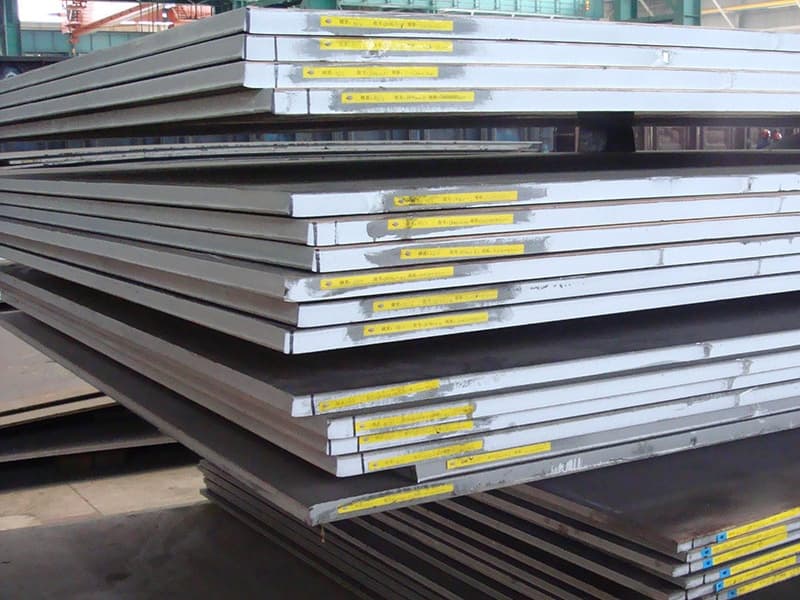
Let me explain each test in simple terms.
Yield Strength Test
Yield strength is the stress at which the plate starts to deform permanently. For Grade A mild steel, the minimum yield is 235 MPa. For higher grades like AH36, it is 355 MPa.
How shipyards test
They cut a small dog-bone shaped sample from the plate. They pull it in a tensile machine. The machine records the point where the material yields. If the value is below the minimum, the plate fails.
A common failure reason
Sometimes a plate passes at the mill but fails at the yard. Why? Because the test sample location matters. Plates can have variation across their width. The mill might test from the good area. The shipyard tests from a random area. That is why third-party witnessing is important.
Tensile Strength Test
Tensile strength is the maximum stress the plate can take before breaking. For Grade A, the minimum is 400 MPa. For AH36, it is 490 MPa.
The pass/fail rule
Both yield and tensile must pass. If yield passes but tensile fails, the plate is rejected. Also, the ratio between yield and tensile is checked. Too high a ratio means brittle material.
Charpy Impact Test
This test measures toughness. It tells you how much energy the plate absorbs before fracturing. Shipyards care a lot about this, especially for cold climates or for structural members.
Standard requirements
- Grade A: no Charpy requirement for plates under 50mm
- Grade B: 27 Joules at 0°C
- Grade D: 27 Joules at -20°C
- Grade E: 27 Joules at -40°C
Why impact tests cause rejections
I saw a case in Pakistan. The buyer ordered Grade D plates for a vessel trading in cold waters. The mill certificate showed 27J at -20°C. But the shipyard tested at -20°C and got 22J. That is a fail. The mill had tested at 0°C but wrote -20°C on the certificate. That is fraud. The buyer blacklisted that mill.
How to protect yourself
Always request that mechanical tests be witnessed by a third-party inspector at the mill. The inspector will check the testing temperature, sample location, and machine calibration. Then you get a report that shipyards trust.
Sampling Frequency
| Plate Thickness (mm) | Number of Mechanical Test Sets per Heat |
|---|---|
| 40 | 1 set per 30 tons |
My note
These are minimums. Major shipyards often ask for double the frequency. They also take their own samples from received plates. That is normal. Do not argue. Just make sure your mill product is consistent.
What Mill Certificate, Heat Number Traceability, and Third‑Party Verification Do Shipyards Require for Compliance?
You have the plates. You have a paper from the mill. Is that enough? For a major shipyard, no. They need full traceability from the liquid steel to the final plate.
Shipyards require an EN 10204 Type 3.1 or 3.2 mill certificate. Every plate must have a unique heat number. That heat number must tie back to chemical analysis and mechanical test results. Third-party verification (like from a classification society) is mandatory for critical grades.
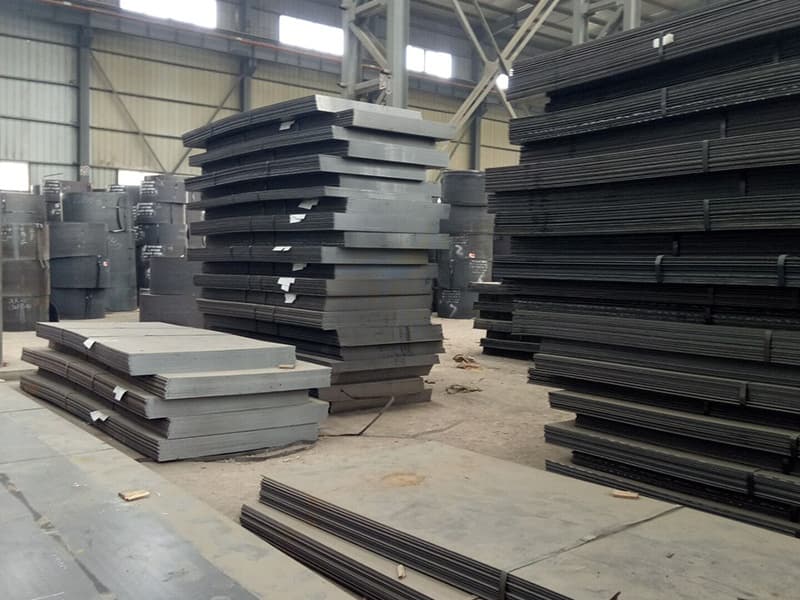
Let me break down what you actually need to provide.
Type of Mill Certificate
- Type 3.1: The mill’s own quality department issues it. It is acceptable for non‑critical applications.
- Type 3.2: A third party (like a class society or an independent inspector) verifies the tests. Major shipyards almost always require 3.2 for structural plates.
What I see in the market
Many Chinese mills offer 3.1 as standard. But a shipyard in Europe or the Middle East will reject it. They want 3.2 from DNV, ABS, LR, or BV. So before you order, confirm with your buyer which type they need. At [Company Name], we work with mills that can provide 3.2 certificates at no extra cost for full container orders.
Heat Number Traceability
Every single plate must be stamped with a heat number. That number must match the certificate. The stamp must be readable after painting, blasting, and cutting.
Shipyard inspection step
The inspector randomly picks a plate. He checks the stamped heat number. Then he looks at the certificate. If the number is missing or mismatched, he rejects the entire lot. Yes, the whole lot.
A real case
A supplier in China forgot to stamp heat numbers on 50 plates. The buyer in Mexico rejected the entire 500‑plate shipment. The supplier had to air freight new plates at his own cost. That mistake cost him over $30,000.
My advice
Before loading, take photos of the heat number stamps on 10% of the plates. Send those photos to your buyer. This small step builds trust and catches errors early.
What Must Be on the Certificate
A proper marine plate mill certificate includes:
- Manufacturer name and mill address
- Heat number and plate identification
- Chemical composition (C, Mn, Si, P, S, plus alloy elements for higher grades)
- Mechanical test results (yield, tensile, Charpy)
- Dimensional inspection results
- Date of manufacture
- Signature of authorized quality manager
Missing items
If any of these is missing, the shipyard will ask for a new certificate. That can take weeks. Always review the draft certificate before the mill issues the final one.
Third‑Party Verification
For high‑grade plates (AH32, DH36, EH36) or for classification society projects, a third‑party surveyor must witness the tests. The surveyor then stamps the certificate. That stamp is the proof that the plate meets class rules.
Which third parties are accepted?
- ABS (American Bureau of Shipping)
- DNV (Det Norske Veritas)
- LR (Lloyd’s Register)
- BV (Bureau Veritas)
- CCS (China Classification Society)
- NK (Nippon Kaiji Kyokai)
My personal practice
For every marine plate order, I ask the buyer: “Do you want your own third‑party inspector at the mill, or should we arrange an accredited one?” Most buyers say yes. The cost is usually shared. It adds 1–2% to the order value. It saves 10–20% in rejection risk. That is a good trade.
Conclusion
Check dimensions, surface, mechanical properties, and full traceability. Meet shipyard standards, or your plates will be rejected.