
Leading paragraph:
You see more ships on order books. But you wonder if this boom actually means more orders for your core products, like marine L-shaped steel.
Snippet paragraph:
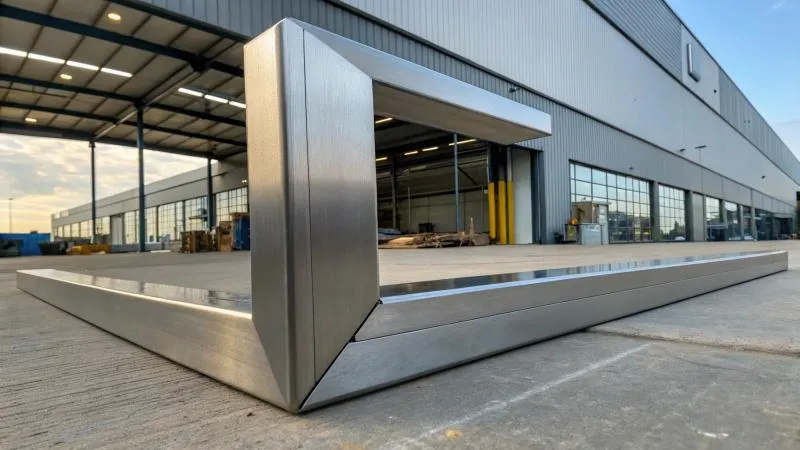
Yes, a shipbuilding recovery directly increases demand for marine L-shaped steel. This steel is essential for hull frames, bulkheads, and deck supports. As shipyards build more vessels to replace an aging fleet and meet new environmental rules, their need for strong, reliable sections like L-shaped steel grows significantly.
Transition paragraph:
I work with shipyards and fabricators every day. I see how changes in the shipping world affect what steel they order. Let me walk you through what is driving this recovery and what it means for our business.
What is the role of shipbuilding in maritime Decarbonisation?
Leading paragraph:
New rules are coming. They target emissions from ships. You might ask: how does building new ships help fix this pollution problem?
Snippet paragraph:
Shipbuilding plays a central role in maritime decarbonisation1 by constructing new, fuel-efficient vessels2 and retrofitting existing ones. Older, dirtier ships are being replaced with modern designs that run on cleaner fuels3 like LNG, methanol, or even wind power [citation:1].

Dive deeper Paragraph:
I remember talking to a client from Greece last year. He runs a technical management office. He told me his biggest headache is not finding cargoes. It is figuring out how to keep his fleet compliant with the new environmental rules from the IMO. He said something that stuck with me: "The rules are changing faster than the ships."
This is the core of the issue. The International Maritime Organization, or IMO, is pushing hard for lower carbon emissions [citation:1]. They are not just making suggestions. They are creating rules that force shipowners to change how they build and run their vessels.
How New Ships Help the Environment
Old ships are like old cars. They burn more fuel and produce more pollution. New ships are different. They are designed from the start to be cleaner. This is where shipbuilding becomes a tool for saving the environment. Here is how:
| Decarbonisation Driver | How Shipbuilding Responds | Steel Demand Impact |
|---|---|---|
| Alternative Fuels | Building ships that run on LNG, methanol, or ammonia. | High-strength steel for new tank designs and gas containment systems. |
| Energy Efficiency | Designing longer, wider hulls for better hydrodynamics. | More steel for larger hull structures and frames. |
| Wind Assistance | Installing huge rigid sails or kites on decks. | Extra steel reinforcement in decks and superstructure to handle new loads [citation:1]. |
| Hybrid Power | Integrating large battery banks for peak shaving. | Modified steel structures to accommodate battery rooms and new machinery [citation:1]. |
The IMO is even working on safety rules for these new technologies, like nuclear power and lithium-ion batteries on ships [citation:1]. This means ship designers need to plan for equipment that did not exist on ships ten years ago. All of this requires steel. It requires strong, reliable frames. L-shaped steel, or angle bars, are a big part of these frames.
For us at the mill, this means more orders for certified marine grades4. Shipowners are not just buying any steel. They want steel that meets the strict standards of classification societies like ABS, DNV, or Lloyd’s Register [citation:2]. They want traceability. They want to know the steel they use for a new LNG carrier will not fail. This focus on quality is good for our business. We work with certified mills. We can provide the documentation these green ship projects demand.
Which type of steel is most commonly used in shipbuilding due to its strength and durability?
Leading paragraph:
You walk through a shipyard. You see steel everywhere. But what is the one type that holds everything together and takes the most punishment?
Snippet paragraph:
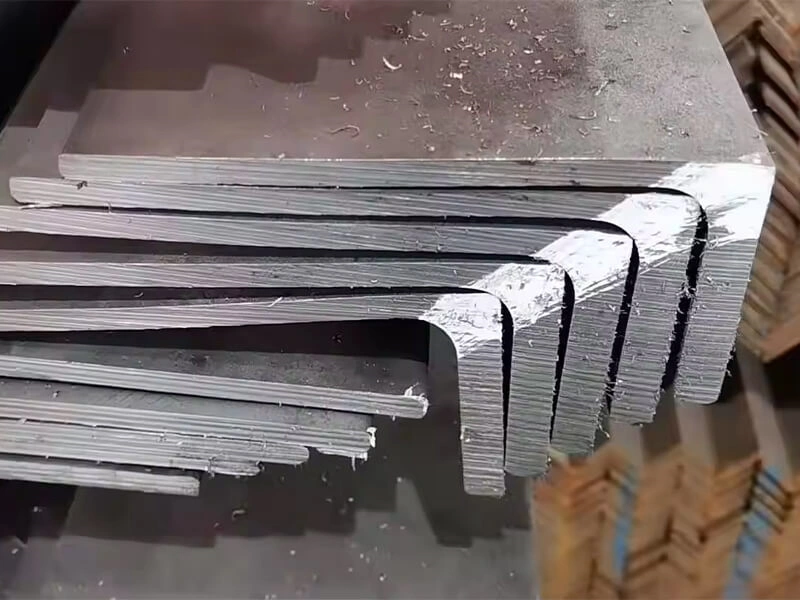
High-Strength Low-Alloy (HSLA) steel1 is the most commonly used type in shipbuilding today. It offers a great balance of strength, durability, and weldability. This allows builders to make ships lighter without sacrificing safety, which improves fuel efficiency [citation:2][citation:7].
Dive deeper Paragraph:
I get questions about steel grades every week. A buyer from Vietnam will ask: "Which steel is best for the hull?" A fabricator in Romania will ask: "What should I use for the frames?" The answer is often the same: it depends on the job, but HSLA is a safe bet.
Steel is not just steel. In shipbuilding, we use different types for different parts of the vessel. But if you look at the overall tonnage, one family of steel stands out.
Common Types of Marine Steel
To understand why HSLA is so popular, it helps to look at the main options on the market.
- Mild Steel (or Carbon Steel): This is the old standard. It is cheap and easy to weld. Shipbuilders use it for internal structures that do not face extreme stress, like some bulkheads and floors [citation:2]. But it is heavy. Using too much of it makes the ship heavier, which means it burns more fuel.
- High-Strength Low-Alloy (HSLA) Steel: This is the modern workhorse. Grades like AH36, DH36, and EH36 are everywhere in new ships [citation:2][citation:7]. They have a higher strength-to-weight ratio2. This means you can use a thinner, lighter piece of steel to do the same job as a thicker piece of mild steel. The ship becomes lighter and more fuel-efficient. It also has good weldability, which is critical for fast production.
- Corrosion-Resistant Steel3: For parts of the ship that see a lot of saltwater, like ballast tanks, we sometimes use steels with extra alloys like chromium or copper. They resist rusting better than regular steel [citation:2].
- Duplex Stainless Steel4: This is a high-performance material. It is very strong and very resistant to corrosion. But it is also expensive. You typically find it in chemical tankers or on offshore platforms, where the conditions are extremely harsh [citation:7].
For our main products, like marine angle steel5 and L-shaped sections, HSLA is the go-to material. When a shipyard orders L-shaped steel for the hull framing, they almost always ask for a high-strength grade. They want the durability to handle the ocean’s forces. They also want the strength to keep the ship safe.
The recovery in shipbuilding is pushing demand for these higher-grade steels. Owners are investing in new assets. They want those assets to last. They are willing to pay a little more for steel that offers better performance and a longer life. This is why we focus on supplying HSLA grades. It matches what the market wants right now.
What are the 4 pillars of shipbuilding?
Leading paragraph:
You hear people talk about the foundations of a strong shipbuilding nation. It sounds complex. But what are the actual pillars that hold up this whole industry?
Snippet paragraph:
The four pillars of shipbuilding are typically: 1) Design and Engineering1, 2) Material and Equipment Supply2, 3) Construction and Assembly3, and 4) Workforce and Skilled Labor4. A recent example is America’s Maritime Action Plan, which structures its strategy around rebuilding capacity, reforming workforce training, protecting the industrial base, and enhancing national security [citation:3][citation:8].

Dive deeper Paragraph:
Thinking about shipbuilding as a simple activity is a mistake. It is a huge, interconnected system. If one part of the system is weak, the whole thing struggles. I saw this firsthand when I visited a smaller shipyard in Romania a few years ago. They had the design skills. They had a workforce. But their supply chain for steel was unreliable. Delays from their previous supplier meant workers were standing around with nothing to do. That is a pillar collapsing.
To understand the industry, you have to look at these four main pillars.
Pillar 1: Design and Engineering
This is the brain of the operation. Before any steel is cut, naval architects and engineers design the vessel. They calculate stresses. They decide which grades of steel go where. They figure out how to make the ship stable and efficient. In today’s market, this pillar is busy with designs for new, greener ships. Engineers are working on hulls that use less fuel and on integrating new fuel systems [citation:6].
Pillar 2: Material and Equipment Supply
This is where we live. This pillar covers everything that goes into the ship. It starts with raw materials like steel plates, angle bars, and bulb flats [citation:2]. It includes the engines, the generators, the navigation systems, and the propellers. A strong supply chain means having reliable sources for high-quality materials. It means having stock available when the shipyard needs it. A weak supply chain causes delays and cost overruns. The recent U.S. Maritime Action Plan5 specifically mentions strengthening this pillar by investing in domestic component manufacturing, like large marine engines and propellers [citation:8].
Pillar 3: Construction and Assembly
This is the physical work. It happens in the shipyard. Workers cut steel plates. They weld frames together. They assemble huge sections of the ship, called blocks, and then lift them into place with massive cranes. This pillar requires modern equipment and efficient processes. Shipyards in Japan, for example, are investing billions in automation and digitalisation6 to make this pillar more productive [citation:4].
Pillar 4: Workforce and Skilled Labor
Ships are not built by robots alone. They are built by people. You need skilled welders, fitters, electricians, and supervisors. This pillar is a major challenge in many countries. In Japan, the shipbuilding workforce is aging, and it is hard to attract young people [citation:4]. In the U.S., the new Maritime Action Plan has a whole pillar dedicated to reforming workforce education and training to create more skilled mariners and shipbuilders [citation:3][citation:8].
When all four pillars are strong, a country can build ships efficiently and competitively. When one is weak, like the workforce pillar in some places, it creates an opening for others. This is why China, with its massive investment across all four areas, has become the dominant force.
Which 3 countries build 93% of ships worldwide?
Leading paragraph:
You look at a map of the world. You see many countries with coastlines. But when it comes to building the big ships, almost all the work happens in just three places.
Snippet paragraph:
The three countries that build approximately 93% of the world’s ships are China1, South Korea2, and Japan3. As of early 2026, China leads by a wide margin, holding over 60% of the global order book4, followed by South Korea with around 20%, and Japan with about 8-9% [citation:4][citation:5][citation:10].
[^5]](https://cnmarinesteel.com/wp-content/uploads/2026/01/L-shaped-steel-7.webp)
Dive deeper Paragraph:
I attend a few exhibitions every year. One thing is always the same. The talk always turns to Asia. People discuss the latest orders in Shanghai, the technology in Ulsan, and the quality in Imabari. These three countries are not just players. They are the game.
The numbers from the start of 2026 tell the story clearly. In January 2026, Chinese shipyards took 67% of new global orders. South Korea took 22%, and Japan’s share was so small it was almost zero for that month [citation:5]. In February, China’s share jumped to 80% [citation:10]. This shows how dynamic and competitive the market is.
The Big Three: A Quick Look
| Country | Market Share (Early 2026) | Key Strengths | Current Strategy |
|---|---|---|---|
| China | ~62-80% of order book [citation:5][citation:10] | Massive scale, competitive pricing, growing technical capability in high-value ships like LNG carriers [citation:4][citation:10]. | Dominate volume market while moving up the value chain into complex vessel types. |
| South Korea | ~16-22% of order book [citation:4][citation:5] | World leader in high-tech, complex ships like LNG carriers and very large container ships [citation:4]. | Focus on high-margin, complex vessels where their engineering expertise provides an edge. |
| Japan | ~8.7% of order book [citation:4] | Reputation for high quality, reliability, and fuel-efficient designs. Strong ties with domestic shipowners [citation:4]. | Consolidate yards, invest in automation, and focus on next-generation zero-emission ships to maintain strategic value [citation:4]. |
For me, as a steel supplier, this concentration of shipbuilding matters a lot. It tells me where the demand is. Most of our exports go to clients who are either directly supplying these yards or are fabricators in other regions who compete with them.
When a Greek shipowner decides to build a new bulk carrier, he likely goes to a yard in China, Korea, or Japan [citation:9]. That decision creates a steel order. That steel needs to come from a certified mill. That is where we come in. We partner with mills that can provide the grades and certifications these top-tier yards require.
The competition between these three countries also drives innovation. Korean yards push for higher value. Japanese yards push for quality and efficiency. Chinese yards push for scale and now, increasingly, for quality too. This pushes all steel suppliers6 to be better. We have to offer competitive prices, but we also have to offer consistent quality and reliable delivery. A delay in steel can hold up a billion-dollar ship. We cannot let that happen.
Conclusion
Shipbuilding recovery, driven by decarbonisation and fleet renewal, means strong and growing demand for reliable marine L-shaped steel from the world’s top building nations.
-
Explore how China dominates the shipbuilding industry with over 60% of global orders, shaping the market dynamics. ↩ ↩ ↩ ↩
-
Discover South Korea’s expertise in complex vessels and its strategies to maintain a competitive edge in shipbuilding. ↩ ↩ ↩ ↩
-
Learn about Japan’s reputation for quality and innovation in shipbuilding, and how it adapts to market changes. ↩ ↩ ↩ ↩
-
Understand the importance of the global order book and how it reflects the competitive landscape of shipbuilding. ↩ ↩ ↩ ↩
-
Find out more about the leading shipbuilding nations and their contributions to the global maritime industry. ↩ ↩
-
Explore the critical role of steel suppliers in meeting the demands of leading shipyards and ensuring timely deliveries. ↩ ↩