
You are sitting in the design review meeting for a new oil tanker. The naval architect points to the material specification. "For the hull, we use Grade A steel. For the cargo tanks, we need stainless steel." The question comes: "Which stainless grade? 304 or 316?" The answer determines the vessel’s safety, lifespan, and cost. Getting it wrong is not an option.
Shipyards choose marine steel plate based on three primary factors: structural requirements, corrosion resistance, and cost. For hull structure, they select classification society grades like A, AH36, or DH36 based on strength and toughness needs. For components exposed to seawater or corrosive cargo, they choose stainless steels like 316 or duplex grades. The choice balances performance against budget, always prioritizing safety and class approval.
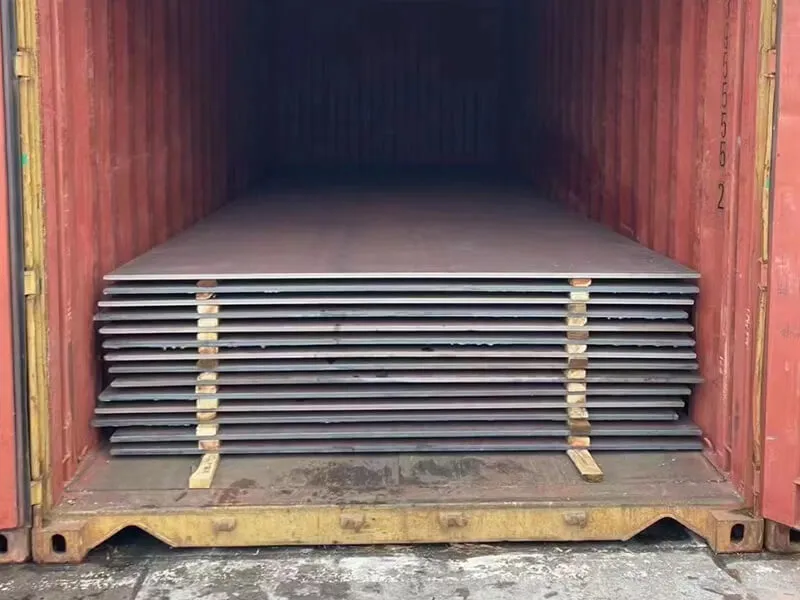
The selection process is complex. Every part of the ship has different demands. The hull must resist wave forces. The deck must support cargo. The cargo tanks must contain corrosive liquids. The choice of steel grade for each part is a critical engineering decision. Let’s start with a common question about stainless steel.
Is 304 stainless steel1 ok for marine use?
You are designing the railings for a new vessel. Stainless steel seems like the right choice. It looks good and resists rust. But not all stainless is the same. Using the wrong grade in a marine environment can lead to unexpected corrosion and failure. The question deserves a careful answer.
No, 304 stainless steel1 is generally not recommended for marine use, especially in applications with direct and continuous exposure to saltwater. While it has good corrosion resistance in many environments, the chlorides in seawater can cause pitting and crevice corrosion2 in 304, leading to premature failure. For marine applications3, grades with higher molybdenum content, like 316, are preferred.
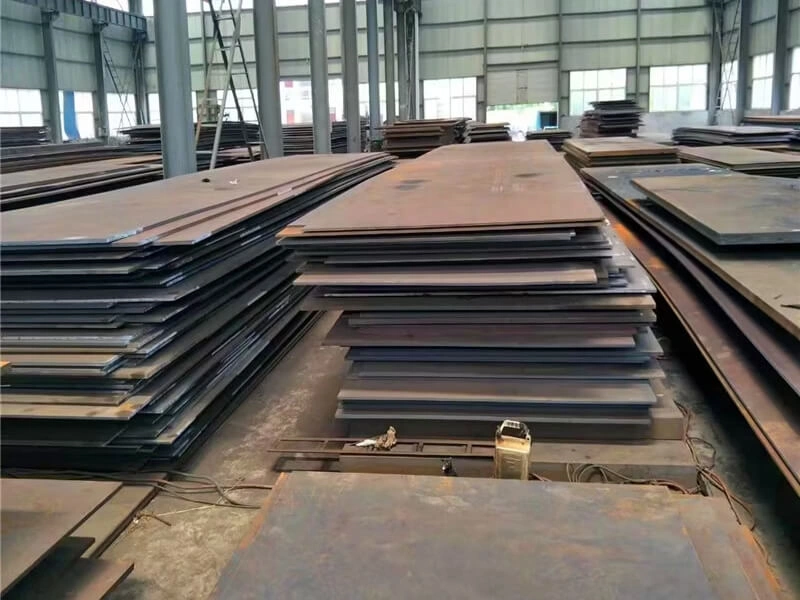
The Limitations of 304 in Saltwater
Understanding why 304 fails at sea helps explain why 316 is the better choice.
1. The Mechanism of Failure: Pitting and Crevice Corrosion.
- Chloride Attack: Seawater contains chlorides (salt). Chlorides break down the protective oxide layer on stainless steel.
- Pitting: Small pits form on the surface. They grow deeper over time, eventually penetrating the material.
- Crevice Corrosion: In tight spaces (under fittings, at welds, in bolt holes), chlorides concentrate and accelerate corrosion. This is often more severe than pitting on open surfaces.
2. Where 304 Might Be Acceptable.
- Interior, Dry Areas: In climate-controlled interior spaces with no salt exposure, 304 can perform well.
- Short-Term Exposure: For temporary applications or components that are regularly cleaned and maintained, 304 might survive.
- Atmospheric Exposure Only: In coastal areas but not in direct splash, 304 can have a reasonable lifespan, though it may still show some staining.
3. Real-World Evidence.
Marine engineers have documented countless failures of 304 in seawater. Boat fittings, railings, and hardware made from 304 often show rust stains and pitting within months or a few years. This is why experienced marine designers default to 316.
My Insight from the Field
A client in Qatar once ordered 304 stainless steel1 plates for exterior railings on a new vessel. We asked if they were sure about the grade. They said yes, it was in the budget. Two years later, they contacted us again. The railings were showing rust spots and pitting. They had to replace them with 316 at twice the cost. The lesson: the small saving on material cost was dwarfed by the cost of premature replacement. Now, they specify 316 for all exterior marine applications3.
What is the best steel for marine use?
You are starting a new project. You want the "best" steel. But best for what? The hull has different needs than the propeller. The deck has different needs than the cargo tanks. There is no single "best" steel for all marine use. The best choice depends on the specific application, the environment, and the budget.
There is no single "best" steel for all marine applications. The optimal choice depends on the component’s function and exposure. For primary hull structure, high-strength low-alloy (HSLA) steels like AH36 or DH361 offer the best combination of strength, toughness, and weldability. For maximum corrosion resistance, 316 stainless steel2 or duplex stainless steels are best. For cost-effective general use, Grade A ship plate3 is common. Each has its place.
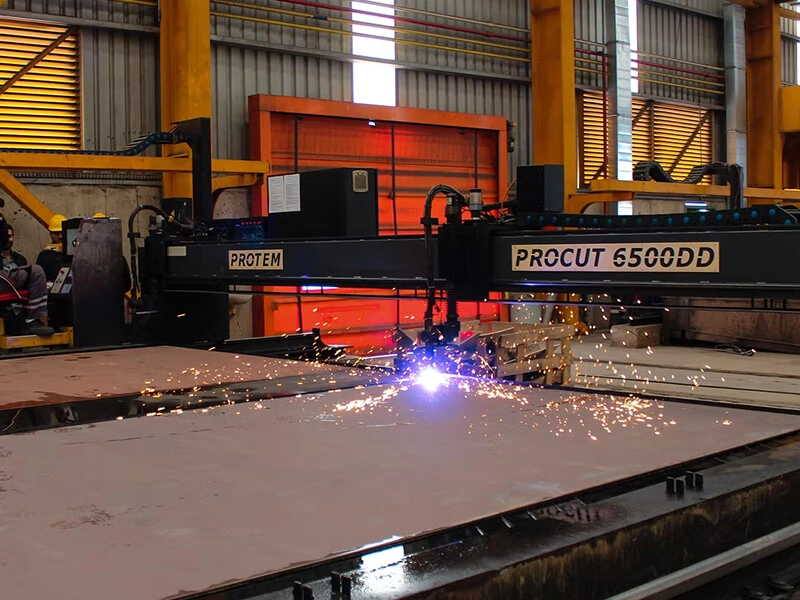
Matching Steel to Application
The "best" steel is the one that meets the requirements at the lowest total cost.
| 1. For Primary Hull Structure: HSLA Steels. | Grade | Yield Strength (MPa) | Toughness (Test Temp) | Best For |
|---|---|---|---|---|
| Grade A | 235 | Not specified | Warm climates, less critical areas. | |
| Grade D | 235 | -20°C | General ocean-going vessels. | |
| Grade E | 235 | -40°C | Very cold environments. | |
| AH36 | 355 | 0°C | High-strength, weight-saving designs. | |
| DH36 | 355 | -20°C | High-strength for cold climates. | |
| EH36 | 355 | -40°C | High-strength for Arctic conditions. |
These are the workhorses of shipbuilding. They offer the best balance of strength, weldability, and cost for the structure itself.
| 2. For Corrosion Resistance: Stainless Steels. | Grade | Key Feature | Best For |
|---|---|---|---|
| 316/316L | Molybdenum addition | Seawater-exposed fittings, railings, piping. | |
| Duplex 22054 | Higher strength, better corrosion resistance than 316 | Chemical tankers, demanding offshore applications. | |
| Super Duplex | Extremely high strength and corrosion resistance | Critical subsea components, high-pressure systems. |
These are for components that must resist corrosion, not carry primary structural loads.
| 3. For Specialized Applications. | Material | Best For |
|---|---|---|
| Aluminum | Superstructures (weight saving), high-speed craft. | |
| Clad Steel5 | Chemical tankers (stainless layer on carbon steel backing). | |
| Wear-Resistant Steel6 | Areas subject to abrasion (e.g., cargo holds for ore). |
My Insight from the Field
A designer once asked me, "What is the best steel for a new ferry?" I asked: "Where will it operate? How cold is the water? How weight-sensitive is the design? What is your budget?" They realized there was no single answer. We worked through the options. For the hull in cold North Atlantic waters, we recommended DH36. For the superstructure, aluminum. For the railings, 316 stainless. The "best" steel was different for each part. This is the reality of marine design.
Is 304 or 316 stainless steel1 marine grade?
You are reviewing a specification. It calls for "marine grade stainless steel." The supplier offers 304. Is that acceptable? The term "marine grade" is often used loosely. Understanding the difference between 304 and 316 helps you specify correctly and avoid corrosion failures.
Of the two, 316 stainless steel1 is considered the true marine grade. Its addition of molybdenum2 (2-3%) provides significantly enhanced resistance to chloride-induced corrosion from saltwater. 304 lacks molybdenum2 and is susceptible to pitting and crevice corrosion in marine environments. While 304 may be used in mild, interior marine applications, 316 is the standard for exterior and seawater-exposed components.
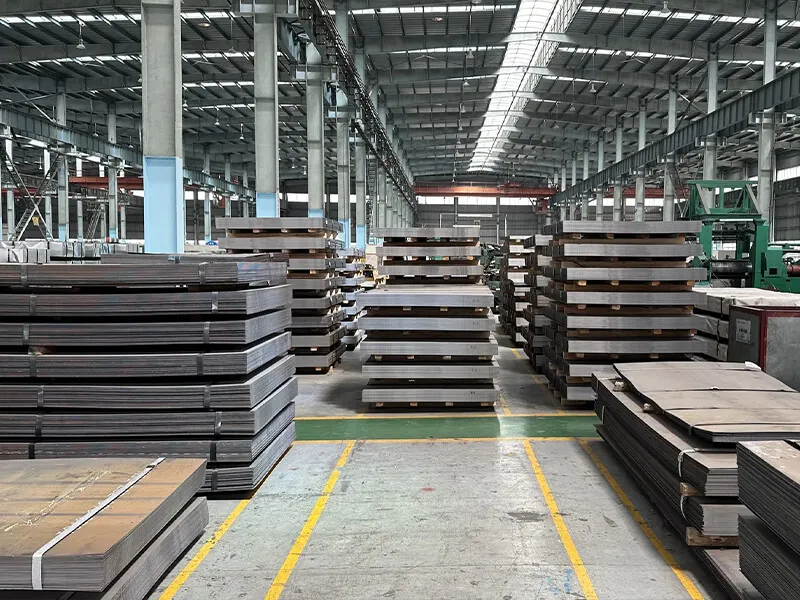
The Critical Difference: Molybdenum
One element makes all the difference.
| 1. Chemical Composition Comparison. | Element | 304 Stainless | 316 Stainless | Why It Matters |
|---|---|---|---|---|
| Chromium (Cr) | 18-20% | 16-18% | Forms protective oxide layer. | |
| Nickel (Ni) | 8-10.5% | 10-14% | Stabilizes the structure. | |
| Molybdenum (Mo) | 0% | 2-3% | Key differentiator. Resists chloride pitting. | |
| Carbon (C) | 0.08% max | 0.08% max | Lower carbon versions (304L, 316L) improve weldability. |
2. Performance in Saltwater.
- Pitting Resistance Equivalent (PRE): A formula used to compare corrosion resistance. PRE = %Cr + 3.3x%Mo + 16x%N. 316 has a PRE of about 24-26. 304 has a PRE of about 18-20. Higher is better for resisting pitting.
- Real-World Result: In seawater, 316 will resist pitting for much longer than 304. It is the standard for marine hardware3, boat shafts, and exterior fittings.
3. When 304 Might Be Used in Marine Settings.
- Interior, Dry Areas: In accommodation spaces, galleys, and other interior areas not exposed to saltwater, 304 is acceptable and cost-effective.
- Freshwater Applications: On vessels that operate exclusively in fresh water, 304 may perform adequately.
- Budget Constraints: For non-critical, easily replaceable items, some owners accept the risk of 304 to save cost.
4. The Cost Difference.
316 typically costs 50-70% more than 304. This premium reflects the value of molybdenum2. For critical applications, it is money well spent.
My Insight from the Field
A shipyard in Vietnam once ordered a large quantity of 304 stainless for exterior handrails. The price was attractive. Within 18 months, the handrails showed rust staining and pitting. The owner demanded replacement at the shipyard’s expense. The shipyard had to buy 316 and replace all the rails. The total cost was triple the original 304 cost. The lesson: specifying the right grade from the start is always cheaper than fixing a failure later.
Is 316 stainless steel1 good for marine use?
You have decided to use 316 for your marine components. You have made a good choice. But is it good enough for every application? 316 is excellent, but it is not indestructible. Understanding its capabilities and limitations helps you use it effectively and avoid over-specifying where it is not needed.
Yes, 316 stainless steel1 is excellent for marine use and is considered the standard marine grade. Its molybdenum content provides superior resistance to corrosion from saltwater, making it suitable for boat fittings, railings, piping, and other components exposed to the marine environment. However, even 316 can corrode under certain conditions, such as in stagnant, low-oxygen environments (like under marine growth) or at high temperatures. For the most demanding applications, duplex stainless steels2 offer even higher performance.
The Strengths and Limits of 316
No material is perfect. Knowing where 316 excels and where it struggles helps you make informed decisions.
1. Where 316 Excels.
- Continuous Seawater Exposure: 316 performs well in continuously flowing seawater. The oxygen in the water helps maintain the protective oxide layer.
- Splash Zone: Above the waterline, in areas regularly wetted by spray, 316 resists corrosion effectively.
- Atmospheric Exposure: In coastal atmospheres, 316 will remain bright and corrosion-free for decades with minimal maintenance.
- Fabrication: 316 welds well (especially the low-carbon 316L version) and can be formed into complex shapes.
2. Where 316 Can Struggle.
- Crevice Corrosion: In tight spaces with restricted oxygen flow (under washers, in threaded connections, under biofouling), 316 can suffer crevice corrosion3. Good design minimizes crevices.
- Stagnant Conditions: In dead-end pipes or areas with no water flow, corrosion can initiate.
- High Temperatures: In hot seawater (e.g., heat exchangers), corrosion rates increase. More resistant alloys may be needed.
- High Chloride, Low Oxygen: In some deep ocean conditions or under marine growth, the environment can become aggressive even for 316.
3. When to Consider Alternatives.
- Duplex Stainless Steels (e.g., 2205): Offer higher strength and better corrosion resistance4 than 316. Used for propeller shafts, high-pressure piping, and demanding offshore applications.
- Super Duplex (e.g., 2507): For the most extreme conditions, such as deepwater subsea components.
- Nickel-Based Alloys (e.g., Inconel): For highly corrosive chemical cargoes or extremely high temperatures.
4. Best Practices for Using 316.
- Design for Drainage: Avoid crevices where water can pool.
- Use Compatible Fasteners: Use 316 fasteners with 316 components. Mixing with lower-grade fasteners creates galvanic corrosion risks.
- Passivate After Fabrication: Chemical passivation restores the protective oxide layer after welding and grinding.
- Rinse Regularly: On vessels, regular freshwater rinsing removes salt deposits and extends life.
My Insight from the Field
A client in the Philippines once complained that their 316 stainless railings were showing rust. We visited the site. The railings were installed in a location with poor drainage. Water pooled in the base sockets, creating a crevice. The corrosion was localized to those areas. We recommended redesigning the base to allow drainage and using a welded, sealed connection instead of a socket. The problem was solved. This taught me that even the best material can fail if the design is wrong. Selection is not just about the grade; it is about how it is used.
Conclusion
Shipyards choose marine steel plate by matching material properties to application requirements. For hulls, HSLA grades offer strength and toughness. For corrosion resistance, 316 stainless is the standard. The right choice balances performance, cost, and longevity.
-
Explore this link to understand the unique properties of 316 stainless steel and its suitability for marine environments. ↩ ↩ ↩ ↩ ↩ ↩ ↩ ↩
-
Discover the benefits of duplex stainless steels for demanding marine applications and their superior performance. ↩ ↩ ↩ ↩ ↩ ↩
-
Find effective strategies to prevent crevice corrosion and enhance the longevity of marine components. ↩ ↩ ↩ ↩ ↩
-
Learn about the factors influencing corrosion resistance to make informed decisions for marine applications. ↩ ↩
-
Explore the innovative use of Clad Steel in chemical tankers for enhanced durability and corrosion resistance. ↩
-
Understand the importance of Wear-Resistant Steel in protecting cargo holds from abrasion. ↩