
Your bulb flat steel supplier changes every project. Every time you restart from zero. Project risk rises.
Supplier stability means consistent lead times, batch‑to‑batch quality, stable pricing, and reliable partnership. It reduces project delays, lowers rework costs, protects against market volatility, and enables accurate forecasting and inventory planning.
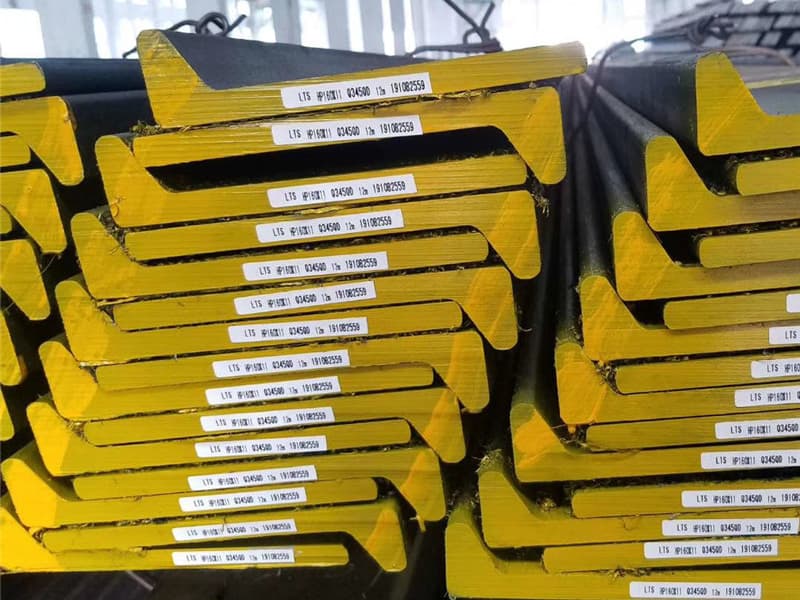
I have seen projects succeed and fail because of the supplier. The stable ones make your life easy. The unstable ones create chaos. Let me walk you through exactly how supplier stability impacts your project outcomes – and why it should be a top criterion when you choose a partner.
How Does a Stable Supplier Reduce Project Delays Caused by Unpredictable Lead Times?
You quote a client 30 days for steel. The supplier takes 50 days. You miss your deadline.
A stable supplier has predictable lead times because they hold stock, have long‑term mill relationships, and control their logistics. Unpredictable lead times force you to add large buffers or risk project delays. Stable suppliers reduce that risk.
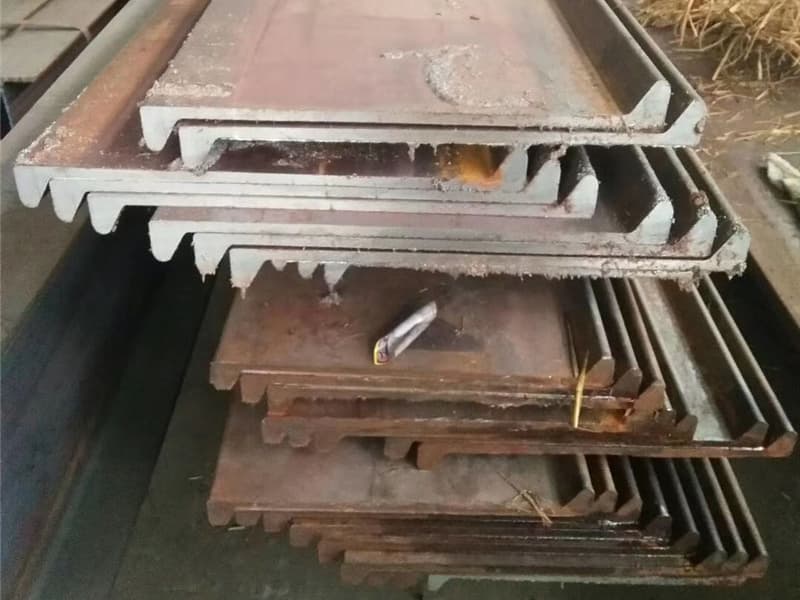
The cost of a 20‑day lead time swing
I remember a contractor in the Philippines. He used two suppliers. Supplier A was stable – always 30‑35 days. Supplier B was unstable – ranged from 25 to 55 days. On one project, Supplier B took 55 days. The contractor had to stop work for 3 weeks. He paid $15,000 in idle labor. After that, he moved all his volume to Supplier A.
So let me explain the numbers.
First, lead time variation is more damaging than long lead time. A long but predictable lead time (e.g., 45 days every time) allows you to plan. A variable lead time (e.g., 25‑55 days) forces you to plan for the worst case – which means holding more stock or risking delay.
| Supplier Type | Lead Time Range | Buffer Needed to Be Safe (95% confidence) | Extra Inventory Cost per Year (for 500 tons) |
|---|---|---|---|
| Stable | 28‑32 days (±4 days) | 4 days | $1,500 |
| Moderately stable | 25‑40 days (±15 days) | 15 days | $5,600 |
| Unstable | 20‑55 days (±35 days) | 35 days | $13,000 |
Second, how a stable supplier achieves predictable lead times.
| Factor | Unstable Supplier | Stable Supplier |
|---|---|---|
| Stock holding | Little or none | Strategic stock of common sizes |
| Mill relationship | Spot buying | Long‑term contract, reserved capacity |
| Shipping | Uses whatever forwarder is cheapest | Preferred forwarders, booked in advance |
| Communication | Reacts to problems | Proactively updates on status |
Third, the impact on your project scheduling.
| Project Phase | With Stable Supplier | With Unstable Supplier |
|---|---|---|
| Quoting | Use standard lead time confidently | Add 40‑50% buffer, less competitive quote |
| Production planning | Schedule fabrication with confidence | Keep workers on standby, inefficient |
| Client trust | Deliver on time, build reputation | Miss deadlines, lose repeat business |
Fourth, a real example from my records.
| Metric | Stable Supplier (Me) | Unstable Supplier (Former) |
|---|---|---|
| Quoted lead time | 35 days | 35 days |
| Actual lead time (average) | 36 days | 47 days |
| Standard deviation | 3 days | 12 days |
| On‑time delivery rate | 94% | 68% |
| Client schedule delays per year | 0‑1 | 4‑5 |
Your lead time stability checklist
- Supplier can provide lead time data for the last 12 months (average, range)
- Supplier holds stock of common bulb flat sizes
- Supplier has a long‑term mill contract, not spot buying
- Supplier provides proactive updates if lead time changes
I share my lead time performance openly. My clients know what to expect.
Why Is Batch‑to‑Batch Quality Consistency Critical for Structural Integrity and Rework Costs?
Batch one fits perfectly. Batch two has a different bulb height. Your welders have to rework every joint.
Batch‑to‑batch consistency – same dimensions, same chemistry, same surface quality every time – ensures that your fabrication process runs smoothly. Inconsistency forces rework, weakens structural integrity, and increases project cost.
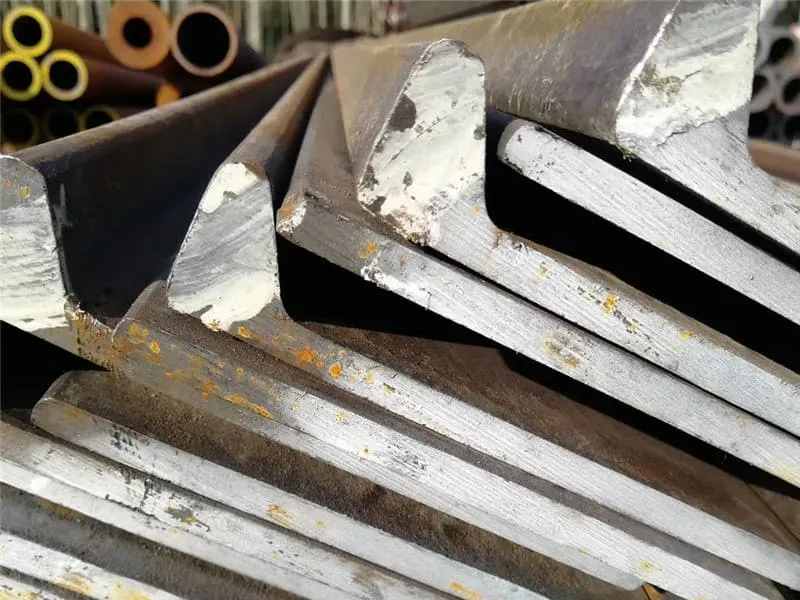
How a 1mm variation cost $12,000
I had a client in Vietnam building a series of coasters. He used a supplier who changed mills without telling him. The first batch had bulb height of 150.2mm. The second batch had 149.0mm. The welding robot’s program was set for 150.2mm. Every joint had a 1.2mm gap. They had to weld manually. The rework cost $12,000. Then he switched to a stable supplier (me) who uses the same mill, same tolerances, every time.
So let me explain the cost of inconsistency.
First, the dimensions that must be consistent.
| Dimension | Variation of 1mm | Consequence |
|---|---|---|
| Bulb height | Stiffener does not contact the plate properly | Gap, extra weld pass |
| Web thickness | Changes heat input needed for full penetration | Inconsistent weld quality |
| Straightness | Forced alignment during assembly | Residual stress, potential cracks |
Second, how a stable supplier ensures consistency.
| Practice | Unstable Supplier | Stable Supplier |
|---|---|---|
| Mill source | Changes mill based on price | Uses same mill for same grade |
| Rolling parameters | May vary | Documented and controlled |
| Quality control | Minimal, reactive | Pre‑shipment inspection, batch records |
| Tolerance | Meets standard (loose) | Tighter than standard (±0.2mm on thickness) |
Third, the cost of inconsistency.
| Issue | Cost per 100 tons |
|---|---|
| Dimensional rework (grinding, shimming) | $800‑2,000 |
| Extra weld passes | $500‑1,500 |
| Quality inspection and testing | $300‑800 |
| Production delay (if severe) | $5,000‑20,000 |
| Total potential cost | $6,600‑24,300 |
Fourth, how to verify consistency before committing.
- Ask for measurement records from the last 5 shipments
- Request a sample batch (10‑20 tons) before a large order
- Use third‑party inspection on multiple batches
- Visit the mill (or do a video tour) to see their processes
I provide measurement records for every shipment. My clients can see that batch 10 matches batch 1.
Your consistency checklist
- Supplier uses the same mill for all deliveries of a given grade
- Supplier provides batch‑specific dimensional records
- Supplier offers a consistency guarantee (replacement if out of tolerance)
- You have verified with a trial order or reference check
I guarantee consistency. If a batch deviates more than my stated tolerance, I replace it at my cost.
How Do Price Stability and Long‑Term Contracts Protect Against Market Volatility?
Steel prices jump 30% in one month. Your unstable supplier raises your price immediately. Your fixed‑price contract becomes unprofitable.
A stable supplier with long‑term contracts offers price stability – fixed or formula‑based pricing for 3‑12 months. This protects you from market spikes and allows you to quote your own projects confidently.
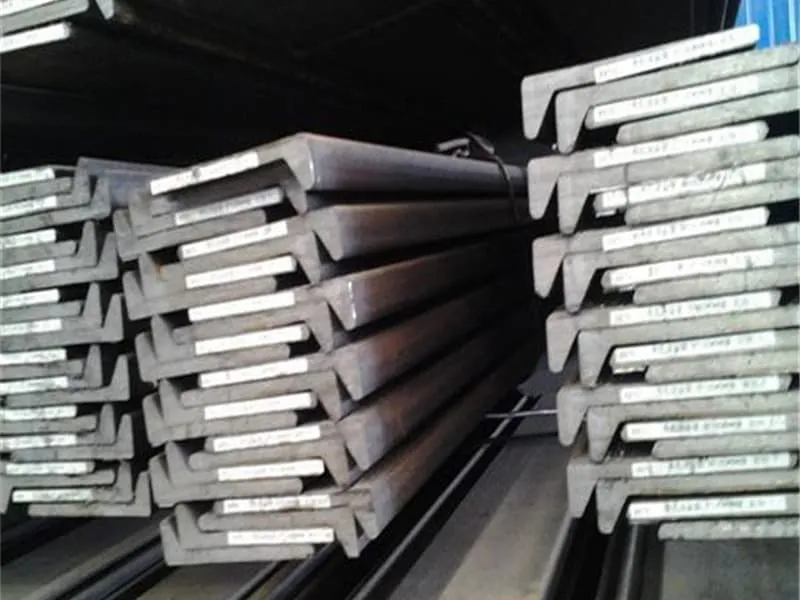
The client who locked in $650/ton for 12 months
I had a client in Malaysia who signed a 12‑month volume commitment with me. We agreed on a fixed price of $660/ton. Six months later, the market spiked to $780/ton. He saved $120/ton on 500 tons – $60,000. The next year, prices dropped, but he had already built his bids around the stable price. He was happy because he could plan.
So let me explain how price stability works.
First, how market volatility hurts unstable procurement.
| Event | Spot Buyer (No Contract) | Long‑Term Contract Buyer |
|---|---|---|
| Iron ore price up 20% | Price up 10‑15% immediately | Price unchanged (fixed) or adjusted quarterly |
| Mill cuts production | Hard to find steel, high prices | Reserved capacity, stable price |
| Freight rate spike | Pays spot freight | Locked in rate for contract period |
Second, types of price stability arrangements.
| Arrangement | How It Works | Best For |
|---|---|---|
| Fixed price for 3‑6 months | Price unchanged regardless of market | Short projects, predictable |
| Fixed price for 12 months | Price locked for a year | Multi‑vessel projects |
| Formula pricing (e.g., raw material index + fixed margin) | Price moves with market, but predictably | Long‑term partnerships |
| Price cap (maximum) | Price can go down but not above a ceiling | Protection against spikes |
Third, what you give up for price stability. Suppliers offer stable prices in exchange for stability from you.
| Your Commitment | Typical Price Stability Offered |
|---|---|
| Spot orders, no forecast | Market price, no stability |
| 3‑month forecast, 100 tons/month | Fixed price for 3 months |
| 6‑month forecast, 50 tons/month + 12‑month contract | Fixed price for 6‑12 months |
| 12‑month volume commitment, monthly minimum | Formula or fixed price with floor/ceiling |
Fourth, the dollar impact of price stability. Price adjustment clauses can protect both sides when markets move sharply.
| Scenario | Without Contract | With 6‑Month Fixed Price |
|---|---|---|
| Market price at order | $700/ton | $680/ton (locked) |
| Price spike to $800/ton after 2 months | Pay $800 on remaining 80 tons = $64,000 | Still pay $680 on 80 tons = $54,400 |
| Saving | – | $9,600 |
| Price drop to $620/ton after 2 months | Pay $620 on remaining 80 tons = $49,600 | Still pay $680 = $54,400 |
| Extra cost | – | $4,800 |
Over time, the savings during spikes usually outweigh the extra cost during drops – especially if you are a consistent buyer.
Your price stability checklist
- Does your supplier offer fixed or formula pricing for long‑term contracts?
- Are you willing to commit to minimum monthly volumes to get price stability?
- Have you discussed price adjustment mechanisms (e.g., quarterly based on raw materials)?
- Is the price stability period aligned with your project timeline?
I offer fixed pricing for 6‑12 months to clients who share a forecast and commit to volume. It is fair for both sides.
What Role Does a Reliable Supplier Play in Enabling Accurate Project Forecasting and Inventory Planning?
You guess how much steel you will need next quarter. You guess wrong. You run out or overstock.
A reliable supplier enables accurate forecasting by providing consistent lead times, predictable pricing, and open communication. They also share their own inventory levels and mill schedules, so you can plan together. This reduces uncertainty and improves your inventory planning.
The joint forecast that cut inventory by 40%
I worked with a shipyard in Thailand. They used to plan inventory based on "best guess" because their supplier was unreliable. They kept 600 tons of safety stock. Then they switched to a reliable supplier (me). We started sharing forecasts. I told them my stock levels and mill production plans. They reduced their safety stock to 350 tons. Inventory value dropped by $175,000.
So let me explain the forecasting benefits.
First, what a reliable supplier provides for your forecast.
| Information from Supplier | How You Use It |
|---|---|
| Stock levels of common sizes | Know what you can get immediately |
| Mill production schedule | Plan orders around mill downtime |
| Forward pricing (3‑6 months) | Calculate project costs accurately |
| Lead time data (actual, not just quoted) | Build realistic schedules |
Second, how forecasting improves with supplier stability.
| Aspect | Unstable Supplier | Stable Supplier |
|---|---|---|
| Your forecast accuracy | Low (you add large buffers) | High (you trust the data) |
| Safety stock needed | High (cover uncertainty) | Low (1‑2 weeks buffer) |
| Inventory turnover | Low | High |
| Risk of stockout | High (despite high stock) | Low |
Third, a joint forecasting process that works.
| Step | Shipyard Action | Supplier Action |
|---|---|---|
| Monthly | Send 6‑month rolling forecast (tons by size) | Confirm capacity and stock availability |
| Quarterly | Review actual usage vs forecast | Provide forward pricing and mill schedule |
| Annually | Commit to volume ranges | Reserve mill capacity, hold strategic stock |
Fourth, real metrics: before and after switching to a stable supplier.
| Metric | Before (Unstable Supplier) | After (Stable Supplier) |
|---|---|---|
| Forecast accuracy (3‑month) | ±40% | ±15% |
| Safety stock (tons) | 600 | 300 |
| Stockouts per year | 2‑3 | 0 |
| Inventory value | $420,000 | $210,000 |
| Urgent orders per year | 4 | 0 |
Your forecasting and inventory checklist
- Your supplier shares their stock levels and mill schedules with you
- You have a joint forecasting process (e.g., monthly update)
- You use supplier data to set safety stock levels, not guesses
- Your forecast accuracy improves over time as trust builds
I share my inventory dashboard with long‑term clients. They see what I have in stock. They order with confidence.
Conclusion
Supplier stability gives you predictable lead times, consistent quality, price protection, and accurate forecasting. That is the foundation of project success.