
Has an unexpected delay or quality issue from your steel supplier ever brought your entire shipyard or project to a standstill? The ripple effect is massive. Your choice of supplier is not just a purchase; it’s a direct investment in your project’s timeline and structural integrity.
Supplier stability for marine angle steel ensures consistent material quality, reliable delivery schedules, and expert technical support. This stability directly prevents costly construction delays, avoids compliance risks with classification societies, and secures the long-term safety and performance of the vessel, making it a critical factor for project success beyond just price.
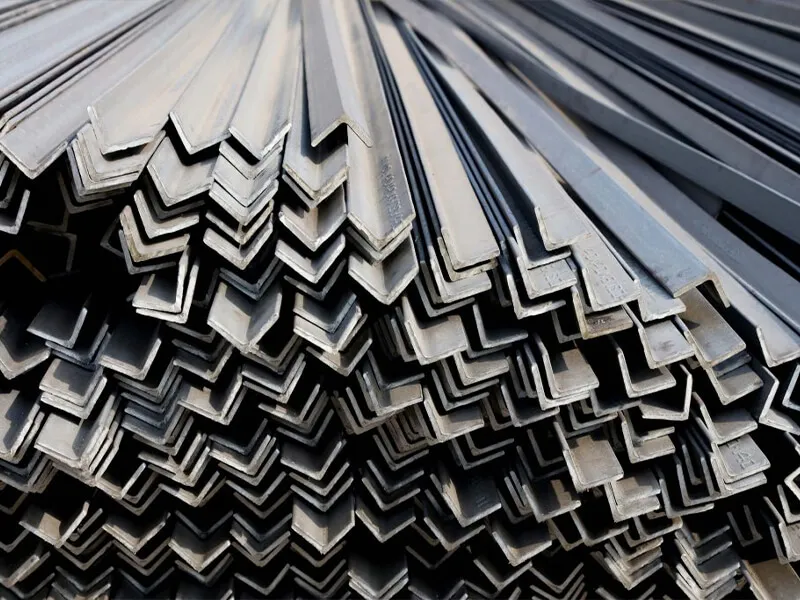
I speak with project managers every week who understand steel specs but underestimate supply chain risks. The technical properties of the steel are crucial, yes. But those properties mean nothing if the material arrives late, with wrong certificates, or inconsistent quality. Let’s examine the key technical questions that define a good material, and I’ll show you how a stable supplier turns these specs from paper into reliable reality on your dock.
What property is particularly important for shipbuilding steel to ensure it can withstand harsh marine environments?
You specify the right grade and thickness for your angle steel. But in the middle of an ocean storm, the steel’s true character is tested by one property more than any other. This isn’t about strength; it’s about survival under impact.
The most critical property is notch toughness1, or impact resistance2, especially at low temperatures. This ensures the steel does not behave in a brittle manner and fracture suddenly when subjected to dynamic stresses, such as wave impact or collision in cold waters, which is a primary safety hazard in marine environments.
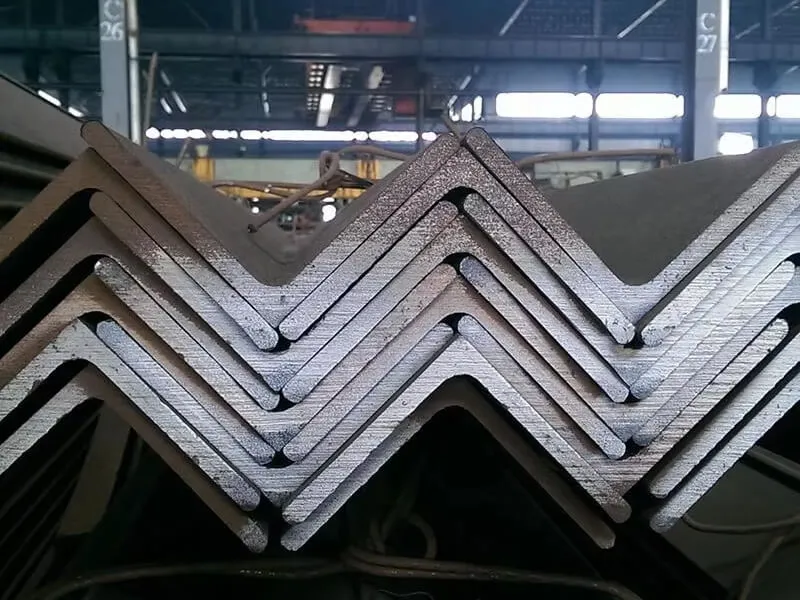
Notch Toughness: The Guardian Against Catastrophic Failure
Strength tells you how much load a material can hold before it deforms. Toughness tells you how much energy it can absorb before it breaks. In a marine environment, where stress is dynamic and temperatures can plummet, toughness is non-negotiable. From reviewing thousands of mill test certificates for clients, I see this as the defining line between standard structural steel and true marine-grade steel3.
The science behind this involves the Charpy V-Notch (CVN) Impact Test4. A small, notched sample of steel is placed on a pendulum machine and struck at a specified temperature. The energy absorbed to break the sample is measured in Joules. Marine steels must meet minimum energy values at low temperatures, often -20°C or even -40°C for Arctic operations.
Why is this so vital? Consider the hull as a complex structure full of potential "notches"—welds, sharp corners, cut-outs. Under the cyclic loading of waves, these are stress concentrators. A material with low toughness can initiate a tiny crack. In cold conditions, this crack can propagate rapidly with little warning, leading to a brittle fracture that can split a hull. This is not a theoretical risk; it has been a factor in historical maritime disasters.
A stable supplier’s role here is multifaceted. First, they must source from mills with consistent production processes like Thermo-Mechanical Controlled Processing (TMCP)5. TMCP refines the steel’s grain structure, giving it superior toughness without needing excessive alloying, which can harm weldability6. Second, they must guarantee traceability and certification7. Every batch of angle steel must come with a valid mill certificate showing the actual CVN test results for that heat of steel, not just a generic spec sheet.
Let’s compare how different grades address toughness and what it means for your supply chain:
| Steel Grade | Typical Minimum Yield Strength | Key Toughness Requirement | Implication for Supplier Stability |
|---|---|---|---|
| General Structural Steel (e.g., S355) | 355 MPa | Often tested at room temperature (e.g., +20°C). | Easier to source, but mills may have wider property variance. Not suitable for primary hull structure. |
| Marine Grade A/B | 235 MPa | Good toughness at 0°C. Used for less critical parts. | Requires marine-specific production. Supplier must segregate stock from ordinary steel. |
| Marine Grade AH32/DH32/EH32 | 315 MPa | Mandated CVN values at 0°C (AH), -20°C (DH), -40°C (EH). | High, consistent quality control needed. Supplier’s mill partnership is critical for reliable DH/EH grades. |
| Marine Grade AH36/DH36/EH36 | 355 MPa | Mandated CVN values at 0°C (AH), -20°C (DH), -40°C (EH). | The most common high-strength grade. Supplier must have a steady pipeline to meet large project demands without quality drops. |
Here is my insight from the front line. A project in Qatar was delayed because their previous supplier delivered AH36 angle bars with certificates that looked fine, but the mechanical test values were at the absolute minimum threshold. Our client, a fabricator, was nervous. When they switched to us, we didn’t just send material. We provided the full mill certs upfront for review and offered optional third-party SGS inspection to verify the toughness properties before shipment. This "stability" gave them the confidence to proceed without fear of rejection by the class surveyor. The supplier becomes your quality gatekeeper, ensuring every length of angle has the inherent property to withstand the environment it’s designed for.
Can the angle of loll1 lead to capsizing2?
Stability calculations are complete, and the vessel is loaded. But a dangerous, hidden condition can develop, making the ship suddenly and dangerously unstable. Understanding this is crucial, and it connects directly to how structural weight, like steel, is distributed and secured.
Yes, the angle of loll1 can lead to capsizing2. It is a dangerous stability condition where a ship with low initial stability (GM) rests at a permanent angle of heel to one side. If disturbed, it can lurch to the same angle on the opposite side, and if the angle becomes too large or the disturbance is severe, it can lead to a complete loss of stability and capsize.
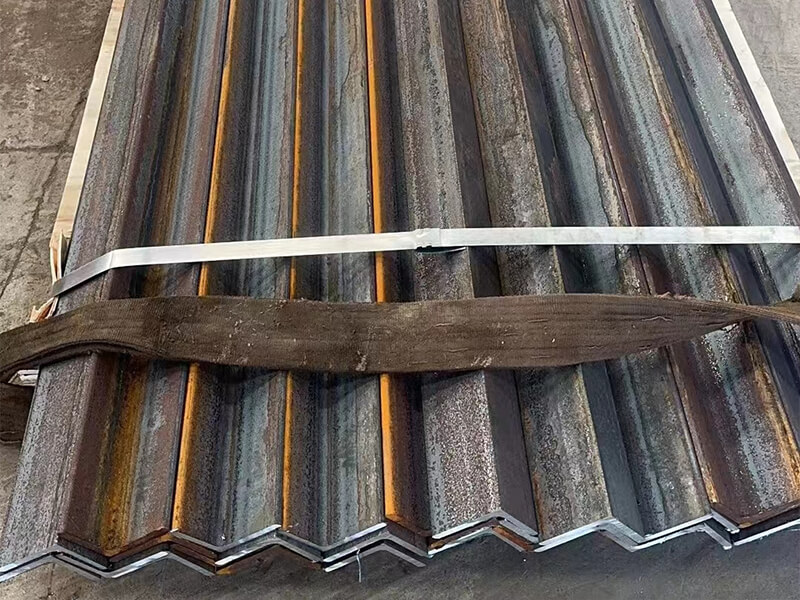
The Angle of Loll: A Stability Crisis with Material Handling Lessons
The angle of loll1 is a specific and critical concept in ship stability, different from a simple list. It occurs when the ship’s center of gravity (G) rises to the same height as the transverse metacenter (M). The metacentric height (GM) becomes zero or negative. The ship finds a new, precarious equilibrium at an angle.
How does this happen? Usually, due to poor weight distribution3 or free surface effect4. For example, a partially filled bulk cargo like grain can shift, or ballast tanks on one side are full while others are empty. The ship’s weight distribution3 changes, raising G.
Now, here is the critical link to our world: The ship’s own structural steel5 is fixed, permanent weight. Its distribution is designed for optimal stability. However, during construction or repair, the storage and handling of steel materials on the dock or on the ship itself can pose a temporary stability risk6. Large stacks of steel plates or bundles of angle bars stored high up on a docked vessel for installation can temporarily raise the center of gravity.
A stable supplier contributes to mitigating these risks indirectly but importantly. How? Through predictable logistics7 and packaging. If steel arrives late and in a rushed manner, it may need to be stored haphazardly on the first available deck space, potentially affecting the vessel’s trim and stability during outfitting. If it arrives on time and as scheduled, it can be properly lifted and installed in its correct location according to the build sequence, maintaining the designed weight distribution3.
Consider the phases where material supply impacts stability considerations:
| Project Phase | Stability Risk | How Unstable Supply Exacerbates Risk | How Supplier Stability Mitigates Risk |
|---|---|---|---|
| Newbuilding Block Outfitting | Blocks can become top-heavy if equipment is installed before the block is turned or joined. | Delayed delivery of structural angles may force yard to install heavier upper-deck equipment first to keep teams busy, altering the block’s CoG. | Phased, on-schedule delivery of materials allows the yard to follow the planned "lowest CoG first" outfitting sequence. |
| Dry Dock Repair | The ship is supported by blocks; uneven weight removal/adding affects dock block loading. | Unplanned waiting for replacement steel can lead to ad-hoc storage of materials on upper decks, raising CoG while the hull is rigidly supported. | Accurate lead times and delivery dates allow the shipyard to plan the repair sequence and material staging areas safely. |
| Vessel Loading (Steel Cargo) | The cargo itself (steel coils, plates) is dense and can affect ship stability if not properly secured. | N/A (Supplier is not the cargo loader). | Proper, secure packaging of steel products (like banded and strapped angle bundles) prevents cargo shift inside the hold, which is a classic cause of listing and potential loll. |
My perspective comes from a near-miss story a client shared. They were converting a vessel. A large shipment of steel for new bulkheads was delayed by two weeks from their original supplier. To keep workers busy, they started installing heavier machinery higher up in the superstructure. When the steel finally arrived and was hastily loaded onto an upper deck for access, the ship developed a noticeable, persistent list in calm water—a textbook angle of loll1 situation in the dock. It took careful re-planning and re-stowing to correct it. The delay didn’t just cost time; it created a tangible safety hazard. A stable supplier, by being reliably on schedule, helps maintain the integrity of the construction plan, which is fundamentally a stability plan.
What is the load bearing capacity of MS angle?
You need to design a support structure in a ship’s store room or a temporary foundation on the dock. You reach for common Mild Steel (MS) angle. But quoting a single load capacity number is impossible and misleading. The real answer depends on multiple factors that a good supplier can help you clarify.
The load-bearing capacity1 of an MS angle (Mild Steel angle2) is not a single value. It depends on its cross-sectional dimensions3 (leg length and thickness), the grade of MS (like S235JR or S355JR), the length of the member, the type of load (tension, compression, bending), and how it is connected and supported.
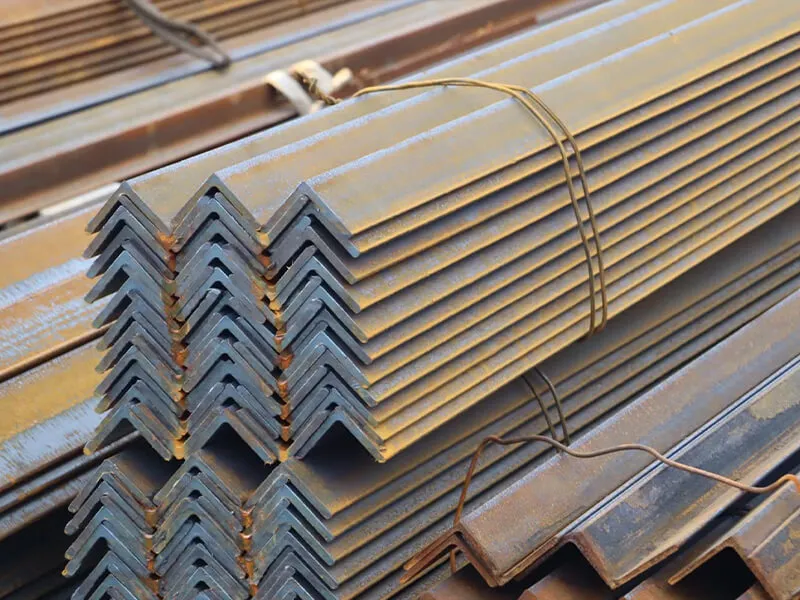
Decoding Load Capacity: Why Context is Everything
"MS Angle" is a broad category. In engineering, we talk about its section properties and how those interact with the loading scenario. As a supplier, we often get asked, "What is the capacity of a 50x50x6 angle?" Our job is to guide the client to the right information, not guess.
First, understand the key section properties from a standard table:
- Cross-Sectional Area: Affects tensile and compressive capacity.
- Moment of Inertia4 (Ixx, Iyy): This is the most important for bending stiffness and buckling resistance. A higher value means the section is stiffer against bending.
- Section Modulus5 (Zxx, Zyy): Directly used to calculate bending moment capacity. Capacity in bending = Section Modulus5 x Allowable Stress of the steel.
Second, the loading and support conditions drastically change the game:
- Axial Tension: The angle can carry a load along its length, limited by its cross-sectional area and yield strength6. This is relatively straightforward.
- Axial Compression: The angle can buckle. Its capacity now depends heavily on its slenderness ratio7 (length / radius of gyration). A long, slender angle buckles under a much lower load than a short stubby one of the same size.
- Bending: The angle acts as a beam. Its capacity depends on which axis it is bending about (about its strong x-x axis or weak y-y axis) and the Section Modulus5.
For marine applications, "MS" often needs to be a specific certified grade8 like S235JR or S355JR, with known yield strength6 (235 MPa or 355 MPa). The "allowable stress" used in calculations is a fraction of this yield strength6, per classification society rules.
This is where supplier stability matters for technical correctness. A supplier who just sells "MS angle" might provide material with unknown yield strength6. A stable, knowledgeable supplier will:
- Ask about the application.
- Provide the relevant section property tables.
- Specify the available certified grade8s (e.g., "We stock S355JR angles with Mill Certs").
- Recommend involving an engineer for final calculations.
Here is a simplified example table for S235JR steel, showing how capacity is not a single number:
| Angle Size | Typical Use Case | Governing Limit State | Approximate Safe Load Capacity (Varies with length & support) | Supplier’s Critical Role |
|---|---|---|---|---|
| 50x50x6 | Small brackets, light cable tray supports. | Bending or local connection strength. | Low (a few kN). | Provide consistent dimensions so weld preparations fit. |
| 100x100x10 | Walkway handrail posts, medium-duty framing. | Compression buckling if used as a column. | Moderate. Highly sensitive to unsupported length. | Supply material with certified yield strength6 (235 MPa) for accurate engineer calculations. |
| 150x150x12 | Heavy foundation base for dock equipment. | Bending or bearing at connections. | High. | Ensure flatness and straightness so the member bears evenly, achieving its full theoretical capacity. |
I recall a contractor in Thailand building a temporary work platform. They asked for the "load rating" of a 100x100x10 angle. Instead of giving a number, we asked about the span, how it would be connected, and the type of load. They sent a sketch. We provided the section property data and the mill cert for our S235JR stock. We also noted that for a primary load-bearing column, buckling would likely govern and suggested they consult their site engineer. They appreciated this caution. The unstable alternative is a supplier who says, "It can hold 10 tons," leading to a potential failure. Stability here means providing reliable, verifiable data that empowers safe design, not just selling a product.
What is the main advantage of using high tensile steel1 for ship building?
Faced with tight budgets, why would a shipowner choose more expensive high-tensile steel (HTS) over ordinary mild steel? The answer goes beyond simple strength and touches the core of modern, efficient ship design and operational economics.
The main advantage of using high tensile steel1 (HTS) is weight reduction2. For the same strength requirement, HTS allows the use of thinner plates and smaller section sizes, significantly decreasing the ship’s lightweight. This directly increases cargo deadweight capacity3, improves fuel efficiency4, and can enhance stability.
High Tensile Steel: Trading Material Cost for Operational Profit
The decision to use HTS like AH32, AH36, or AH40 is an economic calculation. The steel itself costs more per ton. But you use fewer tons of it, and the saved weight translates into earning potential across the ship’s entire lifecycle. From supplying both grades, I see this as a key area where an informed supplier adds value.
Let’s break down the advantages:
- Increased Deadweight Tonnage (DWT): This is the most direct benefit. The ship’s weight is roughly divided into lightweight (the ship itself) and deadweight (cargo, fuel, stores). Reducing the lightweight by, for example, 500 tons by using thinner HTS structures means you can carry 500 more tons of payload on every voyage. For a bulk carrier, that’s more iron ore or grain. Revenue increases directly.
- Improved Fuel Efficiency: A lighter ship requires less power to move at the same speed, or can achieve higher speeds with the same power. Over a 25-year lifespan and with high fuel costs, the savings are enormous.
- Enhanced Design Flexibility: Higher strength allows for longer unsupported spans (larger holds in bulk carriers) or more slender, hydrodynamically efficient shapes.
However, using HTS introduces challenges that a stable supplier must help manage:
- Welding Requires More Care: HTS often has higher carbon equivalent (CE) values. It needs stricter control of pre-heat, interpass temperature, and welding procedures5 to avoid cold cracking.
- Greater Sensitivity to Notches: The higher strength can come with slightly reduced ductility. This makes the notch toughness6 (discussed earlier) even more critical. Proper grades like DH36 (for -20°C service) are essential.
- Higher Cost of Fabrication: Thinner plates can be more prone to distortion during welding, requiring skilled workers.
A stable supplier’s role7 is pivotal in realizing HTS’s advantages while mitigating its risks. They must provide not just the material, but also the consistent, verifiable documentation that allows the shipyard to qualify its welding procedures5. They must guarantee the chemical composition8 of each batch is within the narrow range required by the grade specification.
Compare the life-cycle impact of HTS versus mild steel:
| Aspect | Mild Steel (e.g., Grade A) | High Tensile Steel (e.g., AH36) | Supplier’s Role in Enabling HTS Benefits |
|---|---|---|---|
| Material Cost | Lower per ton. | Higher per ton. | Offer competitive pricing within the HTS category through stable mill partnerships. |
| Weight for Equivalent Strength | Higher (thicker sections needed). | Lower (can be ~20-30% thinner). | Supply material with guaranteed minimum yield strength (355 MPa) so designers can safely use reduced scantlings. |
| Primary Economic Driver | Lower upfront capital cost. | Higher lifetime revenue (more cargo) and lower operating cost (less fuel). | Provide reliable, large-volume supply to meet the needs of a whole hull construction without quality variance. |
| Key Technical Requirement | Good weldability, adequate toughness. | Excellent toughness mandatory; careful welding procedures5. | Supply with full mill certs including CVN values and chemical analysis to support weld procedure qualification. |
Here is my insight from the market. A shipyard in Vietnam was bidding on a series of container ships. The design called for AH36 for the entire hull to maximize container slots. They needed a supplier who could deliver thousands of tons of AH36 plate and angles with guaranteed DH36 (low-temperature) properties for certain areas, all with perfect certification for class approval. Their previous supplier’s inconsistency on certs had caused inspection delays. We demonstrated our process: each batch comes with complete, traceable documentation, and we offered pre-shipment SGS inspection as a standard option. This "stability" in documentation and quality gave the yard the confidence to sign the shipbuilding contract. They knew their material pipeline was secure. The advantage of HTS only materializes if the supply chain is robust enough to deliver it correctly and consistently.
Conclusion
The success of a marine project hinges on more than technical specifications. It relies on a supplier whose stability transforms those specs into guaranteed quality, on-time delivery, and expert support, forming the true foundation of any build.
-
Explore the advantages of high tensile steel in shipbuilding, including weight reduction and improved efficiency. ↩ ↩ ↩ ↩ ↩ ↩ ↩ ↩
-
Learn how weight reduction can enhance cargo capacity and fuel efficiency in ship design. ↩ ↩ ↩ ↩ ↩
-
Understand the significance of deadweight capacity and how it affects shipping operations and profitability. ↩ ↩ ↩ ↩ ↩ ↩
-
Discover the key factors that contribute to fuel efficiency and how they impact operational costs. ↩ ↩ ↩ ↩
-
Explore best practices for welding high tensile steel to ensure structural integrity and safety. ↩ ↩ ↩ ↩ ↩ ↩ ↩ ↩
-
Learn about notch toughness and its critical role in the performance of high tensile steel. ↩ ↩ ↩ ↩ ↩ ↩ ↩ ↩
-
Explore how suppliers contribute to the successful implementation of high tensile steel in shipbuilding. ↩ ↩ ↩ ↩
-
Discover the importance of chemical composition in ensuring the quality and performance of high tensile steel. ↩ ↩ ↩