
You order marine L section steel. The mill gives you a certificate. But the shipyard still says no.
Third-party inspection supports marine L section compliance by verifying the steel’s chemistry, strength, dimensions, and traceability before shipment. An independent inspector from SGS, DNV, ABS, or BV checks everything and stamps the certificate.

I have seen too many buyers trust a mill certificate and then get surprised at the shipyard. That is why I offer third-party inspection to all my customers. Let me explain exactly what it covers and why it matters.
What Does Third-Party Inspection Cover for Marine L Section Steel?
Some buyers think third-party inspection is just a quick look. But it is much more detailed than that.
Third-party inspection1 covers five areas: chemical composition2, mechanical properties3 (tensile, yield, impact), dimensional accuracy4 (leg lengths, thickness, straightness), surface quality5, and traceability6 (heat numbers). The inspector takes samples, watches the tests, and issues a stamped report.
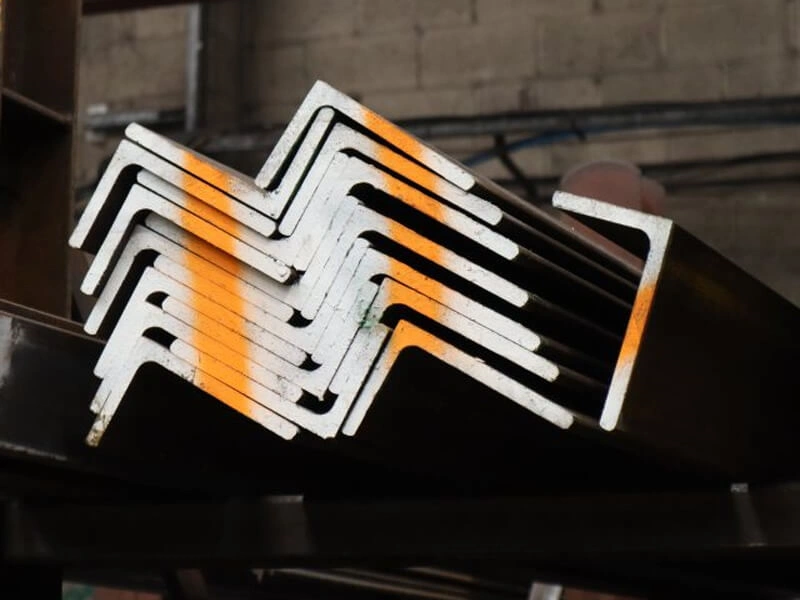
Breaking down each inspection area
Let me go through each one so you know what to ask for.
Chemical composition is the first check. The inspector takes a small sample from the steel. They send it to a lab or use a handheld spectrometer. They check carbon, manganese, phosphorus, sulfur, and other elements. Each grade (A, B, AH32, AH36, etc.) has a range. If any element is outside, the steel fails.
Mechanical properties are next. The inspector watches the mill’s testing machine pull a sample until it breaks. They record the yield strength, tensile strength, and elongation. For impact testing, they cool the sample to a set temperature (0°C, -20°C, or -40°C). Then a swinging hammer hits it. The energy absorbed must meet the grade requirement.
Dimensional accuracy is where many rejections happen. The inspector measures the leg lengths, leg thickness, root radius, and straightness. They use calibrated tools like calipers, micrometers, and straight edges. The measurements must match the order drawing within tolerance.
Surface quality is a visual check. The inspector looks for cracks, seams, laps, deep rust, or pitting. They also check for straightness and twist. Any harmful defect fails the piece.
Traceability is the last check. The inspector verifies that each piece has a stamped heat number. They compare that number to the mill’s production record. Then they make sure the certificate shows the same number.
What a full inspection looks like in a table
| Inspection item | Method | Pass / Fail criteria | Typical time |
|---|---|---|---|
| Chemistry | Spectrometer or lab test | Within grade limits | 1 hour per heat |
| Tensile test | Pull test machine | Yield ≥ grade min, tensile in range | 30 min per sample |
| Impact test | Charpy V-notch | Joules ≥ 27 or 34 at test temp | 1 hour per set |
| Leg length | Caliper | ±1.5mm or per drawing | 5 min per piece |
| Leg thickness | Micrometer | ±0.3mm | 2 min per piece |
| Straightness | Straight edge | ≤4mm per 2m | 2 min per piece |
| Surface | Visual + MPI if needed | No cracks, deep pits, or laps | 5 min per piece |
| Heat number | Visual check | Matches certificate | 1 min per piece |
How this helps you as a buyer
You do not have to be a steel expert. The third-party inspector works for you. They know the standards. They catch mistakes before the steel leaves the mill. I have had inspections find wrong dimensions, missing stamps, and even wrong grades. We fixed everything before shipping. That saved my customers weeks of delay.
Why Do Shipyards and Classification Societies Require Independent Inspection?
You might ask: “Why can’t I just trust the mill’s own certificate?” That is a fair question.
Shipyards and classification societies require independent inspection1 because the mill’s own certificate is not enough for legal liability. The classification society2 needs proof that an unbiased third party watched the tests. That proof protects the shipyard, the owner, and the crew if something goes wrong later.
The legal and safety reasons
Let me explain with a real situation. A ship is built. Five years later, a crack appears in the hull. The owner asks: “Was the steel tested properly?” The shipyard shows the mill certificate3. But the mill might have made a mistake. Or worse, the mill might have faked the certificate. It happens.
Now the shipyard is in trouble. They cannot prove the steel was good at the time of building. But if a third-party inspector4 like DNV or ABS stamped the certificate, that is different. The classification society takes responsibility for the inspection. Their stamp is proof.
That is why shipyards only accept steel with classification society approval. The most common ones are ABS (American Bureau of Shipping), DNV (Det Norske Veritas), LR (Lloyd’s Register), BV (Bureau Veritas), NK (ClassNK), KR (Korean Register), and CCS (China Classification Society).
What each society requires for L section steel
| Society | Abbreviation | Typical inspection level | Common for |
|---|---|---|---|
| ABS | ABS | Witness of all tests | USA, international |
| DNV | DNV | Witness of key tests | Europe, global |
| LR | LR | Full inspection | UK, Commonwealth |
| BV | BV | Sample testing | France, Africa |
| NK | NK | Mill approval + spot check | Japan, Asia |
| KR | KR | Similar to ABS | Korea |
| CCS | CCS | Full inspection for Chinese-built ships | China, Belt and Road |
A story from my customer
Gulf Metal Solutions in Saudi Arabia used to buy from a supplier who only gave mill certificates (EN 10204 Type 2.2). That certificate had no third-party stamp. The shipyard in Dammam refused to accept the steel. The customer had to pay for a new inspection at their own cost. That added 10 days and $2,000.
Now they buy from me. I offer SGS inspection before shipment. SGS is an independent third party. They are not a classification society, but many shipyards accept their reports. For full classification, I can arrange DNV or ABS inspection at the mill. The customer pays a little more, but they get peace of mind.
How Do Inspectors Verify Chemical, Mechanical, and Dimensional Compliance?
The process is not random. Inspectors follow a clear step-by-step method.
Inspectors verify compliance by taking samples from each heat, witnessing the tests in the mill’s lab or an independent lab, measuring the finished steel with calibrated tools1, and comparing all results to the grade standard (like ASTM A62 or JIS G3192). They also take photos and write a report.

The step-by-step verification process
Step one is sampling. The inspector does not test every piece. That would take too long. Instead, they follow a sampling plan3. For chemical and mechanical tests, they take one sample per heat per 50 tons. For dimensions, they check 10% of the pieces or a minimum of 10 pieces per size.
Step two is witnessing. The inspector stands next to the testing machine. They watch the operator set up the sample. They record the machine’s readings. They also take their own notes. Some inspectors bring their own portable testing equipment to double-check.
Step three is measuring. The inspector uses their own calibrated tools. They do not trust the mill’s tools unless the tools have a current calibration certificate. They measure the leg lengths at three points along each piece: near the ends and in the middle. They also measure the thickness at the same points.
Step four is comparing. The inspector has a copy of the standard (like ASTM A6 for dimensions or ASTM A370 for mechanical tests). They put the measured numbers next to the allowed ranges. Any number outside the range is a failure.
Step five is reporting. The inspector writes a report. It includes the heat number, the test results, the measurements, and a pass/fail decision4. They also attach photos of the testing and the steel. Then they stamp the report.
Common pass/fail thresholds for marine L section (example for Grade A)
| Property | Standard requirement | Measurement example | Result |
|---|---|---|---|
| Carbon | ≤0.21% | 0.18% | Pass |
| Yield strength | ≥235 MPa | 268 MPa | Pass |
| Tensile strength | 400-520 MPa | 455 MPa | Pass |
| Impact (0°C) | ≥27J (if t>12.5mm) | 42J | Pass |
| Leg length (100mm) | ±1.5mm | 101.2mm | Pass |
| Leg thickness (8mm) | ±0.3mm | 8.1mm | Pass |
| Straightness | ≤4mm/2m | 2mm/2m | Pass |
What happens when a sample fails?
The inspector marks the failed piece. They also check the other pieces from the same heat or batch. If more than 10% fail, the whole batch is rejected. The mill must fix the problem and offer new steel. The inspector then repeats the tests on the new steel.
I saw this happen once with an order for Romania. The impact test5 failed at -20°C. The mill said it was a mistake. The inspector retested three more samples. All failed. The mill had to change the steel’s heat treatment6. They ran a new heat. The second batch passed. The customer was happy because we caught the problem before shipping.
What Documentation and Stamping Do You Get from a Third-Party Inspection?
After the inspection, you do not just get a verbal “okay.” You get official proof.
You get a third-party inspection report1 (often called a Type 3.2 certificate for classification societies), a stamp on the mill certificate, a stamp on each steel bundle or piece, and sometimes a separate test report with all raw data. This documentation is what the shipyard needs to release the steel for construction.
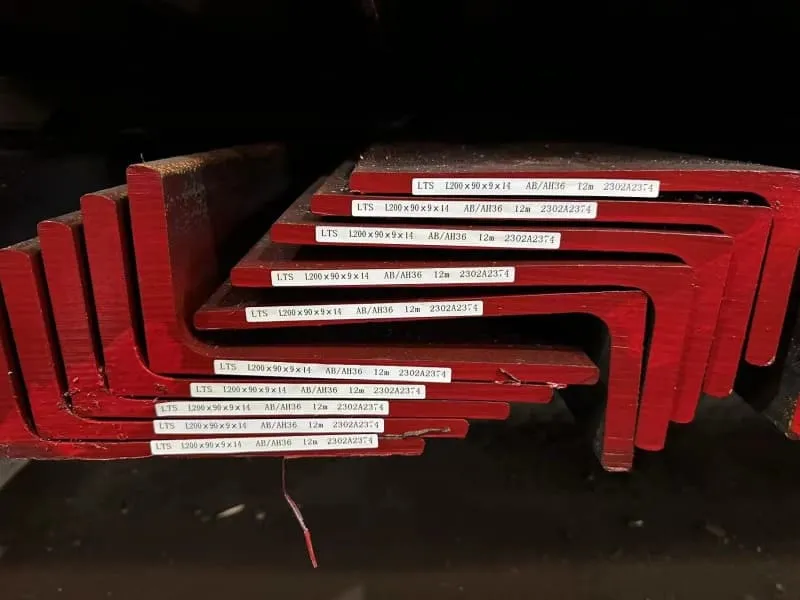
The three documents you must ask for
First is the inspection report. This is a separate document from the mill’s own certificate. It has the inspector’s name, company (SGS, DNV, etc.), date, and signature. It lists each test that was witnessed. It also shows the results and a pass/fail decision.
Second is the stamped mill certificate2. The inspector takes the mill’s original certificate (EN 10204 Type 2.2 or 3.1). They add their own stamp. The stamp says something like “Witnessed by SGS” or “Approved by DNV.” Some stamps have a unique number. You can verify that number with the inspection company.
Third is the traceability record3. This is a list that matches each heat number to the test results and the bundle numbers. The shipyard uses this record to track the steel from the certificate to the actual piece.
What each document looks like and why it matters
| Document | Who issues | What it shows | Why shipyard needs it |
|---|---|---|---|
| Inspection report | Third-party (SGS, DNV, etc.) | List of tests witnessed, results, pass/fail | Proof that an independent person checked |
| Stamped mill certificate | Mill + third-party stamp | Same as mill cert but with stamp | Shows the mill’s data is verified |
| Traceability record | Inspector or mill | Heat number → bundle number → piece number | Allows tracking each piece back to the test |
| Test raw data | Lab (optional) | Actual machine printouts | Extra proof for critical projects |
How to check if a stamp is real
Fake stamps exist. I have seen them. Here is what you do.
First, call the inspection company. Give them the certificate number and the stamp number. They can verify it in seconds. Do not email. Call. Email can be faked too.
Second, look for small mistakes. Real stamps are crisp. The ink is even. The date format matches the company’s style. Fake stamps often have spelling errors or wrong font.
Third, ask for a photo of the inspector at the mill. I do this for every third-party inspection. The inspector holds the certificate next to the steel. That photo is proof that the steel and the certificate were together at the time of inspection.
A real example from my business
For Gulf Metal Solutions’ order of marine steel plate and angle steel, we used SGS inspection4. SGS sent an inspector to the mill in Liaocheng. He watched the tensile and impact tests. He measured 20 pieces of angle steel. He took 15 photos. Then he issued a 6-page report with his stamp.
I sent that report to the customer before the steel was loaded. They forwarded it to the shipyard. The shipyard approved the steel in advance. When the container arrived in Dammam, the shipyard did a quick spot check. Everything matched. No delay. The customer told me: “This is the smoothest import we have ever done.”
Conclusion
Third-party inspection gives you proof, protects you from rejection, and speeds up shipyard approval. Always ask for it.
-
Understanding the significance of a third-party inspection report can help ensure quality and compliance in construction projects. ↩ ↩ ↩ ↩
-
Exploring the details of a stamped mill certificate can provide insights into the verification process of steel quality. ↩ ↩ ↩ ↩
-
Learning about traceability records can enhance your understanding of how steel quality is tracked and verified. ↩ ↩ ↩ ↩
-
Discovering more about SGS inspection can help you understand the role of third-party inspectors in ensuring material quality. ↩ ↩ ↩ ↩
-
Impact tests are essential for assessing the toughness of materials, crucial for safety and performance. ↩ ↩
-
Heat treatment processes are vital for enhancing the properties of steel, ensuring durability and strength. ↩ ↩