
You receive a shipment of marine angle steel, but the dimensions are wrong. Your project stops. Costs rise. It’s a nightmare.
To avoid dimensional disputes, you must specify exact tolerances based on industry standards, verify dimensions upon arrival with proper tools, and work with a supplier who follows strict quality control and offers third-party inspection.
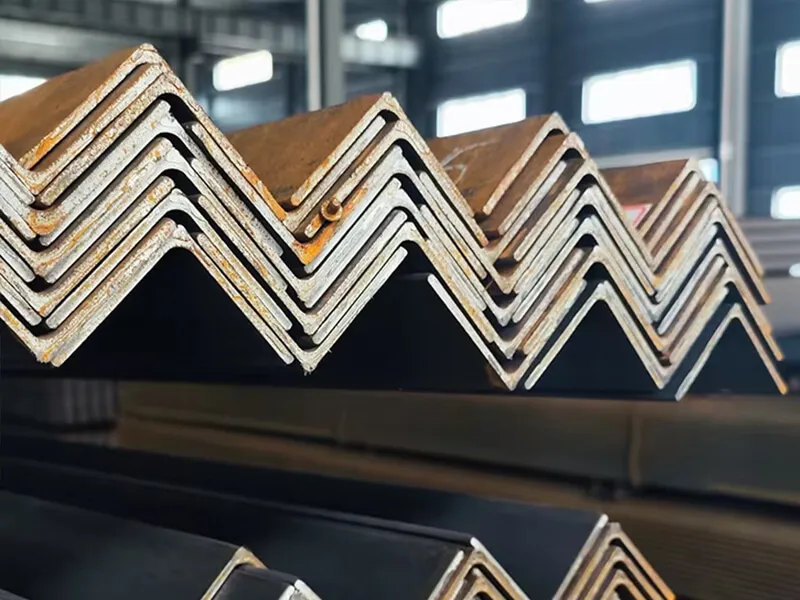
But let’s be honest: even with good intentions, disputes happen. The key is to understand where they come from and how to stop them before they start.
The Devil in the Details: Common Dimensional Complaints in Angle Steel Deliveries
You order 100x100x10mm angle steel, but your fabricator says it’s 98mm. Who is right? This is a common complaint.
Common complaints include leg length deviations, thickness below tolerance, excessive camber, twist, and out-of-square ends. These issues often arise from misunderstanding acceptable tolerances1.
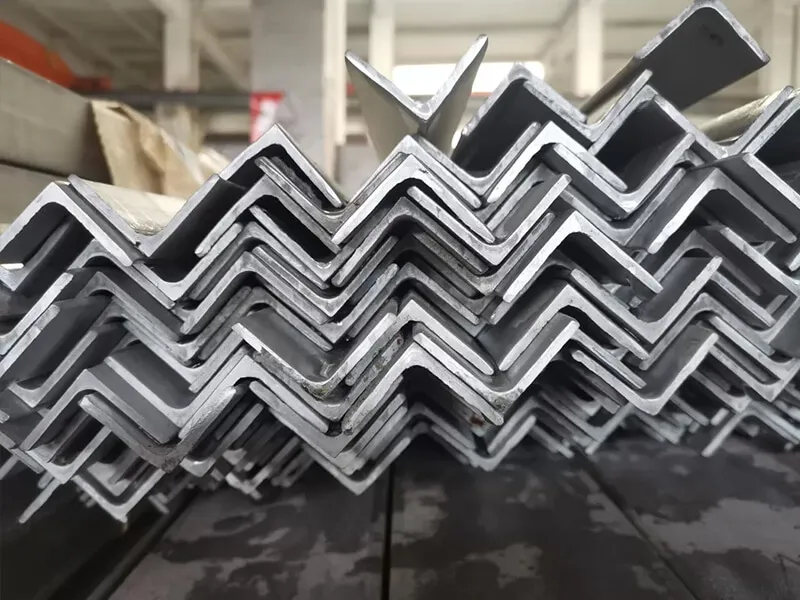
Let’s break down the most frequent dimensional complaints I’ve seen in my 10 years supplying marine steel. I’ll use a table to show you the typical issues and why they happen.
Leg Length Discrepancies2
Buyers often expect perfect leg lengths. But steel production has tolerances. For example, a 100mm leg might be acceptable from 98mm to 102mm under some standards. The problem starts when the buyer’s expectation and the supplier’s standard don’t match. I remember a client from Qatar who rejected a batch because the legs were 1.5mm shorter than ordered. They thought it was a defect. But according to the agreed ASTM A36 standard3, it was within tolerance. We had to educate them and find a compromise.
| Complaint | Typical Reason | How to Prevent |
|---|---|---|
| Leg length too short/long | Misunderstanding of tolerances | Agree on the standard (ASTM, JIS, etc.) in the contract |
| Thickness under tolerance | Mill variation or wear | Specify plus/minus tolerance; request MTC |
| Corner radius too large | Roll wear | Discuss acceptable radius before order |
| Camber (bowing) | Improper cooling or handling | Set maximum camber per length; inspect before shipment |
| Twist | Rolling or straightening issues | Agree on twist limits (e.g., 1° per meter) |
| Out-of-square | Cutting process | Require square cut ends; check with square gauge |
In my experience, most disputes come from not setting clear expectations upfront. The buyer assumes the steel will be perfect, but the mill works within a range. That’s why communication is critical. I always ask my customers: "Which tolerance standard do you follow? ASTM? JIS? EN? Let’s put it in the PO."
Another common complaint is surface condition, but that’s not dimensional. However, surface issues can hide dimensional problems, like pits that affect thickness measurement. So always check surface first.
We once had a customer in Vietnam who ordered angle steel for a ship repair. They measured the thickness with a cheap caliper and found it 0.3mm under. They complained. We sent them our MTC (Mill Test Certificate4) showing the thickness was within ASTM tolerance. We also offered to send a replacement at cost because we value the relationship. But after that, we made sure to discuss tolerances in every new order.
The table above shows the main complaints and solutions. If you know these, you can avoid surprises. Remember: steel is not a precision machine part. It’s a structural material with acceptable variations. The devil is in the details of the tolerance standard you choose.
Decoding the Tolerances: Understanding Industry Standards (ASTM, JIS, EN, GB) for Angle Geometry
You open the spec sheet, and it says "tolerance1 per ASTM A6". What does that mean for your 150x150x12mm angle?
Industry standards like ASTM A6/A6M2, JIS G31923, EN 10056-24, and GB/T 7065 define permissible variations for leg length, thickness, straightness, and more. Knowing these helps you set realistic expectations.
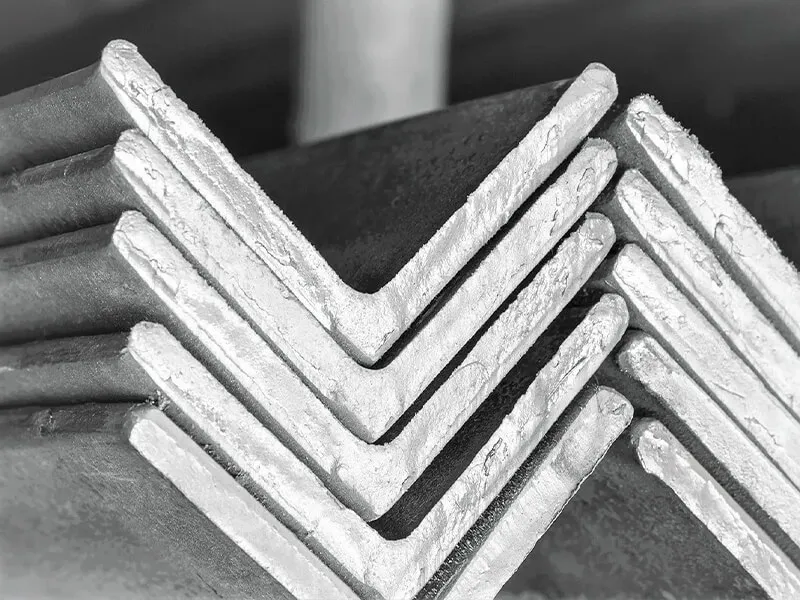
Tolerances are not one-size-fits-all. Each standard has its own tables. Let’s look at some key differences. I’ll explain using a practical example: a 100x100x10mm angle.
ASTM A6/A6M (American Standard)
ASTM A6 covers structural shapes. For a 100mm leg, the tolerance on leg length is ±1.6mm for certain sizes. Thickness tolerance depends on the nominal thickness; for 10mm, it might be ±0.5mm. Straightness (camber) is limited to 1/8 inch per 10 feet, about 1mm per meter. These are quite generous.
JIS G3192 (Japanese Standard)
JIS tends to be tighter in some aspects. For a 100mm leg, the tolerance might be ±1.5mm. Thickness tolerance for 10mm could be ±0.4mm. The corner radius is also specified more strictly.
EN 10056-2 (European Standard)
EN standard often has different classes. For equal angles, EN 10056-2 gives tolerances based on leg length. For 100mm, leg length tolerance is ±1.5mm, thickness ±0.5mm. It also specifies mass per meter tolerance.
GB/T 706 (Chinese Standard)
GB/T 706 is similar to ASTM but with some variations. For 100mm leg, tolerance is ±1.5mm, thickness ±0.5mm. Straightness is 0.4% of length. Many Chinese mills follow GB, but they can also produce to other standards if requested.
Here’s a comparison table for a 100x100x10mm angle:
| Standard | Leg Length Tolerance (mm) | Thickness Tolerance (mm) | Camber (max) | Corner Radius |
|---|---|---|---|---|
| ASTM A6 | ±1.6 | ±0.5 | 1mm per meter | Not specified tightly |
| JIS G3192 | ±1.5 | ±0.4 | 1.5mm per meter | 10mm ± 1.5mm |
| EN 10056-2 | ±1.5 | ±0.5 | 0.4% of length | 9mm ± 1mm |
| GB/T 706 | ±1.5 | ±0.5 | 0.4% of length | 10mm ± 1mm |
As you can see, they are close but not identical. The choice of standard affects what you can accept. If you order to ASTM but inspect with JIS expectations, you might reject good material.
I once had a customer from Mexico who insisted on JIS for a project that originally specified ASTM. They thought JIS was better. But the mill we worked with normally produced to ASTM. We had to check if they could meet JIS. They could, with some adjustments. But it added cost and time. So my advice: pick one standard and stick to it. Don’t mix.
Also, some buyers request "no minus tolerance6". That means they want the steel to be at least the nominal size, never smaller. This is possible but usually costs more because mills have to select from the upper end of the tolerance range. We can arrange that, but it needs to be discussed upfront.
Understanding these standards helps you avoid disputes because you know what’s acceptable. If you measure a 9.7mm thickness on a 10mm angle ordered to ASTM, it’s still within tolerance (±0.5mm). But if you ordered to JIS, it’s acceptable too (±0.4mm? 9.7 is -0.3, so OK). Actually 9.7 is within both. But if it was 9.5, that would be out for JIS (-0.5) but borderline for ASTM (±0.5). So it’s important.
My personal insight: many buyers don’t realize that tolerances exist. They expect perfection. As a supplier, it’s our job to educate them and agree on the rules before we ship. That’s how we build trust.
Measuring Matters: Best Practices for Verifying Leg Length, Thickness, and Corner Radius
You have the steel in your yard. Now how do you check if it meets the spec? Using the wrong tool or method can give wrong results.
To verify dimensions accurately, use calibrated tools like vernier calipers1 for leg length and thickness, radius gauge2s for corners, and a tape measure for length. Follow standard procedures and sample enough pieces.
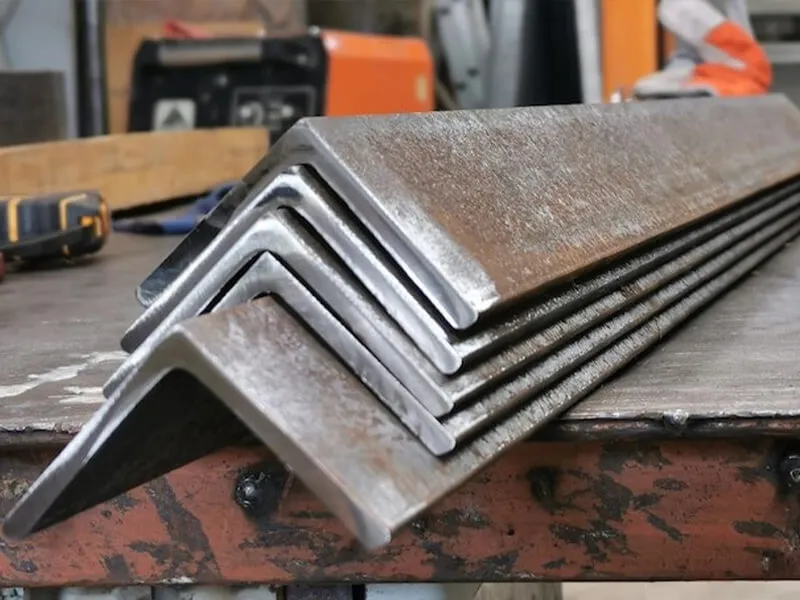
Measuring angle steel seems simple, but there are pitfalls. Let me share some best practices I’ve learned from working with inspectors and customers.
Measuring Leg Length
Leg length is usually measured from the toe to the back of the angle. Use a vernier caliper or a steel ruler. But where exactly do you measure? The standard says at any point along the length, but avoid the ends if they are cut roughly. Measure at least 500mm from the end. Also, measure both legs. They might be different.
Measuring Thickness
Thickness is trickier. The angle is not perfectly uniform. It might be thinner near the edges due to rolling. You should measure at a distance from the toe equal to the leg length, or at the center of the leg if the leg is wide. Use a micrometer3 or caliper. Avoid measuring where there is scale or rust. Clean the surface first. Some buyers use ultrasonic thickness gauges4, which are fine if calibrated.
Corner Radius
Corner radius is often overlooked. But if the radius is too large, it can affect fit-up in fabrication. Use a radius gauge set. Place it against the inside corner. The radius should match the nominal value within tolerance. Standards often don’t specify radius tolerance tightly, so you need to agree with your supplier.
Here’s a table of recommended tools and methods:
| Dimension | Recommended Tool | Measurement Points | Acceptance Criteria |
|---|---|---|---|
| Leg Length | Vernier caliper (0-150mm) | 3 points along length (ends, middle) | Within tolerance per standard |
| Thickness | Micrometer or caliper | 3 points per leg (near toe, center, heel) | Within tolerance per standard |
| Corner Radius | Radius gauge set | Inside corner, both ends | Typically ±1mm or as agreed |
| Length | Steel tape measure | Overall length, both sides | Within +0, -something per standard |
| Straightness (camber) | Straight edge + feeler gauge | Along flange, maximum deviation | Within % of length per standard |
| Twist | Surface plate + level | Place on plate, measure twist angle | Usually max 1° per meter |
In my experience, the biggest mistakes are:
- Measuring only one sample. You should measure at least 5% of the bundle, or as per agreement.
- Using a tape measure for leg length. It’s not accurate enough for small dimensions.
- Ignoring surface condition. Rust or scale can add thickness, making it seem thicker than it is.
I recall a case where a customer in the Philippines complained that the thickness was 0.2mm below spec. They used a caliper on a rusty spot. We asked them to grind the spot and measure again. It was within tolerance. So always measure on clean metal.
Another tip: if you are using third-party inspection like SGS, they have their own procedures. We support that. In fact, we encourage it for large orders. It gives both sides confidence.
We also provide MTC (Mill Test Certificate5) with each shipment. It shows the actual test results from the mill. But remember, the mill tests samples, not every piece. So there can be variation. The best way is to agree on a sampling plan6 and acceptance criteria in the contract.
Straight Talk: Addressing Camber1, Twist, and Out-of-Square2 Issues Before Fabrication
You start welding, but the pieces don’t line up. The angle steel is bent or twisted. Now you have to stop work and fix it.
Camber, twist, and out-of-square are common shape issues. To avoid them, specify maximum allowable deviations in your order, inspect upon arrival, and reject pieces that exceed limits before fabrication starts.
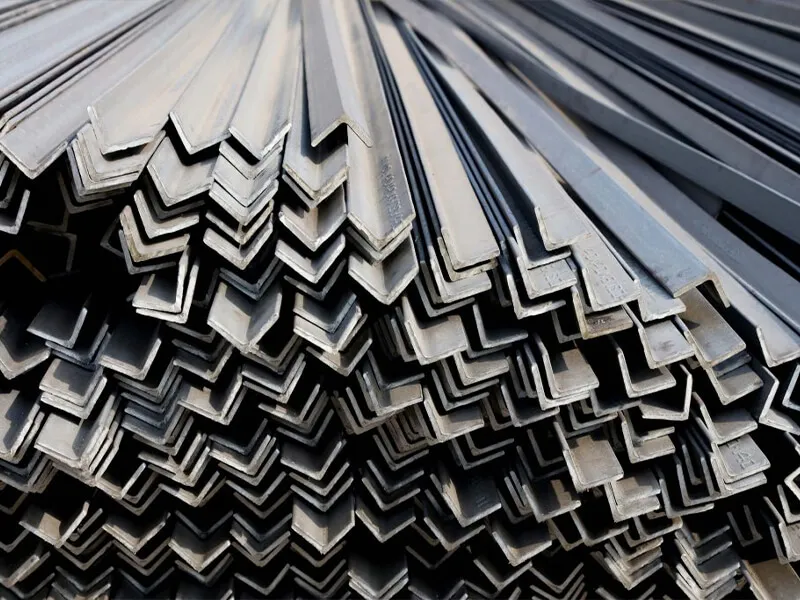
Shape defects are serious because they can’t be easily corrected in the field. Let’s dive into each one and how to handle them.
Camber (Bow)
Camber is the curvature along the length of the angle. It’s usually measured by placing a straight edge along the flange and measuring the gap. Standards allow a certain amount, like 0.4% of length for GB, or 1/8" per 10′ for ASTM. That means for a 12m bar, camber up to 48mm might be acceptable under ASTM. That seems a lot, but it is. If your application needs tighter camber, you must specify it.
Twist
Twist is when one end of the angle is rotated relative to the other. It’s measured by placing the angle on a flat surface and measuring the lift of one corner. Twist is harder to fix. Some standards don’t give a specific number; they say "shall be such that the angle lies flat" or something vague. In practice, a twist of 1° per meter is often acceptable. But for precision work, you might need less.
Out-of-Square
Out-of-square refers to the cut ends not being perpendicular to the length. If you’re welding angles together, square ends are important. Check with a square and feeler gauge. The deviation should be within a few millimeters per width of the leg.
Here’s a table with typical limits and inspection methods:
| Defect | Typical Limit (per standard) | How to Inspect |
|---|---|---|
| Camber | ASTM: 1/8" per 10′ (1mm/m); GB: 0.4% of length | Place angle on its flange, use straight edge and feeler gauge at mid-length. |
| Twist | Often not specified; common practice: max 1° per meter | Place on surface plate, measure height of one corner while others contact. |
| Out-of-square | Max 2mm over leg width for cut ends | Use carpenter’s square against leg and end; measure gap. |
In my years of supplying marine steel3, I’ve seen many disputes over these. A customer in Malaysia once rejected a whole container because they found a few pieces with twist. But the twist was within what we considered normal. We had to explain that for long bars, some twist is inevitable during cooling and handling. We offered to replace the worst pieces, and they accepted.
My advice: if your project requires very straight and square angles, consider ordering from mills that specialize in precision shapes4, or ask for straightening. Also, inspect before you start fabrication. Once you cut and weld, it’s hard to return.
We once had a client in Saudi Arabia (Gulf Metal Solutions) who ordered marine angle steel for a project. They were very particular about straightness. We worked with our mill to select bars that were within half the standard tolerance. We charged a bit extra, but they were happy because they saved time in fabrication. That’s the kind of partnership we build.
Another point: handling and storage can cause camber. If you stack angles improperly, they can bend. So store them on flat racks with supports. Don’t let them sag.
In my experience, the single most important factor is communication. Talk to your supplier about tolerances before you order. Ask for MTCs. If possible, visit the mill or arrange third-party inspection. It saves headaches later. — Zora Guo
Conclusion
Dimensional disputes in marine angle steel orders are avoidable. Agree on standards, measure correctly, and partner with a reliable supplier who communicates clearly.
-
Understanding camber is crucial for ensuring the quality of angle steel in your projects. ↩ ↩ ↩ ↩
-
Knowing how to check for out-of-square cuts can save you from alignment issues during welding. ↩ ↩ ↩ ↩
-
Explore best practices to ensure you receive high-quality marine steel for your projects. ↩ ↩ ↩ ↩
-
Discover the benefits of precision shapes to enhance the accuracy of your steel projects. ↩ ↩ ↩ ↩
-
Understand the significance of Mill Test Certificates in verifying material quality and compliance in steel orders. ↩ ↩
-
This resource will guide you in developing a robust sampling plan to ensure quality control in your manufacturing processes. ↩ ↩