
Two angle bars can look identical and still behave completely differently at minus twenty degrees Celsius. Mix your grades in storage, and the wrong bar ends up welded into a hull.
Avoid mixing marine angle steel grades by verifying the grade at goods receipt, storing each grade in a physically separate and labelled bay, keeping the bundle tag attached until the last bar is cut, and checking the first piece from every bundle against the mill certificate before release to fabrication.
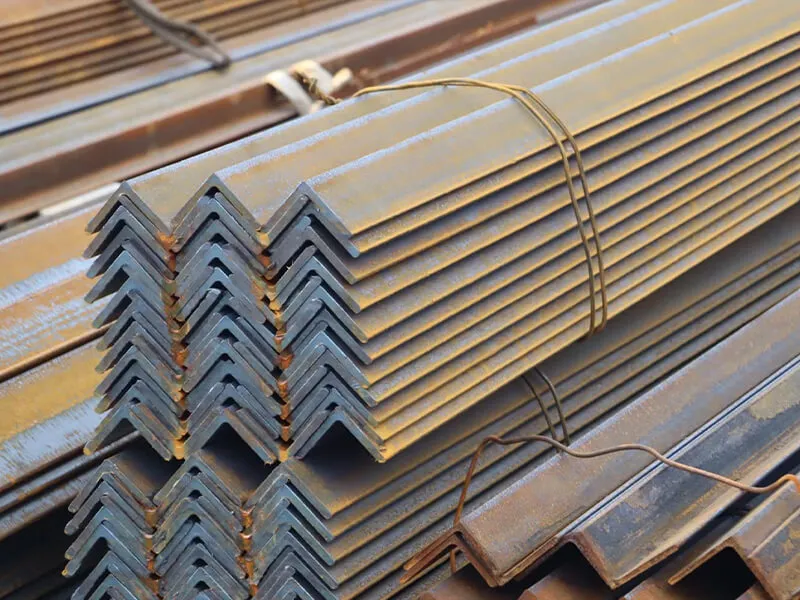
I am Zora Guo, export sales lead at Yichen Steel, and I have walked through enough buyer yards to know that grade mixing rarely starts with carelessness. It starts with a fact that surprises people every time I say it: AH36 and DH36 angle steel look exactly the same, weigh almost the same, and sit one letter apart on the certificate. No caliper, no magnet, no scale can separate them. In this article I will show you where the confusion starts, how to lay out your storage so grades cannot drift into each other, and which checks keep the grade honest from the gate to the saw. Almost none of it costs money. It costs discipline, some floor paint, and a tin of end-marker spray. Buyers who put those three things in place stop worrying about grade mix-ups for good, and their classification surveyors stop finding surprises.
Why Do Different Marine Angle Steel Grades Look Exactly Alike in the Yard?
You receive two bundles of 100x100x10 angle on the same truck. Same mill length, same surface finish, same rust pattern starting at the toe. Only a Charpy test temperature separates them, and no tool in your workshop will find it.
The grades differ only in guaranteed impact toughness, not in appearance, size, or weight. For the 36 class, A is tested at 0 °C, D at −20 °C, E at −40 °C, and F at −60 °C. Only the mill test certificate and the stencil on the bar can tell them apart.
One Letter Changes the Toughness, Not the Look
Under IACS UR W11, every grade in the A, B, D, E family carries the same minimum yield strength of 235 MPa and the same tensile range of roughly 400 to 520 MPa. The 32 and 36 classes keep one strength level right across their whole family too. What changes from grade to grade is only the temperature at which the Charpy V-notch impact test was performed and passed. For the 36 class, AH36 is verified at 0 °C with a minimum of 34 J longitudinal, DH36 at −20 °C, EH36 at −40 °C, and FH36 at −60 °C. The mild grades move through the same temperature ladder at 27 J, and Grade A often carries no impact test at all for thicknesses below 50 mm. That last point deserves a pause: a Grade A bar has never been proven tough at any temperature below ambient, so when it ends up where a D or DH grade was specified, the deficiency is invisible until a surveyor reads the certificate. The steel is not weaker in yield. It is simply unverified in cold toughness, and that is exactly the property your hull design relied on.
| Grade family | Grade | Min yield (MPa) | Impact test temp | Min energy, long. |
|---|---|---|---|---|
| Normal strength | A | 235 | +20 °C (often none ≤50 mm) | — |
| Normal strength | B | 235 | 0 °C | 27 J |
| Normal strength | D | 235 | −20 °C | 27 J |
| Normal strength | E | 235 | −40 °C | 27 J |
| High strength 36 | AH36 | 355 | 0 °C | 34 J |
| High strength 36 | DH36 | 355 | −20 °C | 34 J |
| High strength 36 | EH36 | 355 | −40 °C | 34 J |
| High strength 36 | FH36 | 355 | −60 °C | 34 J |
The Substitution That Is Really a Design Change
Here is the trap that catches repair yards most often. A corroded stiffener comes off a vessel, and the fitter reaches for whatever angle is in the rack that day. If the rack holds mixed grades, a Grade A bar can easily end up where the drawing called for DH36. The bar fits. It welds fine. It passes visual inspection. And it is still a design change, because the scantlings were approved on the assumption that this location carried verified toughness at the design temperature. Classification societies treat that as a rule compliance issue, not a paperwork slip, and rectifying it usually means cutting the bar back out.
I learned to respect this at a port visit a few years ago, watching a repair crew sort through an unlabelled pile for “some 150 angle”. I asked which grade they needed and got a shrug. That shrug is the whole problem in one gesture, and it is why I now tell every buyer that grade identity is a storage problem before it is a procurement problem. If the yard cannot answer “which grade is this bar” in five seconds, the answer will eventually be wrong. One more trap worth naming: buyers sometimes order ASTM A36 when they mean AH36. Same-looking name, completely different steel, 250 MPa against 355 MPa, and no class society approval at all.
Why the Chemistry Quietly Changes Too

There is a second layer under the temperature ladder that buyers rarely see until they compare two certificates side by side. The colder grades are not just tested colder. They are made differently. To guarantee 34 J at −40 °C or −60 °C, EH36 and FH36 need killed fine-grain steel, so the carbon ceiling drops, the manganese and microalloying balance shifts, and the delivery condition narrows toward normalised or thermomechanically controlled rolling. That is why DH36 and EH36 do not price the same as AH36 even though the yield is identical on paper. It also means a substituted grade can change the welding procedure, because carbon equivalent moves with the chemistry. If your welders qualified a procedure on AH36 and the yard quietly feeds them EH36 bar, the procedure qualification question opens up again. None of this is visible on the bar. All of it sits in the heat number, which is exactly why the heat number has to survive storage. Some mills can supply multi-certified angle, one bar carrying several society stamps, and that is legitimate and useful. But multi-certification comes from the mill, not from the warehouse. A mixed pile cannot be re-certified by sorting it afterwards, and any supplier who implies otherwise should be walked away from.
How Should You Lay Out Grade-Segregated Storage Bays?
Good intentions do not keep grades apart. Concrete does, or at least painted lines and steel racks do. Layout is where grade segregation is won or lost, and it costs almost nothing to get right.
Give every grade its own bay, separated by a physical barrier or at least two metres of clear floor, with a big sign at eye level and colour-coded end paint on every bar. Never let two grades share a rack level, a pile, or a bundle.
Physical Barriers Beat Good Intentions
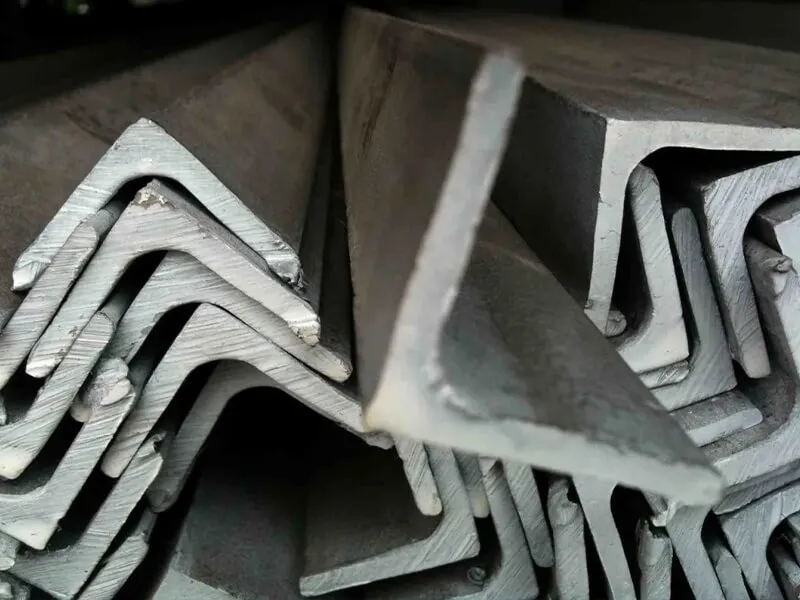
The most reliable yards I have seen do not rely on workers remembering things at seven in the morning. They make the wrong action physically awkward. Separate bays for A, AH32, AH36, and DH36 material, with painted floor lines, chain posts, or rack dividers between them. A large sign on each bay showing grade, size range, and heat numbers currently stored. Some yards add a simple rule that works better than any poster: one rack level, one grade, one size. When a new grade arrives, it does not squeeze into an existing level. It gets its own level or its own row, even if that means steel sits outside for a day on sleepers first. In humid climates like Malaysia or the Philippines, that trade is still worth it, because a mixed pile costs far more than surface rust does. And whatever layout you choose, keep the angles off the ground on dunnage with the open side of the section facing down, so water cannot sit in the V of the angle and start corrosion exactly where the mill stencil is.
The Bundle Is the Unit, Not the Bar
Grade identity dies the moment a bundle is broken. Until then, the bundle tag is the law. Keep the original tag attached, waterproof-laminated or metal, carrying grade, size, heat number, society, certificate reference, and arrival date. When you must break a bundle, break it deliberately: cut only what the job needs, re-band the remainder, and transfer the grade and heat information onto the remaining pieces with end paint or a stamped tag before the saw’s offcuts scatter. Yards that skip that transfer step end up relying on memory, and memory is where AH36 quietly becomes “probably fine”. Our own practice before dispatch is to spray the grade in end paint on every bundle, in a colour the yard and I agree on together, precisely so the first person who touches the steel at the receiving gate can see the grade from ten metres away.
A Zone Map Nobody Has to Guess At
| Storage element | Rule | Why it matters |
|---|---|---|
| Bay assignment | One grade per bay, signed at eye level | Removes the five-second identification problem |
| Barrier | Painted line, chain, or rack divider | Makes mixing a deliberate act, not a slip |
| Rack level | One grade, one size per level | Prevents look-alike size and grade pairs sharing space |
| Bundle tag | Laminated, seven fields minimum | Survives weather; grade survives with the steel |
| Broken bundle | Re-band and re-mark before scattering | Grade identity survives past the first cut |
| End paint | One colour per grade, agreed with supplier | Readable from ten metres, no tag needed |
One more habit worth borrowing from the best yards I supply: a simple location register, even if it is only a spreadsheet. Each bay row records grade, size, heat number, bundle count, and arrival date, and it gets updated the same day steel moves in or out. The register turns storage from a physical habit into an auditable record. When a classification surveyor or a third-party inspector asks you to prove that DH36 never touched the Grade A bay, the register answers in seconds, and the painted floor backs it up. I have watched inspections go smoothly for exactly this reason. The inspector did not trust the yard more because the steel was cleaner. He trusted it because every question had a written answer that matched what he could see on the ground. That is the real goal of the layout: a yard where the paper and the floor tell the same story without anyone working to reconcile them.
What Checks Stop Grade Drift Between Receipt and Cutting?
Layout makes mixing hard, but checks make it impossible. Three checkpoints carry the load: the arrival gate, the first-piece check, and the release authorisation.
Check the certificate against the bundle tag and the bar stencil at receipt, measure the first piece from every new bundle before release, and require a supervisor sign-off that names the grade before any steel moves to fabrication.
The Arrival Gate
When the truck arrives, three documents and three surfaces must agree: the heat number on the mill test certificate, the heat number on the bundle tag, and the heat number stencilled or painted on the bar itself. While you are at it, confirm the certificate names the exact grade and the correct Charpy test temperature, because the classic certificate error is a test temperature carried over from a sister grade. Then walk the bundle and confirm the grade mark on the steel matches. Ask for the certificate to EN 10204 type 3.1 at minimum, issued by the mill itself, or type 3.2 when your project or your surveyor wants an independent authorised inspector named on the document. This takes fifteen minutes per truck, and it is the only moment in the material’s life when the full paper trail is in one place. A discrepancy found at the gate is a claim to me. The same discrepancy found three weeks later, after the steel has entered a mixed pile, is an investigation.
One honest note here: a platform scale at the gate is a fine tool, but it screens size, not grade. Two bundles of the same section in different grades weigh the same, because the chemistry difference does not move density. So use the weighbridge to catch a 75x75x6 labelled as 75x75x8, and use the certificate and the stencil to catch the grade. Buyers sometimes hope one instrument will do both jobs, and that hope is how mixed grades slip through a well-run gate.
The First-Piece Check and the Release Point
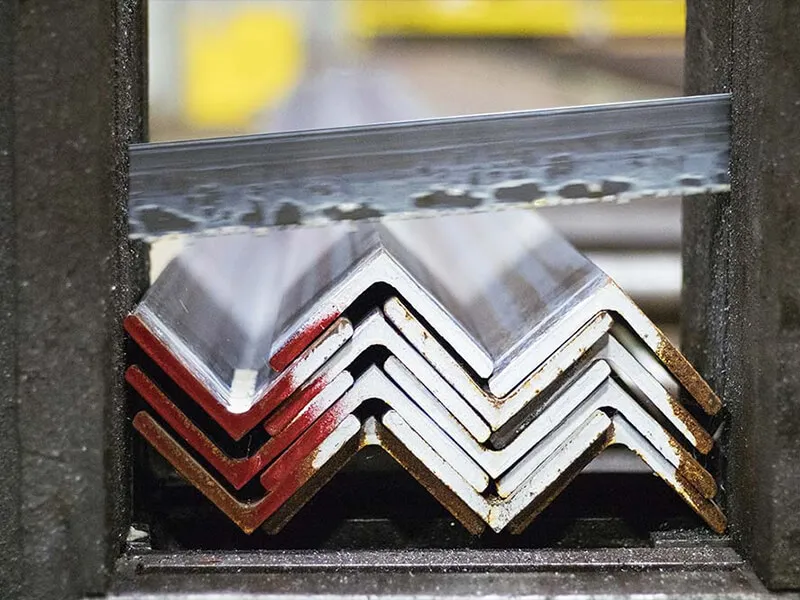
Before any bundle feeds the saw or the fabrication line, pull the first piece and verify it against the cut list: size with a caliper, grade against the tag and the end paint, heat number recorded on the job sheet. If the bundle was broken earlier, this check is your last defence, and it works only if the marking survived the break. The release itself should carry a name. A supervisor signs a simple requisition line that says which grade, which size, which heat, going to which job. That signature does two things. It creates a record you can audit when a surveyor asks, and it makes the person releasing the steel accountable for reading the tag. Yards that skip this step are the ones that call me in a panic asking whether a half-cut assembly can be certified.
The Repair-Yard Trap
Repair work deserves its own warning, because it is where I see the most grade mixing. Old steel comes off, new steel goes on, and nobody checks the drawing’s grade callout against the replacement bar in the rush. Give repairs the same gate discipline as new construction: identify the specified grade from the drawing first, then fetch the steel, then verify the marking before the first weld. If your mixed stock makes that impossible, the fix is not more care. It is the segregated layout from the previous section.
What Discipline Actually Buys You
| Practice | Mixed-grade storage | Grade-segregated storage |
|---|---|---|
| Grade identification | Memory and guesswork | Read the sign, tag, or end paint |
| Surveyor audit | Slow, defensive, paper hunting | Point at the bay, hand over the file |
| Repair substitution risk | High, invisible until failure | Low, wrong bay is visibly empty |
| Wrong-grade discovery point | After cutting or welding | At the arrival gate |
| Cost of the system | Zero money, high risk | Paint, signs, and an hour of routine |
The economics deserve one honest paragraph, because someone in your organisation will ask what all this costs. The paint, the signs, the laminated tags, and the supervisor’s signature line add up to a few hundred dollars and maybe an hour of routine per delivery week. Against that, a single wrong-grade discovery after welding means cutting out fabricated assemblies, re-procuring steel, re-qualifying the weld procedure, and absorbing a schedule slip measured in weeks, plus the conversation with the class surveyor that nobody enjoys. When our Gulf Metal Solutions buyer in Saudi Arabia set up his segregated bays with colour codes we agreed on together, and ran SGS checks batch by batch before shipment to Dammam, his inspections stopped producing findings altogether. He did not buy better steel than before. He bought the same steel with a storage system that could prove what it was holding, and that proof is what his surveyors and his clients were actually paying for. If you want a second pair of eyes, ask us about grade-segregated supply and third-party inspection support before your next shipment, and we will set the end-paint colour scheme with your yard in advance.
Conclusion
Grade mixing is invisible until it is expensive. Verify at the gate, segregate by bay, mark in colour, and check the first piece. Storage discipline is cheaper than one rejected weld.