
Losing the heat number on one bundle of marine angle steel can stop a block, fail a class audit, and force a re-test nobody budgeted for.
Tracking marine angle steel from warehouse receipt to final installation means carrying one heat number through six handoffs: goods-in, storage, blasting, cutting, sub-assembly and erection. Record it at receipt, transfer it after blasting, tie it to the piece number at the saw, and keep the remnant marked.

Every yard I visit believes it has traceability. Then I ask for the heat number of the bar in front of us, and watch three people walk to three different files. That is the whole problem in one minute. The material is traceable in the office and anonymous on the floor. We publish our marine angle steel stock list for buyers who want to see what is actually standing in the bay. So the method below is not a filing system. It is a chain of six handoffs, and each handoff needs one action that takes under a minute, or it will be skipped on the busy shift.
What Should the Warehouse Receipt Actually Record?
A receipt that lists tonnes is a delivery note. A receipt that lists heats is a traceability record.
A marine angle steel warehouse receipt should record, per bundle: heat number, grade, leg size, thickness, length, bar count, theoretical mass, weighed mass, certificate number, classification society and stack location. Nothing less will survive an audit.
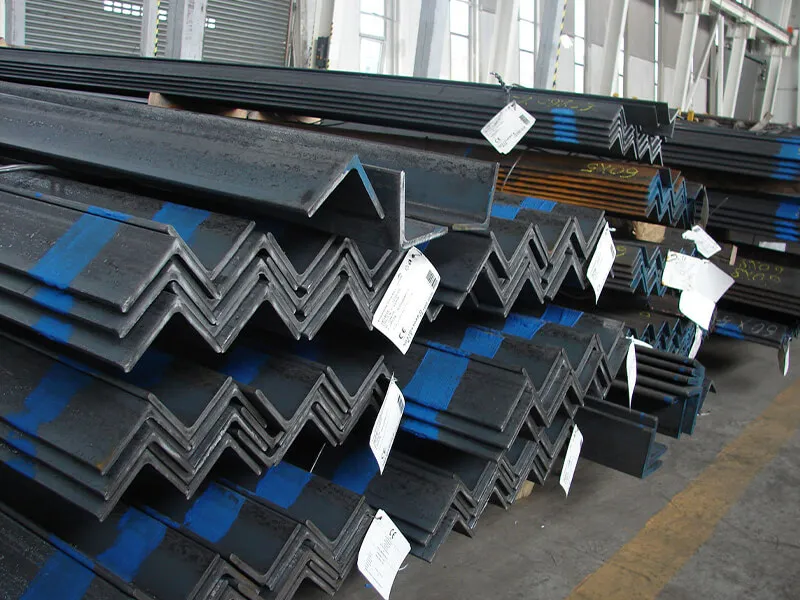
Years of loading angle bundles taught me one thing about mill marks. On an equal-leg angle, the mill usually paints the grade and heat number on the inside face of one leg, near the end. The forklift picks the bundle up under the legs. So the first thing that happens in your own warehouse is that your own equipment scrapes the mark off. I have watched it happen at our yard in Liaocheng, and I have watched it happen at three customer yards since. Nobody is careless. The mark is simply in the wrong place for the way steel is handled.
Why One Line per Order Is Not Enough
A purchase order line says “L100×100×10, 20 t, AH36”. A mill test certificate may list six heats for that 20 t. A packing list may show two bundle numbers. The physical bundle in front of the forklift shows one painted number, and it belongs to only one of those six heats.
If your receipt is written from the order line, you have already lost the chain at the gate. The receipt has to be built per heat and per bundle, so that a 2 t bundle holding bars from two heats becomes two lines and two identities. That sounds fussy until the day you need to prove which heat went into a collision bulkhead.
The Three Documents That Must Agree
At goods-in you hold three papers, and they must agree on four fields: grade, size, heat number and quantity basis. The certificate proves what was made. The packing list proves what was loaded. The marks on the steel prove what actually arrived. Most disputes I see are not about quality at all. They are about a certificate that lists a heat number which does not appear anywhere on the bundle.
There is a second trap in the certificate itself. Under EN 10204, a 3.1 certificate is issued by the manufacturer’s inspection department, which is independent of production but still part of the mill. A 3.2 certificate adds a third-party witness and signature, usually from an inspection body such as SGS, TUV, BV, DNV or LR. Shipbuilding work under class rules generally sits in the second category or requires the surveyor’s endorsement. I walk through the wording in our certificate guide for buyers because the type number is often quoted on a quotation without anyone checking what it means. Either way, the paper is only valid for the steel it names. If the heat number on the certificate does not match the mark on the bar, you do not have a certificate for that bar. You have a certificate for a different bar.
What the Receipt Register Should Hold
Build the register in a spreadsheet if that is all you have. The columns matter more than the software.
| Field | Source document | What it protects against |
|---|---|---|
| Bundle number | Packing list | Two bundles sharing one identity |
| Heat number | Certificate plus bundle mark | Mixed-heat delivery |
| Grade and society | Certificate | Substitution of grade A for AH36 |
| Leg, thickness, length | Certificate plus tape measure | Wrong-size delivery inside tolerance |
| Bar count | Physical count at unloading | Short delivery hidden by bundle weight |
| Theoretical mass | Section table | Invoice based on wrong kg/m |
| Weighed mass | Yard weighbridge | Positive mill tolerance absorbed silently |
| Certificate number and type | Certificate header | 3.1 offered where 3.2 was ordered |
| Stack location | Yard plan | The bar that cannot be found later |
The Nested-Bundle Trap
A buyer in Thailand once showed me a bundle where the outer bars were AH36 and the inner bars were grade A. The mill had nested the tail of the previous heat inside a new bundle. That is a normal packing habit and completely legal, but the tag on the bundle carried only the outer heat.
If your receipt is written from the tag, you inherit the error quietly. If it is written from the certificate plus a bar count plus a weighbridge figure, you catch it, because the mass will not reconcile with the count. This is why the register needs both a count and a weight. Either number alone can be made to agree with anything.
Storage Has to Preserve the Distinction, Not Just the Steel
The yard procedure I trust most comes from a Chinese hull yard, and it is boring in the best way. Stacks are dedicated by grade, size and society. The marks face up, never down. Each stack carries a plate with grade, size and society name. Steel committed to a specific hull carries the hull number on that plate.
That last rule sounds like paperwork. It is not. When grade A and AH36 of the same size sit in the same bay, a size-only pick will find a bar, and the bar it finds may be the wrong grade. A hull number on the plate makes the wrong pick visible before the crane moves, which is the only time it is cheap to fix.
I would add one thing to that procedure. Photograph the tag and the stack plate on the day the bundle lands. Photos cost nothing, they carry a timestamp, and they end most arguments about what was delivered before the steel was ever touched.
How Do You Keep the Heat Number Alive Through Blasting and Priming?
Shot blasting removes paint, rust and scale. It also removes your identity marking, if the marking was only paint.
Keep the heat number alive by recording every bundle sheet by sheet before blasting, then transferring the mark onto the freshly primed surface with a marker colour reserved for that grade, at a fixed position on every bar. Paint marks do not survive blasting; transferred marks do.
IACS UR Z23 puts this in the survey table with almost no drama. The surveyor verifies “transfer marking after treatment line”. Two words, and they separate a clean audit from a week of re-testing.
What Actually Survives the Line
Most yards assume the mill stamp will carry them through. It usually does not, for a reason that has nothing to do with the stamp.
- Paint marker: does not survive. It is gone in the first pass through the machine.
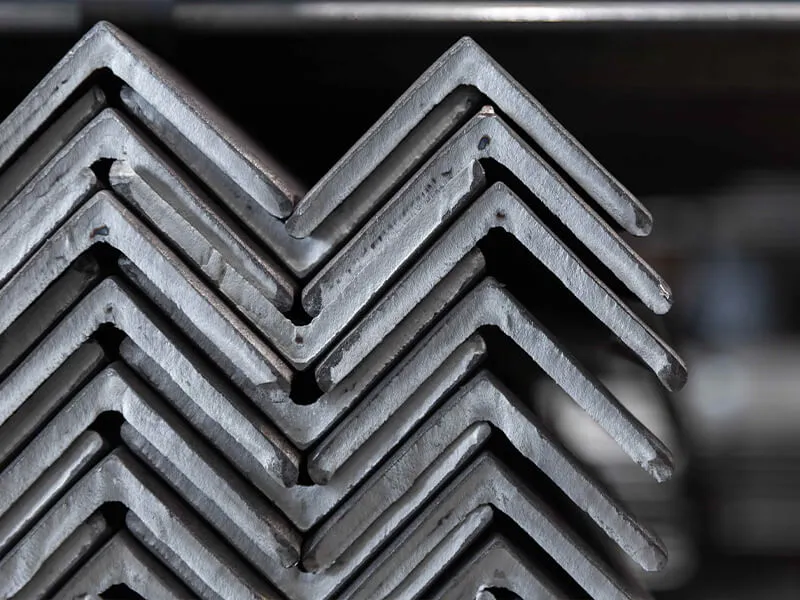
- Hand steel stamp: survives the blast, but a shallow stamp fills with primer and becomes unreadable. A deep stamp puts a notch in the surface, and on higher-strength steel that notch is a stress raiser, so good yards stop stamping AH36.
- Inkjet or dot-peen code: survives blasting and primer when it is applied after the line. This is what the modern yards use, and it is the only method that can carry a piece number and a heat number at once.
- Paper tag on the bundle: survives only if somebody re-hangs it after the line, because the line takes it off.
- Colour code on the primed surface: survives everything until cutting, which is exactly why it works as the backup layer rather than the primary one.
The Transfer Routine That Holds
Before the line, record heat, grade, size and society bundle by bundle, on a sheet that physically travels with the bundle. After the line, re-mark each bundle with grade, heat number and bundle number at a fixed point. One yard I work with marks the middle of the bundle face, about 100 mm in from each end, so the mark is never under a sling.
Then use colour deliberately. That yard writes with a white marker on ordinary mild steel and a yellow marker on high-strength steel, so a glance down the bay tells you which is which without reading a single character. Some yards also shoot different shop-primer shades for different societies, which gives a third layer that survives handling. I explain the sequence in our surface preparation notes, because the primer is also the layer your welders will curse if it is too thick. I like the marker colours better, because a primer shade is hard to argue about under artificial light.
Two rules make the routine hold. The mark goes on before the bundle leaves the line, never later in the stack. And the person who marks signs the sheet, because an unsigned transfer becomes a guess within a week.
Where the Transfer Fails
Three places, in my experience. The bundle that goes through the line at shift change, when the sheet and the bundle part company. The bundle that is split after blasting, so one tag turns into two identities and only one of them is real. And the bundle that is re-stacked for space, when the tag gets re-hung on the nearest bundle instead of its own.
Each of these is a five-second error with a multi-week consequence, which is why the check has to be a physical walk with a sheet in hand, not a report reviewed at month end.
| Method | Survives blasting | Survives primer | Survives cutting | Survives erection | Effort per bundle |
|---|---|---|---|---|---|
| Paint marker from the mill | No | No | No | No | None, and worthless |
| Hand steel stamp | Yes, if deep | Poor, fills with primer | Only on the piece | Only on the piece | High, and risks notching |
| Inkjet or dot-peen code | Yes | Yes | Yes, if re-applied | Yes, if on the piece | Low after setup |
| Paper bundle tag | No | Only if re-hung | No | No | Low |
| Colour code on primed surface | Not applicable | Applied after | Readable at the saw | Lost with the offcut | Very low |
| Marker transfer plus register | Not applicable | Applied after | Yes, per piece | Yes, with piece number | One minute per bundle |
How Does the Piece Number Connect Back to the Heat at the Saw?
Blasting threatens the mark. Cutting destroys the bar. From the saw onward, identity has to live on the piece.
Connect the piece number to the heat by writing both on the cut list before the first cut: hull, block, frame, piece number, heat number and bar identity. The piece number goes on the piece. The heat number stays on the remnant and in the register.
This is the step surveyors describe as marking transfer during cutting, and the wording in the class guidance is specific. The yard has to convert the mill surface mark into a piece number after cutting, and the leftover material must still be identifiable against the original mark.
A Piece Number People Will Actually Write
Long codes get shortened by tired people, and a shortened code is a wrong code. Build the number from things the crew already knows: hull, block, frame, piece. Something like H-1042-B03-F12-P07 tells a man standing at the block everything he needs. A twenty-two character code from an ERP system tells him nothing, so he writes the last four digits and the chain is broken at the weld.
The heat number does not need to be inside the piece number. It needs to sit on the same cut list line that produced the piece. That is the join, and it is enough. What matters is that the join is written before the cut, not reconstructed afterwards from memory and a stack of paper.
The Remnant Rule
Every yard procedure I have read in China says the same thing, and every surveyor I have met checks it: the leftover must keep the original marks. If the remnant loses its heat number, the next job that cuts from it inherits unmarked steel, and unmarked steel becomes either scrap or a guess. Both are expensive, and one is dangerous.
Practically, this means marking the remnant before the saw starts, not after the last piece drops. It also means a remnant register with heat, size, length and location. A 3.6 m offcut of AH36 with no tag is physically identical to a 3.6 m offcut of grade A sitting two racks away.
Reverse Traceability Is the Only Test That Counts
Pick three pieces at random from the block, walk them back to the certificate, and time the exercise. If it takes an afternoon, the system works on paper only. If it takes fifteen minutes, you have a chain.
I do this walk with customers at goods-in, and I will be honest, it is uncomfortable how often it stops at the blasting line. The pieces are marked. The certificate exists. The link between them is a sheet nobody signed.
| Handoff | Typical failure | How it is caught |
|---|---|---|
| Mill to vessel | Bundle tag lost or replaced in the hold | Compare packing list to bundle count at unloading |
| Vessel to warehouse | Marks scraped by forklift or slings | Photograph marks before the first lift |
| Warehouse to blasting | Sheet and bundle separated at shift change | Signed transfer sheet per bundle |
| Blasting to cutting | Mark painted over, grade indistinguishable | Marker colour by grade, plus a fixed mark position |
| Cutting to sub-assembly | Piece number shortened or omitted | First-piece check against the cut list |
| Sub-assembly to erection | Closing plates hide the mark | Hold point with a photograph before closing |
What Does the Surveyor Want to See at Final Installation?
At the block stage the steel stops being steel and becomes structure. After erection, most of it sits behind paint, behind other structure, or inside a closed compartment.
At final installation the surveyor wants three things: that the piece in the block is the piece on the drawing, that its heat matches an endorsed certificate, and that the record was made at the time rather than reconstructed for the visit.
IACS UR Z23 asks the surveyor, during steelwork, to verify that piece parts are identifiable. Not traceable in theory. Identifiable, on the floor, at the workstation, by a man with a torch and no patience.
Closing Plates and the Last Chance
Once a closing plate goes on, whatever is behind it is gone from view for the life of the vessel. That is the last moment to photograph marks, record heat numbers and sign the record. Yards that do this well treat closing as a hold point with a photograph attached. Yards that do it badly treat it as a welding task with a deadline, and the photograph gets taken the next morning.
What Goes in the Audit Pack
The pack does not need to be thick. It needs to be complete at every link, because an auditor will pull one random piece and walk it backwards.
| Document | What it proves | Usual gap |
|---|---|---|
| Mill certificate, 3.1 or 3.2 | Chemistry and mechanical properties of the heat | Heat listed does not appear on the steel |
| Packing list keyed to bundle numbers | What left the mill and how it was bundled | Bundle numbers not carried into the yard register |
| Goods-in register | What arrived, counted and weighed | Written per order line, not per heat |
| Blasting transfer sheet | Identity re-established after the line | Unsigned, or dated a week late |
| Cut list with piece numbers | Which bar became which piece | Piece numbers added after cutting |
| Remnant register | Where the balance of the heat went | No linkage back to the original heat |
| Block record with photographs | That the marked piece went into the block | Photographs taken after closing |
The Cost of a Broken Chain
I will not put a fake number on this. The cost is easy to describe and hard to price, because it is not the price of the bar. If you cannot prove which heat a piece came from, you cannot rely on the certificate for that piece, so you either re-test from a sample you can still identify or you replace the steel with certified material. On AH36 with a society endorsement, replacement means a certified bar from a certified heat, not any bar standing in the yard.
Then add the schedule. A block that cannot be released holds the panel line behind it, and the panel line does not care whose paperwork is missing. This is the reason I push the goods-in register so hard with new customers. The cost of writing a heat number on the day the truck arrives is about forty seconds.
| Approach | Best fit | Weak point | Realistic setup |
|---|---|---|---|
| Paper tag plus yard register | Under 500 t, single project | Tags die at the blast line | Days, almost no cost |
| Paint mark plus spreadsheet | 500 to 2,000 t, one yard | Handwriting and transposition | Weeks, one owner |
| Inkjet code plus barcode scanning | 2,000 t and above, multi-block | Needs discipline at every station | Months, plus hardware |
| RFID on bundles | Large yards with crane tracking | Metal interferes, tags get crushed | Quarters, pilot first |
| ERP or MES with piece-level records | Shipyards building series hulls | Data entry lags the floor | Long, needs process first |
The pattern in that table is not about technology. It is about where the identity is written. Systems that write identity at the point of work survive. Systems that write it at the end of the shift become fiction.
The Gulf Metal Solutions Lesson
A distributor we supply in Dammam, Gulf Metal Solutions, asked for one thing before their last vessel sailed that I did not expect. They wanted the packing list keyed to heat numbers, bundle by bundle, sent as a file before loading finished, not with the documents after arrival. Their reason was simple. If the file arrives late, the receiving check becomes a reconstruction, and a reconstruction always finds a discrepancy that nobody can explain.
We send photographs of the bundle tags with that file now. It costs us twenty minutes per shipment and it has ended every quantity conversation before it starts.
Conclusion
Traceability is not a document. It is one heat number that survives six handoffs, and every handoff needs a named person and a signed line.