
You need marine angle steel for a critical shipbuilding project. The wrong quality can cause delays, cost overruns, and even safety risks. Avoiding these issues starts with knowing what to look for and who to trust.
To avoid quality issues when purchasing marine angle steel, you must work with certified mills, insist on valid Mill Test Certificates, perform or require third-party inspections before shipment, and conduct a thorough visual and dimensional check upon arrival at your site.
Getting quality right is not just about checking a box. It is a process that spans from selecting your supplier to inspecting the delivered goods. The following sections break down this process and tackle common questions and misconceptions in the market.
How to identify good quality steel?
Imagine two piles of marine angle steel. They look similar, but one is certified AH36 and the other is just "structural steel." Using the wrong one could fail a class survey. Identifying true quality requires more than a glance.
You identify good quality marine steel by checking its certification from a recognized Classification Society, verifying its Mill Test Certificate (MTC)1 with actual test data, inspecting its surface finish and dimensions, and confirming it has proper mill markings2 like the grade and heat number stamped on it.
Let’s look at the specific actions you need to take. This process turns identification from guesswork into a reliable system.
A Practical Guide to Identifying Quality Marine Steel
Good quality is a combination of documented proof and physical attributes. I guide my clients through a four-step identification process.
Step 1: Demand Proper Certification
The foundation of quality is official recognition. Good marine steel is never "generic."
- Classification Society Approval3: The steel must be certified by an international Classification Society like ABS, Lloyd’s Register, DNV GL, or BV. This means the mill’s production process and quality management system are audited and approved by these bodies.
- The Certificate Itself: You should receive a Certificate of Approval4 or Works Approval from the society for the specific mill and grade. This is different from the MTC. It is the mill’s license to produce class steel.
- Our Practice: We only source from mills in Shandong and other regions that hold these valid certifications. This is our first filter for quality.
Step 2: Scrutinize the Mill Test Certificate (MTC)1
The MTC is the steel’s birth certificate. A genuine, detailed MTC is the strongest indicator of quality.
- Check for Specifics: A good MTC lists the exact chemical composition5 (ladle analysis) and mechanical properties (tensile, yield strength, impact values). It should match the AH36, DH36, or other grade you ordered.
- Verify the Source: The certificate must come directly from the producing steel mill, not a trading company. The mill’s logo, name, and official stamp must be clear.
- Traceability is Key: The unique heat number or batch number on the MTC is crucial. This number should also be stamped on the steel itself. This link proves the document belongs to the material you have.
Step 3: Conduct a Physical Inspection
The steel must look and measure as promised. We always encourage a pre-shipment inspection6.
- Visual Check:
- Surface: Look for a uniform surface. It should be free from deep pits, heavy scale, cracks, or laminations. Some light rust is normal, but heavy corrosion is a red flag.
- Edges and Corners: The edges of the angle should be clean and sharp, not rounded or torn from improper cutting.
- Straightness: The angle leg should be straight. Significant bowing or twisting indicates poor rolling or handling.
- Dimensional Check:
- Use calipers to measure the leg width, thickness, and length. Compare these to the ordered tolerances (usually per ASTM or EN standards).
- Check for consistent thickness along the length. Uneven thickness affects strength and welding.
Step 4: Look for Mill Markings
Legitimate mills permanently mark their products. This is a simple but powerful check.
- What to Find: Look for the mill’s trademark/logo, the steel grade (e.g., AH36), the heat number, and sometimes the size. These are usually rolled or stamped onto the steel surface at regular intervals.
- The Final Link: When the heat number on the steel matches the heat number on the MTC, you have closed the traceability loop7. This is a hallmark of a quality-controlled supply chain.
Here’s a quick field checklist:
| Identification Aspect | What to Look For | Tool/Method |
|---|---|---|
| Documentation | Valid Class Certificate & Detailed MTC with Heat No. | Review physical/digital documents. |
| Visual Quality | Clean surface, no major defects, straight profile. | Eye inspection, straight edge. |
| Dimensions | Leg width, thickness, length within ordered tolerances. | Tape measure, calipers, micrometer. |
| Markings | Stamped grade (AH36/D36) and heat number on steel. | Visual inspection along the length. |
Following this methodical approach removes uncertainty. It allows you, the buyer, to identify and confirm quality based on evidence, not just a supplier’s promise.
Why is Chinese steel1 poor quality?
Many international buyers ask me this question directly. They have heard stories or had bad experiences. The blanket statement "Chinese steel1 is poor quality" is a common myth, but it exists for a reason.
The idea that all Chinese steel1 is poor quality is a misconception. China produces both low-cost commodity steel and world-class, certified marine-grade steel2. Quality issues usually arise from buyers choosing uncertified mills or traders who prioritize low price over documented quality and traceability.
The truth about Chinese steel1 quality is more complex. It requires understanding the structure of the industry.
Understanding the Two Tiers of Chinese Steel Production
China is the world’s largest steel producer. Its output is vast and varied. The key is knowing where and how to source within this ecosystem.
Tier 13: The Major Certified Mills
These are the source of high-quality marine steel. They compete globally on quality, not just price.
- Who They Are: Large state-owned or private conglomerates like Baowu (the world’s largest), Ansteel, Shagang, and Shougang. Many mills in our partner network in Shandong also hold international certifications.
- Their Standards: They operate advanced facilities. They produce steel to exacting international standards like ABS, LR, DNV, EN, and ASTM. Their processes are automated and controlled.
- Their Focus: These mills invest in research and technology. They supply to global shipyards, infrastructure projects, and automotive companies. The quality from these mills is consistent and reliable. This is the steel we supply.
Tier 24: The Smaller, Uncertified Mills
This is where the "poor quality" reputation often originates.
- Who They Are: Numerous smaller, local mills. They often focus on the domestic market or low-cost export opportunities.
- Their Focus: They primarily produce commodity-grade steel for non-critical applications, like basic construction rebar or low-grade angles. Their goal is often the lowest possible cost.
- The Risk: Some traders export this steel without clear communication about its specifications. It may be sold as "general structural steel" but sometimes misrepresented to buyers seeking specific marine grades. It lacks the stringent testing, certification, and traceability of Tier 13 steel.
The Real Cause of "Poor Quality": The Procurement Choice
The problem is rarely the country of origin. It is usually the sourcing decision.
- Buying on Price Alone: A buyer searching only for the lowest price per ton will likely connect with a trader selling Tier 24, uncertified steel. The documents may be vague or fabricated. The steel itself may not meet the required chemical or mechanical properties.
- Lack of Verification: The buyer may not know to ask for a valid MTC from a certified mill5, or how to verify it. They take the supplier’s word at face value.
- Our Client’s Experience: Gulf Metal Solutions6 from Saudi Arabia faced "quality inconsistency" before. They switched to us because we provide full documentation from certified mills and support third-party inspection. This eliminates the guesswork and ensures they get Tier 13 quality.
A Matter of Perspective:
Consider this table comparing the two sources:
| Aspect | Tier 13 (Certified Marine Mill) | Tier 24 (Small, Uncertified Mill) |
|---|---|---|
| Target Market | Global marine, offshore, critical engineering. | Domestic, low-cost non-critical projects. |
| Certifications | Holds ABS, LR, DNV, etc., approvals. | Little to no international certification. |
| Quality Control | Strict, automated, with full traceability. | Basic, variable, traceability often weak. |
| Price Point | Competitive for certified quality. | Often the lowest market price. |
| Risk for Marine Use | Very Low. | Very High – may not meet spec. |
In summary, labeling all Chinese steel1 as poor quality is inaccurate. China produces top-tier steel. The challenge for buyers is to navigate the market intelligently—to partner with suppliers who have direct access to certified mills and who prioritize transparency over empty price promises.
How to check the quality of steel at a site?
The steel has arrived at your dock or fabrication yard. The paperwork seems in order. But you need to be sure before cutting or welding. A systematic site check is your final defense against hidden problems.
To check marine steel quality1 on site, you perform a visual and dimensional inspection2, verify the mill markings3 against the MTC, and conduct simple field tests like a spark test4 or hardness check. For definitive proof, send samples to a lab for chemical and mechanical testing.
Let’s go through the on-site quality control procedures. These steps can be done by your foreman or quality team.
A Step-by-Step Site Inspection Protocol
A good site check is thorough and recorded. It catches issues that paperwork might miss.
Phase 1: Documentation and Marking Verification (The Paper-to-Metal Match)
Do this before unloading if possible.
- Compare MTC to Shipment: Have the MTC in hand. Check that the grade, dimensions, and quantity on the delivery note match the MTC and your purchase order.
- Find the Heat Number on the Steel: Walk along the bundles. Look for the stamped or rolled markings. The most important mark is the heat number5 or batch number. It is often accompanied by the mill logo and grade (e.g., AH36).
- The Critical Match: The heat number5 on the steel must exactly match the heat number5 on the MTC. If it doesn’t, stop. This means the certificate may not belong to this batch. This is a major non-conformance.
Phase 2: Visual and Dimensional Inspection
Examine the steel closely after it is placed in a suitable area.
- Visual Checks:
- Surface Defects: Look for cracks, seams, laminations, or deep pitting. Rust is common, but it should not be flaky or excessive to the point of reducing thickness.
- Shape and Straightness: Look for excessive bowing, twisting (camber), or warping of the angle legs. A small amount is tolerable per standards, but obvious bending is not.
- Edges: Check for rolled edges that are supposed to be sharp. Also, look for damage from handling like deep gouges or dents.
- Dimensional Checks:
- Use a tape measure, calipers, and a micrometer.
- Check thickness: Measure the leg thickness at multiple points, especially at the ends and middle. Compare to the ordered thickness and the allowable tolerance (e.g., ±0.5mm).
- Check leg width and length: Ensure they are as ordered.
- Check cross-sectional symmetry: For equal angles, both legs should be the same length.
Phase 3: Simple Field Tests (Indicative, Not Definitive)
These tests give quick clues but cannot replace lab analysis.
- Spark Test: Using a grinder on a small, hidden area, observe the spark stream.
- Low-carbon steel (like many marine grades): Produces long, straight, white-yellow sparks with few forks.
- Higher-carbon steel: Produces shorter, brighter sparks with many branches (stellate bursts).
- This test can help identify a gross mismatch—if you ordered a low-carbon grade but see high-carbon sparks, be alarmed.
- Hardness Test: A portable hardness test6er (like a Leeb rebound tester) can give a rough idea of strength. Higher hardness often correlates with higher tensile strength. You can compare readings across different pieces of the same batch to check for consistency.
Phase 4: Sampling for Laboratory Testing (The Ultimate Check)
For high-value or critical projects, this is essential.
- How to Sample: Cut a small sample from a representative piece (follow standard sampling procedures). The sample should include the material’s full thickness.
- What to Test:
- Chemical Analysis (Spectrometry): A lab can give you the exact percentage of Carbon, Manganese, Silicon, etc., in hours. Compare this to the MTC’s ladle analysis.
- Mechanical Testing: A lab can perform a tensile test to confirm Yield and Tensile Strength, and a Charpy V-Notch test to check impact toughness.
- The Gold Standard: This laboratory report is the final, unbiased verdict on quality. It either confirms your MTC or exposes a problem. We always support and facilitate this step for our clients through agencies like SGS or BV.
A disciplined site check protects your project. It turns delivery acceptance from a passive event into an active quality gate.
Which country makes the best quality steel?
This is a frequent and competitive question. As a supplier from China, I have a clear view of the global steel landscape. The answer isn’t about a single "best" country, but about the best mills for your specific need.
No single country makes the "best" steel universally. Top-quality marine steel1 is produced by certified mills2 in several countries including China, Japan, South Korea, Germany, and others. The "best" choice depends on the specific grade, certification required, project budget, and supply chain reliability.
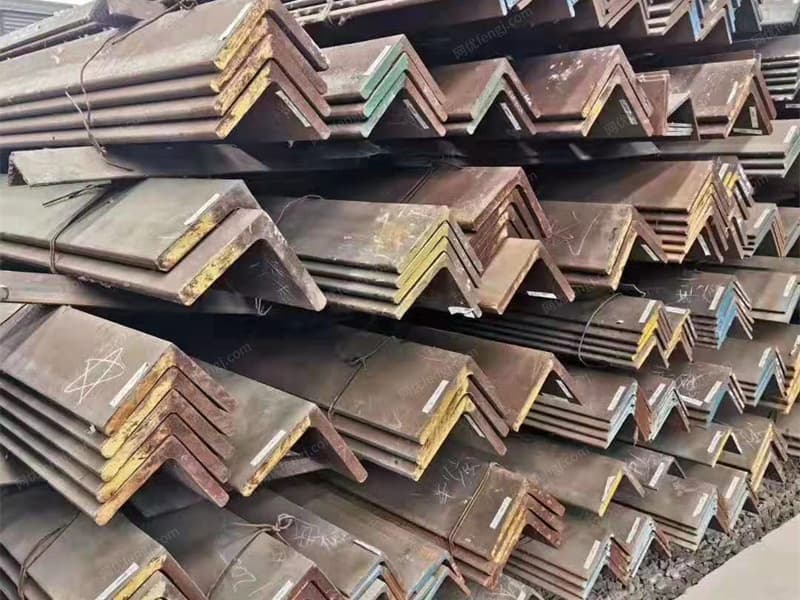
Let’s look at the global players. This will help you make an informed decision based on facts, not stereotypes.
A Global Perspective on Steel Quality
The world’s top steel-producing nations have leading mills, but they often focus on different market segments.
The Asian Powerhouses: China, Japan, and South Korea
These countries dominate in volume and technology for shipbuilding steel.
- China: As discussed, China has a dual market. Its top-tier mills (Baowu, Ansteel, etc.) produce marine steel1 that fully meets and often exceeds international class standards. The advantage is scale, completeness of product range, and competitive pricing. For standard and high-grade marine plates and angles (A to EH grades), Chinese certified mills2 are a top choice for global shipyards.
- Japan: Japanese mills (like Nippon Steel) are renowned for their exceptional consistency, advanced technology, and premium high-specification steels. They are often the benchmark for quality. However, this comes at a significantly higher cost, and they may focus on advanced alloys or special grades for niche applications.
- South Korea: Korean mills (POSCO) are very strong in automotive and high-end shipbuilding steels3. They share similar quality reputations with Japan but are often more cost-competitive than Japanese mills while being premium-priced compared to Chinese top-tier mills.
The European Specialists: Germany and Others
European mills excel in specialty and engineered steels.
- Germany: German steel (from companies like ThyssenKrupp) is famous for precision, high-performance alloys4s](https://cnmarinesteel.com/how-to-choose-the-right-l-shaped-steel-for-marine-projects/)[^5], and specialty steels for machinery, automotive, and engineering. They are less focused on mass-producing standard marine structural shapes but are leaders in technical niches.
- Other EU Mills: They produce high-quality steel but often at a high cost due to smaller scale and strict environmental regulations. They are strong in their regional market.
The Key Factors in Choosing "Best"
For a marine angle steel buyer, the decision matrix looks at several factors beyond the country name:
| Factor | Consideration | How Top Chinese Certified Mills Compare |
|---|---|---|
| Meeting Specification | Does the steel meet ABS AH36, LR DH36, etc.? | Yes. Certified mills produce to all major class rules. |
| Certification & Traceability | Are full, verifiable MTCs provided? | Yes. This is standard practice for export-quality steel. |
| Consistency | Is batch-to-batch variation low? | Yes. Modern, automated mills ensure high consistency. |
| Cost-Effectiveness | What is the price per certified ton? | Highly Competitive. Offers excellent value for certified quality. |
| Supply Reliability | Can large volumes be delivered on time? | Strong. Massive production capacity ensures supply. |
| Technical Support | Can the supplier answer technical questions? | Varies. Reputable exporters (like us) provide this support. |
The Practical Verdict for Marine Buyers:
For the vast majority of global marine projects—building oil tankers, bulk carriers, container ships, and offshore structures—the "best" steel is the one that:
- Meets all class certification requirements6 without compromise.
- Comes with full, transparent, and verifiable documentation7.
- Is supplied reliably and on schedule.
- Fits the project budget without sacrificing points 1-3.
Top-tier Chinese mills excel precisely in this balance. They deliver certified quality at a scale and price point that enables global shipbuilding. The question shifts from "Which country is best?" to "Which certified mill and which reliable supplier can deliver the right quality for my project?"
Conclusion
Avoiding quality issues in marine angle steel requires knowledge, diligence, and the right partner. Focus on certification, verification, and inspection, not just the price tag.
-
Explore this link to discover top suppliers and mills specializing in marine steel, ensuring quality for your projects. ↩ ↩ ↩ ↩ ↩ ↩ ↩ ↩ ↩ ↩
-
Learn about certified mills that guarantee quality and compliance with international standards for your steel needs. ↩ ↩ ↩ ↩ ↩
-
Find out which steels are preferred in automotive and shipbuilding sectors for their quality and performance. ↩ ↩ ↩ ↩ ↩ ↩ ↩
-
Understanding precision alloys can help you choose the right materials for engineering and machinery applications. ↩ ↩ ↩ ↩ ↩ ↩
-
This resource will provide insights into high-performance alloys, crucial for specialized applications in various industries. ↩ ↩ ↩ ↩ ↩
-
This link will clarify the class certification requirements essential for marine steel, ensuring compliance and safety. ↩ ↩ ↩ ↩
-
Discover the significance of verifiable documentation in steel supply, ensuring transparency and trust in your procurement. ↩ ↩