
You rely on one supplier for your L-shaped steel. They have been reliable for years. Then one day, they cannot deliver. Your project stops.
To avoid supply disruptions when purchasing L-shaped steel, qualify multiple class‑approved mills, use long‑term frame agreements with buffer stock and phased deliveries, implement real‑time order tracking and supplier performance monitoring, and have contingency plans with backup suppliers, expedited shipping options, and inventory buffers. These four steps keep steel flowing even when problems arise.
I am Zora Guo from cnmarinesteel.com. I have supplied L‑shaped steel to shipyards and fabricators across Asia and the Middle East. I have seen supply chains break because of one weak link. I have also seen smart buyers build resilient supply chains that survive disruptions. Let me show you how.
How to Qualify Multiple Class‑Approved Mills to Reduce Single‑Source Dependency Risk
You have one approved mill for your L‑sections. That mill has a breakdown. Your order stops. You have no backup. You wait weeks or months for the mill to resume production.
Single‑source dependency is the most common cause of supply disruption. To reduce this risk, qualify at least two, preferably three, class‑approved mills for each critical size and grade. The primary mill gets 60‑70% of your volume. The secondary mill gets 20‑30%. The tertiary mill stays qualified with occasional small orders. When your primary mill faces a problem — unplanned maintenance, raw material shortage, labor strike — you shift volume to your backup mill immediately. Qualification takes 2‑3 months, so start now. Do not wait until you need a backup.
Let me show you how to build a resilient mill portfolio.
The Danger of Single‑Source Dependency
A mill that is approved and reliable today can become unreliable tomorrow. Mills face:
- Unplanned maintenance (furnace breakdowns)
- Raw material shortages (iron ore, scrap, electricity)
- Labor strikes
- Logistics congestion at their port
- Sudden demand spikes from other buyers
If any of these happen to your only mill, you have no options. Your project stops.
How Many Mills Do You Need?
| Annual volume (tons) | Recommended number of qualified mills | Primary share | Secondary share | Tertiary share |
|---|---|---|---|---|
| Under 500 | 2 | 80% | 20% | — |
| 500‑2,000 | 3 | 70% | 20% | 10% |
| Over 2,000 | 3‑4 | 60% | 25% | 15% |
How to Qualify a New Mill
Step 1 — Check approvals. Verify the mill is on the ABS, DNV, or LR approved list for L‑sections and your required grades.
Step 2 — Request mill certificate samples. Review their quality history.
Step 3 — Order a trial batch (50‑100 tons of your most common size/grade). Test the steel at an independent lab. Check dimensions, surface, mechanical properties.
Step 4 — Assess lead time reliability. Ask for a test order delivery timeline. See if they meet it.
Step 5 — Build the relationship. Even if you do not buy from them regularly, place a small order every 6‑12 months. Keep the commercial contact active.
A Real Example
A shipyard in Malaysia relied on one Chinese mill for all their L‑sections. When that mill had a 6‑week unplanned shutdown, the shipyard had no backup. They scrambled to buy from other mills at 25% premium. The delay cost them $200,000 in idle labor. After that, they qualified three mills — two in China and one in South Korea. Now they shift volume when needed. No more stoppages.
Why Long‑Term Frame Agreements, Buffer Stock, and Phased Deliveries Protect Against Unexpected Shortages
You order L‑sections when you need them. The mill is busy. You are placed behind other customers. Your steel is late.
Long‑term frame agreements (LTAs) protect you by locking in mill capacity. The mill knows your volume and reserves production slots for you. Buffer stock — keeping 4‑8 weeks of your most common sizes on hand — covers unexpected demand spikes or short‑term delays. Phased deliveries mean you order a large volume once but receive it in monthly batches. This spreads the risk. If one batch is delayed, you only lose one month of production, not the whole project. Together, these three practices create a supply chain that bends but does not break.
Let me explain each practice.
Long‑Term Frame Agreement (LTA)
An LTA is a contract between you (or your supplier) and a mill for a fixed volume over a fixed period (12‑24 months). The LTA guarantees you mill capacity — you are in the production queue ahead of spot buyers.
What an LTA should include:
- Volume commitment (minimum monthly/quarterly tons)
- Price mechanism (fixed price or formula)
- Lead time (maximum weeks from order to shipment)
- Priority clause (“Buyer shall have priority over spot orders”)
- Penalties for late delivery
Buffer Stock — Your Safety Net
A strategic inventory buffer of 4‑8 weeks of your most common L‑section sizes covers short‑term disruptions. If a shipment is delayed by 2‑3 weeks, you still have steel to work with.
How to calculate buffer:
Buffer (weeks) = Maximum expected supply disruption (weeks) + 1 week safety
Phased Deliveries — Spreading the Risk
Instead of ordering 1,000 tons all at once, place one order for 1,000 tons but ask for 200 tons per month for 5 months. If month 2 is delayed, you only lose 200 tons of steel, not 1,000 tons.
A Real Example
A shipyard in Vietnam used LTAs, buffer stock, and phased deliveries together. They had a 12‑month LTA for 600 tons per month. They kept a 4‑week buffer at their yard. When the mill had a 3‑week delay, they used their buffer and continued production. The delay cost them nothing.
How to Implement Real‑Time Order Tracking and Supplier Performance Monitoring for Early Warning of Delays
You call your supplier. “Where is my steel?” They say “I will check.” Two days later, they call back. “It is on the water.” You have no way to verify.
Real‑time order tracking gives you visibility into your order‘s status at every stage — from mill production to port loading to vessel tracking to inland delivery. Many suppliers now offer online portals or tracking links. Supplier performance monitoring tracks metrics like on‑time delivery, lead time consistency, and response time. A supplier with a declining performance trend is a warning sign. Early warning allows you to take action — expedite a shipment, shift volume to a backup mill, or adjust your production schedule — before a delay becomes a crisis.
Let me explain what to track and how.
What to Track
| Stage | What to track | How to verify |
|---|---|---|
| Mill production | Production start date, estimated completion | Mill production report, photos |
| Testing and certification | Test completion date, certificate status | Mill certificate preview |
| Port loading | Loading date, vessel name, bill of lading | Port loading photos, bill of lading |
| Sea freight | Vessel position, ETA | AIS tracking (MarineTraffic, VesselFinder) |
| Customs clearance | Clearance status | Broker update |
| Inland transport | Truck tracking number, ETA | GPS tracking, trucking company update |
Supplier Performance Monitoring
Create a simple scorecard for each supplier. Track:
- On‑time delivery percentage (target: 98%+)
- Lead time consistency (standard deviation of lead time)
- Quality rejection rate (target: <1%)
- Documentation accuracy (target: 99%+)
- Response time to urgent issues (target: <4 hours)
If a supplier‘s performance drops, investigate immediately.
How to Get Real‑Time Data
Many large steel suppliers now offer online portals where you can:
- See your order status
- Download mill certificates
- Track vessel position
- Receive automated delay alerts
If your supplier does not offer a portal, ask for weekly status updates via email or a shared spreadsheet.
A Real Example
A shipyard in Qatar started using a supplier portal with real‑time vessel tracking. They saw that their vessel was delayed by 5 days at the loading port. They immediately adjusted their production schedule and shifted some work to other areas. No idle labor. The delay cost them nothing.
What Contingency Plans (Backup Suppliers, Expedited Shipping, Inventory Buffers) Minimize Disruption Impact When Problems Occur
No matter how well you plan, disruptions happen. A mill fails. A port closes. A vessel sinks (rare but possible). You need a plan.
A robust contingency plan has three elements. First, backup suppliers — mills that are already qualified and ready to take your order. Second, expedited shipping options — air freight or direct truck delivery for urgent small quantities. Third, inventory buffers — steel on hand to cover short‑term gaps. When a disruption occurs, you activate the plan: shift volume to a backup supplier, expedite a small quantity to keep production running, and draw from your buffer. The plan allows you to keep production going while the disruption is resolved. Without a plan, you stop.
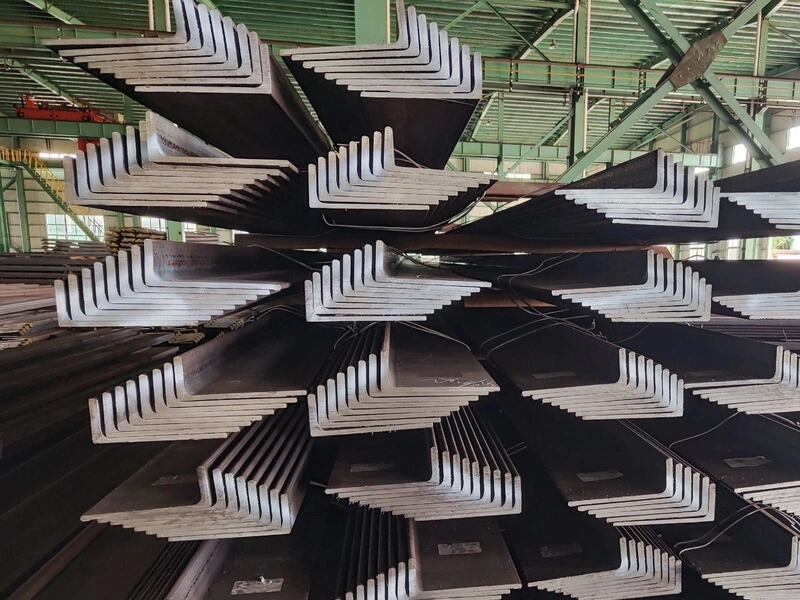
Let me detail each element.
Element 1 — Backup Suppliers
Backup suppliers are not just on paper. They must be:
- Class‑approved for your grades and sizes
- Tested (you have ordered from them before)
- Contacted regularly (you have a relationship)
If your primary mill fails, you should be able to shift volume to your backup within 24‑48 hours.
Element 2 — Expedited Shipping
For urgent small quantities, expedited shipping can keep production running while waiting for a large shipment.
Options:
- Air freight — expensive but very fast (3‑5 days)
- Express truck — fast for regional deliveries (2‑3 days)
- Dedicated container — faster than LCL (1‑2 weeks)
Have a budget for expedited shipping. It is cheaper than stopping production.
Element 3 — Inventory Buffers
Your buffer stock is your first line of defense. It covers short‑term gaps while you activate backup suppliers or expedite shipping.
Buffer size recommendation:
- 4‑8 weeks of consumption for your most common sizes
- 2‑4 weeks for medium‑use sizes
- Order‑on‑demand for low‑use sizes
The Contingency Activation Process
- Alert triggered — You receive a delay notification from your supplier or tracking system.
- Assess the delay — How long is the delay? Is it 2 weeks or 6 weeks?
- Activate the plan — If the delay is short (under 4 weeks), use your buffer and continue normal production. If the delay is long (over 4 weeks), shift volume to a backup supplier and expedite a small quantity to bridge the gap.
- Communicate — Inform your production team, your client, and any other stakeholders about the adjusted timeline.
- Monitor — Track the resolution closely. Update your plan as new information arrives.
A Real Example
A shipyard in Indonesia had a contingency plan. When their primary mill had a 6‑week shutdown, they:
- Shifted 60% of their volume to a backup mill in South Korea
- Expedited 50 tons by air freight to cover the first 2 weeks
- Used their 4‑week buffer stock for the remaining gap
Total production loss: 0 days. The contingency plan cost $30,000 in expedited shipping and premium pricing. The alternative — stopping production — would have cost $300,000.
Conclusion
Avoid supply disruptions for L‑shaped steel by qualifying multiple mills, using LTAs with buffer stock and phased deliveries, implementing real‑time tracking, and having a contingency plan with backup suppliers, expedited shipping, and inventory buffers. These four steps keep steel flowing and projects on schedule.