
One wrong steel grade. One missed certificate. Your whole project stops. Shipyards lose millions this way.
A good steel plate selection strategy breaks the vessel into zones (bottom, side, deck, bulkhead). Each zone gets the right grade (AH36, DH36), thickness, and impact toughness. For multi-project shipyards, standardize on a core set of sizes and grades. Use EN 10204 Type 3.2 certificates for full traceability. And build long-term agreements with pre-approved mills. I have used this strategy for oil tankers and bulk carriers in Vietnam, Mexico, and Saudi Arabia.
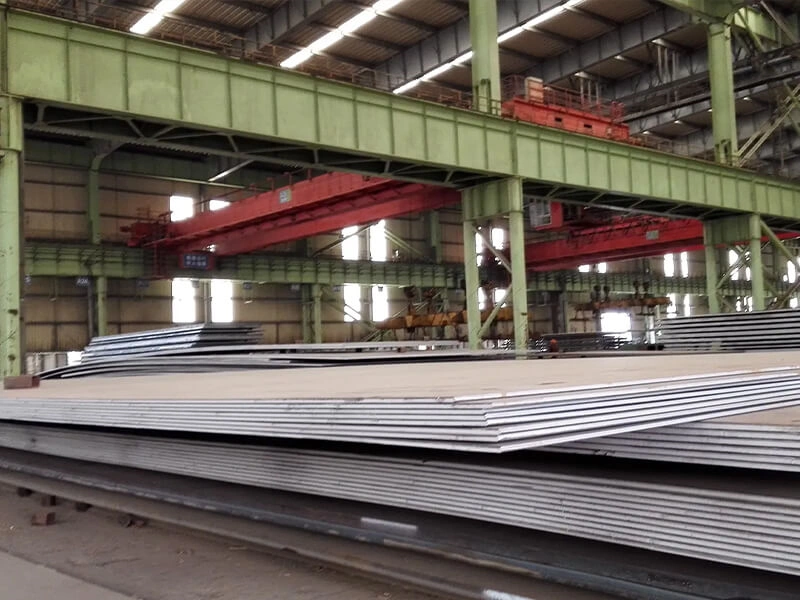
I know complex projects feel overwhelming. Different vessel zones. Multiple grades. Tight delivery schedules. But I have learned a system that works. Let me walk you through it.
How to Break Down Steel Plate Requirements by Vessel Zone and Function?
You look at a general arrangement drawing. It is a mess of lines and labels. How do you turn that into a clear steel plate order list?
You break the vessel into six functional zones: bottom shell, side shell, deck, longitudinal bulkhead, transverse bulkhead, and superstructure. Each zone has different stress levels and temperature exposure. The bottom needs high strength (AH361) and thick plates. The superstructure can use mild steel (Grade A) and thin plates. I helped a shipyard in Pakistan break down a 150-meter bulk carrier into zones. They cut their material waste by 12%.
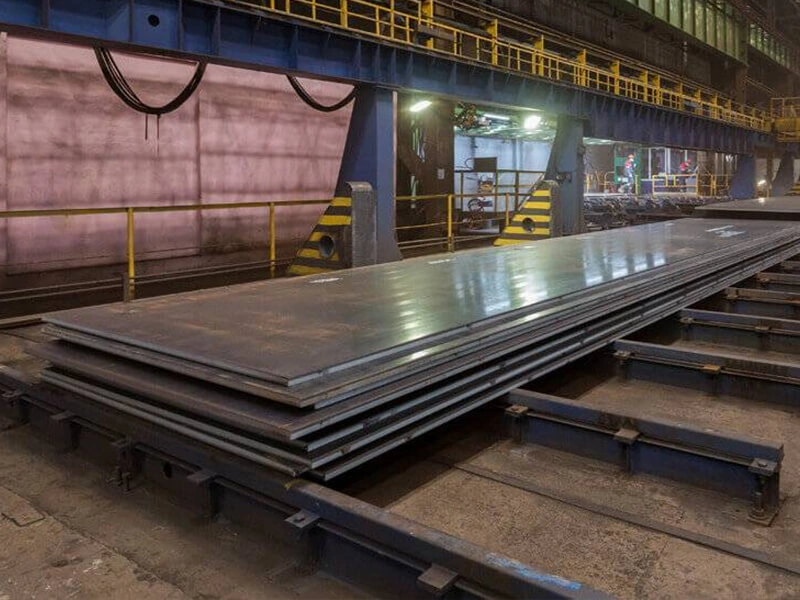
Let me show you the zone-by-zone breakdown.
I am Zora Guo. I have supplied marine steel plates2 for more than 50 shipbuilding projects. Early in my career, a buyer in Thailand sent me a vague order: “Send me 500 tons of marine plates.” I asked: “For which zones?” He did not know. The plates arrived. Half of them were the wrong thickness for the bottom. He had to reorder. That cost him two months.
So here is the zone breakdown I use with every buyer.
Zone 1 – Bottom shell (including keel and bottom plates)
This zone takes the highest stress. Waves push up. Cargo pushes down. The bottom also faces corrosion from seawater.
- Grade: AH36 (or DH36 for cold routes)
- Thickness: 15mm to 40mm, depending on vessel size
- Impact toughness: 34J at 0°C for AH36, 34J at -20°C for DH36
- Key certificate: EN 10204 Type 3.23 with class society stamp
Zone 2 – Side shell (including bilge and sheer strake)
The side shell takes wave slamming and cargo pressure4. The upper part (sheer strake) also takes deck loads.
- Grade: AH36 for most; DH36 for upper strake in cold areas
- Thickness: 12mm to 30mm
- Impact toughness: Same as bottom zone
Zone 3 – Main deck (including weather deck and hatch openings)
The deck takes cargo loads and wave impact from above. Hatch corners need extra toughness.
- Grade: AH36 or DH36 (deck in cold areas needs DH36)
- Thickness: 10mm to 25mm
- Special attention: Hatch corners need ultrasonic testing for laminations
Zone 4 – Longitudinal bulkheads (inside cargo holds)
These bulkheads divide the ship into tanks or holds. They take cargo pressure from one side.
- Grade: AH36 for large vessels; Grade A for small vessels
- Thickness: 8mm to 20mm
Zone 5 – Transverse bulkheads (watertight divisions)
These bulkheads stop flooding from spreading. They need good weldability.
- Grade: AH36 or Grade A
- Thickness: 8mm to 15mm
Zone 6 – Superstructure (accommodation, bridge, etc.)
This zone takes low stress. No cargo loads. Only wind and waves.
- Grade: Grade A mild steel5
- Thickness: 6mm to 10mm
Here is a summary table for your purchase order:
| Zone | Grade | Thickness range (mm) | Special requirement |
|---|---|---|---|
| Bottom shell | AH36/DH36 | 15-40 | High impact toughness6 |
| Side shell | AH36/DH36 | 12-30 | Slamming resistance |
| Main deck | AH36/DH36 | 10-25 | Hatch corner UT |
| Longitudinal bulkhead | AH36 or A | 8-20 | Cargo pressure |
| Transverse bulkhead | AH36 or A | 8-15 | Watertight welds |
| Superstructure | Grade A | 6-10 | Low cost |
I recently worked with a buyer in Romania. He was building a 120-meter cargo ship. We broke down his steel needs by zone. The bottom needed 20mm AH36. The side needed 15mm AH36. The deck needed 12mm AH36. The superstructure needed 8mm Grade A. He ordered exactly what he needed. No waste. No shortage.
What Grade Mix and Thickness Range Work Best for Multi-Project Shipyards?
You run a shipyard. You build three different vessels at the same time. Do you buy different steel for each project? That creates chaos.
The best grade mix for a multi-project shipyard is 70% AH36 and 30% Grade A1. For thickness, standardize on 10mm, 12mm, 15mm, 20mm, and 25mm. These five thicknesses2 cover 90% of hull structures for vessels from 50m to 200m. Keep DH363 only for projects that go to cold regions. I have helped shipyards in Malaysia and the Philippines reduce their steel inventory4 by 30% using this mix.
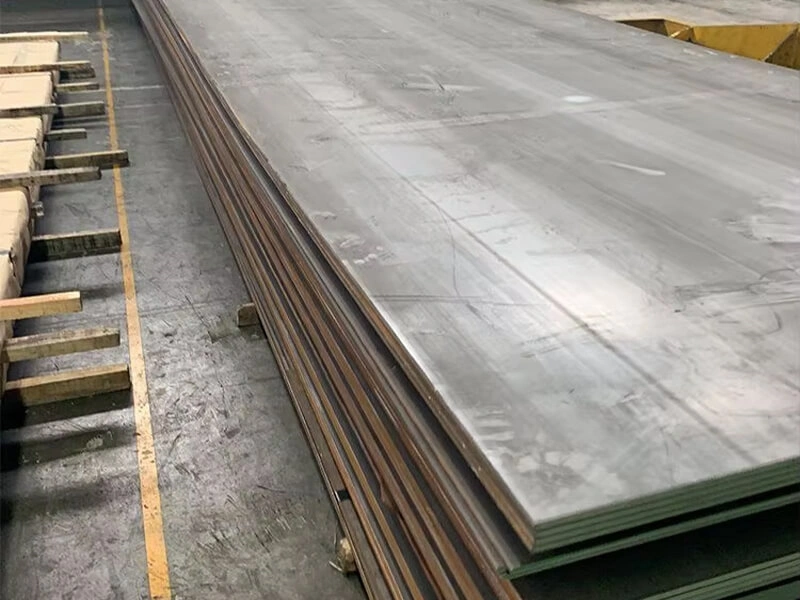
Let me show you how to simplify your steel buying.
I am Zora Guo. A buyer in Malaysia ran a shipyard that built fishing boats, cargo ships, and tugboats. He had 15 different steel grades and 20 different thicknesses in his stock. His warehouse was a mess. Workers grabbed the wrong plate all the time. He asked me: “How do I simplify?”
I told him: “Cut down to five thicknesses and two grades.” Here is how.
Step 1 – Choose two core grades
Grade A for non-critical areas (superstructure, internal bulkheads, small vessels). AH36 for all main hull structures on vessels over 50 meters.
Do not buy Grade B, Grade D, or Grade E unless a specific contract asks for them. They are rare. You can order them as needed.
Step 2 – Choose five core thicknesses
Look at your last 10 projects. List all the thicknesses you used. You will see a pattern. Most plates are between 10mm and 25mm.
The five most common thicknesses are:
- 10mm – for superstructure and light bulkheads
- 12mm – for decks and side shell on small vessels
- 15mm – for side shell and bulkheads on medium vessels
- 20mm – for bottom and deck on medium to large vessels
- 25mm – for bottom and high-stress areas on large vessels
These five thicknesses cover about 90% of your needs. For the other 10% (like 8mm or 30mm), order them per project.
Step 3 – Keep a small stock of DH36
If you build vessels that go to Northern Europe or North America, keep a small stock of DH36 in 15mm and 20mm. Do not stock DH36 in all thicknesses. Order it as needed.
Step 4 – Use a simple reorder system5
Set a minimum stock level for each thickness and grade. When you fall below that level, order more. Do not wait until you run out.
Here is an example for a medium-sized shipyard:
| Grade | Thickness (mm) | Minimum stock (tons) | Reorder quantity (tons) |
|---|---|---|---|
| Grade A | 10 | 20 | 30 |
| Grade A | 12 | 15 | 25 |
| AH36 | 10 | 15 | 25 |
| AH36 | 12 | 20 | 30 |
| AH36 | 15 | 30 | 50 |
| AH36 | 20 | 25 | 40 |
| AH36 | 25 | 15 | 25 |
Real result from a Malaysian shipyard
The buyer followed this system. He reduced his steel inventory from 800 tons to 550 tons. That freed up $200,000 of cash. His workers stopped picking the wrong plates. His waste dropped from 8% to 4%. He told me: “Zora, this simple system saved me more money than any price negotiation.”
So my advice: Keep it simple. Two grades. Five thicknesses. That is enough for most shipyards.
How to Manage Certification, Traceability, and Class Society Approval Across Batches?
You buy steel from three different mills for one project. Each mill sends its own certificates. The class society asks for traceability. How do you keep it all straight?
You manage certification by asking for EN 10204 Type 3.2 certificates1 from every mill. Each certificate must show the heat number2. You then stamp or paint that heat number on every cut piece. Store all certificates in a single binder or digital folder. For class society approval3, submit the certificates before cutting any steel. I learned this after a buyer in Mexico failed an inspection because he mixed heat numbers.
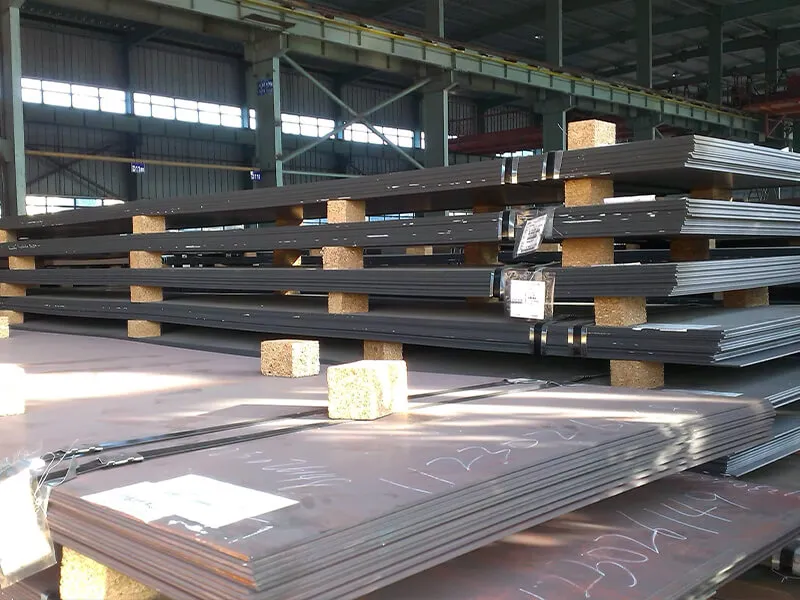
Let me give you a step-by-step system.
I am Zora Guo. A buyer in Mexico once called me in a panic. His class society surveyor had arrived for an inspection. The surveyor asked to see the mill certificates for the bottom plates. The buyer had them. But the surveyor also asked to see the heat number on the actual plates. The buyer’s workers had cut the plates and painted over the stamps. The surveyor could not verify the traceability. He rejected the whole bottom assembly. The buyer had to cut out the plates and redo them.
That day, I promised myself: every buyer I work with will know how to keep traceability.
Step 1 – Get EN 10204 Type 3.2 certificates, not Type 3.1
Type 3.1 is signed only by the mill. Type 3.2 is signed by the mill and witnessed by a class society inspector. For shipbuilding, always ask for Type 3.2. It costs a little more. But it saves you from arguments later.
Step 2 – Check the heat number on the steel
When the steel arrives, walk to each plate. Read the stamp. It shows the heat number (a code of letters and numbers). Write that heat number down on a copy of the certificate. Make sure they match.
Step 3 – Transfer the heat number to every cut piece
When your workers cut a large plate into smaller pieces, the original stamp is lost. So before cutting, use a paint marker or a metal stamp to write the heat number on each piece. Do this for every piece, even the small ones.
Step 4 – Keep a traceability log4
Create a simple table or spreadsheet. For every piece of steel, record:
- Project name
- Zone (bottom, side, deck, etc.)
- Grade (AH36, etc.)
- Thickness
- Heat number
- Certificate number
- Date received
- Date used
Here is an example:
| Piece ID | Zone | Grade | Thickness | Heat number | Certificate number |
|---|---|---|---|---|---|
| B-01 | Bottom | AH36 | 20mm | H22035 | ABS-2024-001 |
| B-02 | Bottom | AH36 | 20mm | H22035 | ABS-2024-001 |
| S-15 | Side | AH36 | 15mm | H22118 | ABS-2024-015 |
Step 5 – Store certificates in a binder or digital folder
Keep one binder per project. Put all certificates in that binder. Also store them in a cloud folder (Google Drive or Dropbox). Share the folder with your class society surveyor before the inspection.
Step 6 – Submit certificates to class society early
Do not wait for the inspection day. Send the certificates to your class society surveyor two weeks before the inspection. Ask them to review them. If there is a problem, you have time to fix it.
Here is a checklist for your quality team:
| Task | Who | When |
|---|---|---|
| Request Type 3.2 certificates | Purchasing | At order placement |
| Check heat numbers on arrival | Warehouse | Within 24 hours of receipt |
| Transfer heat numbers to cut pieces5 | Cutting shop | Before cutting |
| Update traceability log | Quality control | Daily |
| Submit certificates to class society | Project manager | 2 weeks before inspection |
I now include a traceability guide with every shipment. My buyers in Qatar and Saudi Arabia use it. One of them told me: “Zora, your system made our last class society inspection the fastest we have ever had.”
Why Early Supplier Involvement and Long-Term Agreements Reduce Project Risk?
You wait until the last minute to order steel. The mill is busy. The price goes up. The delivery is late. Your project stops. This happens too often.
Early supplier involvement1 means bringing your steel supplier into the planning phase. Share your project schedule 3 to 6 months before you need steel. Sign a long-term agreement (LTA)2 that fixes prices and delivery slots. The supplier reserves mill capacity for you. I have LTAs with shipyards in Vietnam and Romania. They never wait for steel. And they pay 5-10% less than spot buyers.
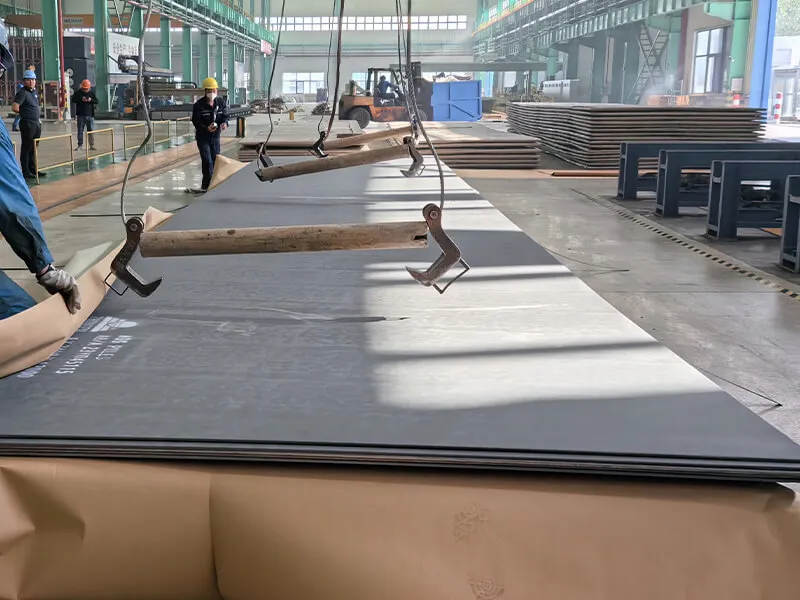
Let me show you how an LTA works and why it saves you money.
I am Zora Guo. A buyer in Vietnam used to order steel project by project. Each time, he called me: “Zora, I need 200 tons of AH36 in four weeks.” Four weeks is too short for mill production. I had to rush. I paid extra for express production. He paid extra for air freight. He was always stressed.
Then we signed a one-year LTA. Now he gives me a rolling forecast every month. I reserve mill slots for him. His steel arrives on time. He pays less. And he sleeps better.
What is a long-term agreement (LTA)?
An LTA is a contract between you and your steel supplier for 6 to 24 months. It covers:
- Estimated total volume (e.g., 2,000 tons per year)
- Fixed price or a price formula (e.g., mill price + fixed margin)
- Reserved delivery slots (e.g., 150 tons per month)
- Quality requirements and certificate types
You are not forced to buy the full volume. Most LTAs have a minimum take (e.g., 80% of forecast). If you buy less, you pay a small penalty. But you are protected from price spikes3 and delivery delays.
Benefits of early supplier involvement
Benefit 1 – Lower price – Mills give better prices to buyers who commit to volume. I offer LTA customers a discount of 5-10% compared to spot buyers.
Benefit 2 – Guaranteed delivery slots – When a mill is fully booked, they still produce for LTA customers. Spot buyers wait.
Benefit 3 – No rush charges – You do not pay for express production or air freight. The steel arrives on the agreed schedule.
Benefit 4 – Better quality – The mill assigns the same production line for LTA customers. Consistency is higher.
Benefit 5 – Dedicated support – Your supplier assigns a dedicated account manager4. You do not talk to a new person every time.
How to set up an LTA
Step 1 – Forecast your annual steel needs – Look at your project pipeline. Estimate tons per month. Add a 20% buffer.
Step 2 – Find a supplier with mill access – Not every trader has direct mill relationships. I work with certified mills in China. I can reserve capacity.
Step 3 – Negotiate the price formula – For marine steel5, the price follows the raw material market. A fair formula is: monthly price = published plate price + fixed processing fee + ocean freight.
Step 4 – Set delivery schedule – Agree on a monthly delivery quantity and a delivery window (e.g., 1st to 10th of each month).
Step 5 – Include a quality clause – Write: “All steel must have EN 10204 Type 3.2 certificate from ABS, DNV, or LR. Buyer has right to third-party inspection at loading port.”
Real example from a Romanian shipyard
A shipyard in Romania signed a 12-month LTA with me for 1,200 tons of AH36 plates. They paid a fixed price6 of $780 per ton CFR Constanta. During that year, the spot market went up to $850 per ton. They saved $70 per ton, or $84,000 total. Their steel arrived on the 5th of every month. They never had a delay.
Here is a comparison table:
| Factor | Spot buying | Long-term agreement |
|---|---|---|
| Price | Market price at time of order | Fixed or formula-based (lower) |
| Delivery lead time | 6-10 weeks | Reserved slots, 4-6 weeks |
| Price stability | High risk of spikes | Protected |
| Supplier commitment | Low | High (dedicated account) |
| Best for | One-off small projects | Ongoing shipyard operations |
My advice: If you build more than 500 tons per year, sign an LTA. The savings and peace of mind are worth it.
Conclusion
Break down your vessel into zones. Standardize grades and thicknesses. Keep tight traceability. And sign a long-term agreement with a trusted supplier.
My Personal Insights (from 10+ years in marine steel export)
I am Zora Guo. My team in Liaocheng supplies marine steel plates for complex shipbuilding projects. We work with certified mills and provide EN 10204 Type 3.2 certificates for ABS, DNV, LR, and CCS. We also offer long-term agreements with fixed pricing and reserved delivery slots. Send me an email at sales@chinaexhaustfan.com or visit cnmarinesteel.com. Tell me your project pipeline and monthly tonnage. I will send you an LTA proposal within 48 hours.
-
Explore how early supplier involvement can streamline your project planning and reduce costs. ↩ ↩ ↩ ↩
-
Learn about LTAs and how they can secure better pricing and delivery for your projects. ↩ ↩ ↩ ↩
-
Explore strategies to safeguard your budget from volatile raw material prices. ↩ ↩ ↩ ↩
-
Learn how a dedicated account manager can enhance communication and support in your projects. ↩ ↩ ↩ ↩
-
Gain insights into the marine steel market and how pricing is determined. ↩ ↩ ↩ ↩
-
Understand the advantages of fixed pricing in contracts to avoid unexpected costs. ↩ ↩