
Your stock card says 0.4 tonnes left. The rack actually holds two. That gap is a container you order twice, and it starts with the offcut nobody books back.
Calculate remaining marine angle steel stock by counting pieces and lengths, not tonnes. Add every unused full bar to every offcut above your minimum usable length, convert total metres to kilograms with the section’s kg/m value, then deduct kerf, end trim and true scrap. Reconcile that figure against the stock card every month.

Most yards we supply count angle steel twice a year, usually the week before an audit. The count then gets typed into a spreadsheet, the spreadsheet disagrees with the ERP, and everyone agrees to “adjust it later”. Later never comes. The next project buys material that was already sitting three bays away, and the surplus quietly rusts at the back of the shed. I have walked through enough fabrication shops in Shandong and in the Gulf to know the pattern, and it is almost never a discipline problem. It is a units problem.
Angle steel is bought in tonnes, cut in metres, and picked in pieces. Three units, one physical object, and most stock systems only track one of them properly. This guide walks through the arithmetic that closes the gap, using the same method our own warehouse team applies when a customer asks us to hold balance stock between shipments. If you want the upstream version — how the order was sized in the first place — our guide on calculating marine angle steel requirements covers that side of the equation.
Why Does Paper Stock Drift Away from the Yard After Fabrication?
Because the offcut never gets booked back. A 12 m bar leaves the rack as a single line item and comes back as nine short pieces that nobody records, so the system keeps subtracting.
Paper stock drifts because issuing a bar to a work order removes the full bar from the ledger, while the reusable offcut that returns to the rack is rarely posted back. The stock card therefore records consumption that did not happen. On a 60-bar order, that missing return can understate real stock by 1.7 tonnes or more.
The Three Ledgers That Never Agree
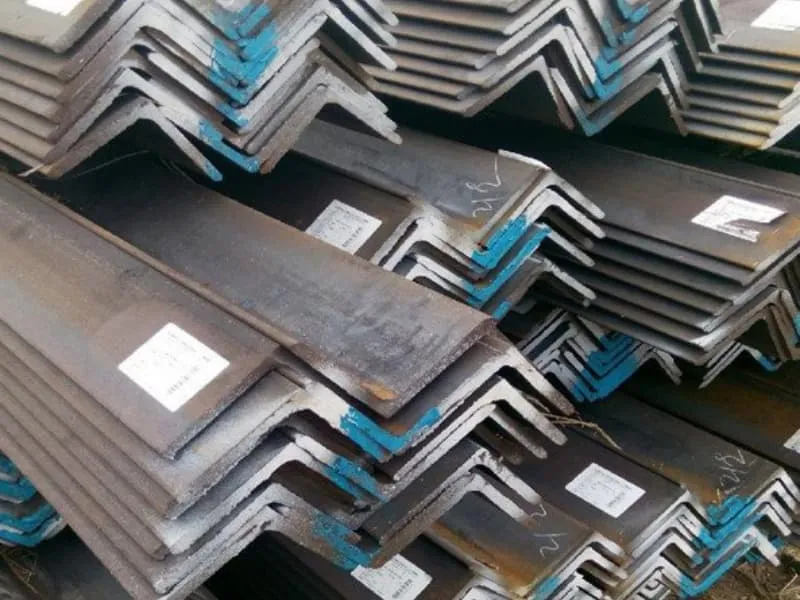
Every yard keeps three records of the same pile of steel, and they are never in the same unit. The purchase order speaks in tonnes. The cut list speaks in millimetres. The rack tag speaks in bars. When the three disagree, the tonnage figure usually wins, because that is the number the accountant recognises. That is exactly backwards. Tonnage is the least precise of the three and the easiest to fudge.
Here is what each record actually captures, and what it quietly loses.
| Record | Unit | What it captures well | What it loses |
|---|---|---|---|
| Purchase order | tonne | Contract weight and price basis | Bar count, length mix, short bars |
| Goods receipt note | tonne / bundle | Arrival weight at the weighbridge | Damaged ends, bundle short-shipped by one bar |
| Stock card | kg | A running balance somebody can defend | Offcut returns, scrap, grade separation |
| Cut list | millimetre | Net part length | Kerf, end trim, remnant |
| Rack tag | piece + length | Physical reality | Nothing — if someone updates it |
The failure is structural, not personal. A stock card cannot represent a 1,967 mm offcut unless the system has a field for it. Most systems do not, because most systems were built for plate and coil, where a remnant is a rectangular number. Angle is a profile. It has a leg, a thickness and a length, and the leg dimensions have to survive on the tag or the remnant becomes unidentifiable scrap.
Where the Weight Actually Goes
When a 12 m bar of L100×100×10 is cut into two 5,000 mm pieces, the bar does not simply become 10 m of product and 2 m of stock. Three losses sit in between, and all three are real weight that left your yard without becoming anything.
The first is kerf. A bandsaw blade removes 1.1–1.6 mm per cut. A cold saw removes 2.0–2.5 mm. An abrasive cut-off wheel removes 2.5–3.0 mm. Two cuts on a bandsaw costs you roughly 3 mm of length, which sounds trivial until you multiply it by forty thousand cuts in a hull block.
The second is end trim. The mill’s sheared ends are never square enough for a fit-up jig, so the first cut on every bar is a squaring cut. Twenty to fifty millimetres per end is normal, and on a 6 m bar that is up to 1.7% of the length gone before a single part exists.
The third is the test piece. If the project requires tensile or Charpy verification from the delivered heat, somebody cuts a coupon out of a bar, and that bar is now short. On a marine job with ABS or DNV witnessing, this happens more often than buyers expect.
None of these three show up on a cut list, because a cut list describes parts, not process. So the system believes it consumed 10.0 m and issued 12.0 m, and the 2.0 m difference gets booked as “waste”. Part of it is waste. Part of it is a perfectly good 1,967 mm remnant that will become eight brackets next month.
The Tolerance Band Is Bigger Than Your Balance
This is the part that makes the naive calculation useless rather than merely inaccurate. Section weight is not exact. EN 10056-1 and GB/T 706 both permit dimensional deviation, and rolled weight typically lands within ±5% of theoretical. On a 10.9 tonne order, that is a band of roughly ±544 kg.
Now compare that to the number the stock card usually reports after a job: about 370 kg. The reported balance sits entirely inside the measurement noise of the purchase. It is not a slightly wrong answer. It is an answer with no information in it. You cannot make a reorder decision on a figure that is smaller than the error bar around the figure it came from.
That is why counting pieces first is not pedantry. A piece count has no tolerance band. Twelve bars is twelve bars whether they weigh 15.1 or 15.4 kg per metre.
Which Method Gives You the True Remaining Quantity?
Count the pieces, measure the offcuts, then convert once at the end. Doing it in that order keeps every error local to a single step instead of letting it compound through the whole balance.
The reliable method is a physical count in pieces and lengths, converted to weight only at the final step. Count full bars, count every offcut above your minimum usable length, total the metres, multiply by the section’s kg/m value, and book everything below the threshold as weighed scrap. The result is accurate to under one percent.
Step One: Count in Pieces and Lengths
Start at the rack, not at the screen. Work one section size at a time and one grade at a time, because L100×100×10 in AH36 and L100×100×10 in A are not interchangeable on a hull, and blending them in a count destroys the traceability a surveyor will ask for later.
For each size and grade, record four numbers. The count of full-length bars. The count of offcuts, with each length taped individually. The count of damaged or bent pieces held for disposition. And the count of pieces already allocated to a released work order but not yet cut — because that material is physically present but commercially gone, and including it in “available” is how a yard promises steel it does not have.
A 2–5 tonne bundle normally holds 20 to 30 bars of mid-size angle. Counting bundles is faster, but bundle tags lie after the first partial pick. Break the bundle and count the loose bars. It takes one person about twenty minutes per size group, which is nothing against the cost of a duplicate order.
Step Two: Apply the Section Factor, Not a Round Number
Convert metres to kilograms with the section’s own factor. For an equal-leg angle, the desk formula is:
kg/m = [(A + B) − t] × t × 0.00785
where A and B are the leg lengths in millimetres and t is the thickness. For L100×100×10 that gives 14.88 kg/m. The mill table value is 15.12. The formula runs about 1.5% light on mid-size angles because it ignores the root radius at the heel, and that gap widens as the section gets heavier.
That 1.5% is not academic. On the 138 m balance in our worked example below, using the formula instead of the table understates the stock by about 33 kg — small, but it is an error that always points the same direction, so it accumulates every time you run the calculation.
| Section | Formula kg/m | Mill table kg/m | Gap |
|---|---|---|---|
| L50×50×5 | 3.73 | 3.77 | +1.1% |
| L63×63×6 | 5.65 | 5.72 | +1.2% |
| L75×75×8 | 8.92 | 9.03 | +1.2% |
| L90×90×8 | 10.80 | 10.95 | +1.4% |
| L100×100×10 | 14.88 | 15.12 | +1.6% |
| L120×120×10 | 18.06 | 18.20 | +0.8% |
| L150×150×10 | 22.77 | 23.00 | +1.0% |
| L150×90×12 | 21.48 | 21.50 | +0.1% |
| L200×200×16 | 48.23 | 48.68 | +0.9% |
Use the table for anything that goes into a stock balance or a contract. Use the formula for a desk check before you commit to a bar count. If the mill certificate states an actual weight per heat, use that instead — it beats both.
Here is the same calculation run end to end on a real-shaped order. Sixty bars of L100×100×10, 12 m each, 720 m total, booked at 10,886 kg. Fifty-eight bars go to the fabrication line. Each bar yields two 5,000 mm pieces, a 30 mm squaring trim and two 1.5 mm kerfs, leaving a 1,967 mm remnant.
| Line | Length | Pieces | Weight at 15.12 kg/m |
|---|---|---|---|
| Received | 720.00 m | 60 bars | 10,886 kg |
| Good pieces produced | 580.00 m | 116 pieces | 8,770 kg |
| Kerf and trim (scrap) | 1.91 m | — | 29 kg |
| Remnant returned to rack | 114.09 m | 58 pieces | 1,725 kg |
| Bars never issued | 24.00 m | 2 bars | 363 kg |
| True remaining stock | 138.09 m | 60 pieces | 2,088 kg |
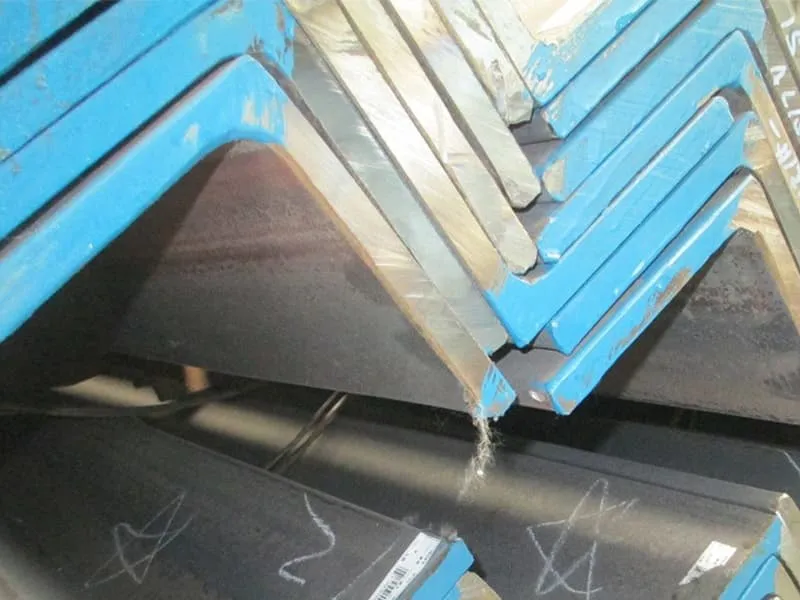
Read the last two lines against the stock card. The card, if it simply subtracted issued bars from received bars, reports 366 kg. The rack holds 2,088 kg. The error is 1,722 kg — 16% of the original purchase — and it points in the direction that costs money, because it makes you buy steel you already own.
Step Three: Separate Remnant from Scrap
An offcut only counts as stock if somebody can find it, identify it and use it. A 180 mm stub of L50×50×5 is not stock, it is handling labour waiting to happen. Set a minimum usable length per section size and apply it without argument.
| Offcut length | Classification | Handling |
|---|---|---|
| ≥ 3,000 mm | Full reusable | Own stock code, rack location, heat number on tag |
| 1,000–2,999 mm | Secondary | Tagged offcut rack, usable for brackets and stiffeners |
| 300–999 mm | Clip stock | Keep only against a known requirement |
| < 300 mm | Scrap | Weighed and booked to the scrap account |
The threshold should move with the section. A 300 mm piece of L200×200×16 weighs nearly 15 kg and is worth keeping for a doubler. A 300 mm piece of L50×50×5 weighs about 1.1 kg and is worth less than the tag you put on it.
Whatever falls below the line must be weighed, not estimated. Scrap that is guessed at is scrap that never leaves the books, and the balance stays permanently inflated. I have seen a yard carry four tonnes of “stock” that turned out to be a scrap skip counted twice.
How Do You Turn the Balance into a Reorder Decision?
Set the trigger in pieces, not tonnes, and run the count on a cycle instead of once a year. A balance you only trust in December is a balance you cannot buy against in June.
Convert the audited balance into a piece count per size and grade, set the reorder trigger at the number of bars a typical hull block consumes in one lead time, and cycle-count the fast-moving sizes monthly. A tonnage trigger inside a ±5% weight band will fire late, and late means a stalled assembly line.
Set the Trigger in Pieces
A reorder point expressed in tonnes inherits the same tolerance band as the balance. If your trigger is “reorder below 5 tonnes” and your weight uncertainty is ±5%, the trigger is really “reorder somewhere between 4.75 and 5.25 tonnes”. That is a 500 kg hesitation on a decision that should be binary.
Express it in bars instead. If a block consumes 40 bars of L100×100×10 over a six-week mill lead time, and your safety margin is two weeks, the trigger is 54 bars on the rack. Fifty-four is a countable number. It survives an audit. It also survives a shift change, which is more than most tonnage triggers manage.
The other half of the trigger is the remnant rack. Before releasing a purchase requisition for a size, the planner should be able to see the offcut list for that size. If 114 m of usable L100×100×10 remnant is sitting in the rack, the requisition is wrong by default.
Run the Count on a Cycle, Not Once a Year
Cycle counting beats annual counting for the same reason a saw cut beats a shear cut: you get a clean edge every time instead of a distorted one at the end. Rank sizes by consumption value. The ten sizes that carry most of the tonnage get counted monthly. The long tail gets counted quarterly. Damage and rust get written off as they are found, not held until December.
A practical cycle is one size group per week, twenty minutes per group. Over a year that is fifty-two size groups counted, which covers a typical fabrication shop’s active range several times over, at a fraction of the disruption of shutting the yard for two days.
Keep the Heat Number on the Remnant
This is the point that separates a marine yard from a general fabrication shop. When a bracket is cut from a remnant, the bracket inherits that remnant’s heat number. If the tag was lost when the bar was cut, the bracket has no traceable origin, and a classification society surveyor can reject the assembly regardless of whether the steel is chemically correct.
Write the heat number on the offcut with a paint marker before it leaves the saw, and transfer it to the tag. It takes four seconds and it is the difference between a remnant that is stock and a remnant that is scrap with extra steps.
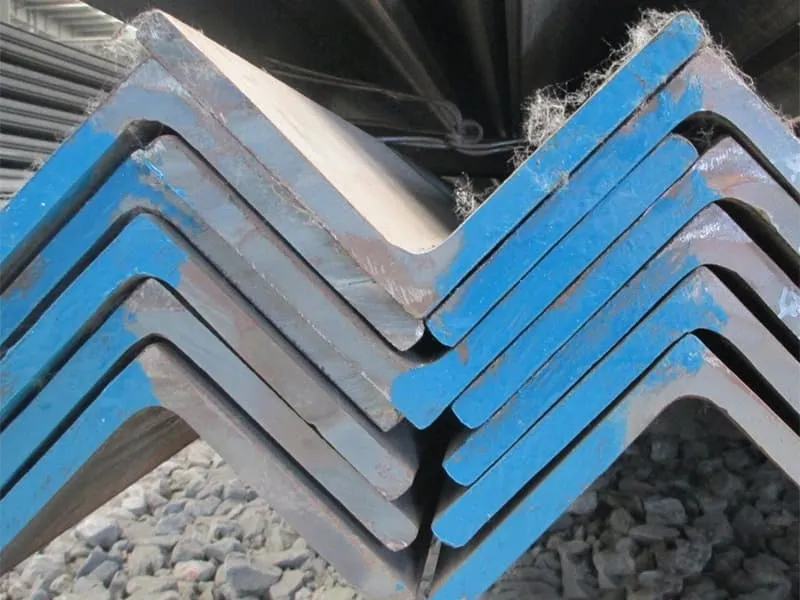
Here is the full picture side by side, on the same 10,886 kg order.
| Check | Paper balance | Audited balance |
|---|---|---|
| Basis of measurement | Theoretical kg/m on issued bars | Piece count plus taped lengths |
| Offcut return | Not posted | Posted per work order |
| Kerf and end trim | Ignored | Deducted per cut |
| Grade and heat separation | Blended into one line | Separated by heat |
| Scrap | Estimated | Weighed |
| Reported balance | 366 kg | 2,088 kg |
| Error against physical truth | −1,722 kg | within ±0.5% |
| Reorder consequence | One container bought twice | Requisition blocked by visible offcut stock |
The audited number is not harder to produce. It is the same twenty minutes of counting, done in a different unit. What makes it stick is deciding, once, that the tonne figure is a purchasing convenience and the piece figure is the truth. Everything downstream — the requisition, the container plan, the project cost report — gets better the moment that switch is made.
If you are rebuilding a balance after a long project and want a second opinion on the numbers, send me the section list and the cut quantities. We keep marine angle steel in the sizes that turn over fastest, and I would rather tell you that you already own the steel than sell you a container you do not need.
Conclusion
Count pieces and lengths at the rack, convert to kilograms last, and keep the offcut on the books. Tonnage alone will always lie to you.