
Two marine angle steel quotes at the same price per tonne can still land very different invoices on your desk. The gap hides in unit weight and bar length. Here is how I compare sizes before I quote.
Compare marine angle steel sizes by theoretical unit weight in kg/m first, then by standard bar length. A 100×100×10 mm angle weighs about 15.12 kg/m — roughly four times a 50×50×5 mm bar at 3.77 kg/m — so the same tonne means far fewer pieces, different crane needs, and a different cutting plan.
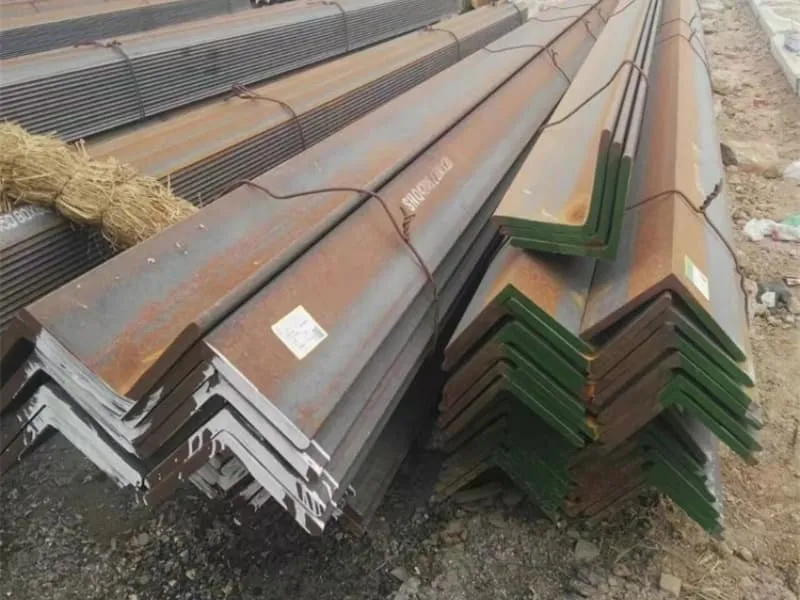
Most buyers I talk to compare marine angle steel by leg size alone, and I understand why. The drawing says L100×100×10, so the order says L100×100×10. But the size label is only the start of the story. What you actually pay for, ship, lift, and cut is weight, and weight does not scale the way the numbers on a drawing suggest. Doubling the leg roughly doubles the weight — but doubling the thickness can add thirty percent or more on its own, and the two effects stack. Then bar length comes in and changes how many pieces you receive, how many welds your fitters make, and how much offcut you throw away. Get both axes right and the comparison becomes simple arithmetic. Get them wrong and you find out at the port, when the bundles come off the vessel and your crane plan no longer matches the cargo.
Why Should You Compare Marine Angle Steel by Unit Weight Instead of Leg Size?
Because every tonne-based price, freight quote, and lifting plan is built on kg/m, not on the nominal leg figure. If you skip the weight column, you are comparing labels instead of steel.
Theoretical unit weight in kg/m is the only figure that converts directly into tonnage, freight cost, and price. A 100×100×8 mm angle weighs 12.276 kg/m against 9.366 kg/m for the 6 mm version — a 31% increase for just 2 mm more thickness — so two “same size” orders can differ by a third of the tonnage.
Where the kg/m Figure Actually Comes From
The unit weight of a marine angle steel bar is not a guess and it is not the supplier’s opinion. It is a theoretical figure calculated from the cross-section: two legs, the thickness, and the root fillet radius where the legs meet. Every major rolling standard publishes it — GB/T 706 for Chinese sections, EN 10056 for European profiles, JIS G 3192 for Japanese sections, and ASTM A6 for American practice. The numbers across these standards sit within a fraction of a percent of each other for the same nominal size, because geometry is geometry everywhere.
What surprises buyers is how sharply weight moves with thickness. You can even check the arithmetic yourself if you are so inclined: the section area in square centimetres, multiplied by the steel density of 7.85 kg per square metre per millimetre, gives kg/m within a rounding error. The published tables simply did this work for you and folded the root fillet in. Take the 100×100 family as an example. At 6 mm the bar weighs about 9.37 kg/m. At 7 mm it is about 10.79 kg/m. At 8 mm, 12.28 kg/m. At 10 mm, 15.12 kg/m. The leg never changed — the drawing still says 100×100 — but the tonnage climbed by more than sixty percent from the lightest to the heaviest. I have watched a procurement team approve a drawing revision that bumped the frame angle from 8 mm to 10 mm for a fatigue concern, and nobody updated the weight estimate. The order suddenly came back three tonnes heavier than the budget line, and the freight quote had to be redone two days before booking. That is the cost of reading the leg size and not the weight column.
The root fillet matters too, though less dramatically. Two mills rolling the same nominal 75×75×6 can differ slightly in fillet radius, and that shows up as a small gap between theoretical weight and weighbridge weight — usually around one percent, occasionally a bit more on smaller sections. Serious suppliers state their invoicing basis explicitly: theoretical weight per the standard table, or actual weighed weight. Ask which one your quote uses. If the answer is vague, treat that as a signal about how the rest of the transaction will go.
How Weight Moves Your Freight and Lifting Plan
| Marine angle size (mm) | Unit weight (kg/m) | Weight of one 12 m bar (kg) | Bars per tonne (approx.) |
|---|---|---|---|
| 50×50×5 | 3.77 | 45.2 | 22 |
| 75×75×6 | 6.91 | 82.9 | 12 |
| 100×100×8 | 12.28 | 147.3 | 7 |
| 150×150×12 | 27.3 | 327.6 | 3 |
| 200×200×20 | 60.06 | 720.7 | 1.4 |
Read that middle column again before you plan a container load. One 12 metre bar of 50×50×5 is a two-hand carry. One 12 metre bar of 200×200×20 needs a forklift or an overhead crane with slings, and your yard’s lifting gear has to be rated for it. I stood in a receiver’s yard in Dammam once and watched a crew try to hand-ball 150×150×12 off a flatbed because the forklift was busy. They managed about four bars an hour. The same tonnage in 75×75×6 would have moved before lunch. Unit weight is not just a pricing figure — it is a labour and equipment figure, and it belongs in your comparison from day one.
What Do Standard Bar Lengths of 6, 9, and 12 Metres Change in Your Order?
Length decides how many pieces you receive per tonne, how many joints your fitters weld, and how much offcut lands in the scrap bin. Two orders of identical tonnage in identical sections can behave completely differently because of length alone.
Marine angle steel rolls in standard lengths of 6, 9, and 12 metres, with length tolerance typically +50/0 mm. Longer bars mean fewer joints and fewer offcuts for long members, while shorter bars suit tight cutting schedules — so length is a production decision, not just a logistics one.
Pieces per Tonne: The Number Nobody Checks
Here is the arithmetic that catches buyers. A tonne of 50×50×5 in 12 metre bars is about 22 pieces. The same tonne in 9 metre bars is about 29 pieces, and in 6 metre bars about 44. Every one of those pieces has to be received, counted, stacked, tagged, and eventually tracked against the material takeoff sheet. On a big frame order, the difference between 12 metre and 6 metre supply is double the receiving workload and double the bundle count on the vessel — for exactly the same steel, at exactly the same price per tonne.
The same logic runs in the other direction. If your drawings call for 11.4 metre continuous members — some deckhouse stiffeners and longitudinals do — then 12 metre bars are not a convenience, they are the only standard length that works without a butt weld. An 11.4 metre requirement supplied in 9 metre bars means a welded splice in every member, and every splice is a weld inspection, a potential distortion point, and a line item your classification surveyor will look at. I have seen buyers save a little on the shorter-bar quote and pay it back twice in welding consumables and NDT hours. When we quote Gulf Metal Solutions in Saudi Arabia, we always ask for their cutting list before confirming length, because the cheapest length on paper is often the most expensive one in the shed.
Length Tolerance and Straightness: Read the Fine Print
Every one of those tolerance rows changes the comparison in a way that never shows up on a price sheet, so read them before you sign, not after.
| Parameter | Typical tolerance / value | Why it matters for comparison |
|---|---|---|
| Standard lengths | 6 m / 9 m / 12 m | Sets pieces per tonne and joint count |
| Length tolerance | +50 mm / 0 mm | Bars come long, never short — plan stacking accordingly |
| Straightness | ≤ 0.4% of length | A 12 m bar may bow up to ~48 mm |
| Leg length tolerance | ±0.8 mm (legs ≤ 50 mm) up to ±1.8 mm (legs 100–200 mm) | Affects fit-up against the drawing |
| Thickness tolerance | ±0.4 mm (≤ 5 mm) up to ±0.7 mm (> 10 mm) | Small thickness shift moves real weight |
That straightness row deserves a comment. Half a percent of a 12 metre bar is a lot of bow when you are trying to fit a frame against a shell plate. My own rule, learned the hard way in a yard where a 9 metre batch arrived with visible sweep: check the longest bars first when the delivery arrives, before the strapping comes off the bottom of the stack. If the long ones are straight, the short ones almost always are. If the long ones are banana-shaped, call your supplier while the bundles are still on the quay and the protest is easy to document.
There is also a stowage angle to length that buyers in our export markets raise more and more. A 12 metre bar will not fit inside a standard container, so long lengths travel either as breakbulk, on flat racks, or in bulk vessels — and each of those options carries its own freight logic and its own lashing requirements. Shorter bars containerise neatly, which is why many of our Southeast Asian buyers deliberately split their orders: 6 metre material for the containerised portion that needs to land fast, and 12 metre material for the bulk parcel that follows. The weight per bar stays the same either way, but the length decides how the steel travels, and that decision belongs in the comparison stage, not the booking stage. Ask your supplier what length mix they can actually ship on your schedule before you fix the bar length on the purchase order.
Which Size and Length Combination Should You Actually Order?
Once you can read weight and length correctly, the choice stops being a guess and becomes a matching exercise: match the section to its structural job, and match the length to your cutting plan and handling capability.
Match the size to the structural role first — brackets take 50–75 mm legs, transverse frames typically run 100–150 mm, and heavy web stiffeners go 150 mm and up. Then choose the bar length that minimises both joints and offcuts for your actual cut list, not the one with the lowest headline price.
The Comparison Table: Size, Weight, and Length Together

| Size (mm) | Unit weight (kg/m) | 12 m bar weight (kg) | Pieces per tonne (12 m) | Typical structural role | Handling class |
|---|---|---|---|---|---|
| 50×50×5 | 3.77 | 45.2 | 22 | Brackets, small stiffeners, tack-up supports | Two-hand carry |
| 63×63×6 | 5.72 | 68.6 | 15 | Light frames, secondary stiffening | Two-hand carry |
| 75×75×8 | 9.03 | 108.4 | 9 | Bulkhead stiffeners, small transverse frames | One-person with bar clamp |
| 100×100×10 | 15.12 | 181.4 | 6 | Main transverse frames, deck beams | Forklift or crane |
| 150×150×12 | 27.3 | 327.6 | 3 | Heavy web frames, engine seating | Crane with slings |
| 200×200×20 | 60.06 | 720.7 | 1.4 | Primary structure, heavy-duty foundations | Dedicated crane lift |
The table only means something when you read it against your own drawings. If your takeoff sheet calls for 340 pieces of 75×75×8 cut to 2.3 metres, the 12 metre bars give you five full pieces per bar with a 0.5 metre offcut — about 5.5% loss before kerf, which is a figure I would accept without a second thought. Switch to 9 metre bars and you get three pieces with a 2.1 metre offcut, nearly 24% loss, and the cheaper-looking quote just became the expensive one. I always run this arithmetic before I quote, and I would encourage any buyer to do the same with their own cut list. It takes ten minutes with a spreadsheet and it has saved my clients real money more times than I can count. When a buyer sends us their cutting sequence up front — as our Saudi distributor client learned to do after their first order — we can sometimes propose a different standard length that cuts their offcut rate in half, and that conversation starts with this exact table.
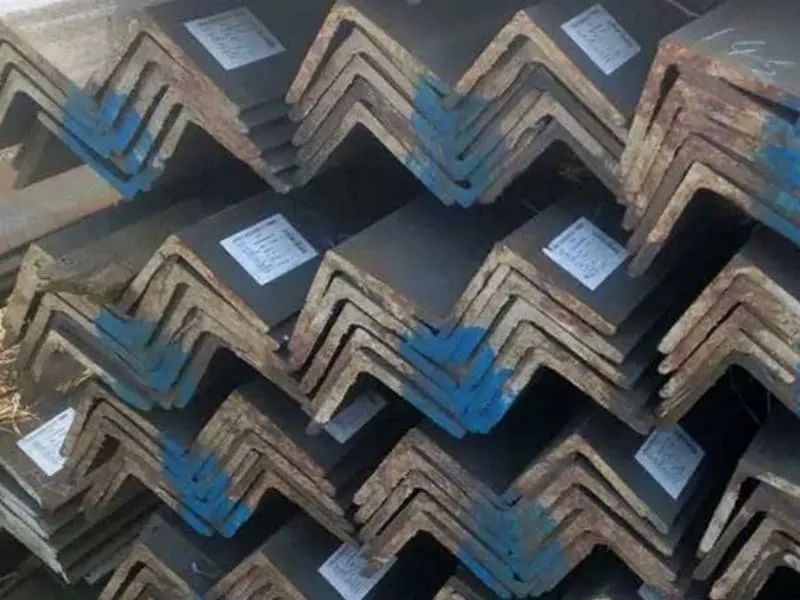
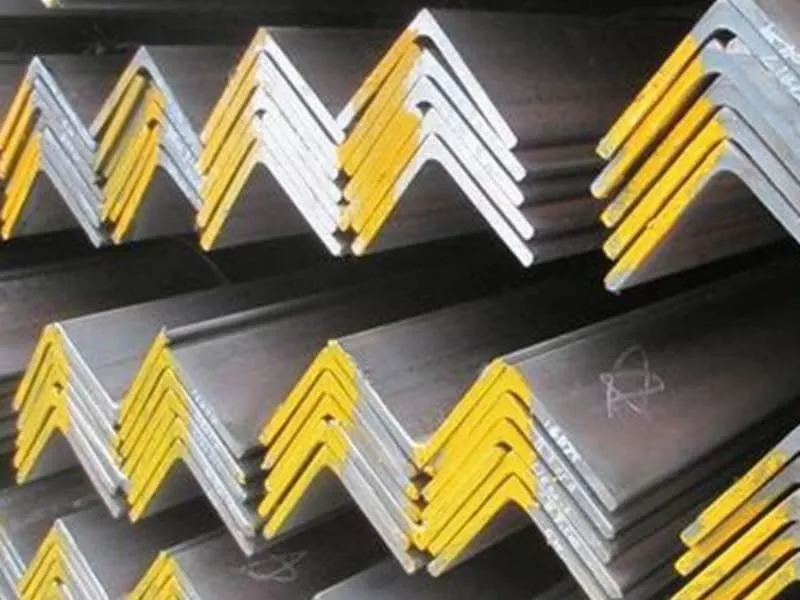
One last personal note from the stockyard side of the business. When I walk our Liaocheng warehouse and see bundles sorted by size with painted colour codes on the ends, I know the customer who ordered them will have an easy receiving day. When I see mixed bundles from a rushed consolidation, I know there will be a phone call within the week. Size and length discipline is invisible on the quote and very visible at the unloading.
A few edge cases are worth naming before you lock the order. First, unequal-leg angles complicate the weight comparison slightly, because the two legs are different widths — a 100×75×8 does not weigh what a 100×100×8 weighs, and the table you consult must match the leg orientation on the drawing. Second, the grade you order interacts with the size choice: a high-strength AH36 angle can sometimes let the designer drop one thickness step versus mild steel, which trims the kg/m figure and with it the freight — but only if the classification rules for that member allow it, so the weight saving has to be confirmed by the design office, not assumed at the negotiation table. Third, if your project spans several deliveries, resist the urge to consolidate sizes across shipments. A mid-order substitution from 100×100×8 to 100×100×10 because a mill had stock will look harmless on paper and will quietly break your weight budget, your weld procedure, and your takeoff reconciliation all at once. Comparing sizes properly on day one is what prevents those substitutions from ever being tempting.
Conclusion
Compare marine angle steel by unit weight in kg/m and standard bar length together, not by leg size alone. The right combination cuts freight surprises, welding hours, and offcut waste in one pass.