
Grade codes look like alphabet soup, and one wrong letter in a purchase order can freeze your vessel at classification survey. Here is how I read a marine angle steel designation line by line, so the steel that arrives matches the steel the drawing asked for.
A marine angle steel grade designation encodes three things: the notch-toughness class (A, B, D, E), the strength level (no letter for normal strength, H for high strength), and the minimum yield strength (32, 36, or 40). So AH36 means impact-tested at 0 °C, high strength, 355 MPa minimum yield, verified on a mill test certificate against a classification society rule.
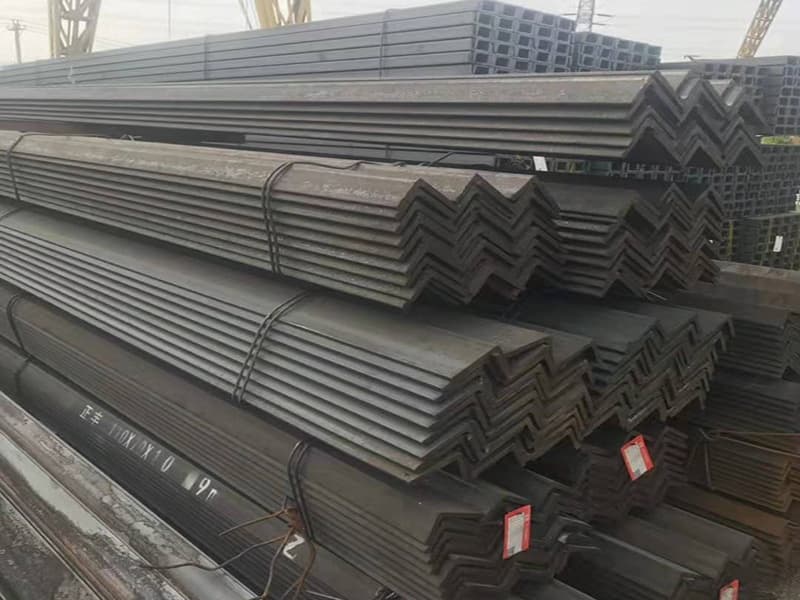
I answer grade-designation questions almost every week. Some buyers send us a full classification society drawing with the material line highlighted. Many others send a note that just says “angle steel, ship grade, 100×75×9”. That second kind of enquiry is where orders go wrong, because the grade is missing entirely and every mill has its own idea of what “ship grade” means. Before you place any order, you need to be able to read the designation like I read a delivery note — quickly, and with a clear idea of what each character commits the mill to. In this article I will walk you through the code itself, the certificate that proves it, and the traps that appear when you compare designations across different classification societies.
What Does Each Part of a Marine Angle Steel Grade Designation Actually Mean?
Most buyers can recite “AH36” but freeze when asked what the A, the H, and the 36 each stand for. If you cannot decode the code, you cannot catch a supplier who quietly offers you a cheaper substitute. Here is the full anatomy.
The designation is a three-part code. The first letter (A, B, D, or E) fixes the Charpy V-notch impact test temperature, from 0 °C down to −40 °C. The letter H marks high-strength steel, and the number 32, 36, or 40 gives the minimum yield strength in ksi, so AH36 delivers 355 MPa. Normal-strength grades A, B, D, and E carry 235 MPa.
The First Letter: Notch Toughness, Not Just “Quality”
The leading letter of a normal-strength grade — A, B, D, or E — is a toughness class. Each class is defined by the temperature at which the steel must pass the Charpy V-notch impact test, and the higher the letter, the colder the test. Grade A needs no impact test for most thicknesses. Grade B is tested at 0 °C. Grade D is tested at −20 °C, and Grade E at −40 °C. For the high-strength family the same idea carries over: AH is tested at 0 °C, DH at −20 °C, EH at −40 °C, and FH at −60 °C.
This letter is the single most important character for structural safety. A hull that sails the Persian Gulf and a hull that trades the North Sea in winter need different letters, and the classification society drawing will already have made that choice for you. Your job is to make sure the purchase order repeats the drawing’s letter exactly. I have seen a buyer downgrade from DH36 to AH36 because the price gap looked attractive, and the class surveyor rejected the batch during the hull survey. The steel itself was perfectly good — it was simply the wrong letter for the design temperature. The replacement order cost him six weeks, and that is before you count the demurrage.
The H and the Number: Strength Level
The H in AH36, DH36, and EH36 stands for high tensile strength. Normal-strength shipbuilding grades (A, B, D, E without an H) specify a minimum yield of 235 MPa. High-strength grades come in three levels: 32, 36, and 40. These numbers are historical — they were originally expressed in ksi, so 36 ksi corresponds to 355 MPa minimum yield, 32 ksi to 315 MPa, and 40 ksi to 390 MPa. AH36 remains the workhorse of commercial shipbuilding: bulk carriers, container ship midbodies, and most deck structures. AH32 and DH32 appear where the designer wants high strength with a slightly different toughness-strength balance, and the 40 grades are reserved for heavily stressed structures.
One detail that trips people up: ASTM A131/A131M, the US standard for ship structural steel, notes that shapes and bars — which is exactly the category marine angle steel falls into — are “normally available as Grades A, B, AH32, and AH36”. In practice this means that if your drawing calls for an exotic grade in an angle section, you should check availability before you promise the yard a delivery date. Most Chinese mills rolling angles cover the A/B/D/E normal grades and the AH32/AH36/DH32/DH36/EH32/EH36 high-strength grades, but the deeper you go into the FH family for bars and shapes, the thinner the supply.
A Designation Is Only as Good as the Standard Behind It
The code A/B/D/E + H + number is harmonised through the International Association of Classification Societies (IACS) rules, so an AH36 angle certified by ABS should be metallurgically interchangeable with an AH36 angle certified by DNV or LR. That interchangeability is real at the level of yield strength, tensile range, and impact energy. What is not interchangeable is the paperwork. Each society stamps its own mark, issues its own certificate, and has its own rule for when a witness must be present at the mill. So the designation tells you what the steel must be; the society mark on the certificate tells you who vouches for it. Both halves have to be right before you release the deposit.
| Code element | Example | Meaning | Impact test temperature |
|---|---|---|---|
| First letter (normal) | A | Basic toughness class | Not required for most thicknesses |
| First letter (normal) | B | Mild toughness class | 0 °C |
| First letter (normal) | D | Cold-service toughness | −20 °C |
| First letter (normal) | E | Low-temperature toughness | −40 °C |
| H | AH36, DH36, EH36 | High tensile strength family | Follows first letter |
| 32 / 36 / 40 | AH32, AH36, AH40 | Min. yield 315 / 355 / 390 MPa | Follows first letter |
| FH prefix | FH36 | Arctic-service toughness | −60 °C |
How Should You Verify the Grade on the Mill Test Certificate Before the Steel Ships?
A designation typed into a purchase order proves nothing. The only document that proves the steel in the bundle is the grade you ordered is the mill test certificate, and most grade disputes I have handled come down to a certificate nobody actually read.
Verify three certificate elements before shipment: the standard and grade line (for example, ABS AH36 or LR DH36 with the society mark), the heat number matching the stencils on the bars, and the Charpy V-notch results recorded at the exact temperature the grade requires. A certificate missing the impact temperature, or tested at the wrong temperature, is grounds to reject the batch.
Read the Grade Line the Way a Surveyor Would
The certificate grade line should repeat your designation in full: delivery condition, grade, society, and rule reference. On a proper EN 10204 3.1 certificate, you will see the chemical composition (carbon, manganese, silicon, sulphur, phosphorus, and micro-alloys such as niobium and vanadium), the mechanical results (yield, tensile, elongation), and the impact tests. For high-strength grades, check the carbon equivalent or CEV as well, because weldability is part of the grade definition. A certificate that shows AH36 chemistry but an impact test done at room temperature is not an AH36 certificate — it is a strength report with the wrong paperwork around it.
I once helped untangle a shipment where the buyer accepted a generic mill test report that showed yield and tensile but no Charpy data at all. The angle steel was for deck framing on a vessel classed in cold service. The surveyor asked for the −20 °C impact results, none existed, and the whole bundle went back into the negotiation. The mill eventually re-tested from retained samples, but the vessel schedule had already slipped. Since then, I send every first-time buyer the same one-line instruction: no Charpy row, no approval.
Match Heat Numbers to the Physical Bars
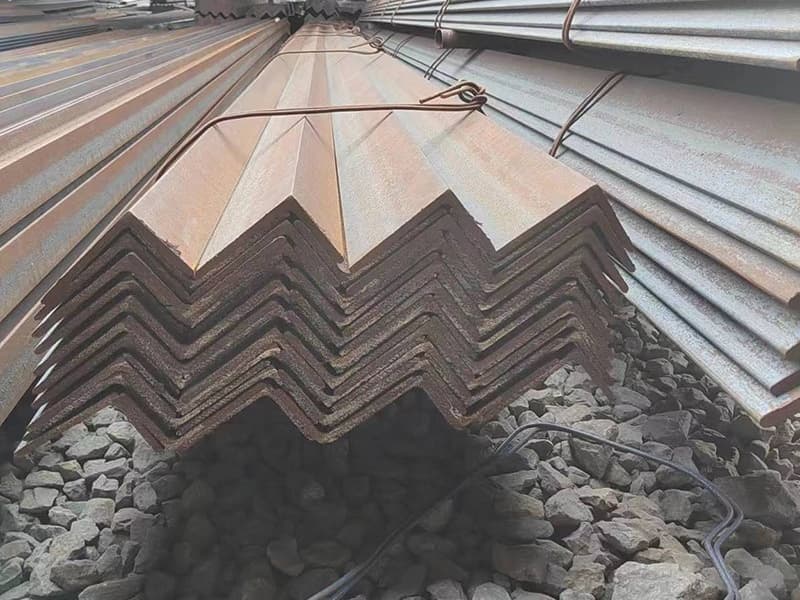
Every certificate is issued per heat, and each bar or bundle in a heat carries a stencil or stamped heat number. Walk the warehouse with the certificate in hand and check that the numbers actually match. In a wholesale yard, bundles from different heats sit side by side, and mixing happens more often through sloppy staging than through fraud. Matching heat numbers takes ten minutes and closes the most common documentary gap between “certificate says AH36” and “this bundle is AH36”.
Know Which Certificate Type You Are Getting
EN 10204 defines the certificate types, and the difference matters for classification work. A type 3.1 certificate is issued by the manufacturer’s own authorised inspection representative, independent of the production department, and is the standard for most shipbuilding orders. A type 3.2 certificate adds validation by the classification society’s surveyor or a third-party inspector such as SGS, and some projects require it for critical structural members. A type 2.1 “declaration of compliance with the order” is not a test certificate at all, and if it shows up where a 3.1 was expected, stop and ask questions. When we ship for clients like Gulf Metal Solutions in Saudi Arabia, the certificate type is agreed in the order confirmation, and SGS inspection support before loading is part of the routine — the buyer never has to argue about paperwork at the port.
| Certificate element | What to check | Red flag |
|---|---|---|
| Grade line | Full designation, society mark, rule reference | Grade written without the society prefix |
| Heat number | Matches stencil on the delivered bars | Certificate heat numbers not traceable to bundles |
| Impact test | Charpy V-notch at the grade’s required temperature | Tested at 0 °C when −20 °C or −40 °C was required |
| Yield / tensile | 355 MPa min. yield for AH36; 235 MPa for normal grades | Results slightly below the grade minimum |
| Chemistry | C, Mn, S, P within grade limits; CEV stated for high-strength | Missing CEV on an H-grade certificate |
| Certificate type | EN 10204 3.1 (or 3.2 when specified) | A 2.1 declaration offered instead of a test certificate |
Which Mistakes Do Buyers Make When Comparing Grade Designations Across Societies and Standards?
The designation system is harmonised, but the labels around it are not. Between ABS, DNV, LR, BV, KR, and CCS, plus national standards like JIS and GB, the same physical angle can wear three different names — and that is where substitution mistakes happen.
The most common mistakes are equating a commercial grade with a marine grade, ignoring the society prefix on the certificate, and substituting down a toughness class to save cost. ABS AH36, LR AH36, BV AH36, and CCS AH36 describe the same steel, but only the certificate with the correct society mark satisfies classification. A structural grade such as ASTM A36 has no mandatory impact test and is not a marine grade at all.
Commercial Grades Are Not Marine Grades
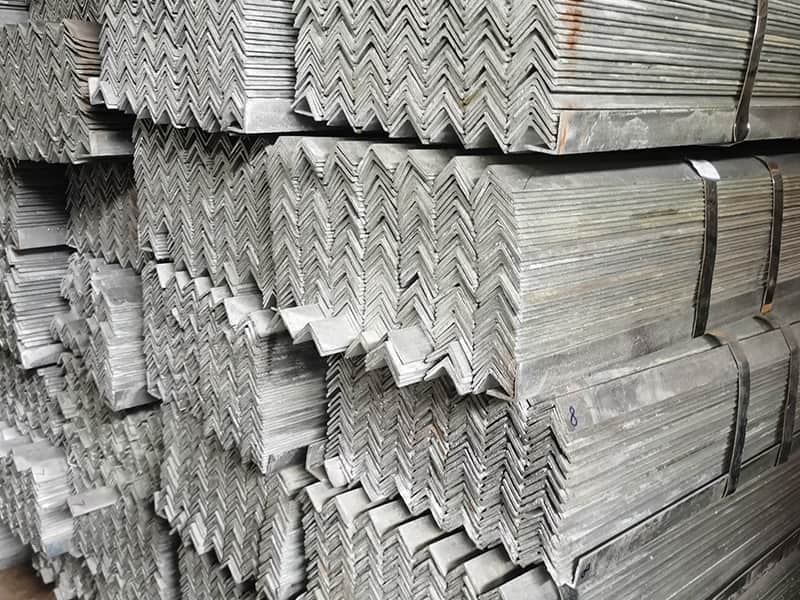
This is the mistake with the largest consequences. Commercial structural angles — ASTM A36, A572 Grade 50, JIS SS400 — are perfectly good steel for buildings and machinery bases, and they are cheaper than marine grades. But their standards do not mandate Charpy impact testing at low temperature, and their chemistry limits are looser. A classification society will not accept an A36 angle for hull framing no matter how good the steel looks. I understand the temptation: on a mixed industrial order, a supplier will sometimes offer “the same size, ordinary grade, save twenty percent”. If the members carry sea loads, the answer has to be no, and the purchase order has to name the marine grade explicitly so there is nothing to argue about later.
Read the Society Prefix, Not Just the Grade
ABS AH36, LR AH36, BV AH36, KR AH36, and CCS AH36 are metallurgical equivalents under the IACS framework — the yield, tensile, and impact requirements are the same. In practice, the society named on the drawing is the society whose mark must appear on the certificate. A batch certified to CCS when the drawing calls for ABS cannot simply be re-labelled; it requires the ABS surveyor’s involvement at the mill, which is a process, not a formality. Before ordering, check three things: the society on the drawing, the society your flag state accepts, and which societies your chosen mill can actually certify in-house. Most large Chinese mills hold multi-society certification, but not every mill covers every society for every product form, and angle sections are the form most often left off a particular approval.
| Property | Grade A (normal strength) | AH36 (high strength) | Typical commercial grade (A36) |
|---|---|---|---|
| Min. yield strength | 235 MPa | 355 MPa | 250 MPa |
| Min. tensile strength | 400–520 MPa | 490–620 MPa | 400–550 MPa |
| Impact test | Depends on grade/thickness | Mandatory at 0 °C | Not required by standard |
| Governing body | Classification society (IACS rules) | Classification society (IACS rules) | National standard body |
| Accepted for hull structure | Yes, within rule limits | Yes, standard for commercial vessels | No |
| Typical relative cost | Baseline | Higher | Lowest |
Substitution: When a Letter Change Is a Design Change
Buyers sometimes discover mid-project that a grade is hard to source and ask whether AH32 can stand in for AH36, or DH36 for EH36. The honest answer is that this is a designer’s decision, not a purchasing decision. The rules permit certain equivalences in defined thickness and application ranges, but the classification society’s approval of the substitution is what makes it legal, and the revised drawing must follow. If you face a shortage, the correct move is to ask the designer and the society surveyor together, in writing, before the order is amended. My own rule of thumb from years of port-side handovers: substitutions approved after delivery are always more expensive than the ones approved before the order is placed — the discount you gain on the cheaper grade never covers the survey re-work when the wrong letter arrives.
Make the Designation Unmistakable in the Purchase Order
Finally, write the designation the long way in the order text. Instead of “angle AH36”, write: “Marine angle steel, equal leg 150×150×12 mm, grade AH36, ABS certificated, EN 10204 3.1 MTC, Charpy at 0 °C, length 12 m, JIS G3192 dimensional tolerance”. It takes thirty seconds to type, and it removes every ambiguity a busy mill clerk might otherwise resolve on your behalf. Every serious enquiry we handle at Yichen Steel comes through this way, and it is also the fastest route to an accurate quotation, because the mill knows exactly which rolling programme and which certification route your order needs. For a broader view of what else belongs in a complete enquiry, see our guide to requesting a quotation and the documentation checklist for international purchasing teams.
Conclusion
Read the designation letter by letter, demand the certificate that proves it, and never let a society name or toughness class drift. Thirty seconds of checking protects a vessel survey worth months.