
A shipyard material list that reaches my inbox as a screenshot or a vague email is not a quotation request. It is the start of a conversation that will cost both of us three days and probably produce the wrong price. After handling marine steel enquiries from yards in Vietnam, Saudi Arabia, and Pakistan, I can tell you that the buyers who get accurate quotes on the first try are the ones who treat their material list as a structured data sheet, not a wish list.
Convert your shipyard material list into a supplier quotation request by turning every line item into a specification table that includes steel grade, dimensions, quantity, delivery condition, classification society, and certification requirements. Add delivery port, Incoterm, and inspection scope, then separate fixed design requirements from negotiable procurement preferences before sending.
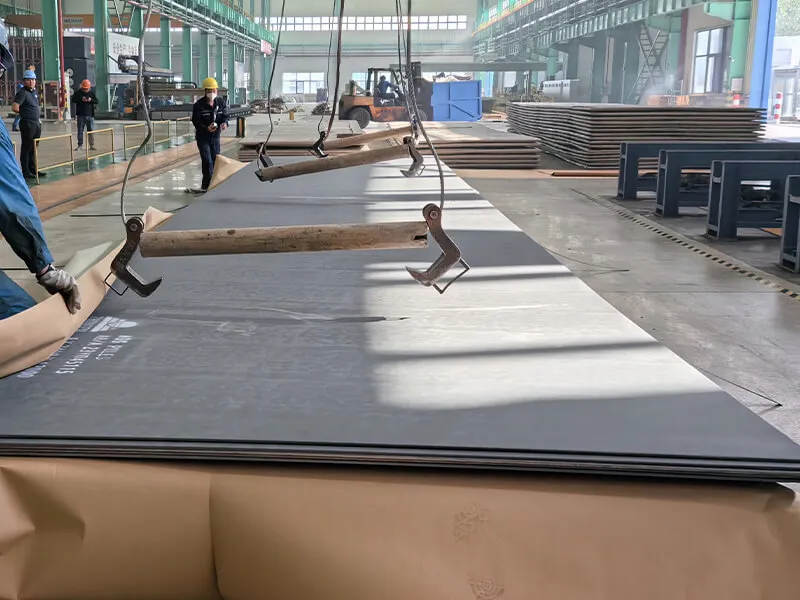
Most shipyard procurement teams start with a bill of materials pulled from the detailed design. That BOM is correct for engineering, but it is rarely ready for a supplier. The drawing tells you that frame 47 needs L150x150x15 angle in AH36. It does not tell the supplier whether you need nine-metre or twelve-metre lengths, whether you will accept AH32 as a substitute, or if the steel must carry LR approval instead of ABS. Those gaps are where quotations go wrong. In this article, I will show you how to bridge the gap between engineering output and a clean RFQ that gets you a firm price in one round.
What Information Must Every Line Item in Your RFQ Contain?
An incomplete line item is the single biggest cause of quotation delays. When a buyer sends “50 tonnes marine plate, AH36, assorted sizes,” I have to stop everything and ask for thicknesses, widths, lengths, delivery condition, and tolerance class. That back-and-forth burns two or three days.
Every RFQ line item must state material type, grade with governing standard, dimensions including thickness tolerance class, quantity with unit, delivery condition, certification level, and any processing or surface finish required. Missing any of these fields forces the supplier to assume, and assumptions always favour the supplier, not the buyer.
The Ten Fields That Define a Quotable Line Item
I have a simple checklist I send to new buyers. It contains ten fields. If every line item on your material list answers all ten, you will get a quote that matches your project exactly.
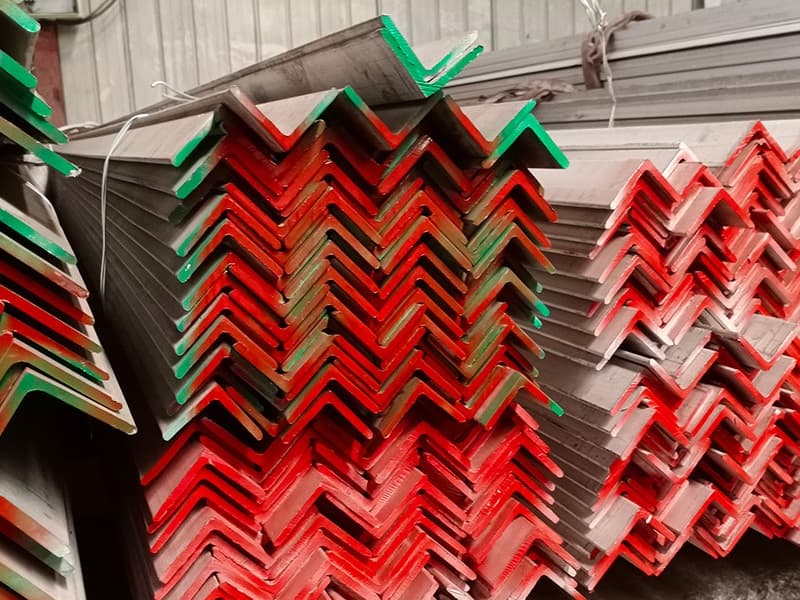
- Material type and shape — Marine steel plate, marine angle steel, bulb flat steel, or L-shaped section steel.
- Grade and governing standard — For example, AH36 to ASTM A131/A131M, or CCS Grade A. The standard matters because ABS and CCS both list “A” grade, but the chemical limits differ slightly.
- Dimensions — For plate: thickness x width x length. For angle: leg x leg x thickness x length. For bulb flat: HP profile number x thickness x length.
- Thickness tolerance class — Controls fit-up accuracy. IACS UR W11 references mill tolerances; specifying them up front avoids arguments later.
- Quantity — In pieces, metres, or tonnes. Tonnes are fine for budgetary quotes, but pieces or metres are better for firm orders because they lock the bundle count.
- Delivery condition — As-rolled, normalized, thermo-mechanically rolled (TMCP), or quenched and tempered. This determines lead time and cannot be substituted silently.
- Certification — EN 10204 3.1 or 3.2. Most shipyards accept 3.1 for standard hull plate; offshore structures often demand 3.2 with third-party witness.
- Classification society approval — ABS, DNV, LR, BV, KR, CCS, or RINA. State the society explicitly. “Class approved” is not enough.
- Ultrasonic test level — Required for plate over 50 mm or fatigue-critical structure. Specify the standard, such as ASTM A435 or EN 10160.
- Processing and finish — Cut-to-length, edge preparation, shot blasting, primer coating, or marking requirements.
Here is how a single line item looks when it is complete:
| Field | Example Entry |
|---|---|
| Material | Marine steel plate |
| Grade / Standard | AH36 / ASTM A131M |
| Dimensions | 20 mm x 2,000 mm x 8,000 mm |
| Tolerance class | Mill standard, minus side zero |
| Quantity | 24 pieces |
| Delivery condition | TMCP |
| Certification | EN 10204 3.1 |
| Classification society | ABS |
| UT level | ASTM A435 |
| Finish | Shot-blasted + shop primer |
That line item gives me everything I need to check mill availability, calculate freight, and confirm lead time. When I receive a list written this way, I can return a firm quotation within four hours. When I receive a partial list, the first email I send back is a request for clarification, and the clock resets.
Why Delivery Condition Cannot Be an Afterthought
I once quoted AH36 plate to a yard in Pakistan that forgot to specify delivery condition. We priced TMCP because that is what our mill programme offered. After the order was placed, their welding engineer realised they needed normalized plate for the low-temperature toughness requirement in their spec. The mill had already rolled the TMCP batch. We had to re-allocate tonnage, delay delivery by two weeks, and absorb a partial re-rolling charge. The buyer saved nothing by leaving the field blank.
Delivery condition affects chemistry, mechanical properties, and lead time. TMCP plate is available from most mills within four to six weeks. Normalized plate often needs eight to ten weeks because of the extra furnace cycle. Quenched and tempered plate for offshore use can stretch to twelve weeks. If your design requires normalized plate, say so on the RFQ. Do not leave it for the supplier to guess.
Grouping Items for Volume Pricing
When your material list contains multiple thicknesses of the same grade, group them by grade and delivery condition before sending. A list with twelve separate lines of AH36 plate in different thicknesses is harder to price than a summary table that shows total tonnes per thickness. The supplier can then check mill rolling schedules and offer volume discounts where the thicknesses fall within the same rolling programme.
I recommend creating a secondary summary table alongside the detailed line-item list. The detailed list is for your internal cutting plan. The summary table is for the supplier. Here is an example:
| Grade | Condition | Thickness | Total Pieces | Total Tonnes |
|---|---|---|---|---|
| AH36 | TMCP | 12 mm | 48 | 72.5 |
| AH36 | TMCP | 16 mm | 36 | 72.4 |
| AH36 | TMCP | 20 mm | 24 | 60.3 |
| DH36 | Normalized | 25 mm | 16 | 75.6 |
This summary lets me see at a glance that you need roughly 280 tonnes of AH36 TMCP and 75 tonnes of DH36 normalized. I can check whether our mill partner has a rolling slot that covers both grades, and I can offer a single price for the combined volume.
How Should You Handle Classification Society Certification and Mill Test Certificates?
Buyers often assume that “class approved” means any society will do, or that a 3.1 certificate is always enough. Those assumptions create problems at the surveyor’s desk, not at the supplier’s desk. I have seen steel rejected at the port because the certificate carried the wrong society’s stamp, and I have seen production halted because the MTC level did not match the project spec.
State the exact classification society and certificate level on every line item. ABS approval is not interchangeable with DNV approval, and EN 10204 3.1 is not automatically accepted where 3.2 is required. Clarify these requirements in the RFQ to avoid re-inspection, re-certification, or rejection at the receiving yard.
Classification Society Cross-Walk
Not all societies use the same grade naming. If your design calls for AH36 under ABS rules, the equivalent under DNV is VL AH36, under LR it is AH36, under KR it is KAH36, and under CCS it is AH36. The mechanical requirements are similar but not identical. ABS AH36 requires a minimum yield strength of 355 MPa and Charpy impact energy of 34 J at 0 degrees Celsius. DNV VL AH36 has the same yield requirement but tests at minus 20 degrees Celsius for some thickness bands.
When you send your RFQ, name the society your surveyor will use. If the project allows multi-society approval, list them in priority order. Here is a typical entry:
| Society | Grade Designation | Impact Test Temp | Preferred? |
|---|---|---|---|
| ABS | AH36 | 0 deg C | Yes |
| DNV | VL AH36 | minus 20 deg C | Acceptable |
| LR | AH36 | 0 deg C | Acceptable |
| CCS | AH36 | 0 deg C | Conditional |
This table removes ambiguity. I know that ABS is your first choice, DNV and LR are acceptable without question, and CCS requires confirmation. I can check mill approvals against that list and quote only what you can actually use.
MTC Levels: 3.1 vs 3.2
EN 10204 3.1 certificates are issued by the mill’s own quality department. They link each plate to its heat number and show chemical composition and mechanical test results. For most commercial shipbuilding, 3.1 is sufficient.
EN 10204 3.2 certificates require independent third-party verification. A surveyor from the classification society or an appointed inspector witnesses the testing and signs the certificate. Offshore platforms, naval vessels, and some LNG projects demand 3.2. The cost difference is real: 3.2 inspection adds roughly [Zora will replace] dollars per tonne and extends lead time by one to two weeks because of the scheduling required with the surveyor.
If your RFQ does not state the MTC level, I will quote 3.1 because that is the mill default. If you need 3.2, the price will change after the fact. State it clearly in the RFQ header or in a dedicated section.
Third-Party Inspection Beyond the Mill
Some buyers want SGS or BV inspection at the mill before shipment, in addition to the class survey. This is separate from the MTC. It is a physical inspection of dimensions, surface quality, marking, and packing. If you want this, include it in the RFQ with the scope: sample size, acceptance criteria, and who pays. At Yichen Steel, we coordinate SGS inspection as a standard service for clients who request it, but we need to know at the quotation stage because the inspector’s travel and reporting time affect both cost and schedule.
What Common Mistakes Turn a Clean Material List into a Delayed Quotation?
Even experienced shipyard buyers make the same errors. I have received RFQs with mixed metric and imperial units, screenshots of Excel files instead of spreadsheets, and references to “same as last project” without attaching the previous project’s spec. Each of these mistakes forces the supplier to reconstruct the request, and reconstruction takes time.
The most common mistakes are omitting grade or standard, sending unsorted takeoffs with mixed units, asking for processing only after material is quoted, failing to state acceptable substitutions, and leaving delivery constraints out of the first RFQ. Removing these errors turns a two-week quoting process into a two-day process.
Mistake 1: Screenshots Instead of Structured Data
A screenshot of your CAD material takeoff is not an RFQ. I cannot copy dimensions from a screenshot. I cannot sort or group the data. I have to retype everything into my own spreadsheet, and every retyped digit is a potential error. Send a CSV, Excel file, or even a plain text table. Any format I can copy and paste is better than an image.
Mistake 2: Omitting Grade or Standard
“Marine plate, 20 mm, 100 tonnes” is not enough. Is it Grade A, AH32, AH36, DH36, or EH36? Is the standard ASTM A131, IACS UR W11, or a national variant? The price difference between Grade A and EH36 can be [Zora will replace] percent. The lead time difference between TMCP and normalized can be four weeks. Omitting the grade does not make the quote faster. It makes it wrong.
Mistake 3: Mixed Units and Unsorted Lists
One line uses millimetres for thickness and feet for length. Another line lists plate by net weight while the next lists angle by piece count. The supplier must normalize everything before quoting. Do that work yourself. Convert all dimensions to a single unit system. List quantities in the unit that matches your cutting plan, but add a tonnes column for the supplier’s freight calculation.
Mistake 4: Processing After Quoting
A buyer asks for a price on standard-length plate. After the quote comes back, they add cut-to-length, edge preparation, and shot blasting. Those processing steps change the price, the lead time, and sometimes the mill choice. Not every mill offers cut-to-length service. Not every processor has edge-beveling capacity for thick plate. Include processing requirements in the original RFQ so the supplier can quote the full scope.
Mistake 5: Failing to State Acceptable Substitutions
If your design allows AH32 instead of AH36 for non-critical framing, say so. If you will accept DNV approval instead of ABS on angle steel, say so. If you have no flexibility, say that too. Silence on substitutions forces the supplier to quote exactly what you wrote, even when a cheaper or faster alternative exists. One of our regular clients in Thailand cut their angle steel costs by [Zora will replace] percent simply by stating that AH32 was acceptable for deck framing where the drawing showed AH36.
Comparison Table: RFQ Quality and Quote Speed
| RFQ Quality Level | Typical Information Provided | Average Quote Turnaround | Revision Rate |
|---|---|---|---|
| Poor | Screenshot, no grades, no standards | 5 to 7 days | 80 percent |
| Fair | Spreadsheet with grades but missing tolerances and delivery condition | 3 to 4 days | 40 percent |
| Good | Complete line items with grade, dimensions, quantity, condition, and society | 1 to 2 days | 10 percent |
| Excellent | All of the above plus summary table, substitution policy, delivery port, Incoterm, and inspection scope | Same day | Under 5 percent |
The buyers who land in the “Excellent” column are the ones who get priority when mill capacity is tight. When I have one rolling slot left for AH36 TMCP this month, I give it to the buyer whose RFQ I can process in one hour, not the one whose RFQ will take three days of back-and-forth to clarify.
Conclusion
Converting a shipyard material list into a supplier quotation request is not paperwork. It is the first quality gate in your procurement process. Complete line items, clear certification requirements, and an explicit substitution policy turn a vague list into a firm quote.