
You’re reviewing a hull drawing. It calls for an "L 150x90x10." You assume it’s a typo and order equal angles. The fabricated bracket doesn’t fit, and you must scrap it. This simple mistake wastes time and money. Choosing the right L-shape is a fundamental engineering decision.
Choosing between equal and unequal L-shaped steel for hulls depends on the structural forces. Equal angles (e.g., L 100×100) provide symmetrical strength and are used for general stiffening and connections. Unequal angles (e.g., L 150×90) are chosen when loading is primarily in one direction, allowing efficient use of material by placing more metal in the leg facing the load, optimizing weight and strength.
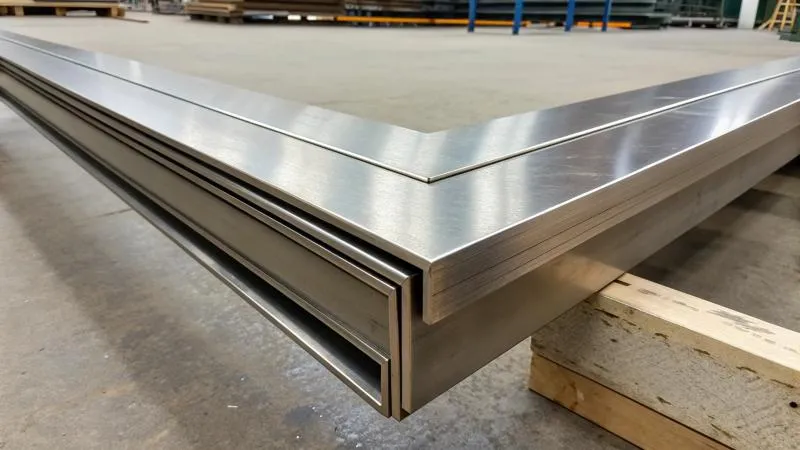
This choice impacts weight, cost, fabrication ease, and structural integrity. It’s not a casual decision left to the purchasing department. Let’s break down the geometric, mechanical, and practical differences to build a clear selection framework.
What is the difference between equal and unequal angle1e](https://lintelsteel.com.au/equal-and-unequal-angle-4-key-differences/)[^2]s?
You have two pieces of steel bent into an "L." One looks balanced; one looks lopsided. The visual difference is obvious, but the mechanical difference is what matters for your hull’s performance. Getting this wrong is a basic engineering error.
The difference between equal and unequal angle1e](https://lintelsteel.com.au/equal-and-unequal-angle-4-key-differences/)[^2]s is the leg lengths. An equal angle2 has legs of identical length (e.g., L 100x100x10). An unequal angle1e](https://lintelsteel.com.au/equal-and-unequal-angle-4-key-differences/)[^2] has legs of different lengths (e.g., L 150x90x10). This asymmetry gives unequal angle1e](https://lintelsteel.com.au/equal-and-unequal-angle-4-key-differences/)[^2]s different section properties (like centroid location3 and moments of inertia) in each axis, making them more efficient for carrying asymmetric loads.
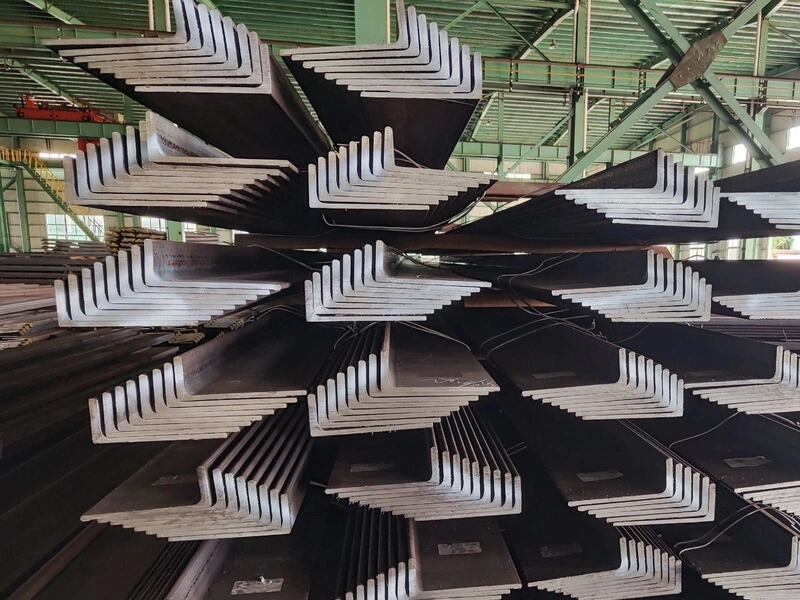
The difference is more than just dimensions. It changes how the steel behaves under stress, where its center of gravity lies, and how it should be connected. Understanding these properties is the first step to correct application.
Beyond Symmetry: The Mechanical Implications of Geometry
The shape of a cross-section dictates its strength. The "L" is deceptively simple, but the leg lengths change its structural personality completely.
Key Geometrical and Mechanical Properties:
| Property | Equal Angle (L 100x100x10) | Unequal Angle (L 150x90x10) | Why It Matters |
|---|---|---|---|
| Visual Symmetry | Symmetrical. | Asymmetrical, one long leg, one short leg. | Affects orientation during installation. Must be installed correctly. |
| Centroid (Center of Gravity) | At the intersection of the angle’s bisector (45° line). | Not on the bisector. It is closer to the longer leg. | Critical for calculating bending stress. The neutral axis is offset. |
| Moment of Inertia (Ix, Iy) | Ix = Iy. Equal resistance to bending in both principal directions. | Ix ≠ Iy. Much higher resistance to bending about the axis parallel to the short leg (i.e., bending the long leg). | Determines which way the angle is stiffer. You align the strong axis with the primary load. |
| Radius of Gyration (r) | Equal about both axes. | Different about each axis. | Important for calculating buckling resistance of compression members. |
| Section Modulus (Z) | Equal for both legs. | Larger for the long leg. | Directly measures bending strength. The long leg can resist a larger bending moment. |
Practical Example in a Hull:
Imagine a vertical stiffener attached to the side shell plate.
- If you use an equal angle2, its strength is the same whether the load comes from port or starboard water pressure. This is versatile but may be inefficient.
- If you use an unequal angle1e](https://lintelsteel.com.au/equal-and-unequal-angle-4-key-differences/)[^2], you orient it with the long leg perpendicular to the plate. The long leg acts as a deeper, stiffer beam to resist the water pressure pushing inwards. The short leg provides a sufficient welding flange to the plate. This uses material more efficiently, saving weight.
The Golden Rule for Orientation:
For an unequal angle1e](https://lintelsteel.com.au/equal-and-unequal-angle-4-key-differences/)[^2] used as a stiffener, the long leg is the "web" (carries the load), and the short leg is the "flange" (connects to the plate). Installing it backwards (short leg as web) defeats its purpose and drastically reduces strength.
Understanding this difference is not academic; it’s the foundation for specifying the correct material from your supplier and ensuring it is fabricated correctly in your yard.
How do you choose the right steel?
You know you need an L-angle. But is it equal or unequal? AH32 or AH36? 8mm or 10mm thick? The "right" steel is a combination of the correct grade, form, and dimensions to meet the structural, fabrication, and economic requirements of the specific hull component.
You choose the right steel by first understanding the structural requirements1 (load, stress, environment), then selecting the appropriate material grade2 (e.g., AH36 for strength/toughness), followed by the optimal section shape and size (equal vs. unequal angle3, dimensions) to meet those requirements efficiently, and finally verifying fabricability and availability with your supplier.
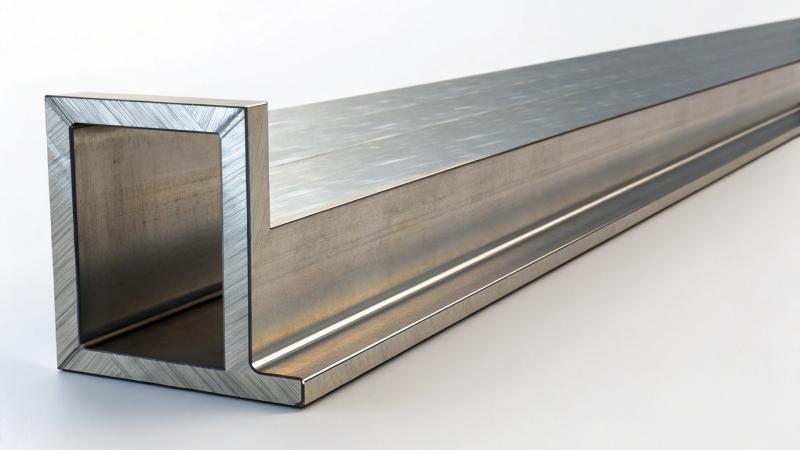
Selection is a systematic process, not a guess. It moves from the abstract (loads) to the specific (purchase order). Let’s walk through this process step by step for a hull component.
A Systematic Selection Framework for Hull L-Steel
Follow this sequence to make confident, optimized choices.
Step 1: Define the Application and Loads
What is the angle’s job?
- Stiffener: Resists buckling of a plate panel. Primary load is lateral pressure (water).
- Bracket (Knee): Connects a deck beam to a frame. Loads are complex (shear, moment).
- Edge Bar: Reinforces a hatch opening. Load is local tension/compression.
- Secondary Frame: Provides transverse hull shape. Load is lateral pressure and global bending.
Step 2: Select the Material Grade
This is dictated by the hull’s location and classification rules.
- General Hull Areas: AH32 or AH36. AH36 is the modern standard for higher strength.
- Cold Climate Operation / Critical Areas (Sheer Strake): DH36 or EH36 for guaranteed low-temperature toughness.
- Corrosive Environment (Ballast Tank): Standard grade (AH/DH36) but with a corrosion allowance4 (extra thickness) or special treatment.
Step 3: Determine Section Shape (Equal vs. Unequal) and Size
This is the core of the "equal vs. unequal" decision. Use the structural analysis.
- If Load is Symmetrical or Direction is Unpredictable: Use an Equal Angle. Example: A diagonal brace in a truss where load can reverse.
- If Load is Clearly Asymmetric and Consistent: Use an Unequal Angle. Example: A vertical stiffener on the side shell. The water pressure is always inward. Orient the long leg perpendicular to the plate for maximum efficiency.
- Size (Leg Length & Thickness): This comes from scantling calculations5. The naval architect calculates the required section modulus (Z)6 to resist the bending moment. They then select a standard angle size from a table that meets or exceeds this Z-value with the least weight.
Step 4: Consider Fabrication and Supply
The theoretically perfect size may not be practical.
- Weldability: Thicker angles (>12-15mm) may require pre-heat. Check the CE value on the MTC.
- Availability: Some unequal angle sizes are less common. Check with your supplier (like us) for standard stock sizes or mill rolling schedules to avoid long lead times.
- Cutting & Fit-up: Very long, unequal angles can be more awkward to handle and position correctly than equal angles.
Selection Checklist Table:
| Hull Component | Primary Load | Likely Grade | Likely Shape | Reasoning |
|---|---|---|---|---|
| Side Shell Vertical Stiffener | Lateral water pressure (one direction). | AH36 | Unequal Angle (Long leg ⊥ to plate). | Efficient use of material to resist one-way bending. |
| Deck Girder Stiffener | Downward pressure from cargo/deck. | AH36 | Unequal Angle (Long leg ⊥ to deck). | Same principle as side shell. |
| Bracket (Knee) connecting elements | Complex shear and moment. | AH36 | Equal Angle (often with clipped ends). | Loads are multi-directional; symmetry is simpler for fabrication and analysis. |
| Horizontal Stringer in Bulkhead | In-plane loading, buckling restraint. | AH32/AH36 | Equal Angle (or Unequal if primary load direction is clear). | Often symmetric restraint. |
By following this framework, you move from "we need some angle iron" to a precise specification: "300m of Unequal Angle Steel, L 150x90x10, material ABS AH36, for side shell stiffeners." This clarity prevents errors and allows your supplier to provide accurate quotes and guaranteed material.
What is the preferred steel type for W shapes?
You’re designing a large deck support or a foundation. You might consider a wide-flange beam (W shape). But for many hull applications, L-angles1 are preferred. Understanding why helps you appreciate the role of L-angles1 and when to consider a different profile.
In building construction, the preferred steel type for W shapes (wide-flange beams) is typically ASTM A9922, which offers high yield strength and good weldability. However, in ship hull construction, W shapes are rarely used. The preferred structural shapes are plates, bulb flats, and L-angles (equal and unequal). These are better suited for curved hull forms, efficient welding, and the specific load patterns in a ship’s structure.
Hull design favors built-up sections and rolled profiles that are compatible with the shell plating. The question itself highlights a key difference between land-based and marine structural engineering. Let’s explore why L-angles1 win in the marine environment.
Why L-Angles Trump W-Shapes in Shipbuilding
It’s a matter of design philosophy, fabrication efficiency, and hydrodynamic form.
1. Compatibility with Hull Plating:
A ship’s hull is a stiffened plate structure3. The primary element is the steel plate (shell). Stiffeners (L-angles1, bulb flats) are welded directly to it to prevent buckling.
- L-Angle: One leg welds easily to the plate (flange), the other stands proud (web) to provide bending stiffness. It’s a perfect, simple attachment.
- W-Shape: Has two flanges. One would weld to the hull plate, but the other flange would point into the ship, serving little purpose and adding unnecessary weight and obstruction.
2. Suitability for Curved Surfaces:
Hull plates are curved (especially at the bow and bilge).
- L-Angle: Can be relatively easily cold-bent in the plane of its web to follow the curvature of the hull.
- W-Shape: Very difficult and expensive to bend in any direction due to its complex cross-section.
3. Weight and Material Efficiency:
- L-Angle: Provides good stiffness in one primary direction (when used as a stiffener) with minimal material. It’s a lean, fit-for-purpose shape.
- W-Shape: Designed for bi-directional bending as a freestanding beam (like in a building frame). This capability is overkill and wasteful for a hull stiffener.
4. Fabrication and Outfitting:
The space inside a ship is packed with piping, cables, and equipment.
- L-Angle: Presents a clean profile. The space behind the web is often used for routing services.
- W-Shape: The lower flange creates a ledge that collects debris and comrades pipe and cable runs.
When Might a W-Shape Be Used in Marine?
In very limited, land-like applications within the ship:
- Support Girders for heavy deck machinery (e.g., under a crane pedestal).
- In engine room platforms that are flat and carry heavy static loads.
- In the construction of modular accommodation blocks.
For the primary hull structure—the skin and ribs of the ship—the L-angle (and bulb flat) is the optimized, industry-standard choice. It’s a classic example of form following function in marine engineering.
How to calculate unequal angle weight?
You have the drawing: L 150x90x101. You need to order 50 meters. How much will it weigh for shipping and costing? A wrong calculation leads to budget overruns or logistical problems. The formula is simple, but you must use the correct dimensions.
To calculate the weight of an unequal angle, use the formula: Weight = (Leg1 + Leg2 – Thickness) x Thickness x Density x Length. For steel (density ~7.85 g/cm³), the practical formula is: Weight (kg) = (A + B – t) x t x 0.0157 x L, where A & B are leg lengths in mm, t is thickness in mm, and L is length in meters. Always refer to standard weight tables for verification.
Weight calculation is critical for procurement, logistics, and structural analysis. While tables are best, understanding the formula builds intuition and helps catch errors. Let’s derive it and see how to use it practically.
The Math Behind the Mass: From Geometry to Tonnage
The weight of a steel section is its volume multiplied by the density of steel (~7.85 tonnes/m³ or 7.85 g/cm³).
Deriving the Formula:
An unequal angle is not a simple rectangle. To find its cross-sectional area, imagine it as two rectangles that overlap at the corner.
- Area of Rectangle 1 (Leg A): = A * t
- Area of Rectangle 2 (Leg B): = B * t
- The corner (where they meet) is counted twice. Its area is = t * t = t²
- Therefore, the true cross-sectional area = (At) + (Bt) – (t²) = t(A + B – t)
Now, to get the weight of a length (L):
- Volume = Area x L = t(A + B – t) * L
- Weight = Volume x Density
The Practical Formula (Using mm and meters):
To use common units (legs in mm, length in meters), we convert:
Density = 7.85 g/cm³ = 7.85 * 10^-6 kg/mm³ (messy).
Easier: Use the constant 0.00785 kg/(mm²·m)2 derived for steel.
- Area (mm²) = t(A + B – t)
- Weight (kg) = Area (mm²) x Length (m) x 0.00785
- Simplified: Weight (kg) = (A + B – t) x t x 0.00785 x L
People often use 0.0157 because they forget to cancel units correctly from an older formula. The safest method is to use a standard table or the correct constant.
Step-by-Step Example:
Calculate the weight of 12 meters of L 150x90x101mm.
- A = 150mm, B = 90mm, t = 10mm, L = 12m
- Area = t(A + B – t) = 10 x (150 + 90 – 10) = 10 x 230 = 2300 mm²
- Weight = Area x L x 0.00785 = 2300 x 12 x 0.00785
= 2300 x 0.0942 = 216.66 kg
Why This Matters Beyond Simple Costing:
- Logistics: Determines if a truck or crane is sized correctly.
- Structural Analysis: Weight is a "dead load." The weight of all the stiffeners adds up and affects the ship’s displacement and stability.
- Comparing Efficiency: You can compare the weight per meter3 of different angle sizes to choose the lightest one that meets the strength requirement.
- Verifying Deliveries: When the steel arrives, you can quickly check if the bundle weight matches the calculated order weight to spot major shortages.
Pro Tip: Use Published Tables
For accuracy and speed, always refer to published steel section tables4 (from mills or engineering handbooks). These list the weight per meter3 for every standard size. For L 150x90x101, the table might say 18.0 kg/m. Then, weight = 18.0 kg/m * 12m = 216 kg. This is the most reliable method.
Providing this data is part of a supplier’s service. In a professional quote, we list the weight per meter3 and total weight for each line item, making your planning and verification straightforward.
Conclusion
Choosing between equal and unequal L-steel for hulls requires analyzing load direction, selecting the appropriate grade, calculating required dimensions based on structural needs, and understanding the weight implications for accurate procurement and fabrication.
-
Knowing the weight per meter helps in budgeting and logistics for steel procurement. ↩ ↩ ↩ ↩ ↩ ↩ ↩ ↩ ↩ ↩ ↩ ↩ ↩ ↩
-
This constant simplifies weight calculations, making it easier to derive accurate results for steel sections. ↩ ↩ ↩ ↩ ↩
-
Understanding this calculation is vital for accurate shipping and cost estimations in construction projects. ↩ ↩ ↩ ↩ ↩ ↩
-
These resources are essential for verifying weights and ensuring your calculations align with industry standards. ↩ ↩
-
Scantling calculations are essential for determining the appropriate dimensions of steel components. ↩
-
Understanding section modulus helps in selecting steel that can withstand bending moments effectively. ↩