
Selecting the wrong marine steel grade can compromise your entire vessel’s safety and lead to costly repairs. Many shipbuilders struggle with this critical decision daily.
Choosing the right marine steel plate requires evaluating three key factors: operational environment (temperature and corrosion exposure), structural requirements (strength and toughness), and classification society rules. Consider service temperature first, then mechanical properties, and always verify certification compliance for your specific application.
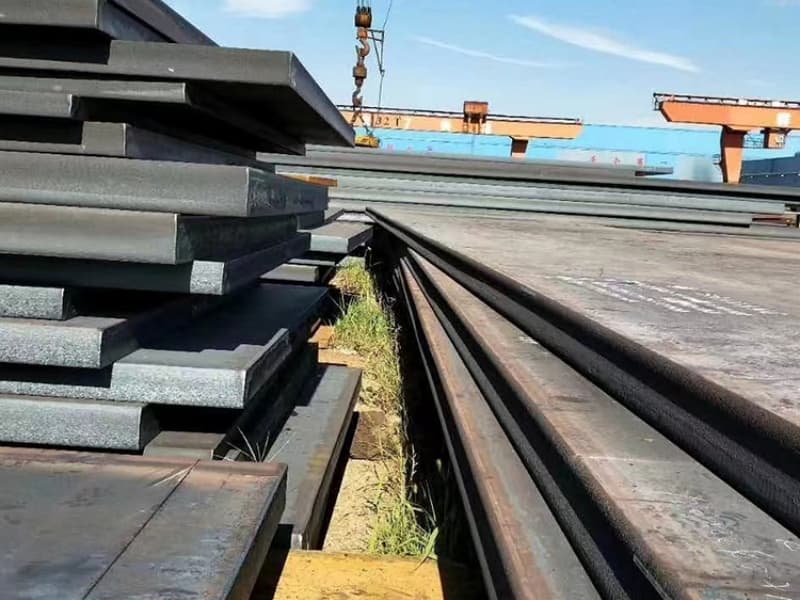
Making the wrong choice can have serious consequences. Let me guide you through the key considerations to ensure you select the perfect grade for your project.
Which is better, 304 or 316 stainless steel1 marine grade?
Many people assume stainless steel is ideal for marine applications2, but not all stainless steels perform equally in saltwater environments. The choice between 304 and 316 can determine your project’s success or failure.
316 stainless steel1 is better for marine applications2 than 304 due to its molybdenum content3 (2-3%), which provides superior resistance to pitting and crevice corrosion in chloride environments like seawater. While 304 is adequate for some coastal applications, 316 offers significantly better performance in harsh marine conditions.
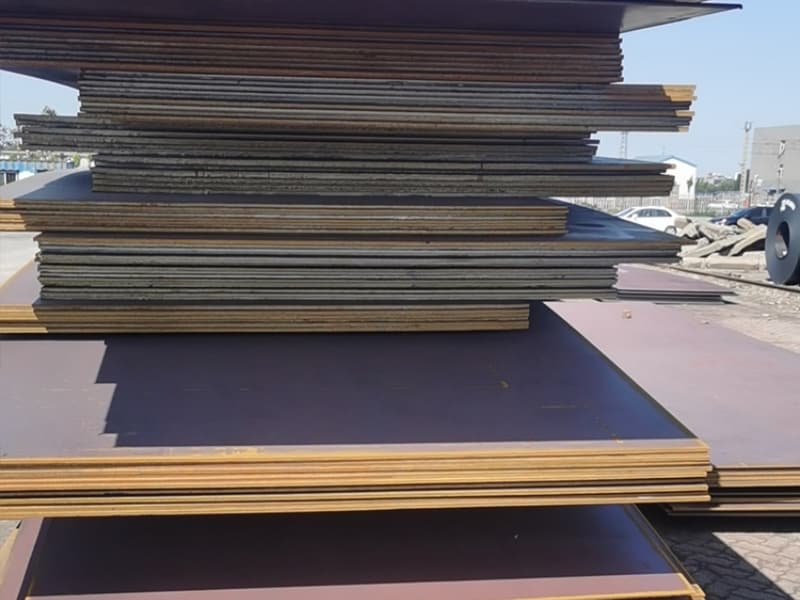
Detailed Analysis of Marine Stainless Steel Selection
The fundamental difference between 304 and 316 stainless steel1 lies in their chemical composition and resulting corrosion resistance4. Both are austenitic stainless steels, but 316 contains 2-3% molybdenum, while 304 contains none. This molybdenum addition dramatically improves 316’s resistance to chloride-induced pitting corrosion5, which is the primary corrosion mechanism in seawater environments.
304 stainless steel6 (also known as 18/8 stainless) contains approximately 18% chromium and 8% nickel. It performs well in many environments but has limitations in marine applications2. When exposed to saltwater, 304 can suffer from pitting corrosion5, especially in stagnant or low-oxygen conditions like crevices. This makes it unsuitable for submerged components or areas with frequent saltwater exposure.
316 stainless steel1‘s superior performance comes at a higher cost, but this investment is justified for critical marine applications2. The molybdenum in 316 forms protective compounds that resist chloride attack, making it the preferred choice for boat fittings, marine hardware, and components exposed to splash zones. However, even 316 has limitations in fully submerged marine applications2, where more specialized alloys like duplex stainless steels may be necessary.
Here’s a comprehensive comparison:
| Property | 304 Stainless Steel | 316 Stainless Steel |
|---|---|---|
| Chemical Composition | 18% Cr, 8% Ni, 0% Mo | 16% Cr, 10% Ni, 2-3% Mo |
| Corrosion Resistance | Good for inland/coastal | Excellent for marine environments |
| Pitting Resistance | Moderate | High (due to molybdenum) |
| Cost Factor | More economical | 20-40% more expensive than 304 |
| Typical Marine Uses | Interior components, non-critical parts | Deck fittings, railings, exposed hardware |
From our experience working with clients in Qatar and Saudi Arabia, we’ve seen projects where 304 was specified for cost reasons but failed within months in the harsh Arabian Gulf waters. The high salinity and temperatures accelerated corrosion dramatically. We now always recommend 316 for any external marine applications2 in these regions, and often suggest considering more advanced alloys for critical submerged components.
How to choose the right steel grade?
Choosing marine steel isn’t about finding the "best" steel, but finding the right steel for your specific application. The selection process requires careful consideration of multiple technical and regulatory factors.
Choose the right marine steel grade by analyzing these key factors: operational temperature range1 determines impact toughness requirements (A vs D vs E grades), structural loads dictate strength needs (normal vs high strength), corrosion environment influences material selection, and classification society rules define certification requirements for your vessel type.
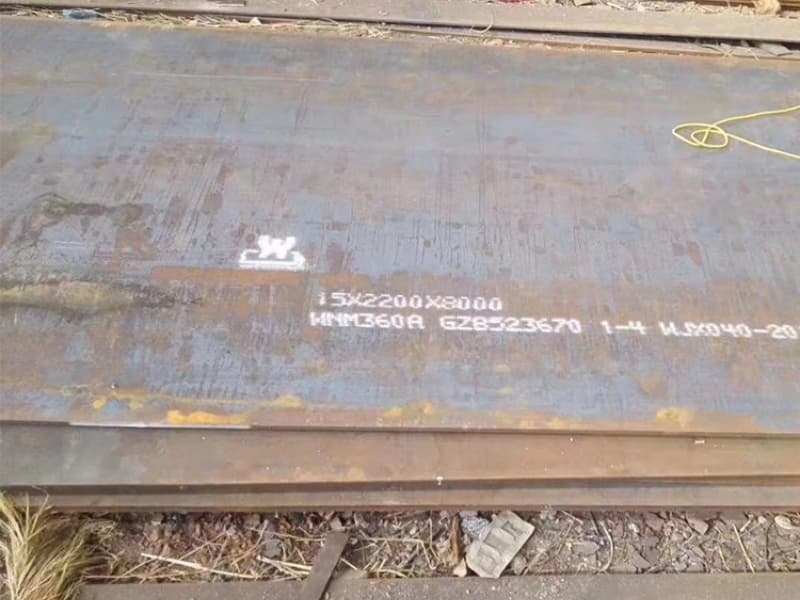
Comprehensive Guide to Marine Steel Selection
The selection process begins with understanding your vessel’s operational profile. Service temperature is the primary consideration because steel becomes brittle at low temperatures. A ship operating in tropical waters might use Grade A steel, while vessels in Arctic waters require Grade E or F steels with proven toughness at -40°C to -60°C.
Structural requirements come next. Calculate the expected loads on different vessel components. High-strength steels like AH36 or DH36 allow for thinner plates and weight reduction, which translates to better fuel efficiency and higher payload capacity. However, these steels often cost more and may require different welding procedures than normal-strength steels.
Consider these critical factors in your selection process:
- Classification Society Rules2: ABS, DNV, LR, and other societies have specific requirements for different vessel types and structural locations
- Fabrication Method: Some steels are better suited for certain welding, cutting, or forming processes
- Lifecycle Costs3: Consider maintenance, repair, and potential downtime in your decision
- Availability: Ensure your chosen grade is readily available in required quantities and dimensions
The vessel type significantly influences steel selection:
- Commercial Ships: Typically use AH32/AH36 or DH32/DH36 for optimal balance of strength and cost
- Naval Vessels: Often require higher-strength grades like AH40 or special treatment steels
- Fishing Vessels: May use normal strength steels with good corrosion resistance
- Offshore Structures: Require specialized grades with through-thickness properties
We developed a systematic approach for our clients that starts with a project questionnaire covering operating regions, vessel type, structural criticality, and budget constraints. This method helped a client in the Philippines optimize their steel selection for a new fishing vessel fleet, balancing performance requirements with cost considerations while ensuring full compliance with classification society requirements.
What grade is marine steel plate?
When we talk about "marine grade" steel, we’re referring to a family of specialized steels rather than a single product. Understanding this family helps you make informed decisions for your projects.
Marine steel plates are graded by classification societies into normal strength (A, B, D, E) and high strength (AH, DH, EH, FH) categories, with numbers indicating yield strength (32=315 MPa, 36=355 MPa, 40=390 MPa). The letters specify impact test temperatures from warm (A) to arctic (F) conditions.
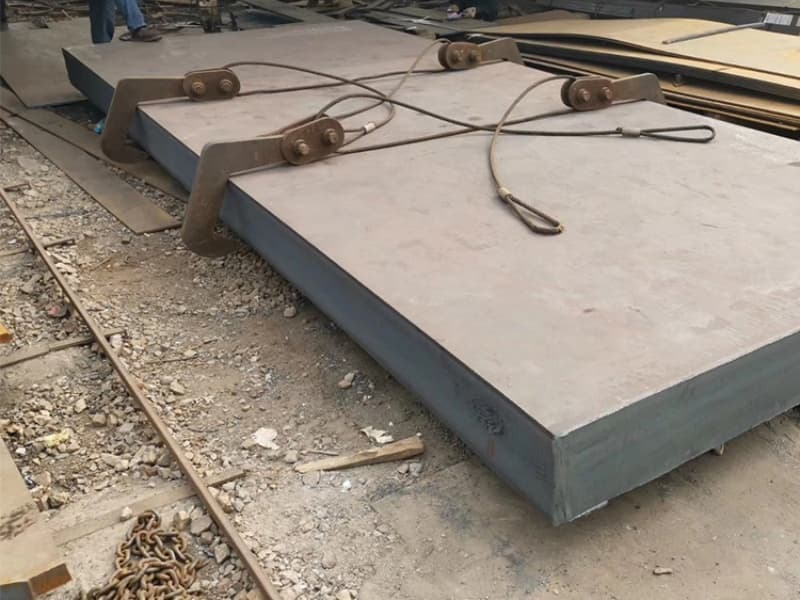
Understanding Marine Steel Grade Classification Systems
The grading system for marine steel plates1 follows international standards established by classification societies like ABS, Lloyd’s Register, DNV, and others. While each society has its own designation system, they’re largely equivalent and recognized globally. The system provides a clear way to specify mechanical properties and quality requirements.
Normal strength steels (Grades A, B, D, E) have a minimum yield strength of 235 MPa. The alphabetical progression indicates increasingly demanding impact test requirements:
- Grade A: Generally no impact testing required
- Grade B: Impact tested at room temperature
- Grade D: Impact tested at -20°C
- Grade E: Impact tested at -40°C
High-strength steels add an "H" to the designation and have higher yield strengths:
- 32 series: 315 MPa minimum yield strength
- 36 series: 355 MPa minimum yield strength
- 40 series: 390 MPa minimum yield strength
Thus, AH36 indicates a high-strength steel with impact testing at 0°C and 355 MPa yield strength, while DH36 indicates the same strength but with impact testing at -20°C.
Different regions and projects may use alternative designation systems:
- European Standards2: S235, S275, S355 grades with JR, J0, J2, K2 impact qualities
- Japanese Standards3: KA, KB, KD, KE grades
- Chinese Standards4: General strength A, B, D, E and high strength AH32-40, DH32-40, EH32-40
Here’s a practical application guide:
| Grade Category | Typical Applications | Key Considerations |
|---|---|---|
| Normal Strength A/B | Small craft, inland vessels, non-critical areas | Cost-effective for warm waters |
| Normal Strength D/E | Coastal vessels, temperate zone operations | Good low-temperature performance |
| High Strength AH/BH | Large commercial vessels, main hull structures | Weight savings with good toughness |
| High Strength DH/EH | Winter navigation, exposed structures | Enhanced low-temperature toughness |
Our inventory in Liaocheng includes the most commonly requested grades like AH36 and DH36, while we source specialized grades like EH40 or FH36 based on specific project needs. We recently supplied EH36-grade plates for an ice-breaking supply vessel bound for Russian Arctic operations, where the -40°C impact toughness was absolutely critical for safety.
Which is better, S2751 or S3552?
The choice between S2751 and S3552 marine steels depends entirely on your project’s structural requirements and design philosophy. Both have their place in shipbuilding, but understanding their differences ensures optimal selection.
S3552 is better for applications requiring higher strength and weight reduction, while S2751 is sufficient for less demanding applications and offers better cost efficiency. S3552 has approximately 35% higher yield strength3 (355 MPa vs 275 MPa) but typically costs 15-25% more than S2751.
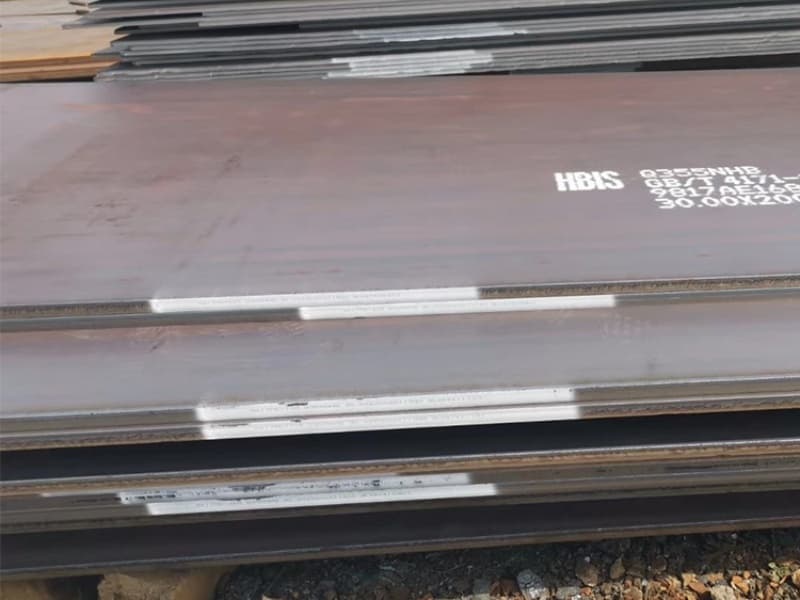
Detailed Comparison of S2751 and S3552 Marine Steels
S2751 and S3552 are European standard structural steels commonly used in marine applications, with equivalents in other classification systems. The numbers refer to their minimum yield strength3 in MPa – 275 MPa for S2751 and 355 MPa for S3552. This strength difference has significant implications for structural design and project economics.
S2751 steel (equivalent to Grade A normal strength steel) is often specified for smaller vessels, secondary structures, and applications where weight is not a critical factor. It offers good weldability and formability at a lower cost point. Many coastal vessels, workboats, and non-critical structural components use S2751 successfully.
S3552 steel (equivalent to AH36 high-strength steel) provides substantial advantages for weight-critical applications. The higher strength allows designers to use thinner sections, reducing structural weight by 20-30% compared to S2751 designs. This weight saving translates directly to improved fuel efficiency, increased payload capacity, or enhanced stability.
Consider these factors when choosing between them:
- Structural Efficiency: S3552 allows lighter structures but may require different design approaches
- Fabrication Considerations: S3552 may need more controlled welding procedures
- Cost Analysis: Evaluate material savings against higher steel costs
- Classification Requirements: Some vessel types mandate minimum strength levels
The impact toughness designation (JR, J0, J2, K2) is equally important:
- S2751JR: Impact tested at room temperature
- S2751J0: Impact tested at 0°C
- S2751J2: Impact tested at -20°C
- S2751K2: Impact tested at -20°C with higher energy absorption
Here’s a technical comparison:
| Parameter | S2751 Steel | S3552 Steel |
|---|---|---|
| Yield Strength | 275 MPa (min) | 355 MPa (min) |
| Tensile Strength | 370-530 MPa | 470-630 MPa |
| Weight Saving Potential | Base reference | 20-30% reduction possible |
| Typical Cost Premium | Base price | 15-25% higher |
| Common Marine Uses | Small craft, secondary structures | Main hull, decks, weight-critical applications |
We helped a client in Thailand analyze the total cost of ownership for a new container barge project. While S3552 had a higher initial cost, the weight savings allowed for additional container capacity that paid back the extra investment within the first year of operation. For their smaller harbor tugs, S2751 remained the more economical choice since weight savings provided minimal operational benefits.
Conclusion
Selecting the right marine steel grade requires careful analysis of your specific operational needs, environmental conditions, and regulatory requirements. There’s no universal "best" choice, only the most appropriate solution for your project.
-
Explore the benefits of S275 steel for smaller vessels and cost-effective projects. ↩ ↩ ↩ ↩ ↩ ↩ ↩ ↩ ↩ ↩ ↩ ↩ ↩ ↩ ↩ ↩ ↩ ↩ ↩ ↩ ↩ ↩
-
Learn why S355 steel is ideal for high-strength needs and weight reduction in shipbuilding. ↩ ↩ ↩ ↩ ↩ ↩ ↩ ↩ ↩ ↩ ↩ ↩ ↩ ↩ ↩ ↩ ↩ ↩ ↩ ↩
-
Understand how yield strength impacts structural design and material choice in marine engineering. ↩ ↩ ↩ ↩ ↩
-
Learn about the Chinese Standards for marine steel grades and how they compare to international classifications. ↩ ↩
-
Learn about pitting corrosion, its impact on stainless steel, and how to prevent it in marine environments. ↩ ↩
-
Learn about the limitations of 304 stainless steel, particularly its vulnerability to pitting corrosion in saltwater. ↩