
A product-code register counts tonnes but cannot name the heat in the rack, so audits become searches and claims become arguments. Here is the build order that fixes it.
Build the register around the heat number, not the product code. One row equals one bundle or one remnant, carrying grade, classification society, measured length, pieces, theoretical and weighed mass, location, certificate reference and status. A spreadsheet is enough to start.
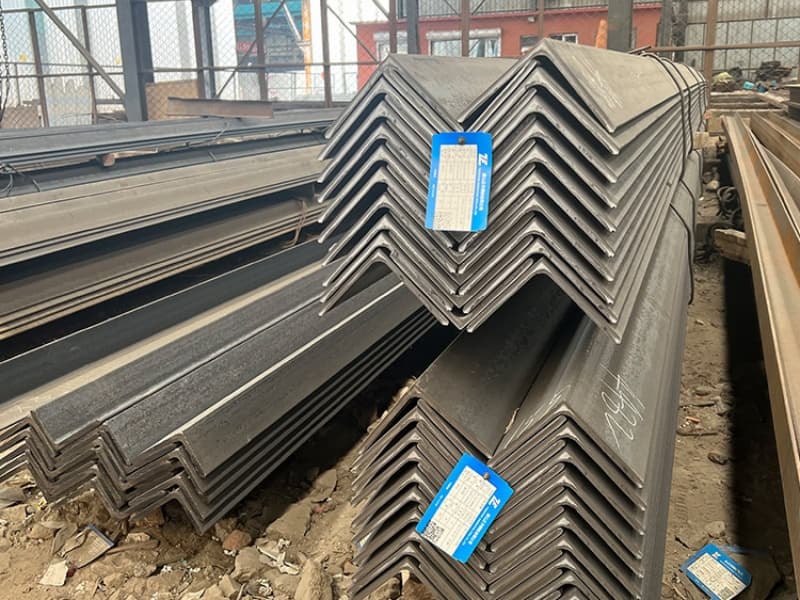
Every yard I have walked has the same wall: a whiteboard with a few sizes written on it, and a folder of mill certificates behind the desk. The two are not connected. When a surveyor asks a simple question about one bundle, someone has to leave the office, find the rack, read the tag and hope the writing is still there. That is not a register. It is a memory with better handwriting.
What Should One Row in the Register Actually Represent?
Most registers fail on the first design decision. If a row stands for a product, the file and the yard stop matching within a month.
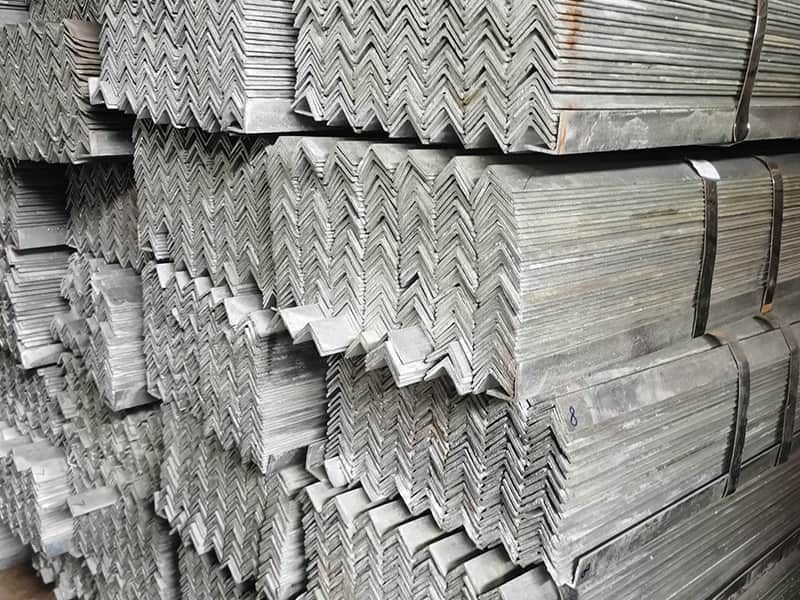
One row should represent one physically separable bundle or one remnant at one location, never one product code. A bundle of L100×100×10 from heat H-2291 and another from heat H-2318 are two rows, because they hold two certificates and two different chemistries.
Identity Is the Heat, Not the Size
Two angle bars of the same designation are interchangeable only if the project allows it. A hull built to a classification society rule does not allow it. Heat H-2291 and heat H-2318 may both test as AH36, both carry a 3.1 certificate and both measure 100×100×10, but they are separate material identities with separate certificates, separate impact test results and separate acceptance records.
So the row key cannot be “L100×100×10 AH36”. That key merges material the surveyor will later ask you to separate. The row key has to be a stock line that points at one heat, one location and one bundle. I use a short code built from the yard, the year and a sequence number, because it is short enough to write on a steel tag by hand and unique enough that nobody reuses it.
The Fields That Earn Their Place
A register that asks for thirty fields gets twelve filled in. The minimum set below is the one I would defend in front of a surveyor. Everything else is optional and should stay optional.
| Field | Why it exists | Example |
|---|---|---|
| Stock line ID | Immutable key printed on the tag | MAS-2026-00417 |
| Heat number | Links the line to the mill certificate | H-2291 |
| Grade and society | AH36 means nothing without ABS, DNV or LR behind it | AH36 / ABS |
| Profile | Equal or unequal leg, both legs and thickness | L100×100×10 |
| Measured length | Nominal length drifts at the cut | 11,980 mm |
| Pieces | Integer count, checked at every move | 38 |
| Theoretical mass | Pieces × length × table mass per metre | 6,878 kg |
| Weighed mass | Bundle weight from the weighbridge | 7,012 kg |
| Location | Yard, bay, rack, row | Y2-B4-R2 |
| Status | Free, reserved, QC hold, scrap | Free |
| Certificate reference | MTC number and EN 10204 type | 3.1 / MTC-24-1188 |
| Receipt reference | PO line, supplier, date | PO-8841-2 / 2026-10-14 |
Twelve fields, one screen, one printable tag. The certificate number matters as much as the heat number, because a heat number without a retrievable certificate is just a number. If the MTC sits in a folder that nobody can find, the register has recorded a fact it cannot prove.
What to Leave Out
Do not put price, customer name or job number in the stock line itself. Those belong to the allocation, not to the material. A bundle that was reserved for one block and released back to stock should not carry a scar from that episode, and the moment you write a customer name into the stock record, someone will start treating that bundle as sold and stop counting it.
I keep allocation in a separate table with a start date, an end date and a job reference. The stock line stays clean, and the history of who wanted it stays in one place. That separation is also what lets you answer the most common commercial question in this business, which is not “what do we have” but “what is genuinely free this week”.
How Do You Keep Pieces, Lengths and Mass Reconciled on the Same Line?
Angle steel is bought by weight, cut by length and issued by piece. A register that stores only one of those three is already wrong.
Store all three and reconcile them on every transaction: pieces as an integer, length in millimetres, mass in kilograms. Theoretical mass comes from the section table, weighed mass comes from the bridge, and the gap between them is a variance to be explained, not averaged away.
The Triple Unit Problem
Selling desks quote in tonnes. The yard issues bars. The saw cuts metres. If each of those three groups keeps its own number, the three numbers drift apart and nobody can say which one is right.
The fix is simple and unpopular: define one primary quantity and two derived ones. I use pieces as the primary, because a piece is a physical object you can point at. Length and mass are derived from it. When a bundle is split, the pieces are counted, the length is measured, and the mass is calculated from the section table and then checked against the bridge.
| Designation | Mass per metre | Mass of a 12 m bar | 40-bar bundle, theoretical |
|---|---|---|---|
| L50×50×5 | 3.77 kg/m | 45.2 kg | 1,810 kg |
| L75×75×6 | 6.78 kg/m | 81.4 kg | 3,254 kg |
| L75×75×8 | 8.92 kg/m | 107.0 kg | 4,282 kg |
| L90×90×8 | 10.8 kg/m | 129.6 kg | 5,184 kg |
| L100×100×8 | 12.2 kg/m | 146.4 kg | 5,856 kg |
| L100×100×10 | 15.12 kg/m | 181.4 kg | 7,258 kg |
| L150×150×12 | 27.13 kg/m | 325.6 kg | 13,022 kg |
| L200×200×20 | 59.7 kg/m | 716.4 kg | 28,656 kg |
Two designations that look close on a drawing can be far apart on the bridge. L75×75×6 and L75×75×8 differ by 31 percent in mass for the same length and the same footprint. A register that stores a single “size” field and a single “tonnes” field will let a picking error through, because the tonnage looks plausible on both.
Theoretical Versus Weighed, and Why Both Stay
Theoretical mass is what the drawing says you bought. Weighed mass is what the crane felt. EN 10056-2 allows a mass deviation of plus or minus 4 percent on individual pieces above 4 mm thickness, and plus or minus 6 percent at or below 4 mm. That is not a defect. It is the rolling process doing what the standard permits.
On a 120 tonne order of L100×100×10, that band is worth roughly ten tonnes between the light end and the heavy end. So a purchase order that says “120 t” and a delivery that arrives as 661 bars can both be correct, and the register has to show which number it is storing. I store both, per line, and never let one overwrite the other. The theoretical figure drives the commercial reconciliation with the mill. The weighed figure drives the crane plan and the container load.
A Worked Line, End to End
Take one bundle: 38 bars of L100×100×10, measured at 11,980 mm, heat H-2291, ABS certificate, bay Y2-B4-R2.
- Pieces: 38.
- Length: 11.98 m.
- Theoretical mass: 38 × 11.98 × 15.12 = 6,883 kg.
- Weighed mass on the bridge: 7,012 kg.
- Variance: +129 kg, or +1.87 percent. Inside the 4 percent band, so it is accepted and the variance is stamped as “within tolerance” rather than quietly ignored.
That last step is the one most registers skip. If the variance is not recorded with a reason, the next person assumes the bridge was wrong, or the tag was wrong, and the line starts drifting. A recorded variance is a dead end. An unrecorded one becomes a rumour.
The Shortcut Formula Is Not the Table
Plenty of buyers calculate mass with the quick formula: (2a − t) × t × 7,850 ÷ 1,000,000, where a is the leg and t is the thickness. It is close, and close is dangerous in a register.
For L100×100×10 the formula gives 14.92 kg/m. The section table gives 15.12. The difference is the root fillet, which the formula ignores. That is 1.3 percent, and on a 6,900 kg line it is 90 kg. Small enough to look like rounding, large enough to break a reconciliation at the end of a project.
Use the table value. If the table is not available, use the formula and mark the line as estimated, then correct it at the first weighbridge reading. Our own marine angle steel dimensional tolerances page lists the standard mass values we work from, and the register should import from that list rather than from a calculator.
How Does the Register Survive the First Cut?
A register that works in the rack and fails at the saw is not a register. Cutting is where identity is lost.
Every cut creates a child line. The remnant keeps the parent heat number, a new measured length and its own location. If the remnant goes back to the rack without a tag, the certificate chain ends there and the material becomes anonymous stock.
Parent and Child, Not Minus and Plus
The instinct is to reduce the parent line by the length that was cut. That is the fastest way to lose traceability, because the register now says a bundle is 7.5 m long when what actually exists is three 2.5 m pieces and one 1.99 m offcut.
Instead, close the parent line and open children. A 12 m bar cut into four 2.5 m pieces leaves 1.99 m after four kerfs of about 3 mm. Each child line carries the same heat number, the same grade and society, the same certificate reference, and a new measured length and location. The parent line is marked as consumed, not deleted, so the history survives.
The numbers are worth staring at. That 1.99 m remnant weighs about 30 kg. Across a 661-bar order, ignoring remnants destroys roughly 20 tonnes of usable material on paper, and about 20 tonnes of real steel in the corner of the yard. A register that tracks remnants pays for itself the first month somebody needs a 1.8 m bracket.
The Transfer Marking Rule
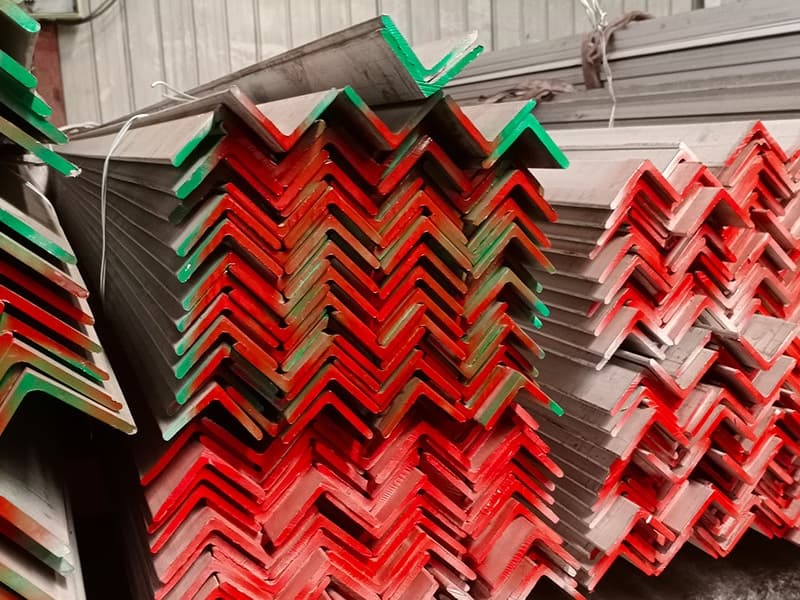
Classification survey practice treats marking as a surveyable item. Under IACS UR Z23, the surveyor is asked to verify material traceability, including stamping identification against the material certification, to verify the transfer of marking after the treatment line, and later to verify that piece parts are identifiable. That last phrase is the one that catches yards out, because a piece part on a block is often a 900 mm offcut that left the saw with no tag.
What this means in practice is that the register is not the record. The register is the index to the record. The physical mark is the record. If the surveyor cannot match a mark on the steel to a line in the register, the register has failed even if every field in it is correct.
So the tag format matters more than the software. I print four things large enough to read from a metre away without bending down: the stock line ID, the heat number, the designation and the length. The QR code carries the rest. When the paint fades, the tag still works, because the tag is steel-strapped to the bundle rather than painted on the end.
Location Has to Be a Physical Address
“Yard” is not a location. “Rack 4” is not a location either, once there are three rack 4s. A register needs a four-level address with a fixed naming rule, and the labels on the racks have to match the register exactly, including the dashes.
I use yard, bay, rack, row. Bay is a painted line on the floor. Rack is a numbered frame. Row is a shelf or a ground position within the rack. Every level gets a physical label, and the label is replaced when it becomes unreadable, not when someone gets around to it.
The payoff is in picking. When a job needs four bars of L100×100×10, the register should return one address that a forklift driver can drive to without asking a question. If it returns two addresses and both turn out to be the same bundle, the register has a location problem, and the count problem is not far behind.
Transactions, Not Edits
The difference between a register and a spreadsheet is that a register records transactions. An edit overwrites history. A transaction adds to it.
| Transaction | What it must capture | Who signs |
|---|---|---|
| Receipt | PO line, heat, pieces, measured length, weighed mass, certificate | Store keeper |
| Issue | Stock line, job or work order, pieces | Store keeper |
| Cut | Parent line, child pieces, child lengths, kerf loss | Saw operator |
| Remnant return | Child line, measured length, new location | Store keeper |
| Transfer | From address, to address, pieces | Forklift driver |
| Hold | Reason, authority, release date | QA |
| Count adjustment | Counted quantity, variance code, approver | Store keeper and supervisor |
| Scrap | Mass, reason, approval | Store manager |
Six of those eight transactions happen in the yard, not in the office. If the system cannot be updated from the yard, it will be updated from memory at four o’clock, and the memory will be wrong. That is the real argument for a phone or a tablet at the rack, not the elegance of the software.
What Separates a Register That Passes an Audit from One That Only Looks Neat?
A neat register answers the questions you expected. An audit-ready register answers the questions you did not.
An audit-ready register returns any certificate, for any heat, on any date, in under a minute, without leaving the desk. If answering takes a phone call or a walk to the archive, the register is a stock list with a search box.
Certificate Intake Is the Whole Game
The certificate is only useful if it enters the system on the day the steel arrives. Not the week after, not when the project asks for the data book.
At goods-in, four things are compared against each other before the bundle leaves the gate: the PO line, the supplier’s delivery document, the heat number physically stamped or tagged on the bundle, and the mill test certificate. If any of the four disagrees, the line is flagged and the bundle goes to a hold location. It does not go to the rack and get sorted out later, because later never comes.
This is also where EN 10204 document types matter. A 3.1 certificate is issued by the mill’s independent inspection representative and is the normal requirement for hull structural steel. A 3.2 certificate adds a third-party witness. A 2.2 certificate is not a substitute for either on a classification job, and a register that stores only “certificate: yes” cannot tell the difference.
Sixty Seconds, Not Sixty Minutes
The practical test is simple. Hand someone a heat number and a stopwatch. They should be able to produce the certificate, the receipt line, the current location and the allocation history in under a minute.
Most yards fail this test on the first attempt, not because the data is missing but because it lives in four places. The certificate is in a folder, the receipt is in the accounting system, the location is on a whiteboard, and the allocation is in somebody’s email. A register that consolidates the first three and links to the fourth will pass. A register that only consolidates the first two will not.
Test it quarterly with a random heat number. If the answer takes longer than a minute, fix the index before the surveyor finds it.
Governance, or Who Is Allowed to Change What
The register is a quality record, so it needs the same discipline as one. Three rules cover most of it.
Nobody deletes a line. Lines are closed, cancelled or marked scrap, with a reason and a name. Nobody edits a quantity without a transaction and an approver. And nobody changes a heat number or a certificate reference except QA, because those two fields are the traceability chain itself.
The last rule sounds bureaucratic until the first time a heat number is corrected by a store keeper who thought he was helping. After that, it sounds reasonable.
Choosing the Tool
The tool matters less than the data model, but it does constrain what you can do at the rack.
| Capability | Spreadsheet | Standalone WMS | ERP with stock module |
|---|---|---|---|
| Heat-level rows | Manual, easy to overwrite | Built in | Built in |
| Pieces, length and mass together | Three columns, no validation | Converted automatically | Converted automatically |
| Parent and child on cutting | Manual rows | Supported | Supported |
| Certificate linked to stock line | Hyperlink or filename | Attached | Attached |
| Yard updates from a phone | No | Usually | Depends on the module |
| Allocation visible to sales | Separate file | Yes | Yes |
| Audit trail of who changed what | Weak | Strong | Strong |
| Cost to start | Almost zero | Licence per user | Project cost |
| Realistic first month | Works if disciplined | Works | Usually still implementing |
My own view is that a spreadsheet is a legitimate first register, provided it has the twelve fields, one row per bundle, and a rule that no cell is edited without a dated note in a transaction log. It will carry a yard of a few thousand tonnes honestly. What it will not do is survive a second warehouse, a night shift and a sales team, and the point where it stops working is usually sudden.
Cycle Counting Beats the Annual Count
One annual count tells you how wrong you were twelve months ago. Small, frequent counts tell you where the process is leaking.
I count one product family per week, thirty lines at most, chosen at random from the register rather than from the rack. The counter does not get a list of expected quantities, because a counter with the answer in front of him will find the answer. Then the variance is coded and reviewed the same day.
The measure that matters is record accuracy: the share of counted lines where the physical pieces and the register agree within the allowed tolerance. Set the tolerance deliberately, written down, and applied the same way every week. Ninety-eight percent is a working target for a clean yard. Anything under ninety is not a counting problem, it is a process problem, and no amount of counting will fix it.
Conclusion
Build the register around the heat, one row per bundle, three quantities per line. Then let the saw create children instead of destroying identity.