
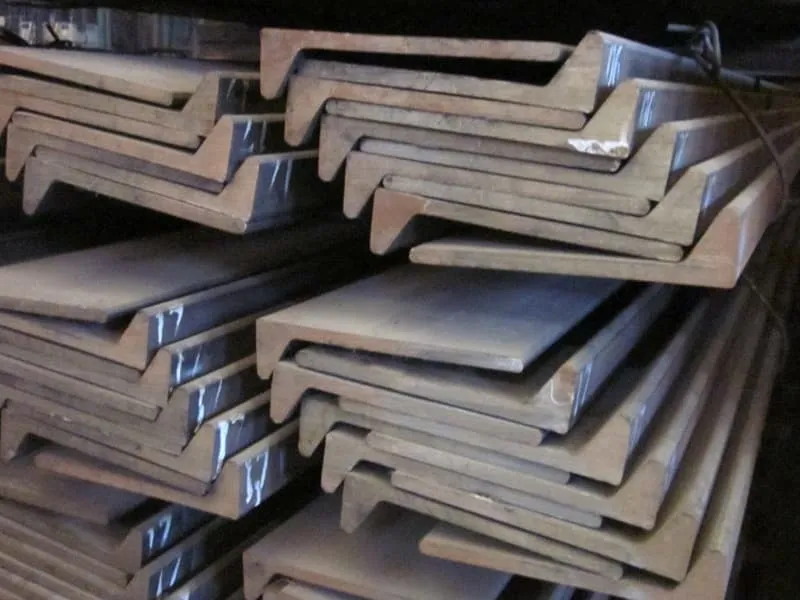
Imagine spending weeks building a ship section, only to find the bulb flat steel won’t fit because it’s warped. This problem causes costly rework and delays in shipyards every single day.
To ensure bulb flat steel flatness and straightness, you must control the manufacturing process precisely, use proper measuring tools like straightedges and levels, and follow strict acceptance standards like ISO 10360 or ASTM standards. Good storage and handling practices after production are also critical.
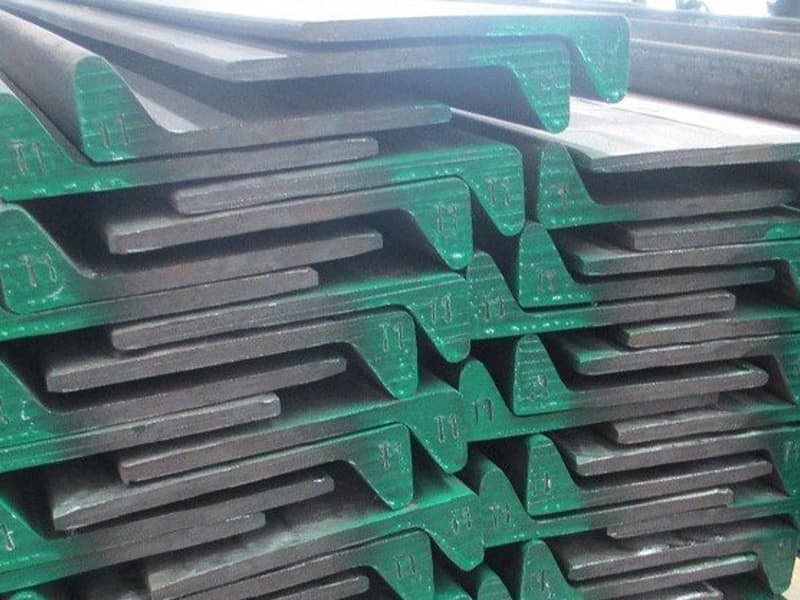
I once visited a shipyard in the Philippines. They showed me a stack of bulb flats that were rejected. The problem was not the steel grade. The problem was the shape. The web was not flat, and the bulb had a slight twist. This made automatic welding impossible. The project manager was frustrated. He told me, "We can fix chemistry in a lab. We can’t easily fix a bent 12-meter beam on the shop floor." This experience showed me that dimensional accuracy is as important as material properties. In this article, I will explain how to measure, specify, and ensure the perfect shape of bulb flat steel for your project.
How do you measure flatness of steel?
You cannot trust your eyes to judge if a steel surface is flat. What looks flat over a short distance can have significant deviation over several meters. Using the right measurement method is the first step to quality control.
The flatness of steel is measured by finding the maximum deviation between the actual surface and a perfectly flat reference plane. Common tools include precision straightedges, feeler gauges, optical levels, and laser trackers, each suitable for different sizes and accuracy needs.
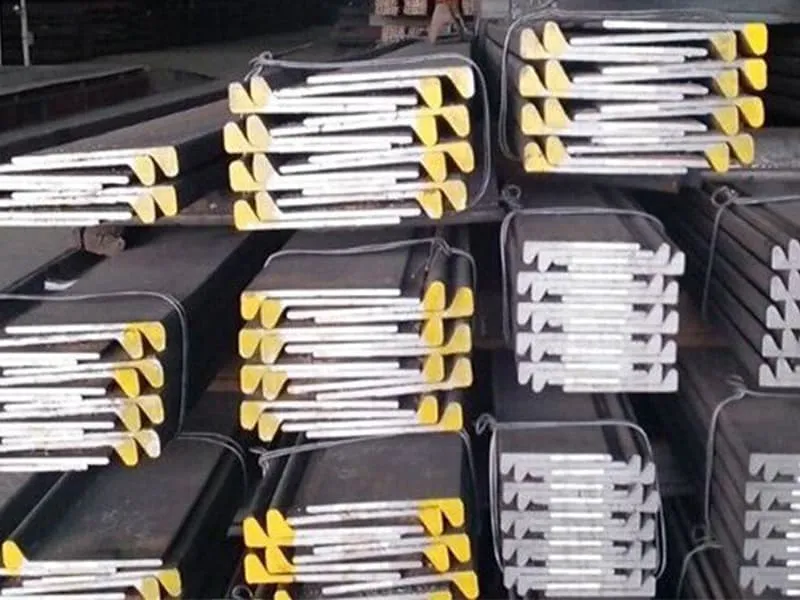
From Simple Tools to Advanced Systems
Measuring flatness is about quantifying "bumpiness" or "bow." You need to understand two concepts: the Measurement Method and the Evaluation Standard.
Common Measurement Tools and Techniques
-
Straightedge and Feeler Gauge: This is the most basic and widely used method in workshops. You place a precision straightedge (made of hardened steel) across the surface of the steel plate or the web of a bulb flat. Then, you try to slide a feeler gauge of a specific thickness underneath the straightedge. The thickness of the largest gauge that fits is the local deviation. You do this at multiple points and along different axes. The biggest reading you get is the flatness error for that area. It’s simple but only works for smaller spans and gives local, not overall, flatness.
-
Optical Level or Digital Level: For very long sections like bulb flats (often 12m or more), an optical level is better. You set up a stable tripod with a precise level. You place a graduated staff at various points along the length of the steel resting on the surface. You take readings at each point. The difference between the highest and lowest readings across the entire length gives you the overall "bow" or deviation from a level plane. This method is good for measuring straightness (sag or camber) over long distances.
-
Laser Tracker or 3D Scanning: This is the high-tech solution for critical applications or for creating a full 3D map of a surface. A laser tracker shoots a beam to a reflective target placed on the steel. It measures the exact position of thousands of points in space. Software then fits a perfect plane to these points and calculates all deviations. This is extremely accurate but requires expensive equipment and trained operators. It is often used for final inspection of large, complex fabricated sections before shipment.
Understanding the Evaluation: Peak-to-Valley vs. Standard Deviation
Once you have the measurement data, how do you report it? There are two main ways:
- Peak-to-Valley (P-V): This is the simplest. It is just the total height difference between the highest point and the lowest point on your measured surface. It is easy to understand. A specification might say "Flatness shall be within 3 mm over any 1-meter span." This is a P-V tolerance.
- Standard Deviation from a Best-Fit Plane: For more sophisticated analysis, especially with 3D scan data, software calculates a mathematically "best-fit" plane through all data points. It then calculates how much each point deviates from this plane and gives a statistical standard deviation. This method is less sensitive to a single outlier point and better describes the overall surface texture.
Here is a comparison of when to use which tool:
| Tool / Method | Best For | Typical Accuracy | Speed | Cost |
|---|---|---|---|---|
| Straightedge & Feeler Gauge | Workshop spot checks, small plates, local flatness. | ~0.1 mm | Fast | Very Low |
| Optical / Digital Level | Measuring straightness (camber) of long beams, decks, bulb flats. | ~0.5 mm over 10m | Medium | Medium |
| Laser Tracker / 3D Scanner | Final inspection of large critical structures, full 3D mapping, reverse engineering. | ~0.05 mm or better | Slow | Very High |
My practical tip: For most bulb flat shipments, our mills and we use a combination. We use straightedges for a quick check along the web every few meters. For the full length straightness, we use a taut wire or an optical level. Before a major shipment to a client like Gulf Metal Solutions, we might even hire a third-party inspector with a digital level to provide an independent report. The key is to match the tool to the tolerance requirement in your purchase order.
What is the flatness of cold rolled steel?
People often think "cold rolled" means "perfectly flat." While cold rolling improves flatness significantly compared to hot-rolled steel, it is not a guarantee. Understanding the process helps you set realistic expectations.
The flatness of cold rolled steel refers to the smoothness and levelness of its surface after being processed through cold reduction mills. It is typically much better than hot-rolled steel, with tolerances often specified in standards like ASTM A568, but it can still have minor waves or edges due to residual stress.
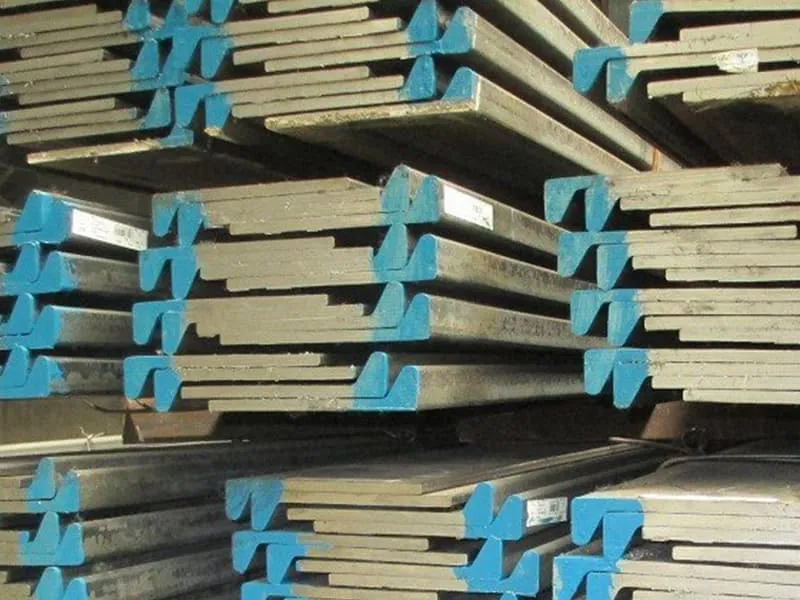
Why Cold Rolling Affects Flatness
Cold rolling passes steel at room temperature through a series of rolls. This process compresses the steel, making it thinner, stronger, and giving it a smoother surface. However, it also introduces internal stresses. If these stresses are not uniform across the width and thickness of the steel, the steel will warp or develop shape defects when it is cut or uncoiled.
Common Flatness Defects in Cold Rolled Steel
Even high-quality cold-rolled sheet or coil can have specific flatness issues. Knowing these terms helps you communicate problems with your supplier:
- Camber: This is when the edge of the strip is not straight but curved along the length. It looks like a long, gentle bend. This makes it hard to feed steel straight through a cutting or forming machine.
- Crown: This is not a flatness issue in the traditional sense, but a thickness profile. It means the center of the strip is slightly thicker than the edges. A severe crown can lead to flatness problems after slitting or leveling.
- Wavy Edge: This is a common defect. The edges of the strip develop a regular wavy pattern, while the center remains relatively flat. It is caused by the edges being elongated more than the center during rolling.
- Center Buckle: The opposite of wavy edges. The center of the strip is wavy or buckled, while the edges are tight. This happens when the center is elongated more than the edges.
- Coil Set (or Curl): This is the curvature that remains in a strip after it is uncoiled from a coil. It is the memory of being wound. For bulb flats made from coiled material, this initial curl must be removed during the profiling and straightening process.
How Flatness is Controlled and Specified
Mills use two key technologies to manage flatness during cold rolling:
- Roll Bending Systems: These systems can adjust the curvature of the work rolls during rolling. By bending the rolls, the mill operator can change the pressure distribution across the strip’s width to counteract waviness.
- Tension Leveling (Skin Passing): After rolling, the steel (especially for sheet) is often passed through a tension leveler. This machine applies a very specific combination of bending and stretching to the steel. This process permanently yields the steel and relieves the internal stresses that cause poor flatness. It is a crucial final step.
For specification, you don’t just say "must be flat." You refer to an industry standard. For example, ASTM A568/A568M is a standard specification for steel sheet, carbon, and high-strength low-alloy, hot-rolled and cold-rolled. It includes standard flatness tolerances. A purchaser can order to "Standard Flatness" or specify a tighter "Restricted Flatness" tolerance, which usually costs more.
A key point for bulb flats: Most marine bulb flats are not made from cold-rolled sheet. They are typically hot-rolled as a section or formed from hot-rolled plate. However, the flatness concepts from cold rolling are still very relevant. The "web" of a bulb flat is like a narrow plate, and it must be checked for the same kind of waviness and bow. The question is important because it teaches us the language of flatness defects that can appear in any steel product.
How do you check for flatness?
Checking for flatness is a hands-on activity. It requires a clear procedure, the right tools, and an acceptance criterion. Skipping steps or using the wrong method can let defective material into your production line.
You check for flatness by placing a known-accurate reference (like a straightedge or a laser plane) against the surface, measuring gaps or deviations at multiple points, and comparing the results to agreed tolerances. A proper check involves a systematic pattern of measurements, not just one spot.
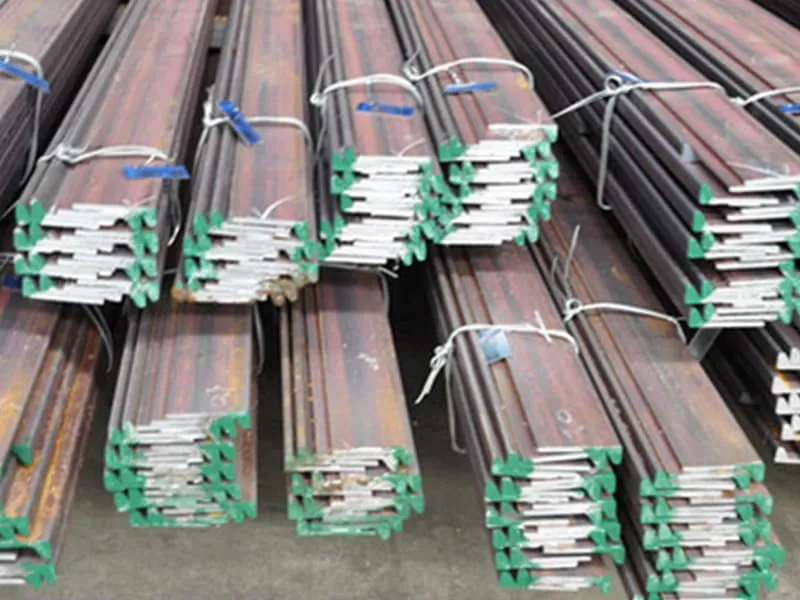
A Step-by-Step Guide for Reliable Inspection
A proper flatness check is a mini quality control process. Let’s break down how we do it for a shipment of bulb flats before it leaves our partner mill or our warehouse.
Step 1: Preparation and Tool Selection
First, you must ensure the steel is properly supported. Checking flatness on an uneven floor or on blocks that are not level will give false readings. We place long beams on at least two stable, level supports near their ends (at the standard lift points). This allows any natural sag to appear.
Next, choose your tool based on the tolerance and part size:
- For a quick incoming inspection of a bulb flat’s web, a 1- or 2-meter precision straightedge is perfect.
- For verifying the straightness of the entire 12-meter length, a taut piano wire with a ruler or an optical level is needed.
Always calibrate your tools regularly. A bent straightedge is useless.
Step 2: The Measurement Pattern
You cannot just check one spot. You need a grid. For a plate or a bulb flat web, the common method is the "Diagonals and Centerlines" method.
- Place the straightedge along one long edge.
- Check for gaps with a feeler gauge every 500mm or 1 meter. Record the maximum gap.
- Place the straightedge along the centerline (lengthwise).
- Check for gaps again. Record.
- Place the straightedge along the other long edge.
- Check for gaps. Record.
- Finally, place the straightedge across the width (transversely) at several points along the length (e.g., at each end and in the middle).
- Check for gaps. Record.
This pattern catches longitudinal bow, edge wave, and crosswise curvature.
Step 3: Data Recording and Judgment
Write down every measurement in a checklist or a sketch of the beam. The most important number is the maximum deviation you find. You then compare this number to the tolerance in your purchase order or the relevant standard.
For example, a typical tolerance for a shipbuilding bulb flat might be: "Straightness shall not exceed L/1000 and not more than 5 mm overall, where L is the length in mm." For a 12,000 mm beam, L/1000 is 12 mm. So, the stricter limit is 5 mm. If your optical level shows a total sag of 7 mm from end to middle, the beam is out of tolerance.
Critical Considerations for Accurate Checking
- Temperature: Steel expands and contracts with temperature. A beam measured on a hot day in the sun will be different from one measured in a cool warehouse. Try to measure in a stable environment, or be aware that temperature can affect results.
- Residual Stress: A beam might measure flat when it’s supported, but warp when you cut it or weld it. This is due to internal stress from manufacturing. A good flatness check can’t predict this entirely, but a history of problems from a certain mill batch can indicate poor stress relief.
- Visual vs. Measured: Some defects, like a gentle "oil can" effect (a large, shallow buckle), are easier to see from a low angle with glancing light than to catch with a short straightedge. Always combine visual inspection with tool-based measurement.
Here is a simple checklist table for inspecting a bulb flat:
| Check Item | Tool Needed | Acceptance Criteria (Example) | Action if Failed |
|---|---|---|---|
| Web Flatness (Local) | 1m Straightedge, Feeler Gauge | ≤ 1 mm over any 1m span | Mark the area, consider rejection if multiple fails. |
| Overall Straightness (Lengthwise) | Optical Level / Taut Wire | ≤ 5 mm total deviation over full length | Reject or request re-straightening. |
| Twist | Spirit Level on Web at both ends | Level bubble deviation ≤ 2° | Reject, as twist is very hard to fix on-site. |
| Edge Condition | Visual, Ruler | No sharp waves > 2mm amplitude | Negotiate with supplier, may require grinding. |
Following a clear procedure like this removes arguments. When we prepare for an SGS inspection for a client, we follow a written procedure similar to this. It gives everyone confidence in the result.
What is the ISO standard for flatness?
Relying on verbal descriptions like "fairly flat" leads to disputes. International standards provide a common technical language that buyers and sellers across the globe can understand. ISO standards are among the most widely accepted.
ISO has several standards related to flatness, but there is no single "ISO flatness standard." Key ones include ISO 103601 for coordinate measuring machines (CMMs), ISO 85122 for surface plates (the reference), and ISO 94433 for tolerances for stainless steel cold-rolled strip. For structural steel, EN (European) and ASTM (American) standards are more commonly specified.
Navigating the World of Dimensional Standards
The ISO (International Organization for Standardization) creates standards for almost everything. For flatness, they approach it from different angles: how to measure it, what the reference surfaces are, and what tolerances apply to specific products.
ISO Standards Relevant to Flatness Measurement and Specification
-
ISO 103601 – Geometrical product specifications (GPS): This is a critical series for anyone using high-tech measurement. ISO 103601-1 and subsequent parts specify how to test and verify the accuracy of Coordinate Measuring Machines (CMMs). If you are using a CMM or laser tracker to measure flatness, this standard tells you how to ensure your machine itself is accurate. It doesn’t give flatness tolerances4 for steel plates; it ensures the measuring tool is trustworthy.
-
ISO 85122: Series – Surface plates: This is fundamental. ISO 85122-1 specifies the accuracy (flatness) of granite and cast iron surface plates. These plates are the primary physical reference for flatness in workshops and inspection rooms. Before you check a steel beam for flatness, you must calibrate your straightedge on a surface plate that meets an ISO (or similar) grade. The standard defines grades like 00, 0, 1, and 2, with Grade 00 being the flattest for laboratories.
-
ISO 94433: Tolerances for stainless steel cold-rolled strip: This is an example of a product-specific tolerance standard. It provides tables for allowable deviations in dimensions, including flatness, for stainless steel strip. It uses specific terms and measurement methods for that product form.
-
ISO 139205: General tolerances for welded construction: This standard is very useful for shipbuilding and fabrication. It provides general dimensional tolerances6, including for flatness and straightness, for welded structures. If a drawing says "ISO 139205-B," it means standard tolerance level B applies to all dimensions unless otherwise stated. This covers the flatness of fabricated assemblies, not raw steel.
Why EN and ASTM Standards Are More Common for Bulb Flats
For raw structural steel products like plates, sections, and bulb flats, regional or material-specific standards are more frequently used in contracts:
- EN 100347: Structural steel I and H sections – Tolerances on shape and dimensions. This European standard is directly applicable to bulb flat steel, which is often considered a special section. It specifies limits for straightness (camber and sweep) and flatness of the web and flanges.
- ASTM A6/A6M8: Standard Specification for General Requirements for Rolled Structural Steel Bars, Plates, Shapes, and Sheet Piling. This is the go-to standard in the Americas and many other regions. It includes an extensive table of straightness and flatness tolerances4 for various product forms. A purchase order might state: "Bulb flats to conform to ASTM A6, with straightness tolerance of 1/4" in any 5 feet (6 mm in 1.5m) and not over 1/2" in 20 feet length overall (13 mm in 6m)."
The practical takeaway: When you order steel, do not just ask for "ISO flatness." Be specific. Say: "Flatness and straightness to meet EN 100347 Class A tolerances" or "Conform to ASTM A6 standard straightness tolerances for shapes." This tells the mill exactly which rulebook to use. For our clients, we always ask for their specified tolerance standard upfront. If they are unsure, we advise them based on their end-use, often recommending EN 100347 or ASTM A6 as a solid, internationally recognized baseline. Using a standard protects both the buyer and the seller.
Conclusion
Ensuring bulb flat steel flatness is a precise science, not a guess. It requires the right tools, a clear procedure, and adherence to recognized international standards from the mill to the shipyard.
-
Explore this link to understand how ISO 10360 ensures the accuracy of Coordinate Measuring Machines, crucial for precise flatness measurement. ↩ ↩ ↩
-
Learn about ISO 8512’s specifications for surface plates, which are essential for accurate flatness measurements in various applications. ↩ ↩ ↩
-
Discover the specific tolerances for flatness in stainless steel products as defined by ISO 9443, vital for quality assurance. ↩ ↩
-
Understanding flatness tolerances is key for buyers and sellers in steel manufacturing, ensuring product quality and compliance. ↩ ↩
-
Find out how ISO 13920 provides general tolerances for welded structures, ensuring quality in fabrication and construction. ↩ ↩
-
Explore the concept of dimensional tolerances to grasp their significance in manufacturing processes and quality control. ↩
-
Explore EN 10034 to understand its role in specifying tolerances for structural steel, particularly for bulb flats. ↩ ↩ ↩
-
Learn about ASTM A6/A6M’s extensive guidelines for flatness tolerances, crucial for compliance in the Americas. ↩