The weld cracks. The inspector fails the joint. Now you must cut it out, re-prepare the steel, and weld again. This rework costs thousands and delays your project. The root cause often isn’t the welder’s skill; it’s the weldability of the steel itself.
You ensure weldability by selecting marine-grade L-shaped steel with a controlled chemical composition, specifically a low Carbon Equivalent (CE). You then verify this through the Mill Test Certificate (MTC). Proper edge preparation, correct welding procedures, and control of moisture and hydrogen sources complete the system for reliable welding.
Weldability is not a single property. It is the result of the steel’s chemistry interacting with the welding process and the environment. For marine structures, where welds are critical to safety, understanding and controlling this interaction is non-negotiable.
How to determine weldability of steel?
You receive a new batch of steel. Your old welding procedure works perfectly on one batch but causes cracks on another. How can you predict this before you start welding? You need an objective way to determine weldability before the arc is struck.
You determine the weldability of steel primarily by calculating its Carbon Equivalent (CE)1 value from the chemical composition listed on the Mill Test Certificate. A lower CE value generally indicates better weldability. Other factors include the steel’s thickness, the presence of crack-inducing elements like sulfur and phosphorus2, and its pre-weld condition3 (cleanliness, moisture).
The Carbon Equivalent is the most important single number, but it’s not the whole story. Weldability is a prediction, not a guarantee. Let’s explore how to use the CE and other data to make an accurate assessment.
The Science of Prediction: Carbon Equivalent and Beyond
Weldability asks: "How likely is this steel to form a sound, crack-free weld under normal conditions?" The answer comes from chemistry and physics.
The Carbon Equivalent (CE)1 Formula: The Primary Tool
During welding, the heat creates a Heat-Affected Zone (HAZ)4. The rapid heating and cooling can harden this zone, making it brittle and prone to cracking. The CE formula estimates this hardening tendency.
The most common formula (IIW/ISO) is:
CE(IIW) = C + Mn/6 + (Cr+Mo+V)/5 + (Ni+Cu)/15
(Where element symbols represent their percentage by weight).
How to Interpret the CE Value:
- CE 0.60: Poor weldability. Requires strict control: pre-heat, specific welding procedures, and post-weld heat treatment. Common in higher-strength, quenched and tempered steels.
A Practical Example from a Mill Test Certificate:
A certificate for ABS AH36 steel might show: C=0.16%, Mn=1.40%, Si=0.35%, P=0.020%, S=0.010%.
- CE = 0.16 + (1.40/6) = 0.16 + 0.233 = 0.393
- This CE of 0.393 indicates excellent weldability. A shipyard can weld this without pre-heat in most situations.
Other Critical Factors on the MTC:
The CE is the headline, but you must check the fine print.
- Sulfur (S) and Phosphorus (P): These are impurities. High levels (typically >0.030%) promote hot cracking in the weld metal. Marine-grade steels have very low S and P (often <0.020%).
- Aluminum (Al) or Niobium (Nb): These are micro-alloying elements used for grain refinement. They can affect the HAZ toughness but are generally positive in controlled amounts.
A Weldability Assessment Checklist:
Before welding, gather and review this data:
| Information Source | What to Check | Why It Matters |
|---|---|---|
| Mill Test Certificate (MTC)5 | 1. Carbon Equivalent (CE)1 value or calculate it. 2. Sulfur and Phosphorus content. 3. Grade and standard (e.g., ABS AH36). | Predicts HAZ hardness and cracking risk. Indicates susceptibility to hot cracking. Confirms the steel is designed for welding. |
| Material Condition | Surface cleanliness (rust, oil, paint, moisture). Edge preparation (bevel angle, smoothness). | Contaminants introduce hydrogen (causes cold cracks) and cause porosity. Affects weld penetration and fit-up. |
| Design & Thickness | Joint design, plate thickness, level of restraint. | Thicker materials and highly restrained joints cool faster, increasing cracking risk. May mandate pre-heat. |
For a buyer, the first step is to source steel that provides this chemical data. When you order marine L-shaped steel from us, the MTC is a standard part of the delivery. This document is your first and most powerful tool for determining weldability before a single piece is cut.
What are the factors that affect the weldability of a metal?
Your welding procedure is perfect. The CE value is good. But the weld still fails. Why? Weldability is not just about the base metal. It is a system where many factors interact. Ignoring any one of them can lead to failure.
The factors affecting weldability fall into three groups: 1) Material Factors1 (chemistry, thickness, surface condition), 2) Process Factors (welding method, heat input, filler metal), and 3) Environmental/Procedural Factors (joint design, pre/post-heat, moisture control). All these factors must be controlled to achieve a sound weld.
%[fishbone diagram of factors affecting steel weldability](https://cnmarinesteel.com/wp-content/uploads/2026/01/L-shaped-steel-1-1.webp "factors affecting weldability")
Think of weldability as a chain. The chain is only as strong as its weakest link. The base metal's CE is one strong link, but a broken link elsewhere will cause the whole chain to fail. Let's examine all the links in detail.
The Weldability Ecosystem: Material, Process, and Procedure
A successful welding operation manages a complex set of variables. Problems arise when people focus on only one or two.
Group 1: Material Factors1 (The Steel You Buy)
We've covered chemistry (CE, S, P). Other material factors include:
- Thickness: Thicker steel acts as a larger heat sink. It cools the weld pool faster, increasing the risk of hard, brittle microstructures in the HAZ. This often requires pre-heating to slow the cooling rate.
- Surface Condition: Oil, grease, rust, mill scale, and moisture on the steel surface are sources of hydrogen. Hydrogen dissolved in the weld metal can cause Hydrogen Induced Cracking (HIC)2 or Cold Cracking, which can appear hours or days after welding. Clean, dry steel is essential.
- Material Uniformity: Inconsistent chemistry or internal defects (laminations) in the steel can cause unpredictable welding results.
Group 2: Process Factors (How You Weld)
- Welding Process3: Some processes are "gentler" than others. Submerged Arc Welding (SAW) has very low hydrogen potential. Shielded Metal Arc Welding (SMAW or stick) can have higher hydrogen, especially if electrodes are damp.
- Heat Input: Measured in kilojoules per millimeter (kJ/mm). Too low heat input causes rapid cooling and HAZ hardening. Too high heat input can overheat the steel, degrading its properties. Each grade has an optimal range.
- Filler Metal Selection4: The filler metal must be compatible with the base metal. Using a filler with significantly higher strength can create a hard, brittle weld. Using a lower-strength filler creates a weak point. The filler's hydrogen classification (e.g., H4, H8 for low-hydrogen electrodes) is critical.
Group 3: Procedural & Environmental Factors (The Rules You Follow)
- Joint Design and Fit-Up5: A tight, well-prepared joint with a proper bevel requires less weld metal and allows for better penetration. A large, uneven gap forces the welder to fill it, creating high stress and distortion.
- Pre-heat and Interpass Temperature6: Pre-heating raises the base metal temperature before welding. It slows the cooling rate, allowing hydrogen to diffuse out and preventing hard microstructures. The required temperature depends on the CE and thickness.
- Post-Weld Heat Treatment (PWHT)7: For thick sections or high CE steels, PWHT relieves residual stresses and softens the HAZ.
- Ambient Conditions8: Welding in cold, damp, or windy conditions cools the weld faster and introduces moisture. Wind can blow away shielding gas.
Here is a table showing how a problem in one area manifests:
| Problem Area | Specific Issue | Likely Weld Defect | How to Prevent |
|---|---|---|---|
| Material | High Sulfur content (0.050%). | Hot Cracking (solidification cracking) in the weld bead. | Source steel with low S & P (marine grade). |
| Material | Damp, rusty surface. | Hydrogen Cracks (Cold Cracks) in the HAZ. | Grind/brush to bright metal. Apply pre-heat. Use dry electrodes. |
| Process | Using damp SMAW electrodes. | Porosity (gas pockets) and Hydrogen Cracks. | Store electrodes in an oven. Use low-hydrogen rods. |
| Procedure | No pre-heat on thick (30mm) plate. | Hard HAZ, potential for cracking. | Follow WPS (Welding Procedure Specification) for pre-heat temp. |
| Design | Poor fit-up, large root gap. | Lack of Fusion, excessive weld stress. | Improve cutting/grinding accuracy. Use proper jigs. |
Ensuring weldability means controlling this entire ecosystem. As a supplier, our role is to guarantee the Material Factors1. We provide clean, certified marine L-shaped steel with a guaranteed low CE. This gives your welders and engineers the best possible starting point to control the Process and Procedural factors successfully.
How can the weld pool1 be prevented from dropping off in overhead welding2?
The welder is on his back, welding a bracket overhead. The molten metal wants to fall down due to gravity. If it drops, it creates an unsafe situation and a poor weld. This is a fundamental challenge in shipbuilding, where overhead welding2 is unavoidable.
To prevent the weld pool1 from dropping in overhead welding2, use a smaller weld pool1 and faster freezing filler metal. Key techniques include: using a lower amperage3 setting, a shorter arc length, a slight upward electrode angle4, and a weaving or "whipping" motion to let the molten metal solidify in small increments before adding more.
%[welder demonstrating technique for overhead welding position](https://cnmarinesteel.com/wp-content/uploads/2026/01/l-shaped-steel-11-1.webp "overhead welding technique")
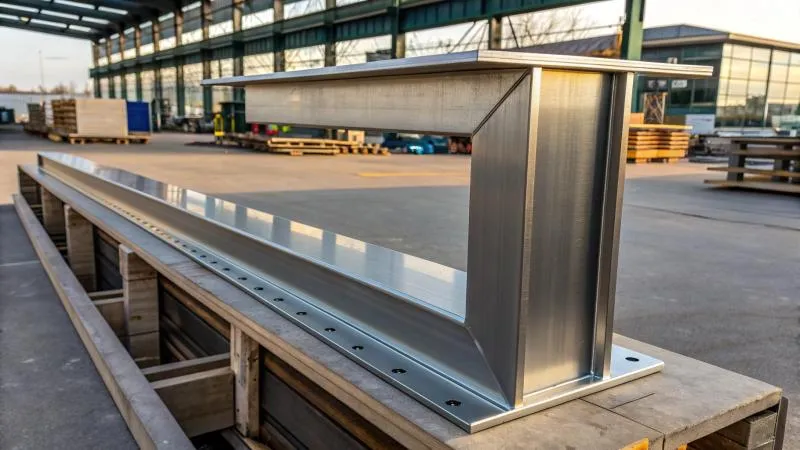
This is a practical welding skill issue, but it connects directly to the material. The weldability of the steel influences how easy or difficult it is to control the overhead weld pool1. Let's break down the techniques and the underlying material science.
Mastering Gravity: Techniques and Physics of Overhead Welding
Overhead welding (Position 4G for groove, 4F for fillet) is a test of a welder's skill. Success depends on manipulating the forces of surface tension and gravity. The goal is to make surface tension "hold" the droplet against gravity long enough for it to solidify.
Welder Technique Adjustments:
- Reduce Heat Input: Use a lower amperage3 (5-15% less than flat position). This creates a smaller, more controllable weld pool1 that solidifies faster.
- Short Arc Length: Maintain a very short distance between the electrode tip and the workpiece. This gives better control and directs the heat more precisely.
- Electrode Angle: Point the electrode slightly upwards (5-15 degrees) in the direction of travel. This uses the arc force to help "push" the metal upwards against the joint.
- Travel Speed and Motion: Use a steady, consistent travel speed. Many welders use a slight backward-and-forward "whipping" or oscillating motion. This deposits a small amount of metal, moves away to let it cool slightly, then returns to add more. It prevents a large, heavy pool from forming.
- Electrode Type: For SMAW, use an electrode with a fast-freezing slag5. E6010 or E7018 electrodes are common choices for overhead. E7018 in particular is a low-hydrogen, all-position rod with good control.
How Base Metal Weldability Affects Overhead Welding:
The steel's properties make the welder's job easier or harder.
- Good Weldability (Low CE Steel): The weld metal and HAZ are less prone to cracking. The welder can use a slightly wider range of parameters without causing defects. This gives them more confidence to control the pool.
- Poor Fit-up or Dirty Steel: If the joint has a large gap or is contaminated, the welder must use more weld metal to fill it. A larger pool is harder to control overhead. Clean, well-prepared edges are even more critical for overhead work.
The Role of Edge Preparation (Connecting to L-Shaped Steel):
Imagine welding an overhead bracket made from L-shaped steel. The edge of the angle is where the weld is placed.
- Poor Preparation: A rough, uneven bevel on the angle leg forces the welder to apply more passes to fill the void. Each overhead pass is a risk.
- Good Preparation: A clean, smooth 45-degree bevel allows for a precise root pass with good penetration. The welder can then follow with smaller, controlled filler passes.
A simple comparison of scenarios:
| Scenario | Edge Condition on L-Steel | Welder's Challenge Overhead | Likely Result |
|---|---|---|---|
| A | Rough cut, no bevel, mill scale present. | Must grind on-site. Weld pool must bridge gaps. Large, unstable pool. | High risk of droop, poor penetration, slag inclusions. |
| B | Clean, smooth, pre-beveled edge from supplier. | Can start welding immediately. Pool fits neatly into prepared groove. | Better control, higher quality weld, faster completion. |
Providing marine L-shaped steel with ready-to-weld edge preparation6 is a direct support to the welding team. It removes one major variable, allowing them to focus on mastering the technique against gravity. This is part of ensuring the overall weldability of the structure.
Which factor has the greatest effect on a metal's weldability?
You control everything: the procedure, the welder, the environment. But if the steel's core chemistry is wrong, all your efforts will fail. The most powerful factor is the one you cannot change after the steel is made.
The single factor with the greatest effect on a metal's weldability is its chemical composition1. Specifically, the carbon content2 and the combined effect of alloying elements expressed as the Carbon Equivalent (CE)3. This inherent property determines the steel's fundamental response to the heat of welding, primarily its tendency to form a hard, crack-prone Heat-Affected Zone (HAZ)4.
%[highlight on chemical composition chart showing carbon and alloy elements](https://cnmarinesteel.com/wp-content/uploads/2026/01/L-shaped-steel-9.webp "steel chemical composition weldability")
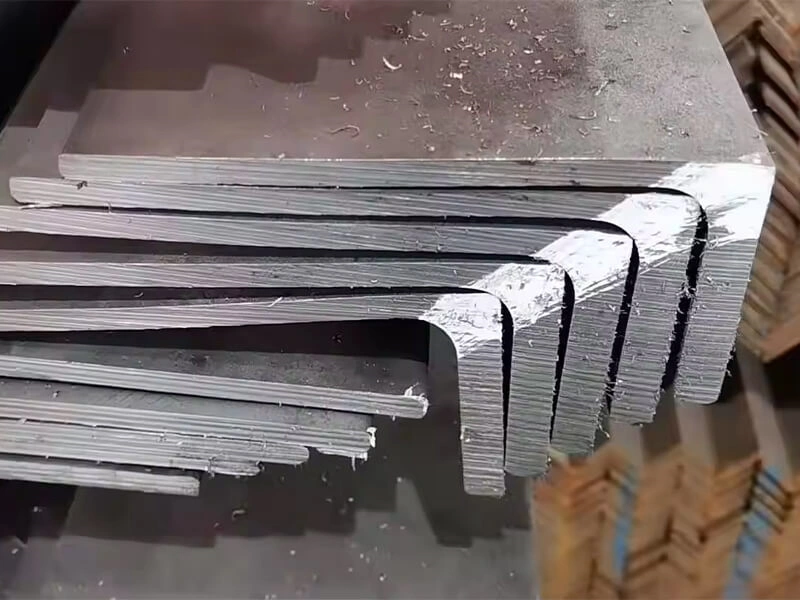
Many factors are important, but they are all adjustable. You can change the welding process, you can pre-heat5, you can clean the surface. But you cannot change the amount of carbon in the steel after it leaves the mill. This makes chemistry the foundation.
The Unchangeable Foundation: Why Chemistry is King
Think of weldability as building a house. The welding procedure6 is the construction method. The steel's chemistry is the land the house is built on. You can have the best builders and plans, but if the land is unstable swamp (high CE), the house will have problems.
Why Carbon is the Key Player:
Carbon is the primary element that strengthens steel, but it also makes it harder to weld. During welding, the intense heat melts a small area. The area next to it (the HAZ) is heated to very high temperatures but not melted. When this hot area cools quickly, carbon helps form hard, brittle microstructures like martensite7. Martensite is strong but has low toughness and is highly susceptible to cracking, especially in the presence of hydrogen.
The Role of the Carbon Equivalent (CE)3:
Other elements also contribute to hardening, but they do so at different rates. Manganese is about 1/6 as potent as carbon. Chromium and Molybdenum are about 1/5 as potent. The CE formula weights these elements to give a single number that predicts the combined hardening effect. A high CE means a high risk of HAZ cracking.
Comparing the Impact of Factors:
Let's rank critical factors by how fundamental and unchangeable they are:
| Factor | Can it be changed/adjusted? | Impact on Weldability | Analogy |
|---|---|---|---|
| 1. Chemical Composition (CE) | NO. Fixed at the steel mill. | Greatest / Foundational. Determines the basic crack sensitivity. | The soil quality of the building site. |
| 2. Steel Thickness & Joint Design | Partially. Design is fixed, thickness is chosen. | Very High. Affects cooling rate and stress levels. | The size and shape of the house you choose to build. |
| 3. Welding Procedure (Heat Input, Filler) | YES. Can be optimized. | High. Must be matched to the steel's chemistry and thickness. | The construction methods and materials used. |
| 4. Pre/Post Heat Treatment | YES. Can be applied as needed. | High. Mitigates the negative effects of high CE or thickness. | Soil stabilization and foundation work for a poor site. |
| 5. Surface Condition & Moisture | YES. Can be cleaned and dried. | Moderate/High. Introduces hydrogen, a key catalyst for cracks. | Ensuring the site is clear of debris before building. |
Implication for Procurement:
This hierarchy shows that your most important weldability decision happens at the time of material purchase. You must select steel with a chemistry suitable for your welding capabilities and the joint's demands.
- For general shipyard fabrication with common arc welding processes, you need steel with a low CE (<0.40). This is why marine grades8 like ABS A/B/AH32 are so popular—they are engineered for this.
- For a highly restrained, thick section, you might accept a slightly higher CE steel but your Welding Procedure Specification (WPS) will mandate strict pre-heat5 and possibly PWHT.
When you request a quote for marine L-shaped steel, the first question you should ask is: "What is the typical Carbon Equivalent for your AH36 angle steel?" A professional supplier will know this number and provide it. We guarantee our marine L-shaped steel is produced to a specification that ensures a low, consistent CE. This gives you the stable, weldable "land" upon which your skilled welders can build a sound, reliable structure.
Conclusion
Ensuring the weldability of marine L-shaped steel starts with procuring material of verified, weld-friendly chemistry (low CE), supported by proper edge preparation and awareness of all interacting welding factors.
-
Understanding chemical composition is crucial for ensuring optimal weldability and preventing defects. ↩ ↩ ↩ ↩ ↩ ↩ ↩ ↩ ↩ ↩ ↩ ↩
-
Carbon content plays a vital role in determining the strength and weldability of steel, making it essential to know. ↩ ↩ ↩ ↩ ↩ ↩
-
CE is a key metric that predicts the hardening effect of alloying elements, impacting weld quality. ↩ ↩ ↩ ↩ ↩ ↩
-
Understanding HAZ is important for managing weld quality and preventing cracking in welded joints. ↩ ↩ ↩ ↩
-
Pre-heating can mitigate the risks associated with high Carbon Equivalent, improving weld integrity. ↩ ↩ ↩ ↩ ↩
-
Optimizing the welding procedure is essential for matching the steel's chemistry and ensuring strong welds. ↩ ↩ ↩
-
Martensite formation can lead to brittleness in welds, making it crucial to understand for quality control. ↩ ↩
-
Marine grades are engineered for low CE, making them ideal for applications requiring high weldability. ↩ ↩