
You need a guaranteed supply of ABS-certified bulb flats for a series of newbuild tankers. The global market is vast, but finding an exporter who combines the right product, reliable quality, and smooth logistics is the real challenge. A wrong choice risks your project timeline and budget.
To find reliable bulb flat steel exporters, focus on suppliers with direct partnerships with certified mills (like those approved by ABS, BV, CCS), proven experience in marine exports, and the ability to provide full Mill Test Certificates (MTCs). Use B2B platforms and trade data to identify active exporters, then verify their credentials through factory audits and third-party inspection services like SGS.
Finding a name is easy. Finding a reliable partner requires a strategy that looks beyond simple rankings. You need to understand the global export landscape, the structure of the supply chain, and the verification steps that separate true partners from simple brokers. Let’s start by understanding the major players in the steel export world.
Who are the top 10 exporters of steel?
Knowing the top exporting countries gives you a macro view of where supply originates. However, for specialized products like marine bulb flats1, the list of relevant suppliers is more specific and driven by manufacturing capability, not just raw export tonnage.
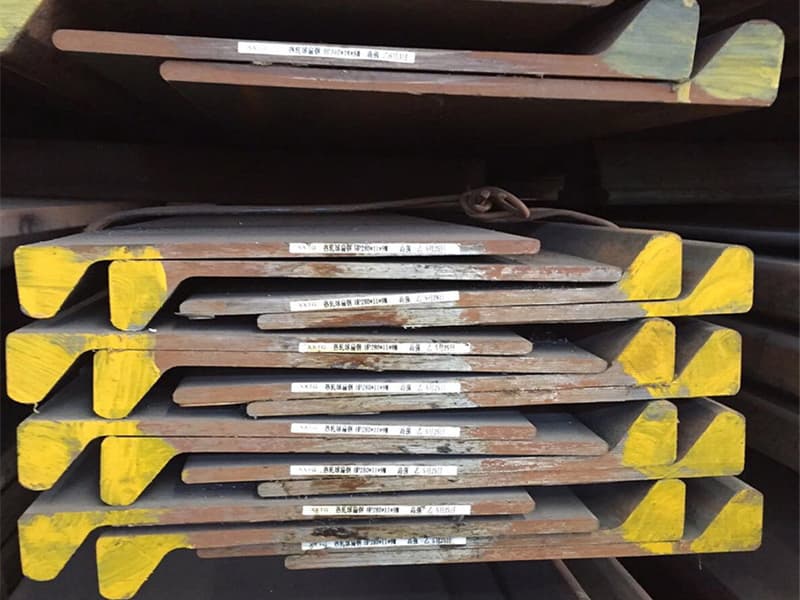
The top steel exporting nations2 by volume are typically China, Japan, Russia, South Korea, Germany, Turkey, Italy, Belgium, Ukraine, and India. For marine bulb flats1, the key exporters are often from China, Japan, South Korea, and specialized mills3/traders in Europe, due to their strong shipbuilding industries and classification society approvals4.
The "top 10" list tells you about commodity steel flows. Your job is to filter this list for the specific capabilities needed to produce and export certified marine profiles.
From Commodity Exporters to Marine Specialists
The volume leaders export a wide range of products: slabs, hot-rolled coil, rebar, and basic sections. Marine bulb flat is a niche within this.
-
Volume Champions vs. Niche Producers:
- China: The dominant volume leader, with a vast industry that includes many mills capable of producing certified marine steel. Finding the right mill or exporter here is crucial.
- Japan & South Korea (POSCO, JFE, Nippon Steel): These countries are steel powerhouses with deep integration into their own world-class shipbuilding industries. Their mills are often at the technological forefront and hold approvals from all major classification societies. They are premium suppliers.
- European Nations (Germany, Italy, Belgium): Home to mills like ArcelorMittal and specialized re-rollers. They are strong in high-quality, specific grades and profiles, often serving European shipyards and niche offshore markets.
-
The Critical Role of Traders and Specialized Exporters: The top "exporters" by trade data include both mills and large trading houses. For an international buyer, a reliable trading company5 with direct mill access can be more effective than approaching a mega-mill directly. These traders understand international logistics, documentation, and provide flexible quantities.
A Practical Guide to Key Sourcing Regions
For bulb flats, you should focus your search on regions with a strong maritime industrial base.
| Export Region | Key Characteristics for Bulb Flats | Considerations for Buyers |
|---|---|---|
| East Asia (China, Japan, Korea) | Highest volume, full range of grades (A, AH, DH, EH), extensive classification approvals. Strong technical support. | China: Requires careful supplier vetting. Japan/Korea: Higher cost, exceptional quality. Ideal for high-spec projects. |
| Southeast Asia | Growing domestic production, but often focused on local shipyard demand. May re-export Chinese-origin material. | Potential for competitive logistics within Asia. Verify mill origin and certification carefully. |
| Europe | Specialized mills for high-toughness grades6 (e.g., for Arctic service). Excellent quality, shorter lead times for European projects. | Premium pricing. Ideal for specialized offshore, wind, or naval projects requiring specific EU standards. |
Therefore, your search for a reliable exporter should start in these regions, particularly in China for a balance of cost and capability, and Japan/Korea for top-tier quality. The "top 10" list is your starting map, but you must then navigate to the specific ports (suppliers) that serve your needs.
Who is the biggest exporter of steel?
China is, by a very large margin, the world’s biggest exporter of steel. However, "biggest" in total tonnage does not automatically mean "best" for your specific need for certified marine bulb flats1.
China is the undisputed biggest exporter of steel, accounting for a dominant share of global exports. For bulb flats, this scale means a wide selection of suppliers, but it also requires careful due diligence to identify the reliable, certified producers and exporters within this vast market.
China’s dominance is a double-edged sword. It offers immense choice and competitive pricing, but it also presents a challenge in filtering for quality and reliability. Understanding the structure of the Chinese industry is key.
The Scale and Structure of Chinese Steel Exports
China’s export power comes from its unparalleled production capacity and integrated industrial ecosystem.
- Sheer Volume: China exports more steel than the next several countries combined. This gives it unparalleled influence on global prices and availability.
- Complete Industry Chain: China has everything from giant integrated mills (Baowu, Ansteel, Hesteel) to thousands of smaller re-rollers, fabricators, and traders. This means almost any steel product, including niche items like bulb flats, can be sourced.
- Government Policy Influence: Export policies (like VAT rebates) can change, affecting price competitiveness and availability. A reliable exporter keeps clients informed of such changes.
Finding Reliability Within the "Biggest" Market
Because China is so big, the question shifts from "who is the biggest exporter?" to "who is a reliable exporter of certified bulb flats within China?"
Here is how to navigate:
- Look for Mill Partnerships: Reliable exporters are not just traders; they have long-term cooperation agreements2 with specific, certified mills. For example, an exporter might be a direct agent for mills like Shandong Steel, Rizhao Steel, or Nanjing Iron & Steel (Nangang), which have strong marine steel divisions. They should name these partners openly.
- Verify Certifications, Not Just Claims: Any supplier can say they sell "AH36 bulb flats." A reliable one provides scanned copies of the Classification Society Certificate3 (ABS, BV, LR, CCS) for the mill and the Mill Test Certificate (MTC)4 for previous shipments. The MTC must trace back to a known, approved mill.
- Assess Export Specialization: A company that primarily serves the domestic market may struggle with export documentation, English communication, and international logistics. Look for exporters whose marketing and client list show a clear focus on international markets (like Vietnam, Middle East, Europe)—like our own business model.
- Check Physical and Operational Credentials: Use tools like third-party verification services5 or request a virtual factory tour. Do they have a real office and warehouse? Can they show loading operations? Companies that are transparent about their operations are generally more trustworthy.
For a buyer, China’s size is an advantage only if you have a filter for quality. You are not looking for the "biggest" Chinese exporter, but for a professional, specialized marine steel exporter6 with proven supply chain connections. Their size might be medium, but their expertise and reliability should be top-tier. This is the kind of partner that can leverage China’s manufacturing scale to your benefit while managing the risks.
Who does the UK export steel to?
The UK’s steel export pattern is a case study in a mature, high-value market. It shows how advanced economies trade steel—not just in bulk, but in specific, often high-specification products. This is relevant because it highlights the kind of markets that value quality and certification.
The UK primarily exports steel to other EU nations1 (like Germany, Ireland, France), the United States, and Turkey. Its exports often consist of higher-value products like alloy steel, coated products, and engineering steels for automotive and aerospace, reflecting its specialized industrial base rather than bulk commodity steel.
The UK is not a major global exporter of basic bulb flats. Its steel industry has evolved to focus on niches where technology and specification command a premium. Understanding this teaches a valuable lesson about supplier specialization.
Lessons from a Specialized Export Model
The UK’s export profile demonstrates important principles for a buyer:
- Specialization Over Volume: The UK cannot compete on volume or price with mass producers in Asia. Instead, it competes on quality, specification, and technical service2. This is a viable model for any supplier, including those in China focusing on the high-end marine market.
- Trade with Trusted Partners: Exports flow to countries with established trade relationships and similar quality expectations (EU, USA). This underscores the importance of a supplier’s export track record3 to specific regions.
- Focus on Downstream Industry: Exports are tied to the needs of key domestic industries (e.g., automotive). Similarly, a reliable bulb flat exporter4 should be deeply connected to the shipbuilding and offshore industries.
Applying the UK Model to Your Supplier Search
When evaluating a bulb flat exporter4, ask questions inspired by this model:
- Do They Specialize in Marine Steel? Or are they general steel traders selling pipes, coils, and angles all together? A specialist will have deeper technical knowledge and better mill connections for marine grades.
- What is Their Main Export Market? An exporter who regularly ships to established shipbuilding nations (South Korea, Japan, Norway) or major project hubs (Middle East, Southeast Asia) likely understands the stringent quality and documentation required. Our own export list to Vietnam, Qatar, Saudi Arabia, etc., signals this specialization.
- Do They Offer Technical Support? Can they advise on grade selection (AH36 vs. DH36), standards (EN 10067 vs. JIS G 3192), or welding considerations? This value-added service separates a partner from a vendor.
In essence, the UK example shows that a reliable supplier is often a specialized supplier5. For bulb flats, you want an exporter whose core business is serving the marine sector, not a general commodity trader who happens to have some bulb flats available. This focus translates into better product knowledge, more reliable quality control, and a smoother export process tailored to marine industry needs.
Which is the world top 5 steel plant?
Ranking the "top" steel plants depends on the criteria: volume, revenue, technology, or product range. For a buyer of marine bulb flats1, the most relevant "top" plants are those with the strongest credentials in producing high-quality, certified flat products2 for the shipping industry.
The world’s largest steel plants by volume are China Baowu (China), ArcelorMittal (Luxembourg-based, global), Nippon Steel (Japan), HBIS Group (China), and Shagang Group (China). For marine bulb flats1, mills with strong flat product divisions and extensive classification society approvals3, like POSCO4 (Korea), Nippon Steel, Baowu, and specialized European mills, are particularly important.
Knowing the giant mills is useful background, but your direct relationship as an international buyer will likely be with an exporter or service center that sources from them. Your goal is to ensure your supply chain connects back to these quality producers.
The Giants and the Specialists
The list of top plants includes two types that matter to you:
- Integrated Giants (Baowu, ArcelorMittal, Nippon Steel): These companies have the scale to invest in advanced technology (like advanced TMCP rolling) and maintain a portfolio of approvals from every major classification society (ABS, BV, DNV, LR, CCS, etc.). They produce the slabs and hot-rolled coil that are then shaped into bulb flats by re-rolling mills.
- Specialized Flat Product Mills: Some mills are renowned for their expertise in plates and sections. POSCO4 in Korea is a global leader in advanced steelmaking and a major supplier to Korean shipyards. In Europe, mills like Dillinger (Germany) are famous for heavy plate, including for offshore.
How This Knowledge Informs Your Exporter Selection
You will rarely buy directly from Baowu or POSCO4 for a container-load of bulb flats. However, you should use this knowledge to vet your exporter:
| What to Ask Your Exporter | Why It Matters | Sign of a Reliable Exporter |
|---|---|---|
| Which mill do you source these bulb flats from? | Links your order to a primary producer. | They name a specific, reputable mill (e.g., "We source from Shandong Steel’s special section mill" or "from a POSCO4-approved re-roller"). |
| Can you provide the Mill Test Certificate5? | The MTC is issued by the producing mill, not the trader. It is the proof of origin and quality. | They guarantee the MTC will be provided and it will clearly name the mill (e.g., "Baosteel" which is part of Baowu). |
| Is your mill approved by [ABS/BV/LR]? | Confirms the mill’s qualification to produce certified marine steel. | They can provide the mill’s certification documents or quote the mill’s approval number. |
A reliable exporter6 has transparent, documented supply lines back to these top-tier or highly specialized mills. They take pride in their mill partnerships. For example, we have long-term cooperation with certified mills in Shandong. This is not a vague statement; it means we have agreed terms, quality protocols, and regular order schedules with specific factories that produce to international standards. When you work with such an exporter, you are leveraging their curated access to the "top" production base, without having to manage that relationship yourself. This is the core value a reliable exporter6 provides.
Conclusion
Finding reliable bulb flat exporters requires targeting specialized marine suppliers in key regions like China, verifying their mill partnerships and certifications, and assessing their export experience and technical support, rather than focusing solely on the largest overall exporters.
-
Explore the significance of marine bulb flats in shipping and their impact on vessel performance. ↩ ↩ ↩ ↩ ↩ ↩
-
Learn about the standards and certifications that define high-quality flat products in the steel industry. ↩ ↩ ↩ ↩
-
Find out how classification society approvals ensure the quality and safety of steel products. ↩ ↩ ↩ ↩
-
Discover POSCO’s innovations and contributions to the steel industry, especially in marine applications. ↩ ↩ ↩ ↩ ↩ ↩ ↩ ↩
-
Understand the importance of Mill Test Certificates in ensuring steel quality and compliance. ↩ ↩ ↩ ↩
-
Get tips on selecting trustworthy exporters who connect you with top-tier steel producers. ↩ ↩ ↩ ↩