
Bad steel arrives at your warehouse. Your project stops. You lose money. What do you do next?
You handle non-conforming marine L-shaped steel by acting fast and following a clear plan. First, document every defect with photos and tests. Second, stop using the steel right away. Third, send a formal claim to your supplier with your evidence. Finally, agree on a solution like replacement, refund, or a price cut. I have done this many times with my buyers.
I know this situation feels stressful. But you can fix it. Let me walk you through the steps I use with my clients from Saudi Arabia, Vietnam, and Mexico. These steps work.
How to Spot Non-Conforming Marine L-Shaped Steel Early?
The earlier you find a problem, the easier it is to fix. Waiting until you cut or weld the steel makes everything harder.
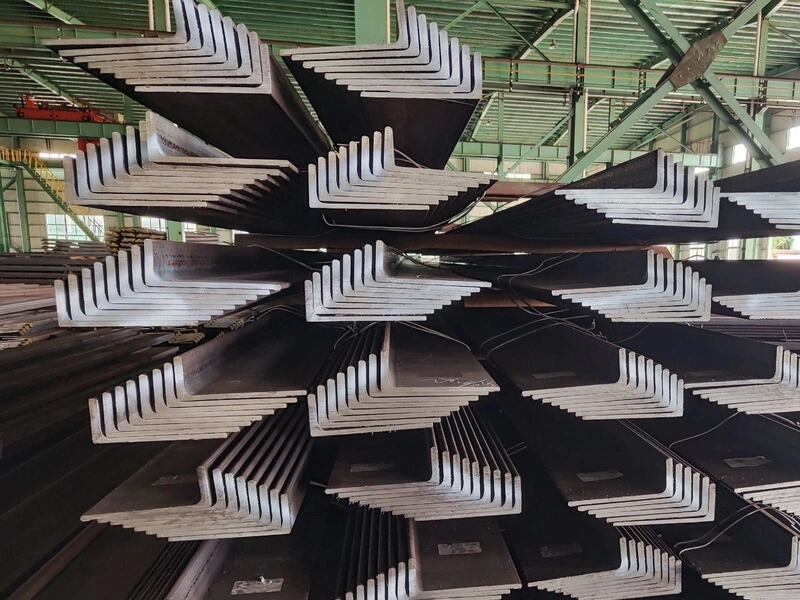
You can spot bad L-shaped steel1 by checking three things: the leg length and angle with a simple gauge, the surface for cracks or laminations, and the mill stamp2 for the heat number. Do this check within 24 hours of arrival. I trained my warehouse team to do this on every shipment.
Let me show you exactly what to look for with real examples.
I am Zora Guo. I export marine L-shaped steel to shipyards and project contractors all over the world. Over the years, I have seen many types of defects. Some are small. Some are big enough to ruin a whole batch. The key is to catch them early.
I remember a buyer from Thailand. He received 50 tons of L-shaped steel from another supplier. He did not inspect it right away. He stored it for two months. Then his workers cut and welded the steel into frames. Only after welding did they notice the legs were twisted. The frames did not fit together. He had to scrap everything. That cost him $12,000 and two months of delay. If he had checked the steel on day one, he could have rejected it and ordered new steel.
So here is my early detection checklist3.
1. Check the leg length and the angle
L-shaped steel (also called angle steel) has two legs. They meet at 90 degrees. The length of each leg and the thickness of the steel must match your order.
Use a steel ruler or a caliper. Measure both legs at three points (both ends and the middle). Also use an angle gauge to check the 90-degree corner. The tolerance for leg length is usually ±1.5mm for sizes up to 100mm. For bigger sizes, the tolerance can be ±2.0mm.
What to watch for:
- One leg longer than the other by more than 2mm
- The angle is not 90 degrees (it could be 88 or 92 degrees)
- The thickness is too thin or too thick
These errors cause big problems when you try to weld the steel into a frame. The parts will not line up.
2. Look at the surface with your eyes
Walk along each piece. Look for cracks, scabs, and rolled-in scale. Also look for deep pitting rust. A little surface rust is okay. But deep pits mean the steel is already damaged.
I also check for laminations. You cannot see them directly. But sometimes a lamination shows as a thin line on the edge. If you see a line that looks like a crack, mark it. That piece needs ultrasonic testing.
3. Read the mill stamp
Every piece of marine L-shaped steel should have a stamp. The stamp shows the mill name, the steel grade (like A36 or AH36), and the heat number. If the stamp is missing, blurry, or hard to read, that is a red flag. It means you cannot trace the steel back to the original melt.
4. Do a simple bend test4 on a sample
Cut a small piece from one bar. Put it in a vise. Hit it with a hammer. Good steel will bend but not crack. Bad steel will snap or show a crack. This is not a lab test. But it gives you a quick idea.
Here is a simple table for your early check:
| What to check | How to check | What is a fail |
|---|---|---|
| Leg length | Steel ruler at three points | Error bigger than ±2.0mm |
| Angle between legs | Angle gauge or square | Not 90° ± 1° |
| Surface cracks | Visual along full length | Any crack or lamination line |
| Mill stamp | Visual check | Missing or unreadable stamp |
| Simple bend | Hammer on a small sample | Cracks or snaps |
Do this check within 24 hours of arrival. Take photos of every failed piece. These photos are your proof later.
What Can You Do When Marine L-Shaped Steel Fails the Test?
You found bad steel. Now you need a clear action plan. Do not panic. And do not start welding.
When the steel fails, you have four options: reject the whole batch1, ask for a replacement2, request a price reduction, or accept the steel with rework3. Your choice depends on how bad the defect is and how urgent your project is. I always recommend rejection for safety-critical defects like cracks or wrong grade.
Let me break down each option with real examples and decision steps.
I remember a buyer from Pakistan. He ordered 100 tons of L-shaped steel for a fishing boat project. The steel arrived. His inspector found that 15% of the pieces had leg length errors. The legs were 5mm shorter than ordered. He called me upset. He asked: "What can I do? My deadline is in six weeks."
I told him to stop using the steel. Then we looked at his options. Here is what I explained to him.
Option 1 – Reject the whole batch
This is the cleanest option. You tell the supplier: "The steel is not acceptable. Come take it back. Give me a full refund."
When to use this option:
- The defect affects safety (cracks, wrong grade, low strength)
- More than 10% of the pieces have the same defect
- The supplier cannot replace the steel quickly
- You have a strict quality requirement from your own client
The downside: You need to find new steel fast. That can take weeks. Your project will delay.
Option 2 – Ask for a replacement
You send the bad steel back. The supplier sends new steel that meets the spec. The supplier pays for shipping both ways.
When to use this option:
- The defect is serious but the supplier has good stock
- You have time to wait (4 to 8 weeks)
- You trust the supplier to send good steel the second time
The downside: You wait. And you hope the second batch is better. I have seen some suppliers send the same bad steel again. So ask for a third-party inspection on the replacement batch.
Option 3 – Request a price reduction
You keep the steel. But you pay less. The discount covers your extra labor or the lower strength.
When to use this option:
- The defect is small (like minor surface rust or small dimensional errors)
- You can still use the steel with some rework
- Your project is urgent, and you cannot wait
How much discount to ask? For small errors, ask for 10-15% off. For bigger problems like wrong thickness, ask for 30-40% off. Put the agreement in writing.
Option 4 – Accept the steel with rework
You keep the steel. You fix the problem yourself. The supplier pays for your rework cost.
When to use this option:
- The defect is easy to fix (like grinding off surface cracks)
- You have a good workshop
- You want to keep the relationship with the supplier
The risk: The rework might not fix the problem fully. And you need to prove your rework cost to the supplier.
Here is a decision table I use with my buyers:
| Defect type | Reject | Replace | Price cut | Rework |
|---|---|---|---|---|
| Wrong steel grade | Yes | Yes | No | No |
| Large cracks or laminations | Yes | Yes | No | No |
| Leg length error >3mm | Maybe | Yes | Yes | No |
| Surface rust (no pitting) | No | No | Yes | Yes |
| Small bend (can be straightened) | No | Maybe | Yes | Yes |
| Missing mill stamp | No | Yes | Yes | No |
For the buyer from Pakistan, I suggested Option 3. The leg length error was 5mm. That was too big for a fishing boat frame. But he could cut the legs shorter and still use the steel. He asked for a 25% discount. The supplier agreed. He saved $5,000 and finished his project on time.
How to File a Claim and Get Compensation for Bad Steel?
You have bad steel. You want your money back. But the supplier says no. You need a strong claim with the right documents.
To win your claim, you need four things: a clear contract with quality terms, an inspection report from a third party like SGS, photos of the defect with a ruler, and a written notice sent within the warranty period. Without these, the supplier will ignore you. I have helped many buyers get compensation using this method.
Let me walk you through the claim process1 step by step.
I learned this the hard way. Early in my career, a buyer from the Philippines received a batch of L-shaped steel with wrong dimensions. He called me angry. But he had no photos. No test report. No contract clause. He just said "the steel is bad." His previous supplier refused to pay anything. The buyer lost $8,000.
That is why I now teach my buyers how to file a proper claim. Here is the step-by-step process.
Step 1 – Stop using the steel immediately
Do not cut it. Do not weld it. Do not move it to another location. Keep the steel exactly where it is. If you use the steel, the supplier will say: "You accepted it by using it." That is a common trick. So stop all work on the bad steel.
Step 2 – Document everything with photos and videos
Take clear photos. Put a ruler next to the defect. Take a photo from far away (to show the whole piece) and a close-up (to show the detail). Also take a video. In the video, show the mill stamp and the defect. Speak the date and the order number out loud. This video is strong evidence.
Step 3 – Get a third-party inspection report2
Call SGS, Bureau Veritas, or Intertek. Ask them to come to your warehouse. They will inspect the steel and write a report. The report will say: "The steel does not meet the standard." This report is the most powerful document you can have. Suppliers cannot argue with an SGS report3.
I always tell my buyers: "If you want to win a claim, get an SGS report." It costs $300 to $500. But it is worth every dollar.
Step 4 – Send a formal written notice4 to the supplier
Write an email or a letter. Use a clear subject line: "Formal Claim for Non-Conforming Steel – Order [number]". In the email, list these things:
- The order number and the date of arrival
- The defect description (with photos attached)
- The inspection report (attached as PDF)
- Your proposed solution (replacement, refund, or discount)
- A deadline for their reply (7 days is fair)
Send this email to the sales person and their manager. Also send it by WhatsApp for a faster response.
Step 5 – Negotiate based on your contract
Go back to your contract. Look for the quality clause5, the warranty period, and the penalty clause. Use these to support your claim. If the contract says "SGS inspection at loading port," and you did not do that, the supplier might say you missed your chance. So check your contract first.
Here is a timeline you should follow:
| Time after arrival | Action |
|---|---|
| Day 1 | Inspect the steel. Take photos. |
| Day 2-3 | Stop using bad steel. Call third-party inspector. |
| Day 5-7 | Get inspection report. Send formal notice to supplier. |
| Day 14 | If no reply, escalate to the supplier’s manager or owner. |
| Day 21 | If still no reply, consider legal action or credit card chargeback. |
I recently helped a buyer from Romania. He received L-shaped steel with surface cracks. He sent me photos. I told him to get an SGS report. He did. The report showed the cracks were from bad rolling. He sent the report to his supplier. The supplier offered a 30% refund within one week. That is the power of good documentation.
How to Stop Non-Conforming Steel from Happening Again?
One bad shipment is a lesson. Two bad shipments is a pattern. You need to fix the root cause.
To stop bad steel from coming again, change your buying process. Add a pre-shipment inspection clause1 to your contract. Only work with suppliers who show you a mill authorization letter2. Order a small test batch3 first. And keep a blacklist of suppliers who sent bad steel. I use these rules for every new supplier I work with.
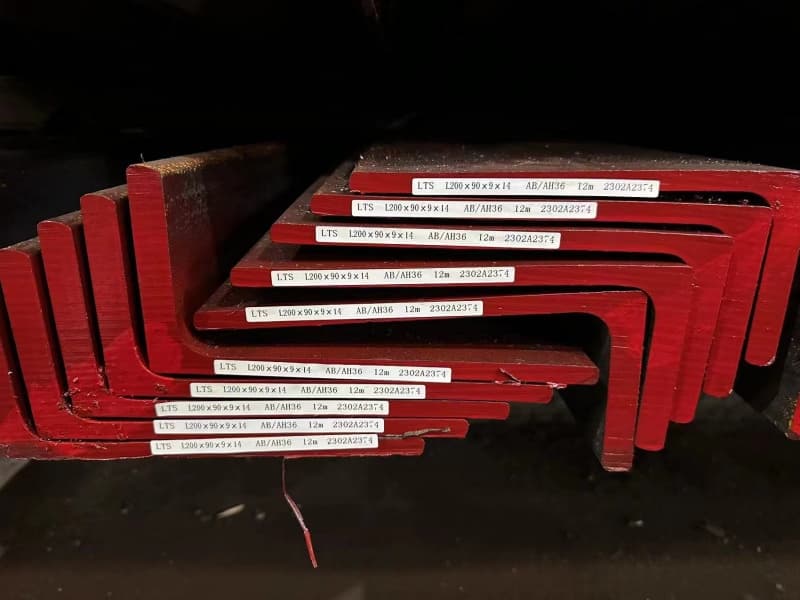
Here is my prevention system after 10 years of exporting steel.
I am Zora Guo. I have shipped thousands of tons of L-shaped steel to more than 15 countries. And I have learned that prevention is much cheaper than fixing problems later. So I built a simple system. You can use it too.
1. Add a pre-shipment inspection clause to every contract
This is the most important step. Write this in your contract: "All steel must be inspected by SGS or a similar third party at the loading port. The supplier pays for the inspection if the steel fails. The buyer pays if the steel passes."
Why does this work? The supplier knows that bad steel will be caught before it ships. So they send their best quality. And if the steel fails, the supplier pays for the inspection and the delay. That gives them a strong reason to send good steel.
2. Only work with suppliers who have a mill authorization letter
A real exporter works directly with a certified mill. The mill gives them a letter. Ask for this letter. Then call the mill to check if the letter is real. I do this for every new mill I work with. It takes 10 minutes. It saves months of headaches.
3. Order a small test batch first
Never start with a full container. Order 5 to 10 tons first. Inspect it at your warehouse. Cut it. Weld it. Test it. If it works well, then order more. I did this with a buyer from Mexico. He ordered 8 tons of L-shaped steel as a test. He inspected it and liked it. Then he ordered 300 tons. That small test saved him from a possible bad batch.
4. Keep a blacklist of bad suppliers4
I have a simple Excel sheet. It has three columns: supplier name, defect type5, and date. Every time I hear about a bad supplier from my buyers, I add them to the list. I never work with anyone on that list. You can do the same. Share this list with your industry friends.
5. Build a long-term relationship with one good supplier
Switching suppliers every time saves a little money on price. But it costs you in quality risk. A good supplier knows your needs. They check the steel before they ship to you. They answer your calls fast. They fix problems when they happen.
For example, Gulf Metal Solutions in Saudi Arabia used to buy from different Chinese suppliers. They got bad quality and slow replies. Then they found my company. Now they buy only from us. We send them photos before every shipment. We arrange SGS inspections. We reply within two hours. They told me: "Your packaging is the best we have ever seen." That is what a long-term relationship looks like.
Here is a checklist for your next purchase:
| Prevention step | How to do it | Why it helps |
|---|---|---|
| Pre-shipment inspection clause | Write it into every contract | Catches bad steel before it ships |
| Mill authorization letter | Ask for it, then verify with the mill | Proves the supplier works with a real mill |
| Small test batch | Order 5-10 tons first | Tests quality before big order |
| Blacklist bad suppliers | Keep a simple Excel list | Avoids repeat problems |
| Long-term partner | Stick with one good supplier | Better quality and faster service |
Conclusion
Spot bad steel early. Act fast. File a strong claim. Then change your buying process to stop it from happening again.
My Personal Insights (from 10+ years in marine steel export)
I am Zora Guo. My team in Liaocheng works only with certified mills. We offer SGS support, flexible MOQ, and fast replies – often within two hours. Whether you need marine L-shaped steel, bulb flat steel, or marine angle steel for shipbuilding, I treat your project like my own. Send me an email at sales@chinaexhaustfan.com or visit cnmarinesteel.com. Tell me your size, grade, and destination port. I will reply with a clear proposal and a packing photo from our stockyard.
-
Understanding this clause can help you ensure quality control in your shipments. ↩ ↩ ↩ ↩
-
Learn why this letter is crucial for verifying supplier credibility and ensuring quality. ↩ ↩ ↩ ↩
-
Discover the benefits of ordering a test batch to avoid costly mistakes in large orders. ↩ ↩ ↩ ↩
-
Find out how to protect your business by avoiding unreliable suppliers. ↩ ↩ ↩
-
Understanding defect types can help you identify and address quality issues effectively. ↩ ↩