
You order angle steel. It arrives late. Or the size is wrong. Then your whole project stops.
Better angle steel planning improves project efficiency by matching the right grade and size to each structural need, ordering with realistic lead times, and using a supplier who provides third-party inspection and fast communication.
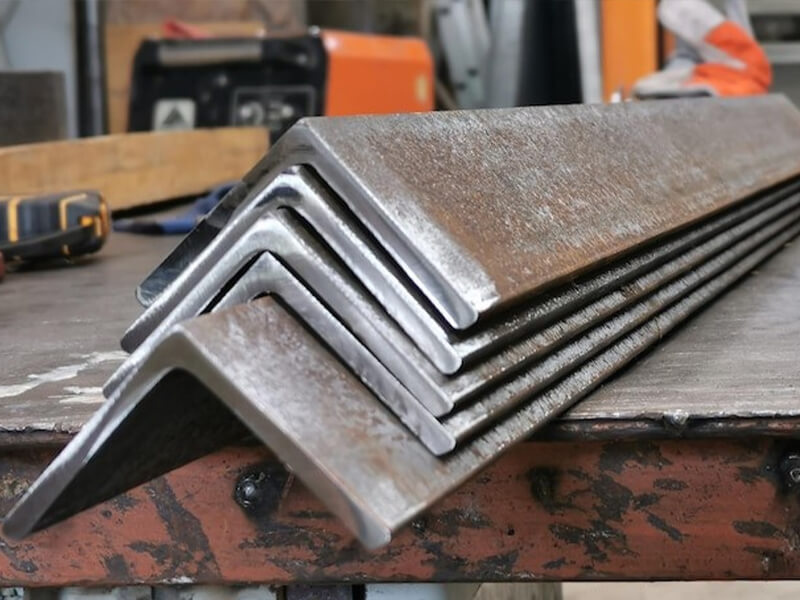
I have helped customers in Saudi Arabia, Vietnam, and Mexico speed up their projects. The secret is not buying faster. It is planning smarter. Let me show you how.
How to improve construction project efficiency1?
Many project managers think efficiency means working faster. But I learned that efficiency starts before the first piece of steel is cut.
You improve construction project efficiency by reducing waiting time, eliminating rework, and making sure every piece of angle steel is ready when the worker needs it. That means planning the order, the delivery, and the inspection all together.
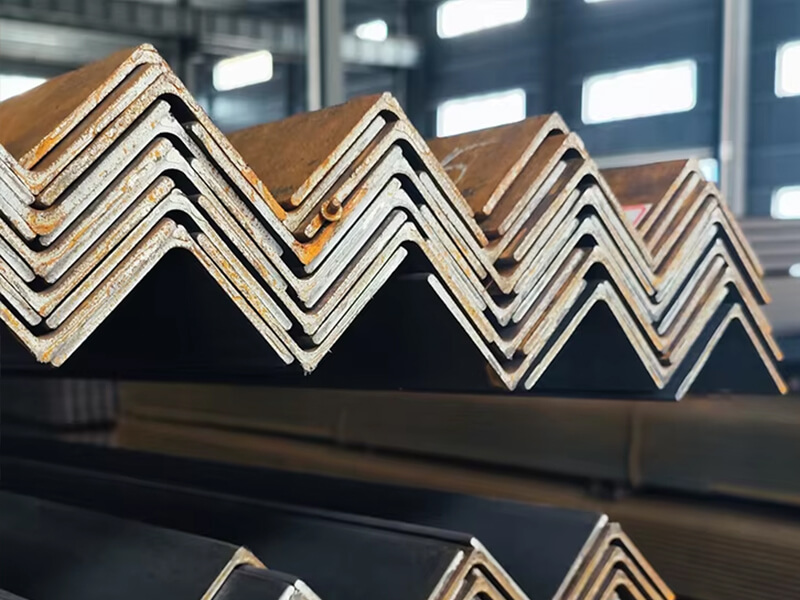
The three delays that kill your project timeline
I have seen the same problems again and again. Let me name them.
First is the material delay2. You order angle steel. The supplier says 30 days. But they mean 30 working days. Or they mean 30 days after they receive your payment confirmation. Or they mean 30 days after the mill finishes another order. You end up waiting 45 days. Your workers stand around.
Second is the quality delay3. The angle steel arrives. Your site supervisor checks it. The leg lengths are off by 3mm. Or the surface has deep rust. Or the certificate does not match the heat number. You reject the steel. Then you wait for a replacement. That is another 30 days.
Third is the documentation delay4. The steel is good. But the customs officer asks for a document. Your supplier takes three days to reply. The steel sits at the port. You pay storage fees.
How to plan around these delays
| Delay type | Root cause | Solution in planning |
|---|---|---|
| Material | Unclear lead time | Ask for “door to site” timeline, not just production time |
| Quality | No pre-shipment check | Add third-party inspection5 at loading port |
| Documentation | Slow response | Have a dedicated contact person with 24-hour reply |
I offer all my customers a simple deal. I give you a written schedule. It says: day 1 payment, day 2 mill order, day 15 production done, day 18 inspection, day 22 loading, day 35 to 45 arrival at your port. If I miss any date by more than 3 days, you get a discount. That keeps me honest.
What is the one thing most people forget in planning?
The cutting and welding plan6. Angle steel comes in standard lengths of 6m or 12m. But your project needs pieces of 2.3m, 3.1m, and 4.8m. If you do not plan the cutting layout, you waste steel. You also waste time cutting on site.
I have a customer in the Philippines. They build fishing boats. They used to order 12m angle steel and cut it themselves. They lost 15% of the steel as scrap. Now they send me a cutting list. I ask the mill to cut to exact sizes. They save time and steel. The project finishes faster.
A simple planning table for angle steel
| Project phase | What to plan | Who is responsible |
|---|---|---|
| Design | List all angle steel sizes, grades, and lengths | Engineer |
| Procurement | Compare lead times from 3 suppliers | Project manager |
| Quality | Decide on third-party inspection (SGS, DNV, etc.) | Quality manager |
| Logistics | Book shipping with buffer days | Logistics coordinator |
| Site | Prepare storage area and cutting tools | Site supervisor |
Why are angles important in the construction of buildings?
Some people think angle steel1 is just a simple shape. But it is everywhere in buildings and ships.
Angles are important because they transfer loads between beams and columns, brace the structure against wind and waves, and provide a flat surface for welding or bolting. Without angles, most steel structures would be weak and expensive to build.
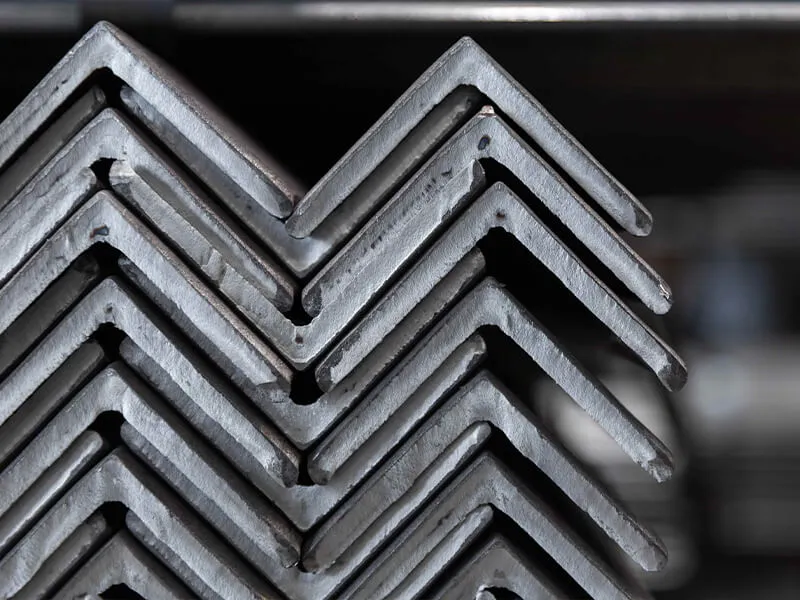
The hidden role of angle steel in structural integrity
Let me explain with a simple example. You have two beams that meet at a corner. How do you connect them? You cannot weld them directly if they are different sizes. You need a bracket. Angle steel is that bracket.
The two legs of the angle steel give you two surfaces. One bolts to the first beam. The other bolts to the second beam. The 90-degree corner transfers the load from one direction to another.
In a ship, angle steel is used as stiffeners. The hull plate is thin. Without stiffeners, the plate would buckle. The angle steel is welded along the plate. It makes the plate much stronger without adding much weight.
What happens when you use the wrong angle steel?
I saw a warehouse collapse in Thailand. Not my steel, but I heard about it. The builder used equal leg angles where they needed unequal leg angles2. The unequal leg design had a longer leg to take more bending force. The equal leg angles bent. The roof came down.
So do not just look at the size. Look at the orientation. Ask your structural engineer3 which leg should be longer.
Common angle steel uses in buildings
| Application | Typical size | Why angle works |
|---|---|---|
| Roof trusses | 50x50x5mm | Light, easy to weld |
| Column bracing | 75x75x8mm | Strong in diagonal tension |
| Stair stringers | 100x75x10mm | Unequal leg fits stair tread |
| Equipment supports | 65x65x6mm | Flat surface for mounting |
| Ship hull stiffeners | 150x90x12mm | Long leg gives high moment resistance |
How do I choose the right angle for my project?
Three questions. First, what is the load? Tension, compression, or bending? For tension, the leg thickness matters most. For compression, the leg length matters. For bending, both legs matter.
Second, what is the connection? Welding or bolting? Welded angles need a clean surface and good weldability (low carbon). Bolted angles need enough space for the bolt head and washer.
Third, what is the environment? Indoors, outdoors, or marine? Marine environment needs higher corrosion resistance or coating. I always ask for the project location before I quote.
How to ensure structural stability?
One wrong piece of angle steel can make a whole structure unsafe. That is not an exaggeration.
You ensure structural stability by using certified angle steel1 that matches the design grade, checking the weldability and impact resistance2, and having a third-party verify the mill certificate3. Then you store and handle the steel so it does not bend or rust before installation.

The three stability killers
Killer one is wrong grade. Grade A36 (36,000 psi yield) looks the same as Grade A572-50 (50,000 psi yield). But the stronger steel is more brittle in cold weather. If your design calls for A572-50 and you use A36, the structure may bend too much. If you use A572-50 when the design calls for A36, the welds may crack because the stronger steel needs different welding rods.
Killer two is poor welding. Angle steel has a root radius at the corner. If the welder puts the weld too close to the root, they get a weak joint. The proper weld size and placement are on the drawing. The mill certificate should show the carbon equivalent value4. A high carbon equivalent means the steel is harder to weld.
Killer three is corrosion. Surface rust is not just ugly. It reduces the thickness. Over time, a 6mm thick angle with 1mm of rust loss is now 5mm thick. That is a 17% loss of strength.
How we verify stability before shipping
| Check | What we do | Why it matters |
|---|---|---|
| Grade verification | Match heat number to mill certificate | Wrong grade = wrong strength |
| Carbon equivalent | Calculate from chemistry | High CE = weld cracking risk |
| Impact test | Charpy V-notch at design temperature | Low impact = brittle failure |
| Straightness | Lay on flat surface, measure gap | Bent steel = bad fit-up |
| Surface rust | Compare to rust grade B or C | Heavy rust = thickness loss |
A story from my customer in Saudi Arabia
Gulf Metal Solutions ordered marine steel plate and angle steel from me. They had a problem before. Their previous supplier sent angle steel that looked fine. But when they welded it, cracks appeared next to the weld. The mill certificate said carbon equivalent was 0.38%. That is okay for normal steel. But the actual steel had 0.44%. That is too high.
They lost two weeks grinding out the cracks and rewelding. Now they ask me for a separate carbon equivalent test on every heat. I am happy to provide it.
What you can do to ensure stability
Ask your supplier for three documents. First, the mill certificate with actual test values, not just “pass.” Second, a welding procedure recommendation for that specific heat. Third, photos of the steel surface before packaging.
If your project is large, hire an independent inspector5. SGS, BV, or DNV can witness the tests and stamp the certificate. The cost is small compared to a structural failure.
What techniques do you use for construction planning in your project?
I am not a construction manager. But I have shipped steel to over 100 projects. I have learned what works and what fails.
We use four planning techniques for angle steel projects: a material takeoff1 that includes waste, a delivery schedule2 that matches the construction sequence3, a quality hold point4 before shipping, and a communication plan5 with one responsible contact person.
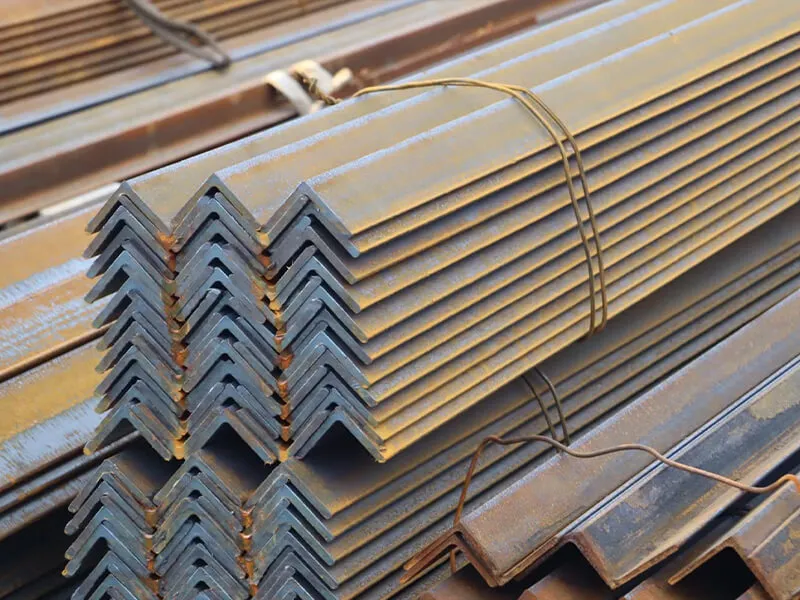
Technique one: the smart material takeoff
Most people just count the pieces on the drawing. That is not enough. You need to add waste. For angle steel, waste comes from cutting. A 12m bar cut into 3.7m pieces leaves a 0.9m leftover. That leftover is waste unless you can use it elsewhere.
I tell my customers to do a cutting optimization6. List all the lengths you need. Sort them from longest to shortest. See how many 12m bars you need. Then add 5% for mistakes and damage. That is your real quantity.
Example of cutting optimization
| Needed length (m) | Quantity | How many from one 12m bar | Bars needed |
|---|---|---|---|
| 5.8 | 4 | 2 pieces (5.8 + 5.8 = 11.6m, waste 0.4m) | 2 bars |
| 3.2 | 6 | 3 pieces (3.2 x 3 = 9.6m, waste 2.4m) | 2 bars |
| 2.5 | 8 | 4 pieces (2.5 x 4 = 10m, waste 2m) | 2 bars |
Total theoretical bars: 6. Add 5% waste: 6.3 bars, so order 7 bars.
Technique two: delivery sequencing
Do not ship all the steel at once. Ship it in batches. The foundation steel comes first. Then the column steel. Then the bracing steel. Then the roof steel.
I have a customer in Mexico who builds oil storage tanks. They order 500 tons of angle steel for one project. But they only have storage space for 100 tons. So we ship in five batches, two weeks apart. The project runs smoothly. No steel sits outside rusting.
Technique three: the quality hold point
Before we load any steel, we stop. We call it the “hold point.” The customer can ask for photos, videos, or a live video call. They can also send an inspector. Only after they say “go” do we load the container.
This technique saved a customer in Romania. They saw in a photo that the edge protection was missing on one bundle. We fixed it before loading. That bundle would have been damaged on the ship.
Technique four: one throat to choke
I learned this phrase from a customer in the US. He said: “I do not want to call five people. Give me one person who can answer everything.”
So I assign one sales rep to each project. That person knows the mill schedule, the shipping date, the document status, and the inspection plan. The customer emails that one person. That person replies within 2 hours, even at night. That is what we did for Gulf Metal Solutions. They told me we were the fastest supplier they ever worked with.
A planning checklist for your next project
| Task | Who | Deadline |
|---|---|---|
| Create cutting list | Engineer | Week -4 |
| Send inquiry to 3 suppliers | Procurement | Week -3 |
| Compare lead times and prices | Procurement | Week -2 |
| Place order with selected supplier | Project manager | Week -2 |
| Confirm mill production date | Supplier (me) | Week -1 |
| Arrange third-party inspection | Quality | Week 2 |
| Book shipping | Logistics | Week 3 |
| Receive and check steel | Site team | Week 5 to 7 |
Conclusion
Plan your sizes, sequence your delivery, verify your quality, and talk to one person. That is how you save time.
-
Understanding material takeoff is crucial for accurate project planning and cost estimation. ↩ ↩ ↩ ↩
-
An effective delivery schedule ensures timely project completion and resource management. ↩ ↩ ↩ ↩
-
Understanding construction sequencing helps in planning and executing projects efficiently. ↩ ↩ ↩ ↩
-
Learn about quality hold points to prevent costly mistakes and ensure project quality. ↩ ↩ ↩
-
A solid communication plan enhances collaboration and project success. ↩ ↩ ↩
-
Cutting optimization can significantly reduce waste and improve material efficiency. ↩ ↩