
Bad bulb flat steel can sink your shipbuilding project. You need a clear plan to stop defects before they happen.
You can manage quality risks by checking three things: the mill’s certificate, the steel’s dimensions, and the internal structure. I also use third-party inspections and a strong contract. These steps protect you from bad steel and save your money.
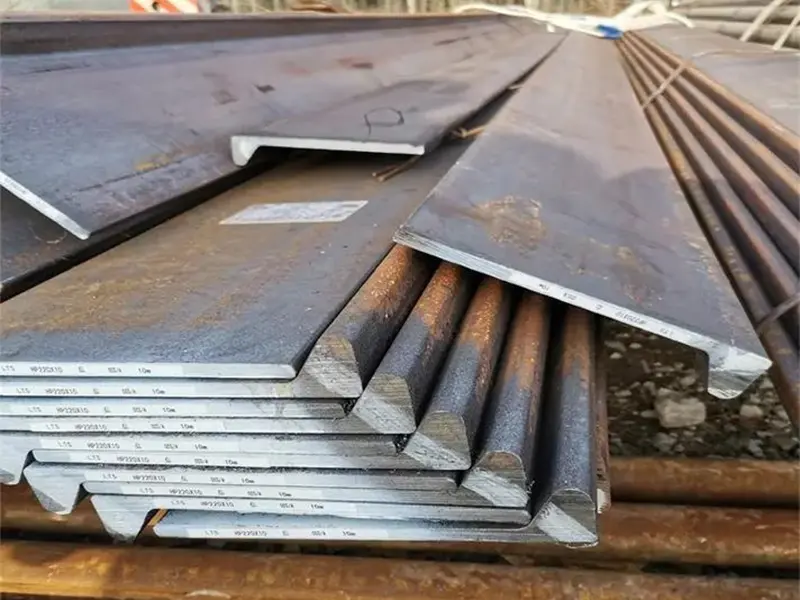
I know you want reliable steel. You do not want delays or rejected shipments. Let me walk you through the real problems and the solutions I use every day with my buyers from Vietnam, Saudi Arabia, and Mexico.
How to Identify Critical Quality Risks in Bulb Flat Steel Procurement?
Many buyers only look at the price. But cheap steel often hides big problems that show up later.
The biggest risks are wrong dimensions1 (web height and flange thickness), low mechanical strength2 (yield and impact), and hidden cracks3 inside the steel. These defects cause weld failure and early corrosion. I have seen all of them in my 10 years of exporting marine steel.
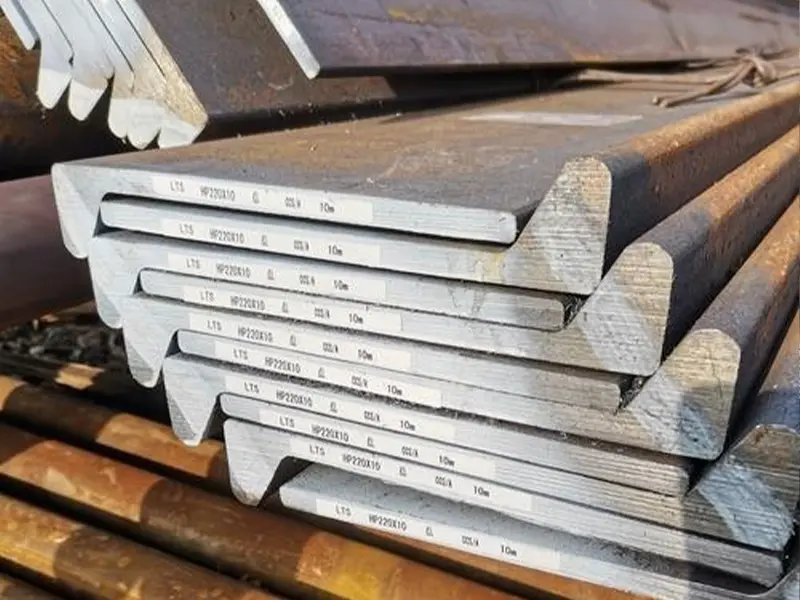
Let me break down each risk with real numbers and examples.
You might think all bulb flat steel is the same. It is not. I learned this from a buyer in the Philippines. He ordered 200 tons from a cheap trader. The steel arrived, and it looked fine. But when his workers started welding, the bulb part cracked open. The mill had used the wrong rolling temperature. That one mistake cost him three weeks of delay and $8,000 in extra labor.
So what should you watch out for? Here is my list.
Risk 1: Dimensional errors
The bulb flat steel has two key dimensions. The web height (the flat part) and the flange thickness (the bulb part). If the web is too tall or too short, the steel will not fit with other pieces. If the bulb is too thin, the strength drops.
Most standards allow a tolerance of ±0.5mm for height and ±0.3mm for thickness. But I have seen steel with errors of +2mm. That is a big problem. Your welder will spend hours grinding or shimming.
Risk 2: Bad mechanical properties
The steel must have a minimum yield strength. For shipbuilding, you often need 355 MPa. The impact toughness is also important, especially at low temperatures. For cold areas like North Europe, you need good performance at -20°C or even -40°C.
I once received a test report from a new mill. The numbers looked good. But I sent a sample to a third-party lab. The real yield strength was only 310 MPa. The mill had faked the certificate. That is why I never trust a paper alone.
Risk 3: Internal laminations and cracks
These are the worst problems because you cannot see them. A lamination is a separation inside the steel. It happens when the mill does not roll the steel properly. When you weld over a lamination, the arc blows through. You get a hole. The only way to find it is ultrasonic testing (UT).
Risk 4: Wrong steel grade or no traceability
Some suppliers mix grades. They sell you Grade A but send Grade B. Or they lose the heat number. That means you cannot trace the steel back to the original melt. If a problem shows up later, you have no proof.
Here is a simple table to help you spot risks early:
| Risk type | What to check | Red flag |
|---|---|---|
| Dimensions | Web height, flange thickness, length | More than ±0.5mm error on any piece |
| Mechanical | Yield strength, tensile, impact at -20°C | Numbers below standard or missing |
| Internal defects | Laminations, voids, cracks | UT shows any reflector above 10mm |
| Grade traceability | Heat number on steel and on MTC | Numbers do not match or missing |
I always tell my buyers: "Do not buy bulb flat steel without a dimensional report and UT." If the supplier says no, walk away.
How to Run Supplier Qualification and Audit Strategies for Overseas Buyers?
A nice website or a low price does not mean a good supplier. You need to check the real people and the real steel.
The best way to qualify a supplier is to ask for three things: a mill authorization letter1, a recent mill test certificate (MTC)2, and a live video call to see the stock. If they say no to any of these, find another supplier. I use this method for every new partner.
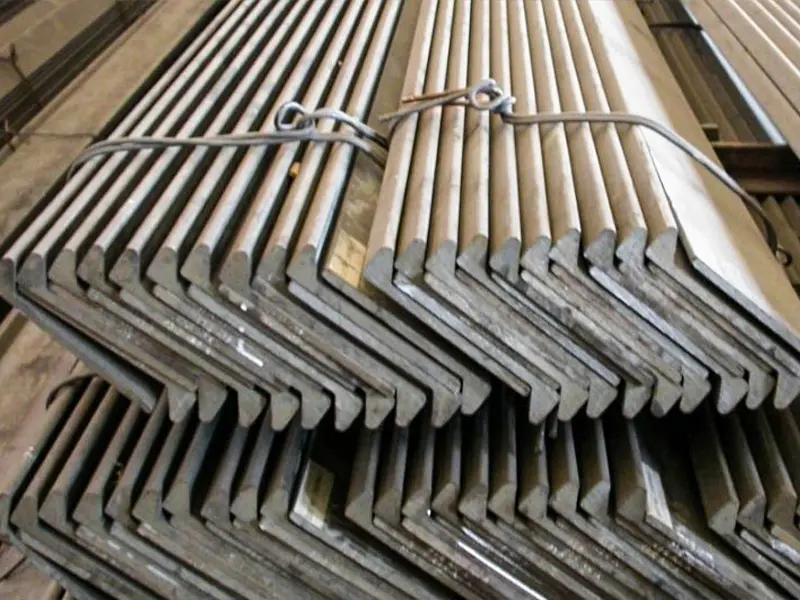
Here is my four-step audit process from real experience.
I am Zora Guo. My company works with large buyers in Qatar, Malaysia, Romania, and many other countries. But I was not always good at checking suppliers. Early in my career, I trusted a trader in another city. He sent me beautiful photos of a big factory. His price was very low. I paid a deposit for 300 tons of bulb flat steel. The steel arrived two months late. The dimensions were all wrong. The buyer in Thailand rejected everything. I lost $20,000 and a good client.
That day I made a promise. I would never buy steel without a proper audit. Now I use these four steps.
Step 1 – Ask for the mill authorization letter
A real exporter works directly with a certified mill. The mill gives them an authorization letter. This paper says: "This company is our official sales agent." If the supplier cannot show this letter, they are just a middleman. They buy from someone else, and you pay extra. Also, you have no idea which mill really made the steel.
Step 2 – Check the mill test certificate (MTC)
Ask for the MTC from the last three shipments. The certificate must show the heat number, the chemical composition, and the mechanical test results. Also check that the certificate follows EN 10204 Type 3.1 or 3.23. Type 3.2 means an independent inspector approved it. That is the best.
Step 3 – Do a live video call to the stockyard4
I schedule a 15-minute video call. I ask the supplier to walk to their steel storage area. I want to see the actual material. I ask them to show me a piece of bulb flat steel with a ruler next to it. I also ask to see the mill stamp on the steel. If they say "the internet is bad" or "we cannot do video today," that is a no. A good supplier will always say yes.
Step 4 – Order a small test batch5 first
Never start with a full container. Order 10 to 20 pieces first. Inspect them at your local warehouse or a lab. Check the dimensions and the surface. If possible, do one ultrasonic test. I did this with a new client from Romania. He ordered 15 pieces of marine angle steel. We sent him photos and SGS reports. He was happy. Then he ordered 200 tons. That small test saved him from a possible bad batch.
Here is a simple scorecard you can use:
| Audit item | What to ask | Pass / Fail |
|---|---|---|
| Mill authorization letter | Official paper from the steel mill | |
| MTC for last three shipments | EN 10204 Type 3.1 or 3.2 | |
| Live video of stock | Show steel with ruler and stamp | |
| Small order accepted | MOQ below 20 tons | |
| English-speaking contact | Reply within 4 hours |
If a supplier fails two or more, do not buy. I learned this with my own money.
What Are the Essential Inspection and Testing Protocols Before Shipment?
Never trust a supplier’s "internal quality control" alone. You need your own eyes or a trusted third party.
You must do four things: a visual check on all pieces, a dimensional check on at least 10%, ultrasonic testing (UT) on a sample, and a mechanical test from each heat number. Also ask for the mill test certificate (MTC)1 that matches the actual steel markings.
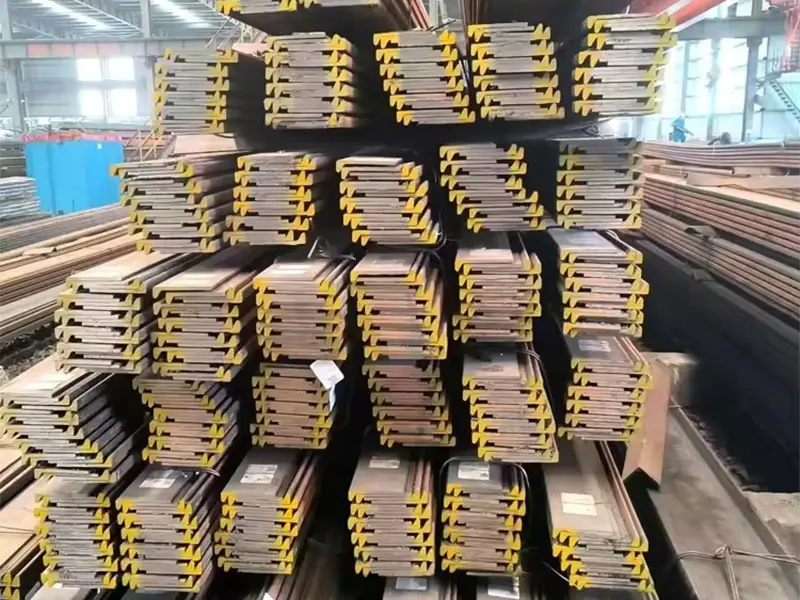
Let me show you exactly how I inspect bulb flat steel for overseas buyers.
I remember a buyer from Pakistan. He ordered bulb flat steel for a small ship repair project. He said "no need for UT, just visual." I told him that is risky. But he insisted. Two months later, he called me upset. His welder found a lamination after cutting a 10-meter piece. The whole piece was garbage. He lost $1,500 on that one piece. After that, he always asks for 100% UT.
So here is my full inspection protocol. I use this for every shipment to Vietnam, Mexico, Saudi Arabia, and other countries.
1. Visual inspection (100% of pieces)
Look at the surface with your eyes. Check for scabs (rough patches), cracks, and rolled-in scale (black flakes stuck to the steel). Also check for heavy rust. A little surface rust is fine. But pitting (deep holes) is not.
I also check the mill stamp. Every piece should have a stamp with the heat number and the steel grade. If the stamp is missing or hard to read, that is a problem.
2. Dimensional check2 (at least 10% of pieces)
Use a caliper and a steel ruler. Measure the web height at three points (left, middle, right). Measure the flange thickness at the bulb. Also check the length. The tolerance for bulb flat steel is usually ±0.5mm for height and ±0.3mm for thickness. If more than 5% of the pieces are out of spec, reject the whole lot.
3. Ultrasonic testing for internal defects3
UT is the only way to find laminations and voids. I recommend UT on at least 10% of pieces for normal projects. For offshore or critical work, do 100% UT. Use the ASTM A578 standard. Any lamination bigger than 10mm in diameter is a fail.
I work with SGS, BV, and Intertek. They can come to the loading port and do the UT on the spot. Then they give you a report. This costs a little money, but it is much cheaper than fixing a broken foundation later.
4. Mechanical test from each heat number4
Take one sample from each heat number (each batch of steel from the same melt). Test the yield strength, the tensile strength, and the elongation. For cold climates, also test the Charpy V-notch impact at -20°C or -40°C. The impact energy should be at least 27J.
5. Match the MTC to the steel
The mill test certificate must show the same heat numbers that are stamped on the steel. I have seen fake MTCs where the numbers do not match. If they do not match, reject everything. This is a clear sign of fraud.
Here is a decision table for you:
| Inspection result | Action you should take |
|---|---|
| All tests pass, MTC matches | Accept. Load for shipment. |
| Minor surface rust (no pitting) | Clean and accept. Take photos. |
| Dimensional error on less than 3% | Ask for discount or replacement. |
| Any UT lamination | Reject the whole heat. Do not accept. |
| MTC heat number does not match steel | Reject the entire shipment. |
I always tell my buyers: "Pay for inspection now, or pay for repair later." The repair cost is always higher. My company supports SGS inspection before any shipment. Just email me, and I will arrange it.
How to Use Contractual Risk Allocation and Logistics Quality Control?
A good contract protects your money. Bad logistics can break your steel, even if the mill made it perfectly.
Put four things in your contract: a clear technical standard, a penalty for late delivery, a warranty for 12 months, and the right to inspect at the loading port. For logistics, use edge protectors, waterproof wrapping, and a flat rack container for long bars.
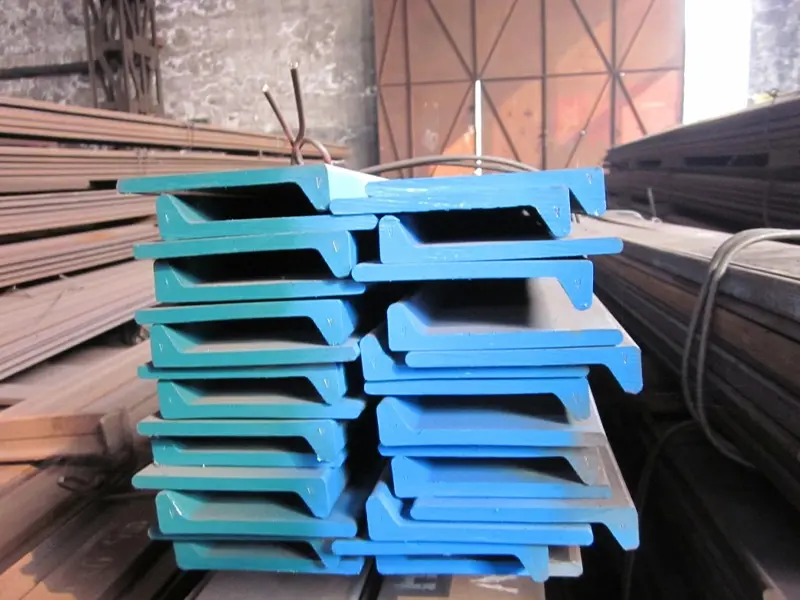
Here is what I learned from a messy shipment to Mexico.
Two years ago, a buyer from Mexico bought bulb flat steel from another Chinese supplier. The contract was only one page. It said "good quality" but no standard. The steel arrived at the port of Veracruz. Half of the pieces were bent. The packing was simple plastic wrap. The ship’s crane had hooked the steel directly on the bulb, leaving deep dents. The buyer had no contract clause to claim damages. He lost $15,000.
That is why I always write a detailed contract. Let me break down the key parts.
Contract risk allocation – four must-have clauses
Clause 1 – Technical specification1
Do not write "marine grade." Write the exact standard. For bulb flat steel, I use GB/T 9945-2012 or EN 10067. For marine plates, I use DNV GL or ABS rules. Attach a drawing of the bulb shape. Write the tolerances for height, thickness, and length.
Clause 2 – Inspection rights2
Write this: "Buyer or his nominated third party (SGS, BV, Intertek) has the right to inspect the goods at the loading port before shipment. If more than 5% of the inspected pieces fail, buyer can reject the whole lot and cancel the order without penalty."
Clause 3 – Delivery penalty3
Write this: "For each week of delay beyond the agreed shipment date, seller pays 0.5% of the contract value, up to 5% total." This clause keeps the supplier honest. I have seen delays of two months because a mill sold the steel to a higher bidder. A penalty clause stops that.
Clause 4 – Warranty period4
Write this: "Seller warrants the steel to be free from manufacturing defects for 12 months from the date of arrival at destination port." This covers hidden defects. Some problems only show after cutting or welding. A 12-month warranty gives you time to find them.
Logistics quality control5 – six practical steps
Steel can break in transit. I ship steel from Liaocheng to Dammam, Ho Chi Minh, Karachi, and many other ports. Here is my packing checklist.
-
Use edge protectors – Place plastic or metal corners on every bulb edge. The bulb shape is easy to dent. The protector stops the steel strap from digging in.
-
Bundle with steel straps – Do not use plastic straps. Plastic breaks in the rain and the salt air. Steel straps hold tight.
-
Waterproof wrapping6 – Use PVC tarpaulin. Wrap the whole bundle. Put silica gel bags inside to absorb moisture. For sea freight to humid places like Malaysia or the Philippines, this is a must.
-
Lifting points – Mark where to hook the crane. Paint yellow marks that say "lift here." If the crane hooks the middle of a 12-meter bar, the bar will bend.
-
Use a flat rack container for long bars – For bulb flat steel longer than 10 meters, do not use a standard container. The forklift will damage the ends. Use a flat rack or an open top container.
-
Take loading photos – Ask the supplier to send 10 photos of the loaded container. Show the sides, the top, the straps, and the markings. I send these to every buyer. They feel safe when they see the photos.
Here is a quick reference table:
| Logistics risk | What can happen | My solution |
|---|---|---|
| No edge protectors | Bulb flange gets dented by straps | Use metal corner guards |
| Standard container for long bars | Bars slide and bend during trucking | Use flat rack + cross beams |
| No waterproof wrap | Rust appears after 20 days at sea | PVC tarpaulin + desiccant |
| No lifting marks | Crane hooks the middle – bar bends | Paint yellow "lift here" marks |
I recently shipped 300 tons of marine angle steel to Qatar. The buyer asked for a video of the loading. I made a 5-minute video and sent it via WhatsApp. He replied: "This is the first time a supplier shows me the actual packing." That small step built trust. You can do the same with your supplier.
Conclusion
Check the mill, inspect the steel, and write a strong contract. That is how you manage bulb flat steel quality risks.
My Personal Insights (from 10+ years in marine steel export)
I am Zora Guo. My team in Liaocheng works only with certified mills. We offer SGS support, flexible MOQ, and fast replies – often within two hours. Whether you need bulb flat steel, marine angle steel, or L-shaped sections for shipbuilding, I treat your project like my own. Send me an email at sales@chinaexhaustfan.com or visit cnmarinesteel.com. Tell me your steel grade, size, and destination port. I will reply with a clear proposal and a packing photo from our stockyard.
-
Learning how to write precise technical specifications can prevent misunderstandings and ensure product quality. ↩ ↩ ↩ ↩
-
Inspection rights allow you to verify the quality of goods before shipment, reducing the risk of receiving damaged products. ↩ ↩ ↩ ↩
-
Delivery penalties incentivize timely shipments, helping you avoid delays and financial losses. ↩ ↩ ↩ ↩
-
A well-defined warranty period protects you from hidden defects and ensures accountability from suppliers. ↩ ↩ ↩
-
Implementing logistics quality control ensures your shipments arrive safely and in good condition, protecting your investment. ↩ ↩
-
Using the right waterproof wrapping materials can prevent damage from moisture during transit, safeguarding your goods. ↩