
A container arrives with five different sizes of bulb flat steel. Your workers start unloading. Nothing is labeled. The project stops.
To manage mixed bulb flat steel shipments, sort and label every bundle by size and grade before loading. Use a clear stowage plan. Keep each heat number separate with its own certificate. Send a digital packing list and photo log before the ship arrives. I have used this system for large projects in Mexico and Saudi Arabia. It cuts unloading time by half and stops mix-ups.
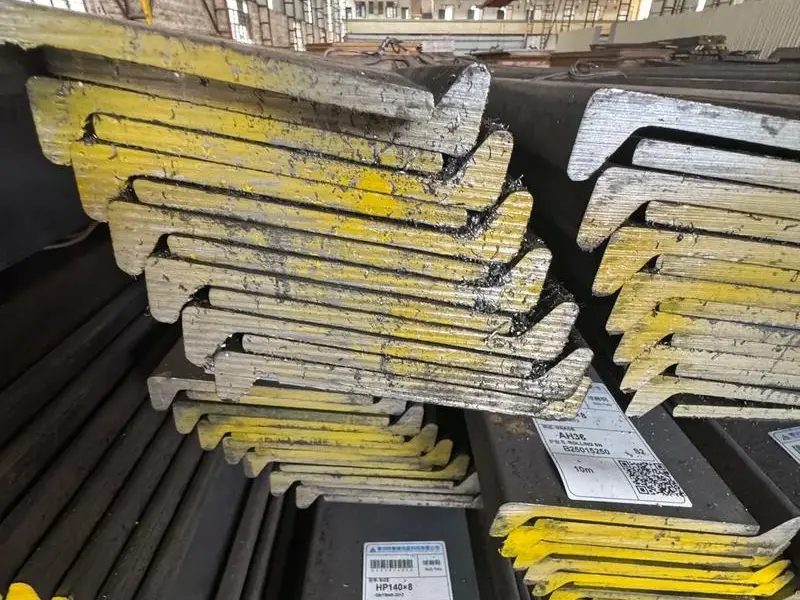
Large projects need many sizes and grades of bulb flat steel. If you mix them up, the wrong steel goes to the wrong block. Then you cut and weld the wrong material. That is expensive to fix. Let me show you how to avoid that.
How to Sort and Label Different Bulb Flat Steel Sizes and Grades Before Shipping?
You have 200 tons of bulb flat steel1 in six different sizes. You load them all into one container. How does your buyer know which bundle is which?
Sort and label each bundle by size (e.g., 150x12mm) and grade (AH36) before shipping. Use color-coded tags2. Paint the size on the end of each bar. Strap bundles separately. I learned this after a buyer in Vietnam mixed up 100x10mm and 120x12mm bars. He cut 50 pieces wrong. The rework cost him $12,000.
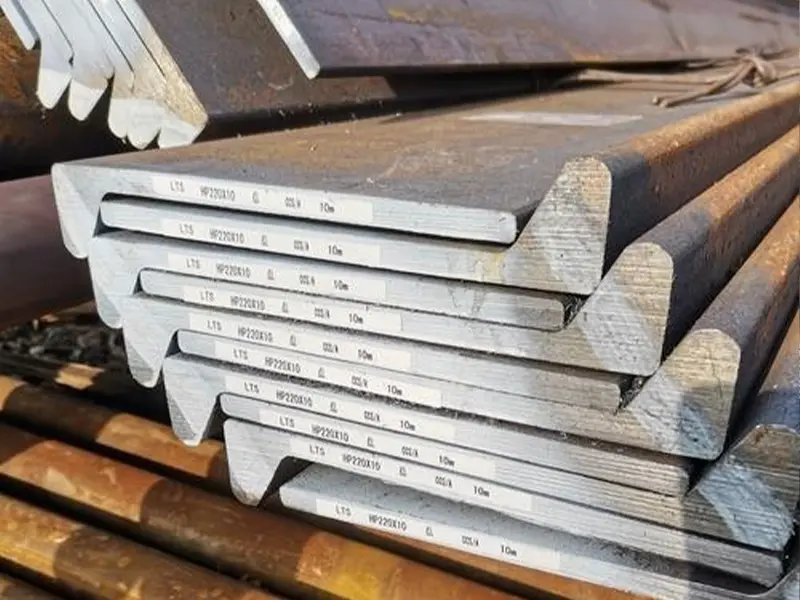
Let me give you a step-by-step labeling system.
I am Zora Guo. I have shipped mixed bulb flat steel to shipyards in more than 10 countries. One buyer in Malaysia used to complain every time: “Zora, your steel is good, but I cannot tell which bundle is which.” So I created a simple labeling system. Now he never complains.
Step 1 – Sort by size and grade3 before bundling
Do not mix different sizes in the same bundle. Separate them on the storage rack. Group all 150x12mm AH36 bars together. Group all 200x15mm DH36 bars together.
Step 2 – Use color-coded plastic tags
Attach a plastic tag to the steel strap of each bundle. Use a different color for each size:
- Red tag: 150x12mm AH36
- Blue tag: 150x15mm AH36
- Yellow tag: 200x15mm DH36
- Green tag: 120x10mm AH36
Write the size and grade on the tag with a permanent marker. Also write the heat number and the bundle number.
Step 3 – Paint the size on the end of the bars
Tags can fall off during shipping. So also paint the size on the cut end of the top bar in each bundle. Use a simple stencil. For example, paint “150×12 AH36” in white or yellow paint.
Step 4 – Strap each bundle separately
Use steel straps. Do not put two sizes in one bundle. Each bundle should have only one size and grade.
Step 5 – Create a bundle list4
Make a simple table on paper or in Excel. Send it with the shipment.
| Bundle number | Size (mm) | Grade | Quantity (pieces) | Weight (tons) | Tag color |
|---|---|---|---|---|---|
| B-01 | 150×12 | AH36 | 45 | 8.2 | Red |
| B-02 | 150×12 | AH36 | 44 | 8.0 | Red |
| B-03 | 150×15 | AH36 | 30 | 7.5 | Blue |
| B-04 | 200×15 | DH36 | 25 | 9.1 | Yellow |
I use this system for every mixed shipment. One buyer in Thailand told me: “Your bundles are the easiest to identify. Other suppliers just throw everything together.”
What Is the Best Way to Load Mixed Shipments to Avoid Unloading Confusion?
You have sorted and labeled the bundles. Now you load them into the container or onto the flat rack. If you load randomly, the unloading will be a mess.
The best way to load mixed shipments1 is to put the first-needed bundles at the front (door side) and later-needed bundles at the back. Also load by zone – all bottom frame steel together, all deck steel together. Make a stowage plan drawing2. Send it to the buyer before the vessel arrives. I used this method for a project in Qatar with 12 different sizes. The buyer unloaded and sorted in 4 hours instead of 2 days.
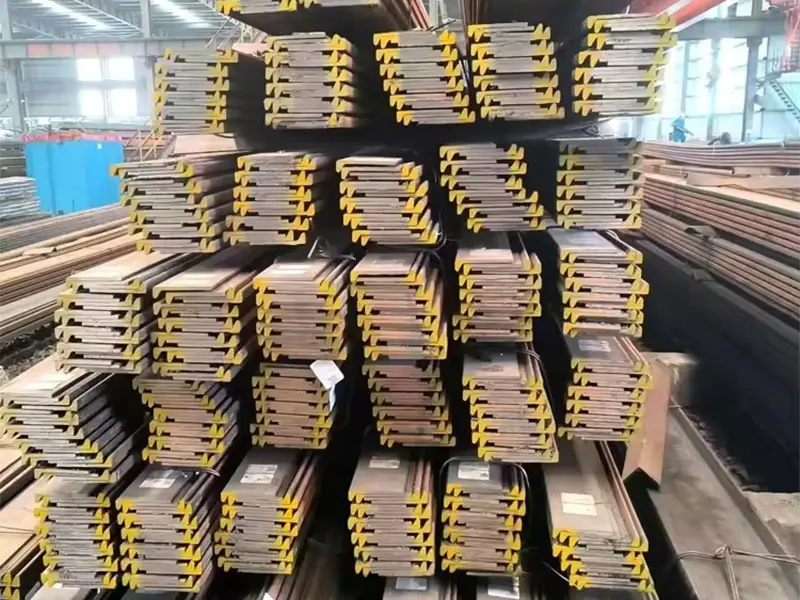
Let me explain the loading sequence.
I am Zora Guo. A buyer in Pakistan once received a container of mixed bulb flat steel. The supplier had loaded the smallest bars at the front and the largest at the back. But the buyer needed the large bars first for the bottom blocks. He had to unload everything to get to the back. That took 8 hours. I taught him to ask for a stowage plan.
Step 1 – Ask the buyer for the unloading sequence3
Before loading, ask: “Which sizes do you need first?” The buyer will tell you: “Bottom frames first. Then side frames. Then deck stiffeners.”
Step 2 – Load in reverse order
Put the last-needed steel at the back of the container. Put the first-needed steel at the front (door side). When the buyer opens the door, the steel they need first is right there.
Step 3 – Separate by project zone
If the project has multiple blocks (block 1, block 2, block 3), load all steel for block 1 together, then block 2, then block 3. Mark each zone with a large sign.
Step 4 – Make a stowage plan drawing
Draw a simple diagram showing which bundles are where. Use a grid. For a 40-foot container:
- Front (door): bundles B-01, B-02 (bottom frames)
- Middle: bundles B-03, B-04 (side frames)
- Back: bundles B-05, B-06 (deck stiffeners)
Send this drawing to the buyer by email and WhatsApp before the vessel arrives.
Step 5 – Take photos of each layer
During loading, take a photo after each layer is placed. Show the bundle tags in the photos. Send the photos to the buyer.
Here is a sample stowage table:
| Position in container | Bundle number | Size | Grade | Project zone |
|---|---|---|---|---|
| Front (door) left | B-01 | 150×12 | AH36 | Bottom block 1 |
| Front (door) right | B-02 | 150×12 | AH36 | Bottom block 1 |
| Middle left | B-03 | 150×15 | AH36 | Side block 1 |
| Middle right | B-04 | 150×15 | AH36 | Side block 2 |
| Back left | B-05 | 120×10 | AH36 | Deck block 1 |
| Back right | B-06 | 120×10 | AH36 | Deck block 2 |
I used this stowage plan for a large project in Saudi Arabia. The buyer sent me a message: “Zora, we opened the container. The steel we needed first was right there. No searching. Thank you.”
How to Prevent Heat Number and Certificate Mismatches in Mixed Batches?
Mixed shipments often come from different mill heats. Each heat has its own certificate. If you mix the heats in one bundle, the buyer cannot match the certificate to the steel.
To prevent heat number mismatches1, keep each heat number in separate bundles. Do not mix heats in the same bundle. Label each bundle with its heat number. Provide a certificate package2 that lists each bundle with its heat number and certificate page. I rejected a mixed shipment from another supplier in Malaysia because they bundled three heats together. The buyer could not trace the steel. He had to retest every piece.
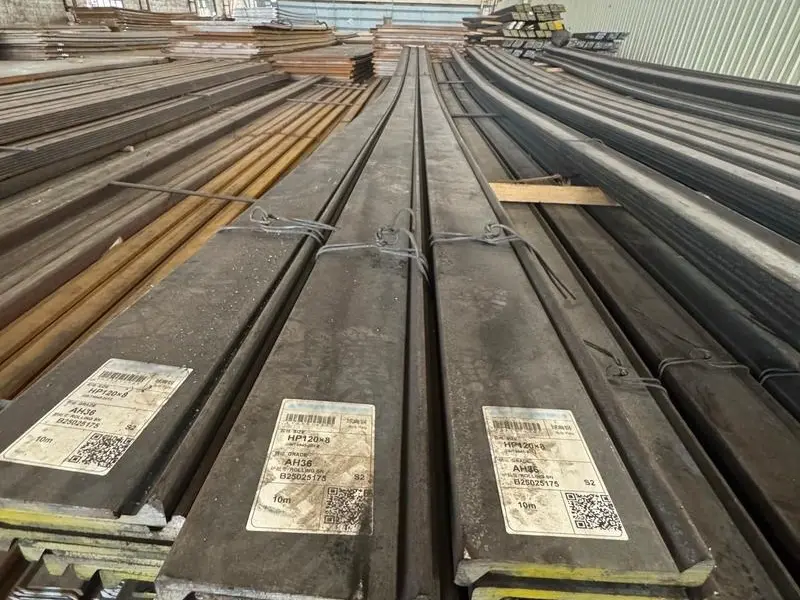
Let me show you a clean traceability system3.
I am Zora Guo. A buyer in Romania once received a mixed shipment from another supplier. The supplier had put AH36 from two different mills in the same bundle. The certificates were mixed up. The buyer did not know which piece belonged to which certificate. The class society rejected the whole shipment. The buyer lost $30,000.
Step 1 – Keep each heat separate from the mill
When the mill rolls the steel, each heat has a unique number. Ask the mill to keep heats separate during cutting and packing. Do not mix them.
Step 2 – Bundle by heat number, not just by size
Even if the size is the same (150x12mm), separate bundles by heat number. For example:
- Bundle A: Heat H22035, 50 pieces
- Bundle B: Heat H22036, 48 pieces
Do not put H22035 and H22036 in the same bundle.
Step 3 – Mark the heat number on each bundle
Paint the heat number on the end of the top bar. Also write it on the plastic tag. Make it big and clear.
Step 4 – Prepare a certificate index4
Create a simple table that links each bundle to its heat number and certificate page.
| Bundle number | Size (mm) | Grade | Heat number | Certificate page |
|---|---|---|---|---|
| B-01 | 150×12 | AH36 | H22035 | Page 1 of 5 |
| B-02 | 150×12 | AH36 | H22035 | Page 1 of 5 |
| B-03 | 150×15 | AH36 | H22041 | Page 2 of 5 |
| B-04 | 200×15 | DH36 | H22112 | Page 3 of 5 |
Step 5 – Send certificates before shipment
Email the certificates to the buyer. Include the index table. The buyer can then check the certificates before the steel arrives.
Step 6 – Use a third-party inspector5
If the project is large, hire SGS or Intertek to verify the heat numbers at the loading port. They will check that the steel matches the certificates. Then they stamp each bundle. The buyer trusts the third-party report.
Here is a quick checklist for your packing team:
| Task | Who | When |
|---|---|---|
| Keep heats separate during cutting | Mill | Before bundling |
| Bundle by heat number | Packing team | At bundling |
| Paint heat number on bundle | Packing team | After bundling |
| Create certificate index | Export coordinator | Before shipping |
| Send certificates to buyer | Export coordinator | 1 week before arrival |
I use this system for every mixed shipment. One buyer in Qatar told me: “Zora, your certificates are always perfect. I never have to chase heat numbers.”
Why Does a Digital Packing List and Pre-Shipment Photo Log Save Time On-Site?
The steel arrives. The buyer opens the container. He sees many bundles. He does not know which bundle is which. He calls you. You are asleep. The workers stand around.
A digital packing list1 and pre-shipment photo log2 save time because the buyer can see exactly what is in the container before it arrives. The packing list is an Excel or PDF file3 with bundle numbers, sizes, weights, and heat numbers. The photo log shows each bundle from three angles. I send these to every buyer. One buyer in the Philippines unloaded and started cutting within 2 hours of arrival. He said: “I already knew exactly where everything was.”
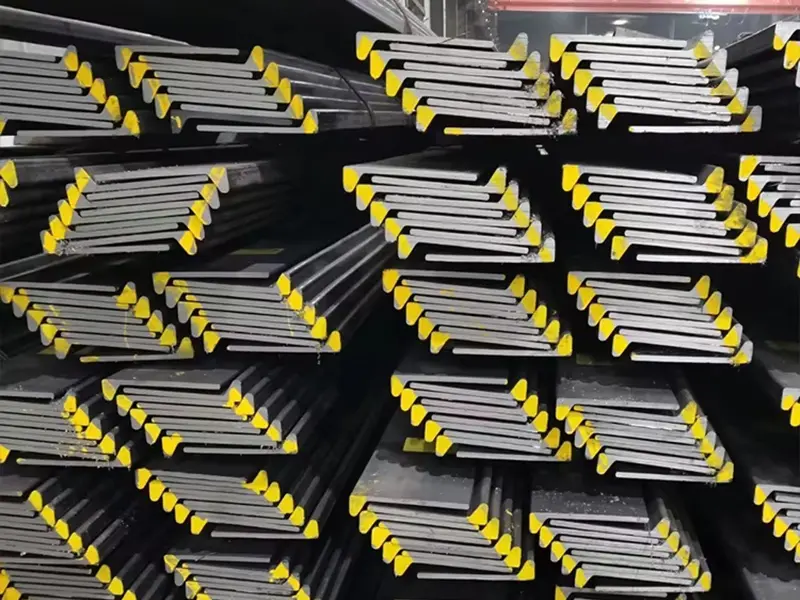
Let me show you what to include.
I am Zora Guo. A buyer in Mexico used to spend a full day sorting steel when a mixed shipment arrived. He would open the container, pull out bundles, read tags, and make his own list. I asked him: “Why not let me send you the list before the ship arrives?” He said: “Other suppliers never do that.” So I started sending a digital packing list and photos. Now he sorts his yard before the steel even arrives.
What to put in the digital packing list
Create an Excel file with these columns:
| Bundle number | Size (mm) | Grade | Heat number | Quantity (pieces) | Weight per piece (kg) | Total weight (kg) | Position in container |
|---|---|---|---|---|---|---|---|
| B-01 | 150×12 | AH36 | H22035 | 45 | 182 | 8,190 | Front left |
| B-02 | 150×12 | AH36 | H22035 | 44 | 182 | 8,008 | Front right |
| B-03 | 150×15 | AH36 | H22041 | 30 | 250 | 7,500 | Middle left |
Also include a summary at the top:
- Container number
- Vessel name and voyage number
- Estimated arrival date
- Total number of bundles
- Total weight
What to put in the photo log
Take three photos of each bundle:
- Full bundle – Stand back and show the whole bundle.
- Tag close-up – Show the plastic tag with size, grade, and heat number.
- End paint – Show the painted size and heat number on the cut end.
Name the photos clearly: “B01_full.jpg”, “B01_tag.jpg”, “B01_end.jpg”.
Send all photos in a ZIP folder. Or use a shared Google Drive link.
When to send the documents
Send the packing list and photo log 5 to 7 days before the vessel arrives. The buyer can then:
- Plan where to store each bundle
- Assign workers to specific unloading tasks
- Pre-fill his inventory system
- Show the documents to customs for faster clearance4
Bonus – Use QR codes
For high-tech buyers, put a QR code on each bundle tag. The QR code links to the digital packing list page for that bundle. The worker scans the code with his phone. He sees the size, grade, heat number, and certificate. This is the future of steel logistics.
Here is a comparison table:
| Method | Time to sort at arrival | Risk of error | Buyer satisfaction |
|---|---|---|---|
| No packing list, no photos | 1-2 days | High | Low |
| Paper packing list only | 4-6 hours | Medium | Medium |
| Digital packing list + photos | 1-2 hours | Low | High |
| QR codes on each bundle5 | 30 minutes | Very low | Very high |
I started using digital packing lists two years ago. My buyers love it. One buyer in Romania told me: “Zora, you are the only supplier who sends photos before the steel arrives. It makes my job so much easier.”
Conclusion
Sort and label each bundle. Load in reverse order. Keep heat numbers separate. Send a digital packing list and photos before the ship arrives.
My Personal Insights (from 10+ years in marine steel export)
I am Zora Guo. My team in Liaocheng manages mixed bulb flat steel shipments for large projects. We use color-coded tags, stowage plans, and digital packing lists with photos. We also support third-party inspection for heat number verification. Send me an email at sales@chinaexhaustfan.com or visit cnmarinesteel.com. Tell me your project sizes and delivery schedule. I will send you a sample packing list and a stowage plan.
-
Explore this resource to understand how digital packing lists streamline logistics and improve efficiency. ↩ ↩ ↩ ↩
-
Learn about the significance of pre-shipment photo logs in enhancing transparency and reducing errors in shipping. ↩ ↩ ↩ ↩
-
Discover tips and templates for creating packing lists that save time and improve organization. ↩ ↩ ↩ ↩
-
Understand the role of proper documentation in expediting customs processes and avoiding delays. ↩ ↩ ↩
-
Find out how QR codes can revolutionize shipping processes and enhance buyer experience. ↩ ↩