
Too much steel makes the ship heavy and expensive. Too little makes it weak. You need the right plate in the right place.
You optimize hull design by matching steel grades to stress zones. Use high-strength AH36 or EH36 in high-stress areas (bottom, deck) and Grade A in low-stress areas (superstructure, internal bulkheads). Replace Grade A with AH36 to reduce thickness by 15-20% and save weight. And involve your steel supplier early to avoid designing non-standard plates. I have helped shipyards in Vietnam and Mexico save 12% on steel weight and 8% on cost using these methods.

Good hull design is not just about strength. It is about putting the right steel where it works hardest. Let me show you how.
How to Match Steel Plate Grades to Hull Stress Zones for Weight Savings?
The bottom of the ship takes huge wave loads. The superstructure takes almost none. Why would you use the same steel for both?
Match higher-strength grades (AH36, DH36, EH36)1 to high-stress zones like bottom, deck, and side shell. Use mild steel (Grade A) in low-stress zones like superstructure, internal bulkheads, and non-structural parts. This cuts weight because AH36 gives 50% more strength than Grade A for the same thickness. I worked with a buyer in Qatar who switched from Grade A to AH36 for his bottom plates. He saved 18 tons of weight on a 100-meter vessel.
[^2] for [weight savings](https://gcaptain.com/part-design-efficient-ship/)[^3]](https://cnmarinesteel.com/wp-content/uploads/2026/01/Marine-steel-plate-31.webp)
Let me map the hull zones to the right grades.
I am Zora Guo. A buyer in Malaysia once designed an entire hull with Grade A steel2. The hull was heavy and thick. I asked him: “Why not use AH36 for the bottom and deck?” He said: “I did not know the strength difference.” We redesigned his steel selection. The new design used AH36 for 60% of the hull and Grade A for 40%. The weight dropped by 15%. The cost dropped by 8%.
Hull stress zones – where the loads are highest
| Zone | Stress level | Recommended grade | Why |
|---|---|---|---|
| Bottom shell (keel to bilge) | Very high | AH36 or DH36 | Wave bending, slamming, cargo pressure |
| Main deck (especially hatch corners) | High | AH36 or DH36 | Cargo loads, wave impact |
| Side shell (waterline area) | Medium to high | AH36 | Wave pressure, berthing loads |
| Longitudinal bulkheads (cargo holds) | Medium | AH36 or Grade A | Cargo pressure, but less than bottom |
| Transverse bulkheads | Medium | Grade A or AH36 | Watertight divisions, moderate loads |
| Superstructure (accommodation, bridge) | Low | Grade A | Only wind and small waves |
| Internal non-structural parts | Very low | Grade A | No significant loads |
The strength-to-weight benefit
AH36 has a yield strength of 355 MPa3. Grade A has 235 MPa. That means AH36 is 50% stronger. For the same load, you can use a thinner plate4.
Example: A bottom plate needs to carry a certain bending moment. With Grade A, you need 18mm thickness. With AH36, you need only 12mm. That is a 33% weight reduction.
| Grade | Yield strength (MPa) | Relative strength | Thickness for same load | Weight for same load |
|---|---|---|---|---|
| Grade A | 235 | 1.0x | 18mm | 100% |
| AH36 | 355 | 1.5x | 12mm | 67% |
How to apply this in your design
- Identify the stress level for each zone using your design software (or class society rules).
- Set a target grade for each zone.
- Calculate the required thickness using the grade’s yield strength.
- Check that the thickness meets minimum class requirements (some zones have minimum thickness regardless of strength).
I always tell designers: “Do not use Grade A where you can use AH36. The weight savings pay for the higher grade many times over.”
What Thickness and Grade Combinations Reduce Overall Hull Weight Without Sacrificing Strength?
You can reduce weight by using a higher grade with a thinner plate. But you need to know the right combinations.
The best thickness and grade combinations use AH361 for plates 10mm to 25mm thick. For plates under 10mm, the weight saving from switching to AH36 is small because the minimum thickness rules5 apply. For plates over 25mm, consider DH36 or EH36 to avoid excessive thickness. I helped a buyer in Romania reduce his hull weight by 22 tons by changing from 15mm Grade A6 to 10mm AH36 in the superstructure – a zone where the load was low enough to allow the thinner plate.
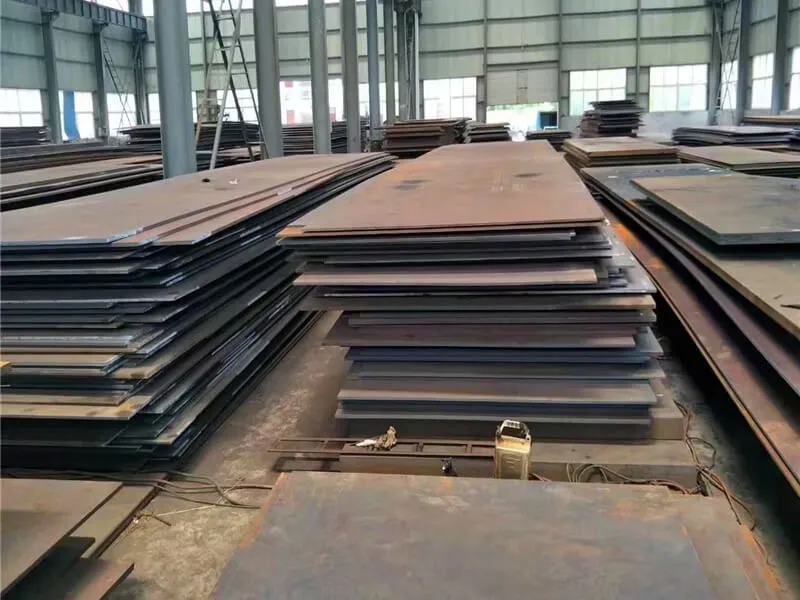
Let me show you a practical weight-saving table.
I am Zora Guo. A buyer in Thailand had a design with all plates at least 12mm thick. Many zones could have used 8mm or 10mm Grade A. But he used AH36 everywhere. That was over-engineering. I showed him a table of optimal combinations.
Rule 1 – Use the minimum thickness allowed by class
Class societies have minimum thickness rules for hull plates. For a vessel over 100m, the bottom cannot be less than 10mm regardless of grade. So switching from Grade A to AH36 below 10mm gives no weight saving (you cannot go thinner than the minimum).
| Plate thickness range | Best grade | Why |
|---|---|---|
| Under 6mm | Grade A | AH36 not needed; minimum thickness rules apply |
| 6mm to 10mm | Grade A or AH36 | Weight saving small; choose based on stress |
| 10mm to 20mm | AH36 | Significant weight saving over Grade A |
| 20mm to 30mm | AH36 or DH36 | Consider DH36 for cold routes |
| Over 30mm | DH36 or EH36 | Higher grades allow thinner plates |
Rule 2 – Replace Grade A with AH36 at the same thickness only if you need more strength
Do not use AH36 at the same thickness as Grade A if the load does not require it. That adds cost without benefit. Only use AH36 when you also reduce thickness.
Rule 3 – Use a weight-saving calculator2
Here is a simple table for a 10m x 10m plate area:
| Grade | Thickness (mm) | Weight (tons) | Relative cost |
|---|---|---|---|
| Grade A | 12 | 9.42 | 1.00x |
| AH36 | 10 | 7.85 | 0.95x (thinner plate, slightly higher grade cost per ton) |
| AH36 | 8 | 6.28 | 0.85x |
For the same strength, AH36 at 10mm replaces Grade A at 15mm. Weight saving: 33%. Cost saving: often 5-10% because less steel is used.
Real example from a bulk carrier
A buyer in Vietnam had a deck design calling for 14mm Grade A. I recommended 10mm AH36. The strength was equivalent (AH36 10mm has similar bending strength to Grade A 14mm). The weight saving was 28%. The cost saving3 was 12% because the mill had AH36 in stock at a good price.
Here is a summary table for common replacements:
| Original (Grade A) | Replacement (AH36) | Weight saving | Strength equivalent |
|---|---|---|---|
| 20mm | 14mm | 30% | Yes |
| 18mm | 12mm | 33% | Yes |
| 15mm | 10mm | 33% | Yes |
| 12mm | 8mm | 33% | Yes (but check minimum thickness) |
| 10mm | 7mm | 30% | Often not allowed (min thickness) |
My advice: For any plate thicker than 10mm in a high-stress zone, ask “Can I use AH36 at a thinner gauge?” The answer is usually yes.
How to Use Higher-Strength Steel in Non-Critical Areas to Lower Material Costs?
This sounds backwards. Higher-strength steel costs more per ton. So why would you use it in non-critical areas? Because mills sometimes have stock of higher grades at lower prices.
Sometimes AH361 is cheaper than Grade A5. Mills roll AH36 in large campaigns. They have overstock. Grade A is less common for thick plates. So I have seen AH36 sold at a discount to Grade A. Also, using a standard size from mill stock (even if higher grade) avoids expensive custom rolling. I saved a buyer in Pakistan $5,000 by suggesting AH36 instead of Grade A for his non-critical deck plating because the mill had AH36 in stock and Grade A had a 6-week lead time.
[^3] in non-critical areas to lower costs](https://cnmarinesteel.com/wp-content/uploads/2025/10/Marine-steel-plate-42.jpg)
Let me explain the market logic.
I am Zora Guo. A buyer in Saudi Arabia needed 8mm plates for his superstructure. He asked for Grade A. I checked with the mill. They had no Grade A in 8mm for 4 weeks. But they had AH36 in 8mm in stock. The price was actually $20 per ton lower because they wanted to clear inventory. He bought AH36. He got better steel for less money.
When higher grade is cheaper – three scenarios
Scenario 1 – Mill overstock
Mills roll AH36 in big batches. Sometimes they produce too much. They need to sell it quickly to free up warehouse space. Price drops below Grade A.
Scenario 2 – Thicker plates
For plates over 20mm, Grade A is rarely rolled. Most mills produce AH36 or higher for thick plates. So Grade A becomes a special order with a premium price. AH36 is standard and cheaper.
Scenario 3 – Combined orders
If you already buy AH36 for your hull, adding a few tons of AH36 for non-critical areas keeps your order volume high. You get a better volume discount2 than splitting the order into two grades.
When NOT to use higher grade
- If the higher grade has stricter impact toughness requirements that you do not need (e.g., EH36 for tropical waters). You pay for testing you do not use.
- If the higher grade requires special welding procedures or preheating. That adds labor cost.
- If the buyer’s contract specifically requires Grade A (some owners specify grade for each zone).
How to check for cost-saving opportunities3
Before placing your order, ask your supplier:
- “What grades do you have in stock in my required thicknesses?”
- “What is the price difference between Grade A and AH36 for this thickness?”
- “Is there a volume discount if I use the same grade for the whole order?”
Here is a decision table:
| Thickness (mm) | Grade A availability | AH36 availability | Typical price comparison | Recommendation |
|---|---|---|---|---|
| 6-10 | Good | Good | Grade A cheaper | Use Grade A |
| 10-20 | Good | Good | Similar or AH36 slightly higher | Use Grade A unless stock issue |
| 20-30 | Poor (special order) | Good | AH36 often cheaper | Use AH36 |
| Over 30 | Very poor | Good | AH36 much cheaper | Use AH36 |
I had a buyer in the Philippines who needed 25mm plates for a non-critical internal bulkhead. Grade A had a 8-week lead time and cost $850/ton. AH36 was in stock at $820/ton. He bought AH36 and saved $30/ton plus 6 weeks of waiting.
Why Should Your Design Engineer Collaborate Early with the Steel Supplier?
Designers draw beautiful plans. Then they send them to purchasing. The purchasing team asks the supplier for a quote. The supplier says: “That size is not standard. It will take 12 weeks and cost 30% more.” Disappointment follows.
Early collaboration with the steel supplier1 means the designer knows which plate sizes, grades, and tolerances are standard. The supplier can suggest small changes – like making a plate 2mm thicker but using a standard stock size – that save money and time. I have seen designs with non-standard thicknesses5 like 11.5mm or 17mm. Changing to 12mm or 16mm standard stock cut lead time from 10 weeks to 2 weeks and saved 15% on cost.
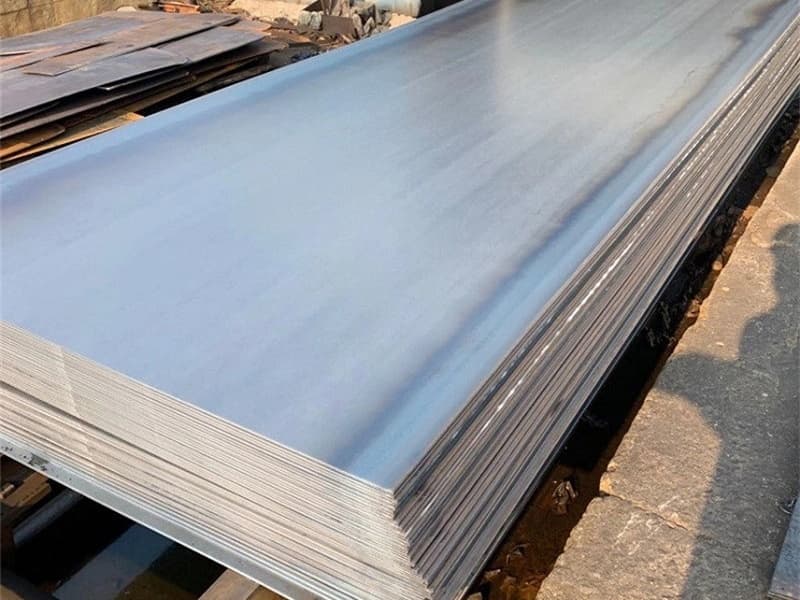
Let me give you a checklist of what to discuss before finalizing the design.
I am Zora Guo. A buyer in Mexico sent me a steel take-off list with 23 different thicknesses. Some were odd numbers: 9mm, 11mm, 13mm, 17mm. I asked the designer: “Why 11mm?” He said: “That is what the calculation gave.” I showed him that 12mm is a standard stock size. He changed his design to use 12mm instead of 11mm. The extra 1mm of thickness added 9% weight but cost 20% less because he avoided a special mill run. He saved $50,000 on the project.
What to discuss with your steel supplier early
1. Standard thicknesses
Most mills stock plates in even millimeter increments: 6, 8, 10, 12, 14, 16, 18, 20, 22, 25, 30, 35, 40, etc. Odd numbers like 11, 13, 15, 17, 19 are non-standard. They require a special rolling campaign.
Rule: Design with standard thicknesses unless you have a very good reason not to.
2. Standard widths and lengths
Common plate widths: 1,500mm, 2,000mm, 2,500mm, 3,000mm. Common lengths: 6,000mm, 9,000mm, 12,000mm. Design your plate layouts to use these dimensions to avoid cutting waste.
3. Tolerances
Standard tolerances (EN 10029 Class A) are enough for most designs. Do not specify tighter tolerances unless necessary. Tighter tolerances cost more.
Not all mills roll all grades. Ask your supplier: “Which grades are readily available in my thickness range?” For example, EH36 is common for thick plates but rare for thin plates.
Ask for the current rolling schedule. If you need steel in 6 weeks, you may need to use whatever grades and sizes are in stock. If you can wait 12 weeks, you can order custom sizes.
A practical early-collaboration checklist
| Item to discuss | Questions to ask supplier |
|---|---|
| Thickness | What thicknesses do you have in stock? What are standard mill sizes? |
| Width & length | What are your standard plate dimensions? Can you cut to custom lengths? |
| Grade | What grades are available in my thickness range? What is the lead time for each? |
| Tolerances | What is the standard tolerance? What is the cost for tighter tolerance? |
| Certification | How long for EN 10204 Type 3.2 certificates? |
| Quantity | What is the minimum order quantity for custom sizes? |
The cost of non-standard design3
| Design choice | Standard | Non-standard | Cost impact |
|---|---|---|---|
| Thickness | 12mm | 11mm | +20% cost, +8 weeks lead time |
| Width | 2,000mm | 1,850mm | +15% cost (cut from 2,000mm anyway) |
| Grade mix | One grade for similar zones | Many grades | Higher logistics cost, risk of mix-up |
| Tolerance | EN 10029 Class A | Class B (tighter) | +10-15% cost |
I always tell designers: “Call me before you finalize your thickness list. I will tell you what is standard and what is not. One phone call can save you weeks and thousands of dollars.”
Conclusion
Match grades to stress zones. Replace Grade A with AH36 at thinner gauges. Watch for cost-saving grade swaps. And involve your supplier early.
My Personal Insights (from 10+ years in marine steel export)
I am Zora Guo. My team in Liaocheng supplies marine steel plates for hull design optimization. We can advise on standard thicknesses, grades in stock, and lead times. We also help designers convert odd sizes to standard stock. Send me an email at sales@chinaexhaustfan.com or visit cnmarinesteel.com. Tell me your design thicknesses and grades. I will send you a recommendation for weight and cost savings.
-
Discover how early collaboration can streamline your design process and save costs. ↩ ↩ ↩ ↩
-
Explore how lead times impact your project timeline and how to manage them effectively. ↩ ↩ ↩ ↩
-
Understand the financial implications of non-standard designs to make informed decisions. ↩ ↩ ↩ ↩
-
Explore the benefits of using thinner plates in ship construction for weight reduction and cost efficiency. ↩
-
Learn about standard thicknesses to avoid costly delays and ensure efficient design. ↩ ↩ ↩
-
Find out how to ensure you have access to the right steel grades for your project. ↩ ↩