
Your steel plates are ready. You arrange shipping. The freight bill is huge. You wonder if there was a cheaper way.
To optimize marine steel plate logistics for cost control, choose the right shipping mode (container for standard plates, flat rack for oversize, breakbulk for very heavy), consolidate orders to reduce per‑ton freight, implement just‑in‑time delivery to cut storage, and negotiate freight contracts with volume commitments. These steps can reduce logistics costs by 15‑25%.
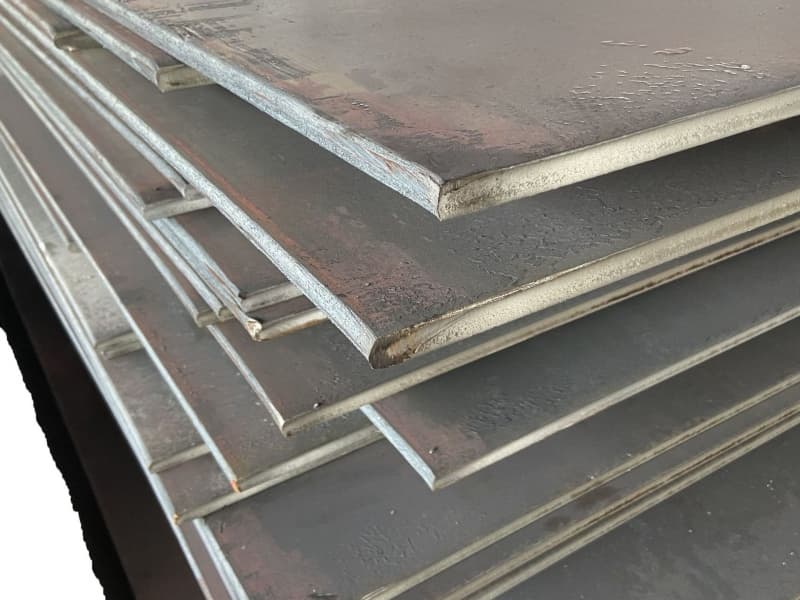
I am Zora Guo from cnmarinesteel.com. I have shipped thousands of tons of steel plates to Asia, the Middle East, and Europe. I have seen buyers pay too much for freight. I have also seen them save big by following a few rules. Let me share what works.
How to Choose the Most Cost‑Effective Shipping Mode (Container, Flat Rack, or Breakbulk) Based on Plate Dimensions and Volume?
You have steel to ship. Your first instinct is to put it in a standard container. But that is not always the cheapest or safest option.
Choose standard dry containers for plates that fit within 2.35m width and 5.9m (20ft) or 12.0m (40ft) length, with each bundle under 2 tons. Choose flat racks for plates exceeding standard container dimensions or weighing up to 45 tons per unit. Choose breakbulk for very long plates (over 12m) or very heavy plates (over 45 tons). The wrong choice can double your freight cost or cause cargo damage.
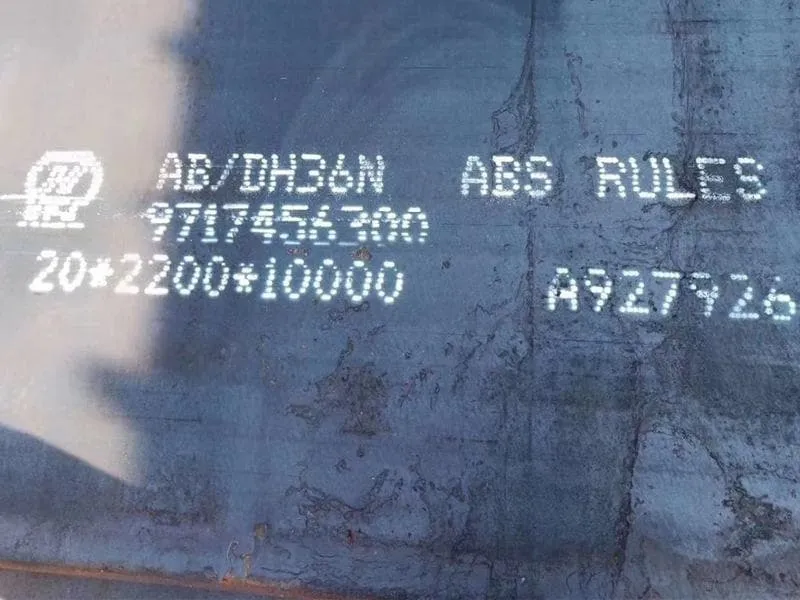
Let me break down the cost and practical differences.
Standard Dry Containers – The Baseline
Standard 20ft and 40ft containers are the most common option. A 20ft container has internal dimensions of 5.9m length × 2.35m width × 2.39m height, with a maximum payload around 28 tons. A 40ft container holds about 28‑30 tons [reference:0].
For comparison, a standard 20ft container from Shanghai to Los Angeles costs around $1,800‑$4,000 in 2025, while a 40ft container costs $2,500‑$5,500. The rate per ton for 20ft is about $64‑$143, while 40ft often works out cheaper per ton [reference:1].
Flat racks have a maximum payload of approximately 45 tons for heavy‑duty types, compared to about 28 tons for a standard 20ft container [reference:2]. This means a flat rack can carry nearly twice the weight of a standard container.**
Flat Racks – When Plates Do Not Fit
Flat racks have no side walls or roof. They cost more than standard containers but are necessary for plates that are too wide, too tall, or too heavy.
A 20ft flat rack has a maximum payload around 31 tons. A 40ft heavy‑duty flat rack can carry up to 45 tons. Flat racks are indispensable when width, height, or weight exceed classic 40ft dimensions [reference:3].
The downside is weather exposure. Flat racks are open to salt spray and rain. You should use shrink wrap or VCI film for protection. Theft risk is also higher due to open access [reference:4].
Breakbulk – For Very Large Quantities
Breakbulk means loading steel directly into a vessel’s hold, not in containers. This is the cheapest option for large volumes (500+ tons) because you avoid container costs. But it requires more coordination and longer port times.
Decision Matrix
| Factor | Standard Container | Flat Rack | Breakbulk |
|---|---|---|---|
| Max plate width | 2.35m | Up to 5m | Unlimited |
| Max weight per unit | ~2 tons (bundle) | 45 tons | Unlimited |
| Cost per ton (small order) | Low | Medium‑High | Very High |
| Cost per ton (large order) | Medium | Medium | Low |
| Weather protection | Good (enclosed) | Poor (open) | Poor |
| Best for | Standard sizes, <100 tons | Oversized plates | Bulk shipments, 500+ tons |
A Real Example
A customer in Vietnam ordered 200 tons of 12mm plates (2m x 6m, 1.8 tons per bundle). Standard 20ft containers were the right choice. Cost per container was about $3,200 – total $25,600 for eight containers. A different order required 25mm plates that were 3m wide. Those would not fit standard containers. Flat racks at $1,800 each were more expensive per ton, but they were the only option.
What Consolidation Strategies (Combining Orders, Phased Deliveries) Reduce Freight Costs per Ton?
You have five small orders over six months. Each ships separately. Each pays full freight. You are wasting money.
Freight consolidation combines multiple small shipments into one larger shipment. For ocean freight, this means using FCL (full container load) instead of LCL (less than container load). LCL cargo lets multiple shippers share space in a single container, cutting costs for smaller shipments [reference:5]. But for steel plates, FCL is usually cheaper per ton once you have enough volume to fill a container. Phased deliveries allow you to consolidate orders while still receiving steel when you need it – the supplier holds the consolidated stock at their warehouse and ships to you in phases.
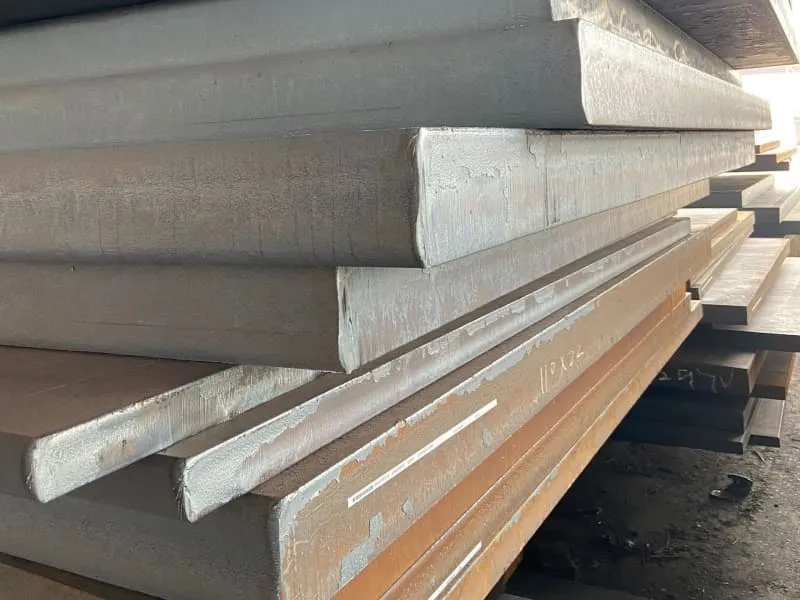
Let me explain the numbers.
LCL vs. FCL – The Cost Difference
LCL means your cargo shares a container with other shippers. You pay based on cubic meters (CBM) or weight. LCL rates are higher per CBM because of handling fees.
FCL means you book the entire container. You pay a flat rate regardless of how full it is (up to max payload). For steel plates, which are heavy and dense, FCL is almost always cheaper per ton once you reach about 15‑20 tons.
Example calculation: A 20ft container from China to Saudi Arabia costs about $2,800. It can hold up to 28 tons of steel plates. That is $100 per ton. If you ship 15 tons LCL, you might pay $150‑$200 per ton – up to double the rate.
Consolidating Multiple Small Orders
If you have three different projects that each need 10 tons of plates, do not ship them separately. Combine them into one 30‑ton order. Book one FCL container. The cost is about $2,800. If you shipped separately as LCL, you might pay $1,200 per 10‑ton shipment – total $3,600. Consolidation saves you $800.
Consolidated shipping also means fewer touchpoints and smoother routes, leading to shorter delivery times and less risk of damage or delay[reference:6].
Phased Deliveries – The Best of Both
You want the cost savings of consolidation, but you do not want all your steel at once. The solution is a consolidated order with phased deliveries.
You place one master order for 500 tons. The supplier holds the steel at their warehouse. You release 100 tons every month. The freight cost is lower because you are shipping FCL each month, not LCL. The supplier can also combine your monthly releases with other customers' orders to further reduce costs.
Consolidated shipping also reduces the number of trips needed, which lowers fuel consumption and carbon emissions [reference:7].
A Real Example
A shipyard in Malaysia needed 400 tons of plates over eight months. They tried ordering 50 tons per month separately. Each LCL shipment cost $2,000 in freight – total $16,000. I suggested consolidating into a single 400‑ton order with phased monthly deliveries of 50 tons via FCL. The freight cost per month dropped to $1,500 – total $12,000. They saved $4,000 and got faster transit times because FCL shipments move faster.
How to Plan Warehouse, Inventory, and Just‑in‑Time Delivery to Minimize Storage and Handling Charges?
Steel sitting in your yard costs you money. Every day of storage adds rent, insurance, and risk of rust.
Just‑in‑Time (JIT) delivery reduces inventory holding costs by receiving steel only as it is needed. This requires precise coordination with your supplier and transport providers[reference:8]. VMI (Vendor Managed Inventory) takes this further – the supplier holds the steel at their warehouse and ships to you on demand. You pay for storage only when you use the steel. These strategies can cut inventory holding costs by 30‑50%.
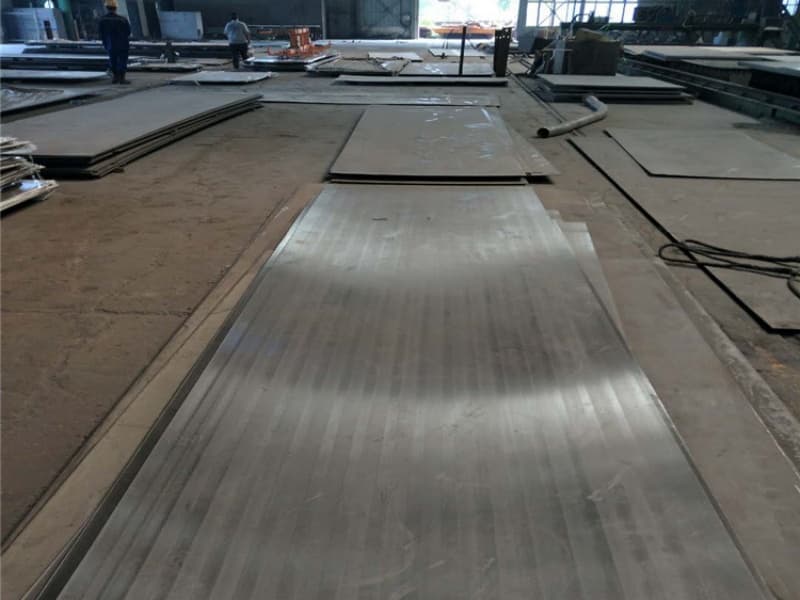
Let me show you the cost of holding inventory.
The Cost of Holding Steel
Inventory holding costs include rent, utilities, insurance, maintenance of warehouse space, and labor for receiving, picking, packing, and shipping [reference:9].
For steel plates, holding costs typically range from 15‑25% of the steel value per year. A 100‑ton order at $800/ton is $80,000. Holding it for six months costs $6,000‑$10,000 – just in storage.
Just‑in‑Time (JIT) Delivery
JIT means your supplier ships steel so that it arrives exactly when you need it – not a day earlier, not a day later.
Engineering logistics is about balance – arriving too early incurs stacking fees, arriving too late delays the project. Companies should require "JIT delivery planning" from their freight partners: real‑time project progress updates, on‑demand delivery instead of advance hoarding, to save costs and ensure project timelines [reference:10].
What you need for JIT to work:
- A reliable supplier who delivers on time.
- Accurate production forecasting (you must know your needs 3‑4 weeks ahead).
- A small safety buffer (1‑2 weeks of steel) in case of delays.
Vendor Managed Inventory (VMI)
VMI is even better for long‑term projects. The supplier holds your steel at their warehouse. You pay only when you take the steel.
By outsourcing inventory management to the steel supplier, manufacturers can reduce costs associated with warehousing, labor, and carrying excess inventory. A VMI program ensures a consistent and reliable steel supply, reducing the risk of production delays due to stockouts [reference:11].
Benefits of VMI:
- You pay for steel when you use it, not months ahead.
- No storage costs at your yard.
- Supplier manages the buffer stock.
- You can order small quantities frequently without paying a premium.
A Real Example
A shipyard in the Philippines used to hold 600 tons of steel inventory. They switched to JIT delivery with their supplier. Inventory dropped to 200 tons. Holding cost saving: 400 tons × $800 × 15% = $48,000 per year. They also reduced rust damage because steel was not sitting in the yard for months.
How to Negotiate Freight Contracts and Optimize Container Loading to Maximize Weight Utilization and Reduce Demurrage?
You book freight as a spot customer. You pay market rates. But large shippers pay less. You can get those rates too.
To negotiate better freight contracts, consolidate your annual volume and commit to a minimum quantity. Annual deals with volume incentives can lock in rates 20‑40% below spot market. Ask for tiered discounts: for example, 50‑100 containers gets 10% off, 100‑200 gets 15% off, over 200 gets 20% off. Also negotiate demurrage caps – maximum 3‑5 days free time, after that a capped rate. Optimize container loading by using proper dunnage to distribute weight and maximize payload. Never exceed container floor load limits – use Maersk's standard of 5 pieces of 100×100mm wood per layer to spread the load.
Let me give you practical tips.
Freight Contract Negotiation – The Numbers
If your annual volume reaches a certain scale (for example, 50+ full containers per year or 200+ CBM of LCL), you can negotiate tiered discounts. For example, 50‑100 containers per year gets 10% off, 100‑200 gets 15% off, over 200 gets 20% off. Additionally, freight forwarders may return 1‑3% of freight as an annual rebate, applied as a direct credit against the next quarter's freight costs [reference:12].
What to negotiate:
- Volume commitment (MQC) – Promise a minimum annual quantity. Carriers give lower rates for guaranteed volume.
- Long‑term contract rates – Lock in rates for 6‑12 months to avoid seasonal spikes.
- Peak season surcharge (PSS) – Cap it. Many carriers add $300‑$2,000 per container during peak season [reference:13]. Negotiate a lower cap.
- Demurrage and detention – Ask for 7‑10 free days instead of the standard 3‑4. Demurrage charges can be hundreds per day.
A standard 20ft dry container globally averages around $2,800 in 2025. With a volume contract, you may get rates $500‑$1,000 lower per container [reference:14].
Optimizing Container Loading – Weight vs. Volume
Steel plates are heavy. The challenge is not filling the container by volume – it is staying within the weight limit without exceeding floor load limits.
Standard container maximum payload is about 28 tons for 20ft. The tare weight is about 2.2 tons, so total gross weight cannot exceed 30.5 tons (depending on carrier).
How to maximize weight utilization:
- Use dunnage (timber) to spread the load across the container floor.
- Maersk requires 5 pieces of 100×100mm wood per layer, extending 30cm beyond the plate at each end, OR 4 pieces of 150×150mm wood [reference:15].
- Never place heavy plates directly on the container floor – that can exceed point load limits and puncture the floor.
Forces towards side‑ and end‑wall shall be distributed evenly throughout the full length and width. Forces towards the door‑end must be arrested by a bulkhead anchored in the corner posts. Maersk does NOT accept dunnage bags for securing due to quality concerns [reference:16].
Demurrage – The Hidden Cost
Demurrage is the charge for keeping a container beyond the free time. Standard free time is 3‑5 days. After that, charges can be $100‑$300 per day per container.
How to reduce demurrage:
- Negotiate longer free time (7‑10 days) in your contract.
- Pre‑clear customs documents before the vessel arrives.
- Have a receiving team ready when the container is delivered.
- For large projects, use a freight forwarder who can coordinate unloading.
A Real Example
A customer in Saudi Arabia shipped 200 containers of steel plates per year. They were paying spot rates. I helped them negotiate an annual contract: 5% discount for 100‑200 containers, 10% for over 200. Their rate dropped from $2,800 to $2,500 per container. Annual saving: 200 × $300 = $60,000. They also negotiated 10 free days instead of 5, reducing demurrage charges by 70%.
Conclusion
Choose the right shipping mode for your plates, consolidate orders to fill containers, use JIT and VMI to cut storage, and negotiate freight contracts with volume commitments. These strategies cut logistics costs by 15‑25% and keep your project on schedule.