
Storing marine angle steel by size alone will eventually put AH36 into an A36 frame. One mixed bundle can stop a block and fail a survey.
Organize marine angle steel on four keys in this order: heat number first, then grade, then leg size, then length. Give every bundle a location code, a heat-linked tag, and one ledger row, so any bar can be traced back to its mill certificate in under a minute.
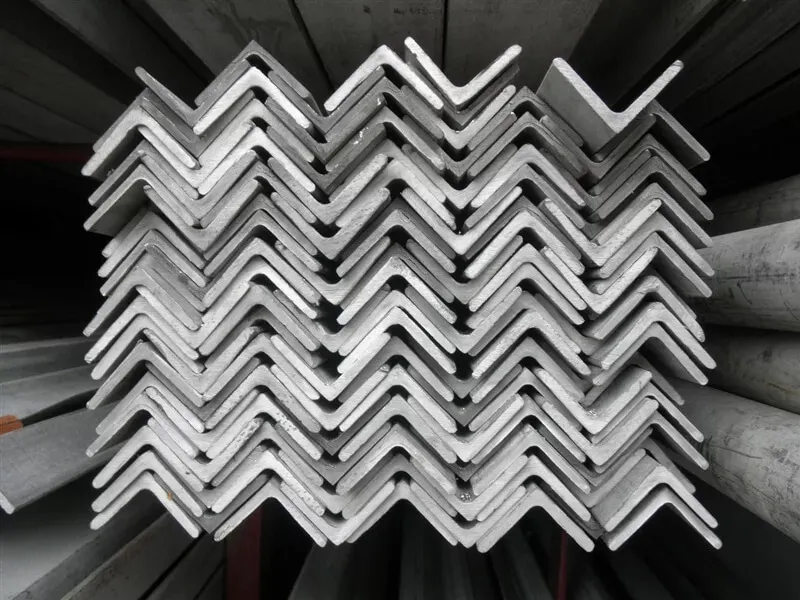
I have walked through yards in Vietnam, Saudi Arabia, and northern China that hold four thousand tonnes of angle steel and still cannot answer a simple question: which heat is in rack B-14? The steel is fine. The storage is not. What follows is the system we recommend to our buyers, and the one we use in our own warehouse in Liaocheng when a container is being loaded.
Why Should the Heat Number Come Before Grade and Size in Your Yard?
Most yards label by size because size is visible. But size tells you where a bar fits, not what it is. Heat tells you what it is.
The heat number is the only key that links a bar to its mill certificate, its chemistry, and its Charpy results. Grade and size are properties of that heat, so the heat belongs at the top of the hierarchy, not the bottom.
What One Heat Actually Represents
A heat is one furnace charge. Scrap and alloys go into an electric arc furnace or a basic oxygen furnace, melt together, and get cast into billets or blooms. That single melt typically runs 50 to 300 tonnes, depending on furnace size [Zora will replace]. Every bar rolled from it shares one chemical analysis, because there was only one ladle of liquid steel.
That is why the mill tests one sample and the result applies to everything from that heat. It is also why the heat number, not the grade, is the identifier that matters. “AH36” tells you the specification the steel was made to meet. The heat number tells you whether this particular bar actually met it. A mill certificate full of impressive numbers means nothing if you cannot tie it to the bundle in front of you.
Heat numbers are usually four to eight characters. In many mill numbering systems the first digit is the furnace, the second the year of melting, and the last three or four the melt sequence. Formats differ by mill and country, so never guess at the structure. Read it off the tag exactly as printed, including the letters.
Heat, Lot, and Serial Are Not Interchangeable
These three words get used as if they mean the same thing. They do not, and confusing them is how traceability quietly dies.
| Identifier | Who assigns it | What it covers | What it proves |
|---|---|---|---|
| Heat number | Steel mill | All steel from one furnace charge, typically 50–300 t | Chemistry and mechanical results on the MTC |
| Lot or bundle number | Mill or stockist | A shipping quantity, sometimes mixed heats | What was packed together and when |
| Serial or piece number | Mill or fabricator | One bar or one cut part | Where that single piece went |
A bundle can hold two heats. A heat can be split across six bundles and three trucks. So a bundle number is a logistics label, not a quality label. If your receiving clerk writes the bundle number in the “heat” column, you have lost the link to the certificate without noticing. The mistake surfaces months later, when a surveyor asks for the MTC behind a frame that has already been welded into a block.
What the Surveyor Actually Asks For
Marine steel is certified under rules that go beyond a normal mill certificate. IACS UR W7 covers the testing and certification of plates, sections, and bars for ship construction. It requires ladle analysis records for each heat, not just product analysis from finished samples, and it requires that a class surveyor witnesses the mechanical test sampling rather than countersigning a certificate produced by factory quality control.
That is the difference between EN 10204 3.1 and 3.2 in practice. A 3.1 certificate is signed inside the mill by an inspection function independent of production. A 3.2 certificate adds an independent inspector appointed by the purchaser or a third party. Both are legitimate documents. Neither one helps you if the heat number on the paper does not exist on your rack.
IACS UR W11 sets the grade nomenclature and the marking that goes with it: grade, heat number, piece identity, and the society’s brand. On plate, that marking is often die-stamped into the surface. On rolled sections like angle, it frequently travels on a bundle tag or a stencil on a few bars in the bundle, because stamping every six-metre bar is not practical. That single fact is the reason a section yard needs its own labelling discipline. The mill’s mark is thin, and your handling can erase it.
The Failure I See Most Often
A bundle arrives with a stencil reading 100×100×10 and one paper tag that says AH36, heat H4827B. The tag is stapled to the binding wire at one end. The yard cuts the wire, the tag drops into the mud, and the bundle becomes anonymous. Six weeks later the steel is still perfectly good and completely unusable for classed work, because nobody can prove which heat it came from.
The fix is not more paperwork. The fix is to accept that the mill’s tag is a temporary label, and to re-identify the bundle the day it lands.
How Should You Lay Out the Yard by Grade and Size?
Two grades look identical under a coat of rust. If they share a bay, someone will pick the wrong one on a Friday afternoon.
Give each grade its own bay, each size its own rack inside that bay, and each heat its own bundle position inside the rack. The physical layout should repeat the same four keys as the paperwork, in the same order.
Zone by Grade First
Grade substitution is the expensive error, so grade gets the biggest physical separation. I recommend four zones, not two:
- Normal strength: A, B, D, E
- 32 series: AH32, DH32, EH32
- 36 series: AH36, DH36, EH36
- Other: S355JR, Q345B, and anything non-marine
Separate them with painted floor lines and, where the yard is busy, a chain or a rail. The barrier is not there to stop theft. It is there to make a forklift driver stop and read before he lifts. A 235 MPa bar in a 355 MPa frame is not a cosmetic problem. It is a design failure that can require the frame to be cut out.
Rack by Size Second
Inside a grade zone, one size per rack. Never two leg sizes on the same arms. A 100×100×10 and a 120×120×12 look close enough at three metres that a tired picker will take the wrong one, and the error only shows up at fit-up.
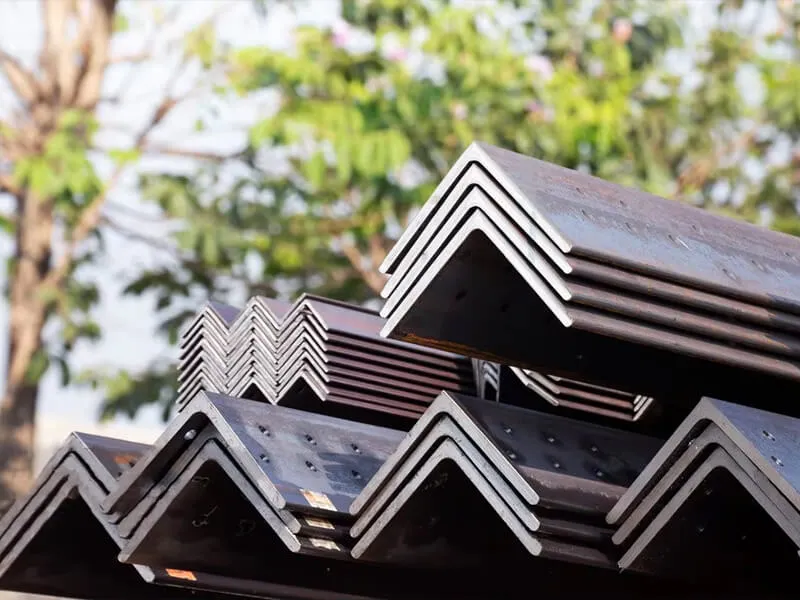
Use A-frame racks rather than flat stacks for anything held more than a few weeks, the same geometry we describe in our guide to marine angle steel storage best practice. Keep the steel at least 150 mm off the ground on sleepers or blocks so air moves underneath. Store angles open side down so water runs off the toes instead of sitting in the corner. Support long bars on dunnage at 3 to 4 metre centres, vertically aligned from the bottom of the stack to the top, or the bottom bars take a permanent bow.
Why Colour Alone Fails
Painting the cut end is a good fast check. Red for AH36, blue for A, yellow for DH36, and so on. I use it myself. But colour is a convenience, never the record. Paint fades under UV within a season, the paint pot runs out and someone substitutes the wrong shade, and roughly one man in twelve has some degree of colour vision deficiency.
So paint the end, and still write the heat. Colour gets you to the right rack in two seconds. The tag gets you through an audit.
A Layout That Matches the Paperwork
| Zone | Holds | Rack rule | What the floor sign says |
|---|---|---|---|
| N | A, B, D, E | One size per rack, open side down | N / 150×150×12 / A |
| H32 | AH32, DH32, EH32 | One size per rack, chains at the aisle | H32 / 125×125×10 / AH32 |
| H36 | AH36, DH36, EH36 | One size per rack, separate from H32 | H36 / 150×150×12 / AH36 |
| X | S355JR, Q345B, non-marine | Physically fenced off | X / not for classed work |
The sign repeats the zone and the size, and the bundle tag repeats the same two fields plus the heat. When a picker reads “H36 — 150×150×12 — AH36”, he is checking three keys at once without thinking about it.
What Should a Bundle Tag and Location Code Actually Contain?
A tag that says 100×100 is a guess. A tag that says where, what, which heat, and how long is an answer.
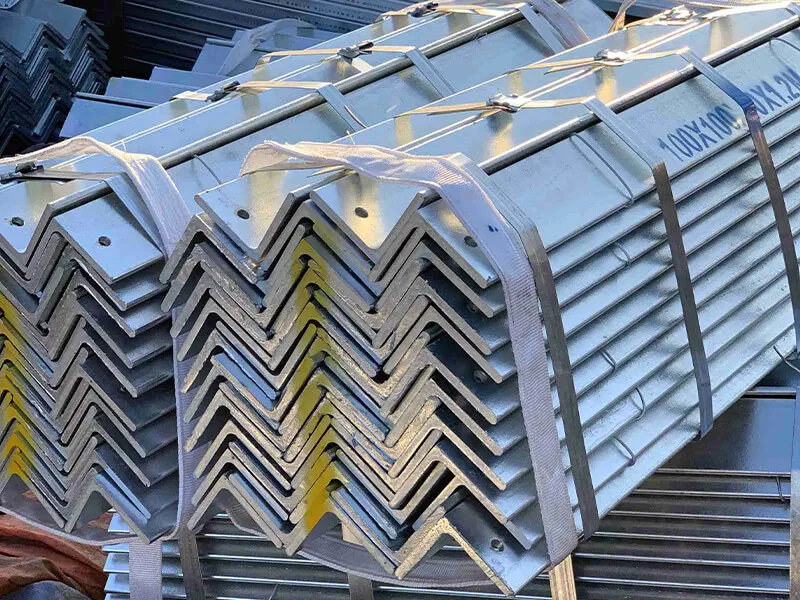
A working tag carries eight fields: grade, size, length, heat number, piece count, weight, receiving date, and location code. The location code repeats the first four, so the rack and the paperwork can never drift apart.
The Eight Fields and Why Each One Earns Its Place
| Field | Example | Why it matters |
|---|---|---|
| Grade | AH36 | Tells the picker whether the bundle is allowed on a strength member |
| Size | 150×150×12 | Prevents the nearest-lookalike error |
| Length | 12,000 mm | Length drives nesting and offcut planning |
| Heat number | H4827B | The only link to the MTC and the Charpy results |
| Pieces | 84 | Lets the storekeeper count without breaking the bundle |
| Weight | 12.4 t theoretical | Checks against the mill ticket and the truck weighbridge |
| Received | 2026-11-04 | Drives FIFO and flags slow-moving stock |
| Location | H36-150-12-04 | Says exactly which rack and which position |
Eight fields sounds like a lot until you compare it with the cost of one wrong pick. A laminated card and a marker cost almost nothing. A held block costs a production day.
Reading the Stencil, Then Trusting the Tag
At receiving, read the mill’s stencil first, then read the mill’s tag, then read the certificate. All three should agree on grade and heat. If the stencil shows only the size and the heat appears only on the tag, copy the heat onto at least two bars in the bundle with a paint marker before the tag is removed. If the tag and the certificate disagree, stop and call the supplier. Do not average the difference and do not assume the tag is wrong.
This is also where a third-party inspector earns his fee. When SGS attends a pre-shipment inspection for a buyer like Gulf Metal Solutions in Dammam, the first thing he checks is whether the bundle tags match the mill certificates, bundle by bundle. He is not being difficult. He knows that a tag which does not match the paper means the whole chain is unproven.
Length Is a Key, Not a Detail
Standard marine angle lengths are 6, 9, and 12 metres. Mills roll to a length tolerance of roughly +50/−0 mm, so the “12 m” bar you ordered can arrive at 11.95 m. That is within specification, and it will still ruin a nesting plan built on exactly 12,000 mm.
Never mix lengths in one lane. A 9 m bar slid in front of a 12 m bundle hides the short one until someone cuts from the wrong end. If you must share a rack, put the short lengths at the front and label the rack with both.
Measure length at shop temperature. Steel expands about 11.7 micrometres per metre per degree Celsius, so a 12 m bar that is 20 °C warmer than the tape has grown almost 2.8 mm. In a heated bay in summer that is enough to move a bar from “pass” to “short” on paper.
Check the Dimensions While the Bundle Is Still on the Truck
Once the bundle is in the rack, nobody re-measures it. The bands below are the short version of our marine angle steel dimensional tolerances page. So the check belongs at receiving, and it should be quick and recorded. Selected EN 10056-2 bands for hot-rolled angles:
| Item | Range | Tolerance |
|---|---|---|
| Leg length | ≤ 50 mm | ± 1.0 mm |
| Leg length | 50–100 mm | ± 2.0 mm |
| Leg length | 100–150 mm | ± 3.0 mm |
| Thickness | ≤ 5 mm | ± 0.50 mm |
| Thickness | 5–10 mm | ± 0.75 mm |
| Out of square | ≤ 100 mm leg | 1.0 mm |
| Straightness | All sizes | 0.4% / 0.2% / 0.1% of length by size |
| Mass per piece | t > 4 mm | ± 4% |
Check the weight against the tag while you are there. For an equal-leg angle the theoretical mass is [(A + B) − t] × t × 0.00785 kg/m, so a 150×150×12 bar should run about 27.3 kg/m. A bundle of 84 bars at 12 m should be roughly 27.5 tonnes, not 24 and not 31. A ±4% band is normal. A 15% gap means the piece count is wrong, the length is wrong, or the tag belongs to another bundle.
How Do You Keep the System Intact After the First Cut?
The rack is tidy until the saw starts. Then remnants go back without a heat number and the traceability you paid for is gone.
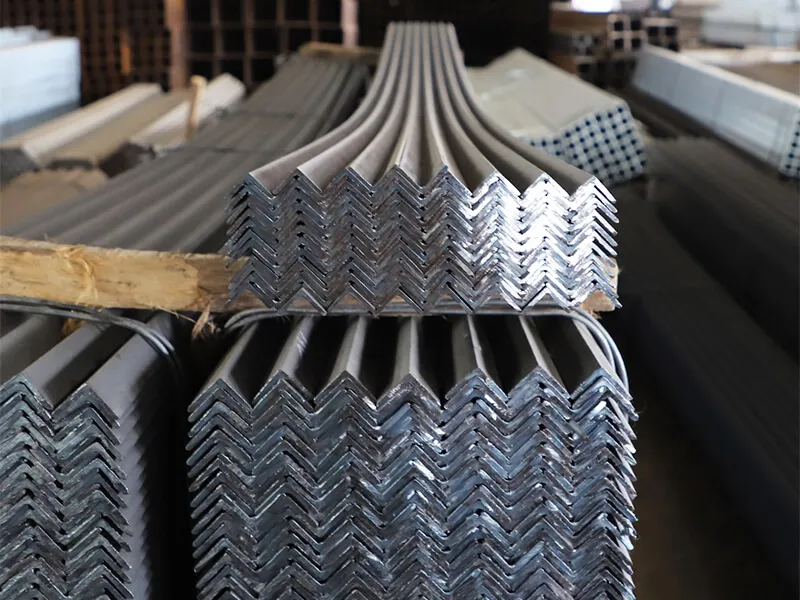
Transfer the heat number onto every offcut before it leaves the saw, tag the remnant, and give it its own location. A remnant without a heat number is scrap, whatever its grade says.
The Offcut Rule
Every cut produces a remnant, and every remnant is a small piece of certified steel that is about to become anonymous. The rule is simple: before the offcut leaves the saw table, paint or stamp the heat number on the cut end and attach a wire tag with the same four keys. Then it goes into the remnant rack, not back into general stock.
Grade the remnants by length so the next planner can use them:
- 3,000 mm and above: back into the size rack as usable stock
- 1,000 to 2,999 mm: secondary rack, still fully traceable
- 300 to 999 mm: clip rack for brackets and stiffeners
- Under 300 mm: scrap bin
That last bin is where a lot of certified steel goes to die, and where a lot of audit findings are born. A 250 mm offcut with a heat number is worth keeping if your bracket schedule uses 200 mm pieces. The same offcut without a heat number cannot be used on a classed job at all.
One Ledger Row per Bundle, Not per Bar
The ledger holds the location code, heat, pieces, weight, and status. Paper works at twenty bundles. At four hundred it does not, because the person who knows where things are goes on holiday.
A spreadsheet is enough to start, provided the location field is mandatory and formatted, not free text. The moment someone types “back left” instead of “H36-150-12-04”, the system stops being a system. If you run an ERP, make the heat and location fields required at goods receipt. A record that can be saved without a heat number will be saved without a heat number.
What an Audit Actually Checks
A surveyor or a customer auditor follows one chain: tag heat → mill test certificate → location → issue record → weld map or block number. Five links. If any one of them breaks, the material is treated as untraceable, and untraceable marine steel does not go into a classed hull, no matter how good the steel is.
This is why I tell buyers that the storage system is not a warehouse project. It is a certification project that happens to use racks. The yard that can produce five links in five minutes passes. The yard that produces a confident story and three of the five links does not.
What It Costs When the Chain Breaks
The direct cost is re-inspection: pulling the bundle, cutting a sample, waiting for a laboratory. The indirect cost is the block. A held block stops the panel line, the panel line stops the erection sequence, and the erection sequence is what the delivery schedule was built around. I have seen a single unlabelled bundle cost more in schedule than the entire racking system for that bay [Zora will replace].
This is also where packaging and identification meet. Buyers remember the supplier whose bundles arrived with tags that matched the paperwork. The feedback we get most often from clients like Gulf Metal Solutions is not about chemistry. It is about opening a container and finding every bundle readable, every tag intact, and every certificate already matched to a bundle number.
| What you are comparing | Size-only storage | Four-key storage (heat → grade → size → length) |
|---|---|---|
| Time to find a specific bundle | 10–30 minutes of walking the yard | Under 2 minutes from the location code |
| Answering a surveyor’s heat query | Certificate folder search, often fails | Tag → MTC in one lookup |
| Wrong-grade pick risk | High where 32 and 36 series share a bay | Low, because grade is physically separated |
| Offcut traceability | Lost at the first cut | Preserved by the cut-end heat mark |
| Stock accuracy at cycle count | Typically 5–10% variance | Typically under 2% |
| Setup cost | Almost none | Racks, signs, tags, and one afternoon of labelling |
| Cost of one mixed bundle | Block hold, re-inspection, possible rework | Avoided |
Conclusion
Organize by heat, grade, size, and length in that order. Label the rack and the tag the same way, and the yard answers the surveyor before he finishes asking.