
Planning bulb flat steel for several ships at once feels like solving a puzzle. One wrong piece can delay your whole project.
You can plan bulb flat steel supply for multi-vessel construction by first calculating total needs across all ships, then grouping orders by size and grade to save mill costs, staggering deliveries to match each ship’s build sequence, and keeping buffer stock for smooth production.
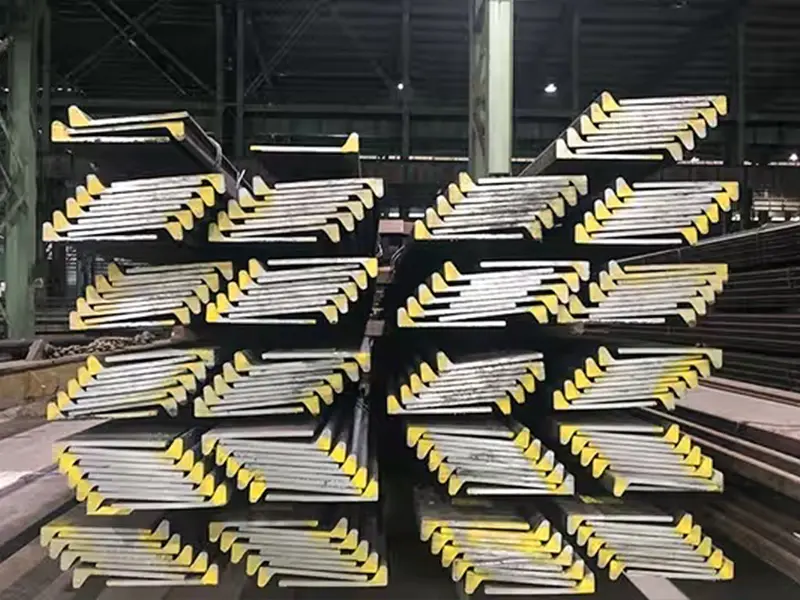
I have seen too many buyers struggle with this. They order material for one vessel, then panic when the next vessel starts. Or they buy everything at once and run out of space. Let me walk you through the system that works for my clients in Vietnam, Saudi Arabia, and Mexico. This is not theory. This is what we do every day at CN Marine Steel.
Calculating Total Bulb Flat Steel Requirements Across Multiple Vessels?
Do you know exactly how much bulb flat steel1 you need for three or four ships combined? Most buyers guess. Guessing leads to leftovers or shortages.
To calculate total bulb flat steel needs for multiple vessels, you sum up each vessel’s bill of materials by size and grade, then add a 5-10% waste factor2 for cutting and welding3, and finally cross-check against mill minimum rolling quantities4.
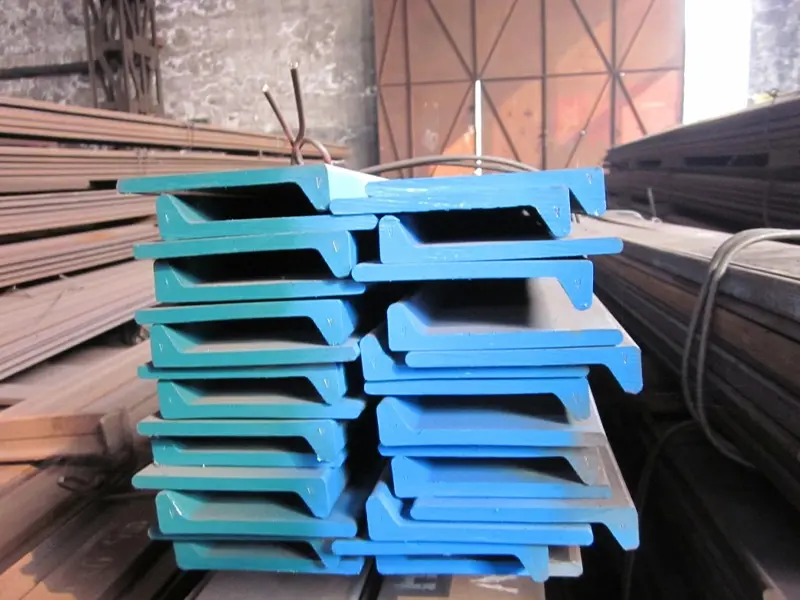
Break down each vessel separately first
I learned this lesson from a buyer in Pakistan. He tried to combine all vessels from the start. That was a mess. Different ship designs5 need different profiles. So here is what I tell my clients:
Step one – Make a separate list for each vessel. Write down every bulb flat steel size (like 160x8mm or 220x10mm) and grade (usually A, B, or AH36). Also note the length per piece and total meters.
Step two – Add waste factor. Shipyard cutting is not perfect. You will lose some material to beveling and test pieces. For simple hulls, add 5%. For complex curves, add 10%. A client from Qatar once skipped this step. He ended up reordering 12 tons of 180x9mm grade A at air freight cost. Do not be that person.
Step three – Combine like items across vessels. This is where the real saving starts. For example, Vessel 1 needs 50 tons of 160x8mm grade A. Vessel 2 needs 40 tons of the same. Vessel 3 needs 30 tons. Total is 120 tons. But the mill might have a minimum rolling quantity of 80 tons per size. You are safe. However, if each vessel only needs 20 tons of a rare size like 260x12mm grade D, total is 60 tons. The mill may refuse to roll such a small batch. Then you need to either increase the order or switch to a similar size.
| Vessel ID | Size (mm) | Grade | Length per vessel (m) | Waste factor | Total needed (tons) |
|---|---|---|---|---|---|
| Hull 101 | 160×8 | A | 1,200 | 5% | 42 |
| Hull 102 | 160×8 | A | 1,350 | 5% | 47.3 |
| Hull 103 | 220×10 | AH36 | 800 | 8% | 51.8 |
| Combined | 160×8 | A | 2,550 | 5% | 89.3 |
Step four – Check mill’s MOQ per size. Some Chinese mills need 50 tons per size. Others accept 30 tons for standard grades. I work with certified mills6 in Liaocheng, Shandong. They give me flexible MOQ for regular buyers. But for rare grades like D or E, you may need 80 tons. So always ask your supplier before finalizing.
A practical tip: Keep a spreadsheet that auto-calculates totals as you add vessels. Update it every time a ship design changes. I share this template with all my wholesale clients. It saves hours of back-and-forth emails.
Grouping Orders by Size and Grade to Achieve Mill Economies?
Have you ever paid extra because your order was too small for the mill’s standard run? That is the cost of not grouping properly.
Grouping orders by size and grade means combining similar bulb flat steel profiles1 from different vessels into one mill order, so you meet the minimum rolling quantity2 and unlock lower per-ton prices, often saving 8-15% compared to separate purchases.
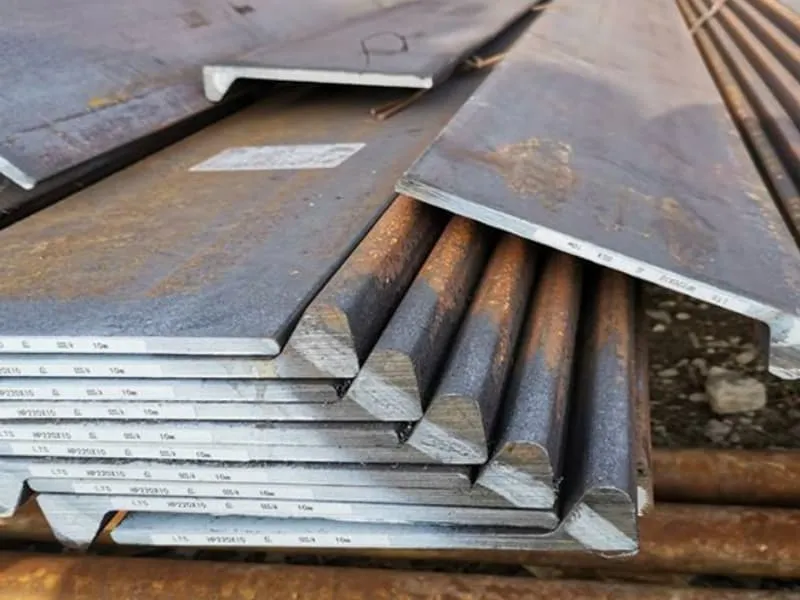
Why mills reward grouping
Steel mills are like bakeries. Baking one loaf costs almost as much as baking ten. So they prefer big batches. When you give the mill a single order for 200 tons of 160x8mm grade A, they can roll it continuously. That lowers their cost. They pass some saving to you.
I saw this clearly with a distributor in Malaysia. He needed bulb flat steel for three tankers. First, he wanted to order each vessel separately. The mill quoted him $780 per ton for each small batch. I asked him to wait. We combined all three vessels. Total became 240 tons of the same size and grade. The mill dropped the price to $710 per ton. That is a saving of $16,800. Enough to cover shipping to Port Klang.
How to group without overstocking
But grouping can backfire if you order too much of one size. You end up storing steel for months. That ties up your cash and yard space.
Here is my rule: Only group sizes that appear in at least two vessels. For sizes that appear in only one vessel, order them separately unless you can use the extra for future projects.
Let me give you an example from a Philippines contractor. He had four fishing vessels. Three used 140x7mm grade A. One used 160x8mm grade A. He grouped the 140x7mm across three vessels – total 110 tons, perfect. For the 160x8mm, he ordered only 35 tons. The mill minimum was 40 tons. So he added 5 tons of 160x8mm as buffer stock (more on that later). That extra 5 tons cost him storage but saved him from paying a $2,000 small-batch surcharge3.
What to do when sizes don’t match
Sometimes you cannot group because every vessel has different profiles. Then you have two choices:
-
Change the design slightly. Ask your naval architect if a similar size can work. For example, 180x9mm can often replace 170×8.5mm. The weight difference is small. But the mill can roll 180x9mm easily. This requires approval, so do it early.
-
Work with a trader like us. We combine orders from multiple buyers. One client in Thailand needs 30 tons of 200x9mm. Another in Vietnam needs 25 tons of the same. We put them together. Both get mill prices. That is the value of a B2B wholesaler4.
Remember: Grouping is not just about saving money. It also reduces your admin work. One purchase order, one inspection, one shipment. Much easier than chasing three separate deliveries.
Staggering Delivery Batches to Match Each Vessel’s Build Sequence?
Does your steel arrive too early or too late? Early shipments clutter your yard. Late shipments stop your welders. Both cost you money.
Staggering delivery batches means scheduling bulb flat steel shipments so that each vessel gets its material just before that vessel’s hull assembly begins, typically sending 20-30% of the total at the start, then the rest in weekly or bi-weekly drops according to the build sequence.
[^1] board showing staggered batches for three vessels](https://cnmarinesteel.com/wp-content/uploads/2025/11/Flat-steel-ball-84.webp)
The just-in-time trap
Many buyers think just-in-time delivery2 is the answer. But I have seen this fail in shipbuilding. Shipyards are not car factories. Weather delays, design changes, and labor shortages happen. If your steel arrives exactly when needed, one crane breakdown can stop production.
A client in Romania tried to be very efficient. He ordered bulb flat steel for two bulk carriers with delivery split into six batches. Batch one arrived on time. Then a storm closed the Black Sea port for 10 days. Batch two was stuck on a ship. The yard ran out of 150x8mm. Workers stood idle for three days. The cost of that delay was five times the inventory holding cost.
So what works better? A balanced approach.
My three-batch staggered system3
After working with over 50 shipyards, I developed this simple system:
Batch 1 (30% of total) – delivered 4 weeks before hull start. This is your kickoff material. The yard uses it to set up cutting machines, make templates, and train workers. Any quality issues show up early. If the mill made a mistake, you still have time to fix it.
Batch 2 (50% of total) – delivered 2 weeks after Batch 1. This is the main production batch. Most of the hull gets built from this material. Make sure this batch covers the most common sizes. For a typical vessel, sizes 160x8mm, 180x9mm, and 200x10mm are used the most. Prioritize those.
Batch 3 (20% of total) – delivered 6 weeks after Batch 1. This is the completion batch. It includes leftover sizes and any extra pieces for last-minute changes. Often shipyards realize they need more of a specific size. Batch 3 saves them.
For multi-vessel construction4, you repeat this pattern for each vessel, but offset the start dates. For example:
- Vessel A: Batch 1 on Jan 1, Batch 2 on Jan 15, Batch 3 on Feb 12
- Vessel B: Batch 1 on Feb 1, Batch 2 on Feb 15, Batch 3 on Mar 15
- Vessel C: Batch 1 on Mar 1, Batch 2 on Mar 15, Batch 3 on Apr 12
This creates a smooth flow. Your yard always has material. Your warehouse never overflows.
What to do when build sequences change5
Here is the real-world problem: Shipyards change schedules. A client in Mexico had his three vessels delayed by two months because of financing issues. His steel was already produced and sitting at our warehouse in Shandong. What did we do? We held it for him. No extra charge for the first 30 days. After that, we charged a small storage fee – much cheaper than him finding new warehouse space in Mexico.
But if the change happens after shipment, you have less flexibility. So I always advise my clients: Order the steel, but ask the mill to delay rolling for the later vessels. Most mills can hold your rolling slot for 60 days. You pay a deposit, but the steel is not cut until you give the final green light. This is a negotiation point. Not all mills offer it. But our partners in Liaocheng do.
Managing Inventory and Buffer Stock for Continuous Production?
What happens when a size runs out on a Friday afternoon? Do you have a backup plan, or do you call your supplier in panic?
Managing inventory and buffer stock1 for continuous production means keeping a small extra quantity of the most common bulb flat steel sizes – typically 10-15% above your calculated needs – and tracking usage daily so you reorder before hitting zero, with a dedicated storage area that separates active material from buffer.
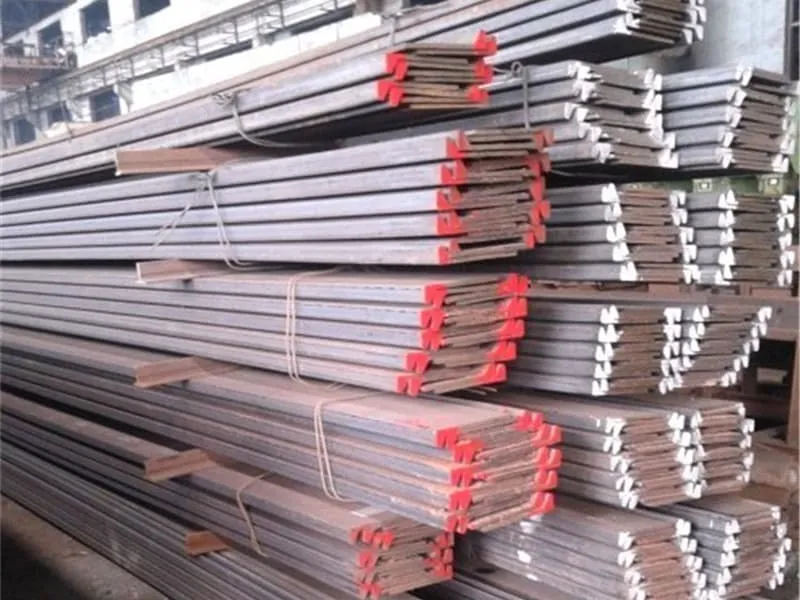
The buffer stock myth
Some buyers think buffer stock is wasted money. I disagree. Buffer stock is insurance. And insurance costs something. But the cost of a production stop2 is much higher.
Let me share a story from Saudi Arabia. Gulf Metal Solutions – one of our regular clients – was building three oil tankers. They calculated their needs carefully. But the yard’s cutting machine malfunctioned and ruined 8 tons of 220x10mm grade AH36. Without buffer stock, they would have waited 25 days for a new mill run. With buffer stock, they pulled from the reserve and kept working. They later ordered replacement buffer stock. The total extra cost was the interest on 8 tons of steel for two months – about $400. The cost of stopping production for 25 days would have been over $30,000 in labor and penalties.
So how much buffer stock do you need? It depends on three factors:
| Factor | Low risk (5% buffer) | Medium risk (10% buffer) | High risk (15% buffer) |
|---|---|---|---|
| Mill lead time | 6 weeks | ||
| Shipyard experience | Very experienced | Somewhat experienced | New shipyard |
| Design maturity | Final design | Minor changes expected | Major changes likely |
| Port reliability | Reliable, multiple routes | Some delays | Frequent closures |
For most of my clients, 10% works well. But for a first-time buyer in Myanmar, I recommended 15%. Their local logistics were unpredictable. That extra 5% gave them peace of mind.
How to track inventory without fancy software
You do not need an expensive ERP system. A simple whiteboard or shared spreadsheet works. Here is the method I teach:
Three piles system:
- Pile 1 (Active): Steel that is cut and used today.
- Pile 2 (Reserve): Steel that is allocated for next week’s work.
- Pile 3 (Buffer): Steel that is not to be touched unless there is an emergency.
Every morning, the yard foreman checks Pile 1. When it drops below a certain level, he moves material from Pile 2 to Pile 1. Then he sends a text to the purchasing manager: “Moved 5 tons of 160x8mm from Reserve to Active. Please reorder 5 tons for Reserve.” That reorder becomes the new buffer after the next delivery.
This system has worked for a Philippine shipbuilder for three years. They have never run out of a critical size. Their buffer stock rarely sits for more than two months.
When to increase or decrease buffer
Buffer stock is not fixed. Review it every month. Ask these questions:
- Did we use buffer stock last month? If yes, why? Was it a one-time problem or a pattern?
- Is the mill lead time3 getting longer? (Chinese New Year, summer maintenance, or new environmental rules can extend lead times.)
- Are we starting a new vessel design? New designs have more unknowns. Increase buffer to 15% for the first vessel, then drop to 10% for repeat vessels.
A client in Vietnam learned this the hard way. He kept buffer at 5% for all vessels. Then a typhoon delayed his mill’s raw material delivery. Lead time jumped from 3 weeks to 7 weeks. His buffer ran out. He had to airlift 12 tons of bulb flat steel from South Korea. The air freight cost was $6,000. A 10% buffer would have cost him an extra $1,500 in inventory holding. You do the math.
A final word on inventory management4 from my own experience
When I first started CN Marine Steel, I thought inventory was just about counting pieces. Then I visited a client’s yard in Malaysia. They had 40 tons of bulb flat steel sitting outside, covered in rust. The labels had fallen off. Nobody knew what size or grade it was. That steel was worthless.
So now I always include this in my sales contract: “Supplier will provide color-coded tags and a packing list that matches each bundle to a specific vessel and build phase.” And I tell my clients: “Store steel off the ground on wooden sleepers. Cover it with tarps. And never, ever remove the tags until the piece is welded into the ship.”
That is not just good advice. That is the difference between a smooth project and a scrap heap.
Conclusion
Plan your bulb flat steel across multiple vessels by calculating totals first, grouping for mill savings, staggering deliveries to build sequence, and keeping smart buffer stock.
-
Understanding buffer stock is crucial for maintaining production efficiency and avoiding costly delays. ↩ ↩ ↩
-
Learn about the financial implications of production stops and how to mitigate risks. ↩ ↩ ↩ ↩
-
Discover the key factors influencing mill lead time and how to manage them effectively. ↩ ↩ ↩ ↩
-
Explore effective strategies to enhance your inventory management practices and streamline operations. ↩ ↩ ↩ ↩
-
Understand how to adapt to changes in build sequences to minimize disruptions and costs. ↩ ↩
-
Discovering the advantages of certified mills can ensure you receive high-quality materials and service. ↩