
When you mix different sizes and grades in one order, things can get messy fast. I see it happen with buyers who try to save costs but end up with delays or waste.
The most efficient way to plan a mixed marine angle steel order is to group items by steel grade first, then by size, and finally by length. This helps you meet minimum order quantities for the mill while reducing cutting waste on your end.
Many buyers focus only on price. But mixing orders is not just about getting the lowest price per ton. It is about how you combine the items so that the whole process—from mill production to your final fabrication—works smoothly. Let me walk you through the practical steps I use with my own clients, from project contractors in Saudi Arabia to marine steel wholesalers in Vietnam.
What is the thumb rule for calculating structural steel quantity?
Do you ever order steel and later find you are short on some sizes but have too much of others? That happens when the initial quantity calculation does not match how the material will actually be cut and used.
The simple thumb rule is to calculate the net weight needed for your design, then add a cutting waste allowance1 of 5% to 10%. For mixed orders, you must also account for the minimum mill order quantity2 per size and grade.
The Common Mistake: Using Only the Bill of Materials
Many buyers send me a bill of materials (BOM) and ask for a price. The BOM shows the total length or weight needed for each angle size. But the mill does not produce steel in the exact piece lengths you need. They produce in standard mother lengths, usually 6, 9, or 12 meters.
So, here is where the gap happens. If your project needs 200 pieces of a specific angle that are 3.2 meters long, the mill will produce them in 6-meter or 12-meter lengths. You will have to cut them yourself. The waste from those cuts is your responsibility.
How to Plan Quantities for a Mixed Order
To plan well, you need to think in terms of both net required and gross ordered.
| Calculation Step | What It Means | Example for Marine Angle Steel |
|---|---|---|
| 1. Net Requirement | Total length or weight from your project drawings | 500 pieces of L 100x100x10mm, each 6 meters long = 3,000 meters total |
| 2. Waste Factor | Add 5-10% for cutting, nesting, and project buffers | 3,000 meters + 8% = 3,240 meters needed to order |
| 3. Mother Length Conversion | Divide total meters by the mill’s standard length (e.g., 12m) | 3,240 meters / 12 meters per piece = 270 pieces from the mill |
| 4. MOQ Check | Ensure the quantity for each size meets the mill’s minimum | Mill requires 25 tons for a specific grade. You calculate the weight of your 270 pieces to check. |
I always tell my clients to do this math before they ask for a quote. A project contractor from Malaysia once shared his BOM with me, and we realized his 5% waste allowance was too low for the complex angles he was using. We adjusted it to 10%, and that saved him from a costly reorder later. When you mix sizes, the waste factor can be even higher because you are trying to nest different profiles from the same mother length.
What is the angle of steel structure?
If you have ever looked at a ship’s frame or a support column, you have seen angle steel1. But why is it called "angle"? And why does the choice of angle matter for your project’s strength?
The "angle" in steel structure refers to the L-shaped cross-section. It is measured by the leg length and the thickness. For example, an L 100x100x10mm angle has two legs of 100mm each and a thickness of 10mm.

More Than Just a Shape: The Role of Angles
In shipbuilding and steel structures, angles are not just connectors. They are key components for strength. There are two main types you will see in marine applications:
- Equal Angles2: Both legs are the same length. These are common for general framing, stiffeners, and supports where the load is balanced.
- Unequal Angles3: One leg is longer than the other. These are used when the load is not symmetrical, often at the edges of decks or for specific structural connections.
The choice affects the overall structural integrity4. A larger leg provides more strength against bending. A thicker leg provides more strength against twisting.
How the Angle Choice Impacts Your Mixed Order
When you are planning a mixed order, the variety of angles you choose directly affects the complexity and cost.
| Angle Type | Impact on Order Complexity |
|---|---|
| Few Sizes, One Grade | Low complexity. Easy to combine. You can easily hit the mill’s MOQ. |
| Many Sizes, One Grade | Medium complexity. You need to carefully calculate the quantity per size to meet MOQ for the mill’s production run. |
| Many Sizes, Multiple Grades | High complexity. This is where planning is critical. Different grades cannot be combined for mill production. You are essentially managing several separate orders in one. |
I once worked with a buyer in the Philippines who wanted to mix three different grades of angle steel in one shipment. He thought it would save on freight. But when we spoke to the mill, they said each grade needed its own production run. That meant we had to meet the MOQ for each grade separately. In the end, he ordered a larger quantity of the most common grade and found a local supplier for the other two. Sometimes, mixing too much can work against you. Your goal should be to simplify, not complicate.
How to combine sizes and grades1 to reduce waste and cost?
You want to buy in bulk to save money, but you also need different sizes for your project. Is there a smart way to combine them so you are not stuck with unusable leftovers or a huge inventory cost?
To combine sizes and grades effectively, first standardize your size list2 to match the mill’s most common production profiles. Then, group sizes that share the same grade and can be cut from the same mother length. This reduces cutting waste3 and helps you reach the minimum order quantity4 faster.
The Smart Approach to Nesting
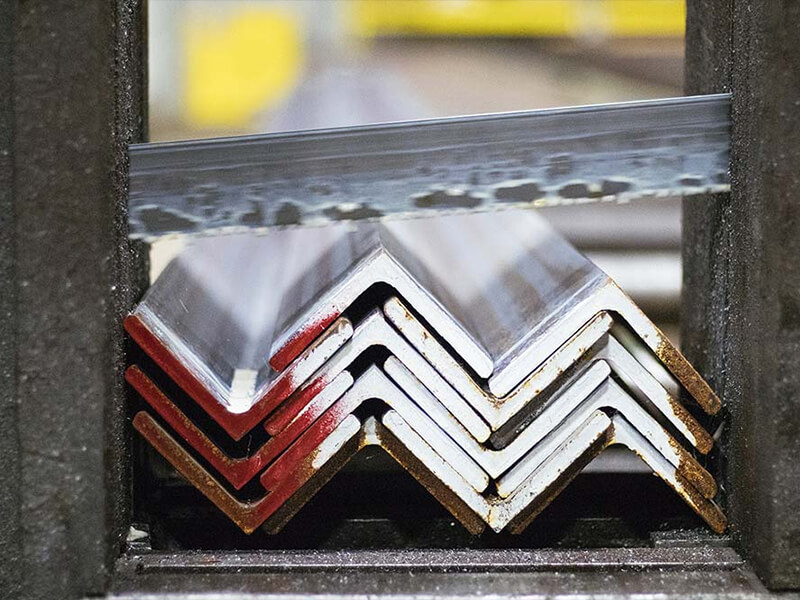
Nesting is the process of arranging different part shapes to be cut from a single piece of material. In the world of angle steel, nesting is simpler because the shapes are linear. But the principle is the same: you want to use the full length of the mother bar.
Let me give you a real example. Imagine the mill’s standard length is 12 meters. Your project needs:
- 200 pieces of 3.0-meter angles
- 150 pieces of 4.0-meter angles
- 100 pieces of 6.0-meter angles
If you order them separately, you will cut the 3.0-meter and 4.0-meter pieces from 12-meter bars, but you will have waste. A 12-meter bar cut into three 4-meter pieces uses the whole bar perfectly. A 12-meter bar cut into four 3-meter pieces also uses the whole bar. But if you cut a 12-meter bar into one 4-meter piece and two 3-meter pieces, you still have 2 meters left as waste.
A Practical Strategy for Your Order
Here is a three-step process I use with my clients, like the project-based distributor Gulf Metal Solutions in Saudi Arabia. They had a complex order with many sizes and we used this method to simplify it.
-
Harmonize Your Sizes: Look at your list of required lengths. Can you change some to be a multiple of the mill’s standard length? For example, if you need 2.9-meter pieces, can you adjust your design to use 3.0-meter pieces? This one change can dramatically reduce waste.
-
Group by Grade: Separate your order by steel grade (e.g., all A36, all AH32). You cannot combine different grades in the same mill order. Each grade is its own batch. This helps you see where you have enough quantity to meet MOQ.
-
Nest by Length: For each grade group, look at how the different lengths can be cut from the same mother length. Aim to use 100% of the mother bar. If you have leftover lengths, see if you can use them for another part of your project or sell them as standard stock.
By following this process, the distributor from Saudi Arabia was able to reduce his cutting waste from an estimated 12% to just under 5%. That was pure profit for his project. He also told me that the steel arrived with clear markings, and his fabrication team was able to start cutting immediately without delays. This is the kind of result you get when you combine sizes with a plan.
What should you confirm with your supplier before placing a mixed order?
You have done your planning. You have your sizes and grades ready. But before you send that purchase order, there are a few key things you must double-check with your supplier. A missed detail here can cause delays, extra costs, or even a rejected shipment.
Before placing a mixed order, you must confirm the mill’s standard mother lengths, the minimum order quantity per size or grade, the tolerance for length and weight, and the supplier’s process for managing and marking mixed items for easy identification upon arrival.

The Details That Make or Break Your Order
A mixed order is more complex than a single-item order. Your supplier needs to manage it correctly from the mill to your warehouse. Here are the five critical confirmations I always make with my team and my clients.
1. Mill’s Standard Mother Lengths1
This is the most basic but most important point. Different mills have different standard lengths. Some use 9 meters, some use 12 meters. If you plan your nesting based on a 12-meter bar but the mill uses 9-meter bars, your plan will not work. I always ask for the exact standard lengths for each size before I start the quantity calculation.
2. Minimum Order Quantity (MOQ) per Size and Grade2
The MOQ is not always a simple "25 tons total." Sometimes, the mill requires a minimum quantity for each size within a grade. For example, you might need 5 tons of L 80x80x8mm and 10 tons of L 100x100x10mm, both in Grade A. The mill might require a minimum of 8 tons per size. If you do not meet that, they might charge a premium or refuse the order. I help my clients adjust their quantities to meet these mill requirements without over-ordering.
3. Length and Weight Tolerances3
Steel is not a precision product. There are accepted industry tolerances. For marine angle steel4, the length tolerance is typically +0mm / -?mm. This means the bar can be shorter than ordered, but not longer. The weight tolerance is usually based on a theoretical weight or actual weight. You need to confirm which standard your supplier uses. If you are on a tight project budget, knowing this helps you avoid surprise shortages.
4. Marking and Packaging for Mixed Orders5
This is where many mixed orders go wrong. You have five different sizes in one container. How do you know which is which when it arrives? You need a clear plan.
- Ask about color coding: Will they paint the ends of each size with a different color?
- Ask about tagging: Will each bundle have a durable metal tag with the size, grade, and quantity?
- Ask about packing lists: Will they provide a detailed packing list that maps each bundle to its location in the container?
A client from Vietnam once received a container with three different angle sizes all bundled together with no markings. His team spent two days sorting and measuring before they could start work. That cost him time and money. Now, I make sure this is detailed in the contract.
5. Third-Party Inspection Support6
For a mixed order, having a third-party inspection like SGS is a smart move. It confirms that the right grades and sizes are actually loaded into the container. I offer this to my clients, especially those in markets like Mexico or Qatar where import regulations are strict. It provides an extra layer of certainty. When Gulf Metal Solutions from Saudi Arabia placed their first mixed order with us, they opted for SGS inspection. It gave them the confidence to move forward with a larger, more complex order later.
By confirming these five points, you turn a potentially risky mixed order into a predictable and efficient transaction.
Conclusion
Planning a mixed marine angle steel order is about more than just listing sizes. It is a process of calculation, strategic grouping, and clear communication with your supplier.
-
Understanding mill lengths is crucial for accurate order planning and avoiding costly mistakes. ↩ ↩ ↩ ↩
-
Knowing MOQ requirements helps you avoid extra costs and ensures your order meets supplier standards. ↩ ↩ ↩ ↩
-
Familiarizing yourself with tolerances can prevent unexpected shortages and budget overruns. ↩ ↩ ↩
-
Exploring marine angle steel can enhance your understanding of its uses and specifications in projects. ↩ ↩ ↩
-
Effective marking and packaging can save time and reduce confusion upon delivery. ↩
-
Third-party inspections add assurance that your order meets specifications, especially in strict markets. ↩