
leading paragraph:
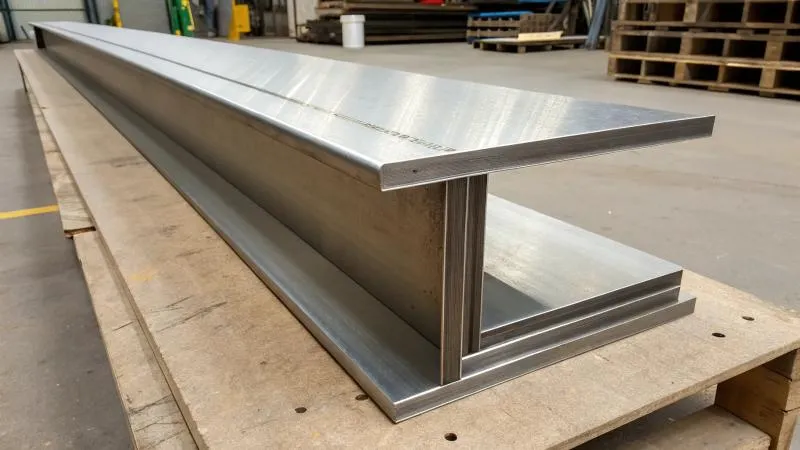
Your shipbuilding project stops because L-shaped steel is wrong. Wrong size. Wrong grade. Arrives bent. You lose time.
snippet paragraph:
Check mill certificates and use third-party inspection before shipment. Confirm dimensions and tolerances. Pack steel properly. Plan buffer stock and phased delivery.
Transition Paragraph:
I am Zora Guo from cnmarinesteel.com. I supply L-shaped section steel to shipyards in Saudi Arabia, Vietnam, and the Philippines. I have seen many delays. Let me show you how to avoid them.
Check Mill Certificates and Third-Party Inspection Before Shipment?
leading paragraph:
You trust the supplier. The steel arrives. The certificate looks real. But the steel fails the test. Now what?
snippet paragraph:
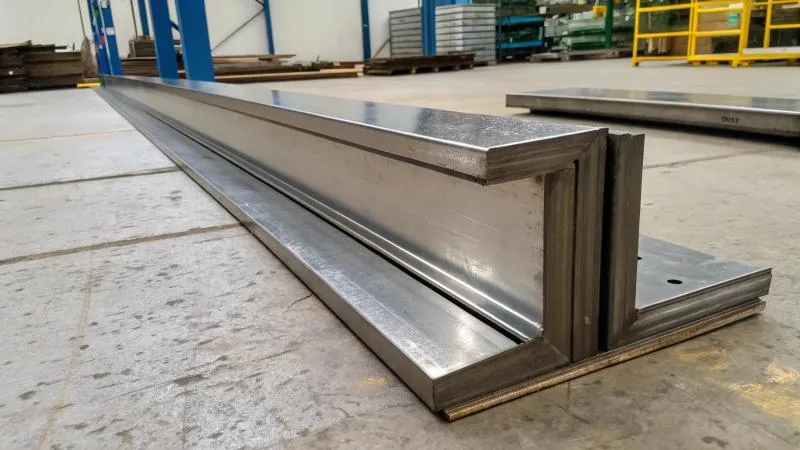
Always ask for original mill certificates1. Then hire a third-party inspector2 like SGS3. They check the steel before it leaves China. No bad steel gets shipped.
Dive deeper Paragraph:
This is the most important step. I cannot say it enough. Bad documents and fake certificates4 are common in the steel trade. I have seen buyers lose months because they trusted a cheap supplier.
What is a mill certificate?
A mill certificate is a document from the steel mill. It shows the chemical composition5 and mechanical properties of the steel. For L-shaped steel used in ships, you need certificates from approved mills. Classification societies like DNV, ABS, BV, and LR have their own lists.
A real mill certificate has:
- Heat number (unique batch ID)
- Chemical analysis (C, Si, Mn, P, S levels)
- Mechanical tests (yield strength, tensile strength, elongation)
- Impact test results (for low temperature)
- Mill stamp and signature
The problem with fake certificates
Some suppliers print fake certificates. They take a real certificate from one batch and copy it for another batch. The steel does not match the paper. When you test the steel, it fails. The classification society rejects it. You have to cut out the bad steel and replace it. That costs weeks and thousands of dollars.
I had a customer in Vietnam who bought L-shaped steel from a trader. The certificate looked good. But when he tested a sample, the yield strength was too low. The trader disappeared. He lost $30,000 and two months of project time.
How third-party inspection helps
Third-party inspection means an independent company checks your steel before shipment. SGS, Bureau Veritas, or Intertek are common choices. The inspector comes to the supplier’s warehouse. They check:
- Visual surface condition (no cracks, no heavy rust)
- Dimensions (leg length, thickness, straightness)
- Markings (heat number matches certificate)
- Sampling for lab testing (if you pay extra)
The inspector sends you a report. If something is wrong, you can reject the steel. The supplier must fix it or refund you. You do not pay for shipping bad steel.
Inspection checklist
| Item | What inspector checks | Acceptable standard |
|---|---|---|
| Surface | Cracks, laminations, heavy rust | No cracks, light rust only |
| Leg length | L-shaped steel legs (mm) | +/- 2mm from specification |
| Thickness | Thickness of each leg | +/- 0.5mm |
| Straightness | Bend along 1 meter length | Less than 2mm per meter |
| Heat number | Matches certificate | Exact match |
| Mill stamp | Present on each piece | Yes |
My practice
At cnmarinesteel.com, I offer SGS inspection on every order. The buyer pays the fee (usually $300-$500 per container). I arrange the inspector. I send photos and the report to the buyer before shipment. Most of my customers approve the steel within 24 hours. Then I ship.
Gulf Metal Solutions in Saudi Arabia used this service. They told me: “The product quality is stable.” That is because they saw the inspection report before the steel left China. No surprises.
What if you skip inspection?
You save $500. But you risk thousands in delay costs. One wrong shipment can cost you $10,000 in labor, $5,000 in shipping, and two weeks of time. The math is simple. Pay for inspection. It is cheap insurance.
Ensure Correct Dimensions and Tolerances for L-Shaped Steel?
leading paragraph:
You order 100mm x 100mm L-shaped steel1. It arrives 98mm x 102mm. Your brackets do not fit. You stop work.
snippet paragraph:
Set clear tolerances2 in your purchase order. Ask for mill test reports3 showing actual dimensions. Use a caliper4 to check a sample before loading.
Dive deeper Paragraph:
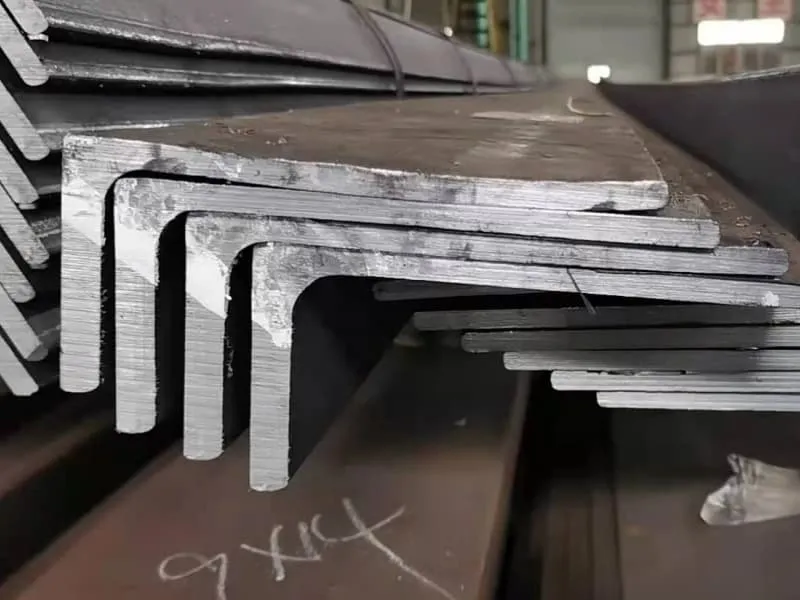
Dimensions matter a lot for L-shaped steel. This steel is used for frames, brackets, and stiffeners. If the legs are too short, the weld gap is wrong. If the legs are too long, the steel does not fit into the assembly.
Standard tolerances for marine L-shaped steel
Most marine standards (like JIS G3192 or ASTM A6) allow small variations. For leg length under 100mm, tolerance is +/- 2mm. For leg length over 100mm, tolerance is +/- 3mm. For thickness, tolerance is +/- 0.5mm for sizes under 10mm, and +/- 0.8mm for thicker sizes.
But here is the problem. Some mills produce steel at the lower end of the tolerance. They save material. For example, a 100mm leg might be 98.5mm. That is still within tolerance. But when you weld two pieces together, the gap is 1.5mm too small. Your welder has to grind. That takes time.
How to avoid this problem
First, tell your supplier your exact needs. Say: “I need 100mm legs. Please produce at nominal size5 or slightly above. Do not go below 99mm.” A good supplier can request this from the mill.
Second, ask for actual measurement data. The mill test report often includes the measured dimensions of the sample pieces. Read that data. If the sample is close to the low limit, ask for another batch.
Third, do a simple check when the steel arrives. Use a caliper. Measure the leg length in three places: near the end, in the middle, and at the other end. Measure both legs. Also measure the thickness. If the steel is out of tolerance, reject it immediately.
Common dimension issues
| Issue | Cause | Consequence | Prevention |
|---|---|---|---|
| Leg too short | Mill rolls to low tolerance | Weld gap too small, grinding needed | Request nominal or plus tolerance |
| Leg too long | Mill error or wrong setup | Does not fit into jig | Check before cutting |
| Uneven legs (one leg longer) | Twisted during rolling | Assembly crooked | Measure both legs |
| Thickness too thin | Mill uses less material | Weak strength, fails inspection | Ask for actual thickness data |
| Bowed (bent along length) | Poor cooling or handling | Cannot lay flat for welding | Check straightness with a straight edge |
A real example
I shipped L-shaped steel to a customer in Malaysia. He needed 75mm x 75mm for a deck frame. The mill produced legs at 74.2mm. Within tolerance. But the customer’s jig was made for 75mm exactly. He had to modify the jig. That took three days. He was not happy.
Now I always ask the mill to produce at 75.5mm for that customer. No more problems.
My advice
Put your tolerance requirements in writing. Add a clause in the purchase order: “All L-shaped steel legs shall be within +0mm / -1mm of nominal size.” That means the legs cannot be shorter than 1mm below nominal. They can be equal or slightly longer. Most mills can do this. They just need to know.
Also, ask for a dimension report6 before shipment. I can send you photos with a caliper next to the steel. You can see the measurement yourself. Then you decide if you accept.
Proper Packing and Loading to Avoid Damage During Transit?
leading paragraph:
The steel is perfect at the factory. But after two months on a ship, it arrives bent and rusted. You cannot use it.
snippet paragraph:
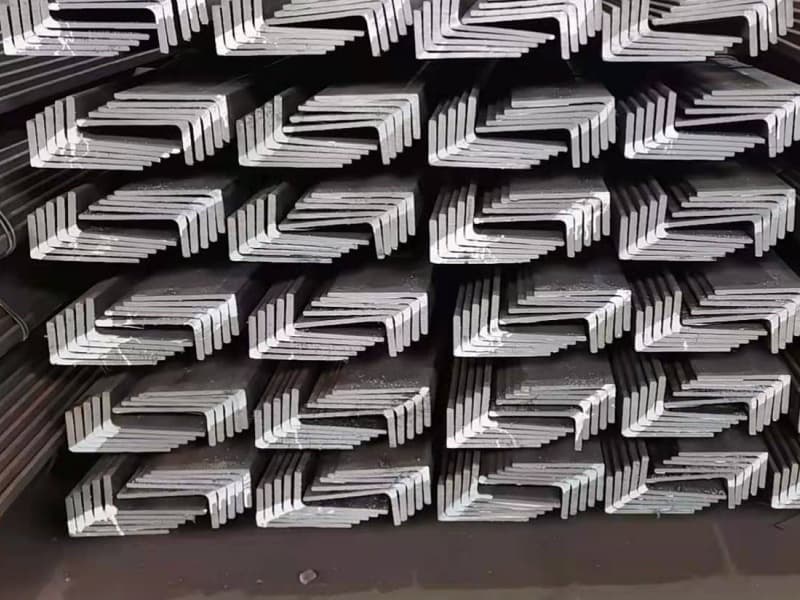
Use steel straps1, wooden spacers2, and edge protectors3. Pack L-shaped steel4 in layers. Load it tight in the container. No movement means no damage.
Dive deeper Paragraph:
L-shaped steel is strong. But it can bend. It can twist. It can rust. The shipping journey from China to Saudi Arabia or the Philippines takes 20 to 35 days. The container gets shaken on trucks and ships. Steel moves. Movement causes damage.
The three types of damage
First, bending. When a bundle of L-shaped steel is not strapped tightly, the pieces slide. The steel bends under its own weight. A bent piece cannot be used for welding. It must be straightened or scrapped.
Second, surface rust. Moisture gets into the container. It condenses on the steel. Rust forms. Heavy rust requires grinding. That adds labor and time.
Third, edge damage. The sharp corners of L-shaped steel hit each other. The edges get dented or rolled over. A damaged edge does not fit into a joint.
How to pack L-shaped steel correctly
I have developed a packing method at my warehouse in Liaocheng. It works for all lengths from 6m to 12m.
Step 1: Group steel by size. Do not mix different leg lengths in one bundle.
Step 2: Lay the first layer with the L-shape facing up. The inside corner points up.
Step 3: Put wooden spacers (2cm thick) between each piece. The spacers keep the steel from touching each other.
Step 4: Add a second layer. This time, turn the L-shape upside down. The inside corner points down. The two layers lock together.
Step 5: Use steel straps every 1.5 meters. For a 6m piece, use 4 straps. For 12m, use 8 straps.
Step 6: Add corner protectors under the straps. The protectors stop the strap from cutting into the steel.
Step 7: Wrap the whole bundle with plastic film. The film keeps moisture out.
Packing method comparison
| Packing feature | Bad packing | Good packing | Best packing |
|---|---|---|---|
| Strapping | Plastic straps, 2 per bundle | Steel straps, 4 per bundle | Steel straps + corner protectors |
| Layer separation | No spacers, steel touches | Wooden spacers every 1m | Rubber spacers + wood |
| Moisture protection | None | Plastic wrap around bundle | Plastic wrap + silica gel bags |
| Container loading | Loose, no blocking | Wood blocks at front and back | Wood blocks + air bags5 |
| Typical damage rate | 10-15% of pieces | 2-5% of pieces | Less than 1% |
What I do for my customers
I use the best packing for all my L-shaped steel shipments. It costs a little more. But my customers save money on the other end. They do not have to grind rust. They do not have to straighten bent steel.
Gulf Metal Solutions told me: “The packaging is the best among all the packaging for ship plates we have received so far.” That is for marine plate. But I use the same standard for L-shaped steel.
Loading into the container
Packing the bundle is half the job. Loading it into the container is the other half.
First, put wooden dunnage on the container floor. The dunnage lifts the steel off the floor. Air can circulate. Moisture does not pool under the steel.
Second, place the first bundle at the front of the container. Push it all the way to the wall. Put a wooden block between the bundle and the front wall.
Third, put the next bundle behind it. Leave a small gap. Put another wood block. Then add air bags. Inflate the air bags to fill the gaps. The air bags press against the bundles. Nothing moves.
Fourth, at the back of the container (near the doors), put a large wood block. Close the doors. The doors press against the block.
A mistake I saw
One customer bought L-shaped steel from a different supplier. The supplier put the steel in the container loose. No straps inside the bundle. No blocking. When the container arrived, the steel was a tangled mess. Half the pieces were bent. The customer had to scrap 40% of the order. He lost three weeks.
Do not let that happen to you. Ask your supplier for packing photos before shipment. I send my customers photos of every container. You can see the straps, the spacers, the plastic wrap, and the blocking. If it looks bad, ask for repacking.
Plan a Buffer Stock and Phased Delivery for Critical Sizes?
leading paragraph:
You need 50 tons of 100x100mm L-shaped steel. The shipment is late. Your workers stand idle. The client is angry.
snippet paragraph:
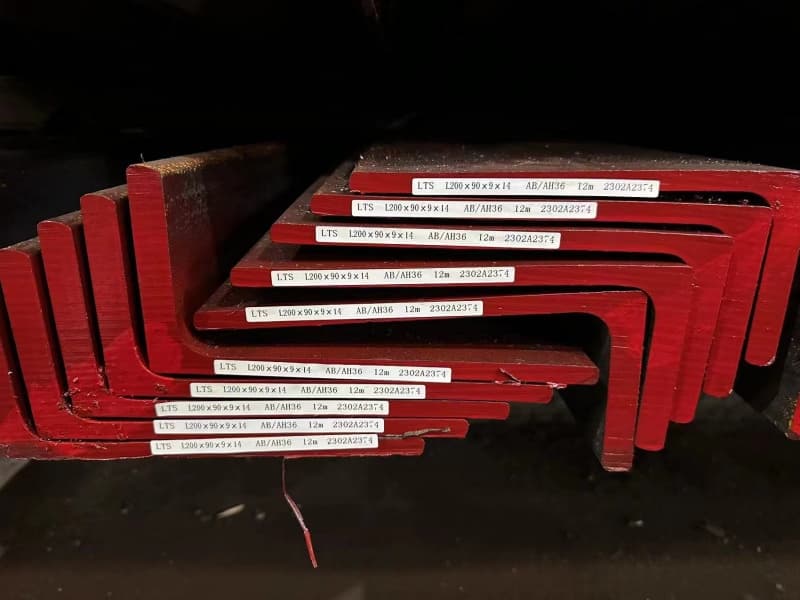
Order 10-15% extra buffer stock1 for critical sizes2. Ask your supplier for phased delivery3. The first batch arrives early. You start work. No waiting.
Dive deeper Paragraph:
Even with perfect quality and packing, delays can happen. Ships are late. Ports are congested. Customs holds the container. You need a backup plan.
What is buffer stock?
Buffer stock means extra steel beyond your exact project needs. For example, your design calls for 100 tons of L-shaped steel. You order 110 to 115 tons. The extra 10-15 tons is your buffer.
Why do you need buffer? Because some pieces will be damaged. Some will be cut wrong. Some will have surface defects you only see after cutting. With buffer stock, you have replacement pieces ready. You do not stop work to order more.
How much buffer do you need?
It depends on the project complexity. For simple frames with straight cuts, 5% buffer is enough. For complex assemblies with many angles and notches, use 10-15% buffer.
I asked a customer in the Philippines. He builds fishing boats. He uses 10% buffer for L-shaped steel. He told me: “The extra cost is small compared to the cost of stopping the line for two weeks.”
What is phased delivery?
Phased delivery means your supplier sends the steel in multiple batches. Instead of one shipment of 100 tons, you get 30 tons first, then 30 tons, then 40 tons.
The first batch arrives early. You start cutting and welding. While you work, the second batch is on the water. The third batch is being prepared. You never run out of steel. You never wait.
Phased delivery schedule example
| Batch | Quantity | Order placed | Shipped from China | Arrives at your port |
|---|---|---|---|---|
| 1 | 30 tons | Week 0 | Week 2 | Week 6 |
| 2 | 30 tons | Week 0 | Week 4 | Week 8 |
| 3 | 40 tons | Week 0 | Week 6 | Week 10 |
With this schedule, you start welding at week 6. You finish at week 14. No gaps.
The cost of phased delivery
Phased delivery costs a little more. You pay for multiple shipments instead of one. Each shipment has its own freight and port fees. For three shipments, you might pay 15% more in logistics.
But compare that to the cost of a delay. One week of delay for a medium shipyard costs $5,000 to $10,000 in labor and overhead. If phased delivery prevents a 2-week delay, it pays for itself.
How I help my customers
At cnmarinesteel.com, I offer phased delivery for all project orders. You tell me your project schedule. I plan the mill production and shipping to match. I also keep safety stock4 at my warehouse. If a mill batch is late, I pull from safety stock. You do not wait.
Gulf Metal Solutions used phased delivery for their marine steel plate5. They told me: “The steel company maintained rapid response speed throughout the entire delivery process.” That means they never waited for answers. They never waited for steel.
Practical tips for buffer stock
- Store buffer stock separately. Label it clearly. Do not use it unless you need it.
- Rotate your buffer. Use the oldest buffer first in your next project. Then replace it.
- For very expensive grades (like high-tensile steel), a 5% buffer is enough.
- For common grades (like A36), you can use 10-15% because it is cheaper.
My final advice
Talk to your supplier about buffer stock and phased delivery before you place the order. Do not assume they offer it. Ask them. A good supplier will work with you. I always do.
Conclusion
Check certificates. Confirm dimensions. Pack properly. Plan buffer stock. Four steps. No delays. Your project stays on track.
-
Understanding buffer stock can help you prevent delays and ensure smooth operations in your projects. ↩ ↩ ↩ ↩
-
Learn how to effectively manage critical sizes to maintain efficiency and meet project deadlines. ↩ ↩ ↩ ↩
-
Exploring phased delivery can reveal strategies to optimize your supply chain and avoid costly delays. ↩ ↩ ↩ ↩
-
Discover how safety stock can safeguard your operations against unexpected supply chain disruptions. ↩ ↩ ↩ ↩
-
Understanding marine steel plate applications can enhance your project planning and material selection. ↩ ↩ ↩ ↩
-
A dimension report gives you confidence in the quality of your steel, ensuring it meets your specifications. ↩