
leading paragraph:
Your ship frame is too heavy. Or too weak. You need a balance. Marine angle steel gives you both.
snippet paragraph:
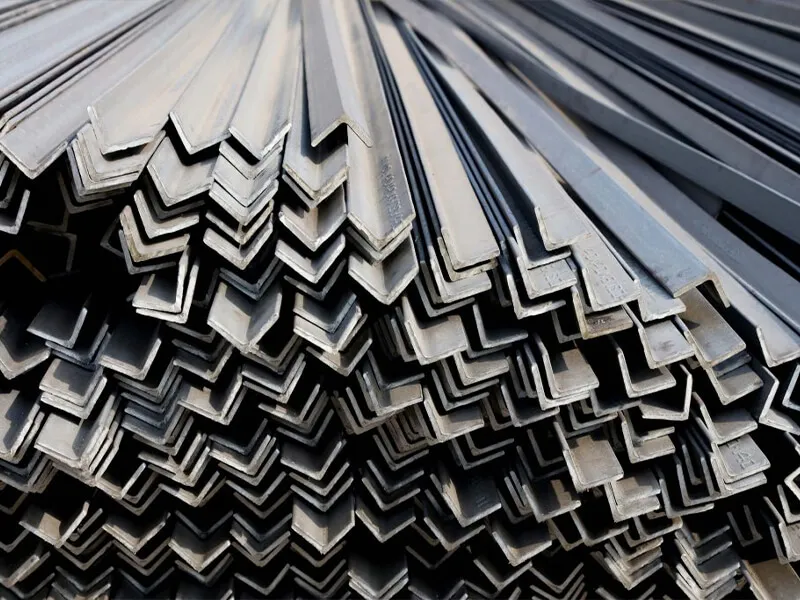
Marine angle steel has an L-shape. This shape gives high strength with less material. You can design lighter frames that still pass classification rules.
Transition Paragraph:
I am Zora Guo from cnmarinesteel.com. I supply marine angle steel to shipbuilders in Saudi Arabia, Vietnam, and the Philippines. I have seen many frame designs. Let me share what works best.
Why Marine Angle Steel Is Ideal for Ship Frame Structures?
leading paragraph:
You try to use flat bar. It bends too easily. You try to use heavy plate. It costs too much. You need a better option.
snippet paragraph:
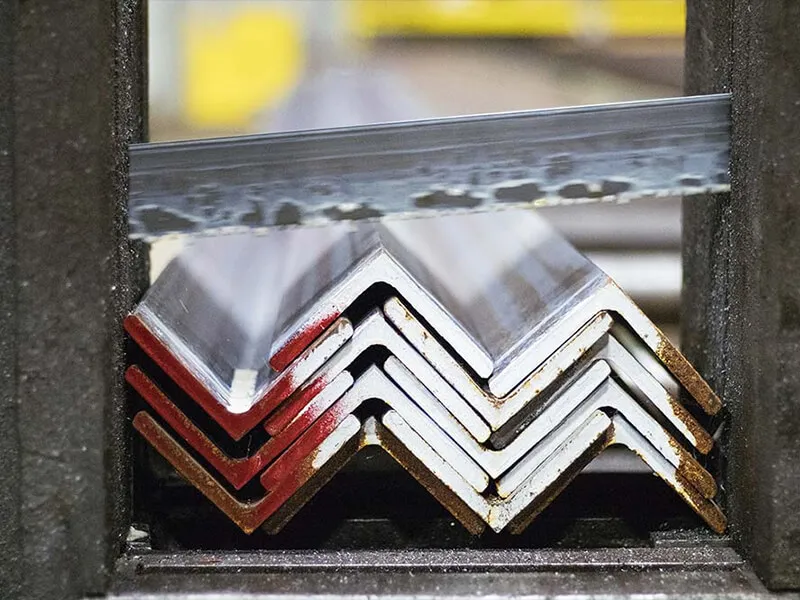
Marine angle steel1 has two legs at 90 degrees. This shape resists bending and twisting. It is strong in two directions. That is perfect for ship frames.
Dive deeper Paragraph:
Let me explain why the L-shape works so well for ships. A ship frame takes forces from many directions. Waves push from the side. The engine vibrates. The cargo presses down. A simple flat bar is strong in one direction only. Bend it the other way, and it folds.
The science of the L-shape
The two legs of marine angle steel create a thing called the moment of inertia2. That is a fancy term. But here is the simple meaning: the L-shape spreads the load across two planes. When a force tries to bend the steel, both legs work together to resist it.
Think of a piece of paper. A flat sheet bends easily. But fold the paper into an L-shape. Now it is much harder to bend. Same material. Different shape. That is the power of angle steel.
Comparison with other shapes
| Steel shape | Strength in one direction | Strength in two directions | Weight per meter (for 100mm size) | Best use |
|---|---|---|---|---|
| Flat bar | High | Low | 7.8 kg | Simple stiffeners |
| Marine angle steel | High | High | 11.2 kg | Frame corners, web frames |
| Bulb flat steel | Very high | Medium | 14.5 kg | Bottom longitudinal |
| Square bar | Medium | Medium | 15.7 kg | Small brackets |
Real world example
I supplied marine angle steel to a customer in Malaysia. He was building a fishing boat. His old design used flat bar for the frame. The boat was heavy. It used more fuel. He switched to marine angle steel for the new design. The frame weight dropped by 18%. The boat was still strong. He saved fuel and material cost.
Why classification societies3 approve angle steel
DNV, ABS, and BV all have sections in their rules for angle steel. They know the shape works. They provide standard sizes and grades. You do not need special approval. Just pick a size from the rule book. That saves time in the design phase.
My advice
Use marine angle steel for any frame that takes load from two directions. That includes web frames, floor beams, and deck stiffeners. For simple straight stiffeners, flat bar is fine. But for corners and connections, angle steel is the better choice.
Key Design Parameters: Leg Length, Thickness, and Radius?
leading paragraph:
You open the classification rules. There are hundreds of sizes. Which one do you pick? You feel lost.
snippet paragraph:
Focus on three numbers: leg length1, thickness2, and root radius3. Leg length gives bending strength4. Thickness gives shear strength5. Radius prevents cracking.
[^6]](https://cnmarinesteel.com/wp-content/uploads/2026/01/Marine-angle-steel-47.jpg)
Dive deeper Paragraph:
Designing with marine angle steel is not hard. But you need to know what each number means. Let me break it down.
Leg length
The leg length is the length of each side of the L. Common sizes are 50mm, 65mm, 75mm, 90mm, 100mm, 120mm, 150mm. The longer the leg, the more resistance to bending. But longer legs also mean more weight.
How to choose: For a small boat, 50mm or 65mm is enough. For a cargo ship, you need 100mm or 120mm. For a tanker, maybe 150mm. Look at the span between supports. A longer span needs a longer leg.
Thickness
Thickness is how thick the steel is. Common thicknesses range from 4mm to 16mm. Thicker steel is stronger. But it is also heavier and harder to weld.
A good rule: the thickness should be about 1/10 to 1/8 of the leg length. For a 100mm leg, use 10mm to 12mm thickness. For a 65mm leg, use 6mm to 8mm thickness. This ratio gives a balanced design.
Root radius
The root radius is the curve at the inside corner of the L. This is easy to miss. But it is very important. A sharp corner concentrates stress. That leads to cracks. A radius spreads the stress over a larger area.
Marine angle steel has a standard root radius. For sizes under 75mm, the radius is 6mm. For larger sizes, the radius is 8mm or 10mm. Do not buy angle steel with a sharp corner. It will fail under vibration.
Design parameter table
| Parameter | What it controls | Too small | Too large | Recommended range |
|---|---|---|---|---|
| Leg length | Bending strength | Frame bends | Too heavy, wasted material | 50-150mm depending on ship size |
| Thickness | Shear strength | Buckles under load | Hard to weld, heavy | 1/10 to 1/8 of leg length |
| Root radius | Fatigue life | Cracks at corner | No problem, but rare | 6-10mm for marine grades |
A mistake I saw
A customer in Vietnam ordered 90mm x 90mm angle steel with 5mm thickness. That is too thin for the leg length. The ratio was 1/18, not 1/10. When he welded the frame, the steel warped. The frame was not straight. He had to add extra bracing. That added weight and cost.
I told him to use 9mm thickness next time. He did. The frame came out straight. No extra bracing needed.
How to read a mill certificate
When you get your marine angle steel, check the mill certificate. Look for these three numbers. The leg length should be within +/- 2mm of specification. The thickness should be within +/- 0.5mm. The radius is usually not listed, but you can see it with your eye. A smooth curve is good. A sharp corner is bad.
My advice for designers
Start with the classification society rules. They have tables of approved sizes. Pick a size from the table. Then check the leg length to thickness ratio. Adjust if needed. Then add a small safety margin (10-15%). That gives you a solid design.
How to Reduce Weight While Keeping Frame Strength?
leading paragraph:
Your ship is too heavy. It burns too much fuel. You need to cut weight. But you cannot cut strength.
snippet paragraph:
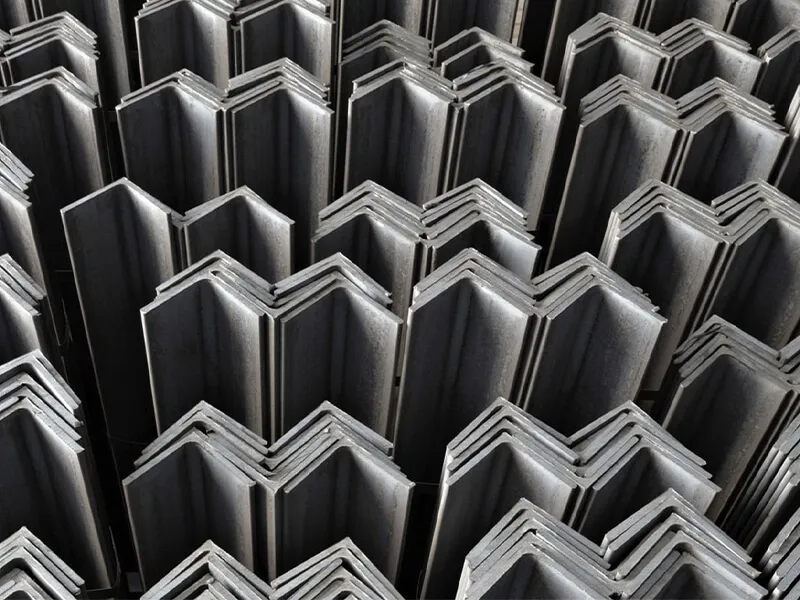
Use unequal leg angle steel. The longer leg goes where the load is higher. The shorter leg goes where the load is lower. You save weight without losing strength.
Dive deeper Paragraph:
Most people think equal leg angle steel (like 100mm x 100mm) is the only choice. That is not true. Unequal leg angle steel (like 100mm x 75mm) is very useful. It lets you put material only where you need it.
How unequal leg works
Imagine a frame that is welded to a plate on one side. The side touching the plate carries more load. The free side carries less. With equal leg, both sides are the same. You waste material on the free side.
With unequal leg, you make the longer leg on the plate side. The shorter leg is on the free side. You get the same strength at the connection. But you use less steel overall. The weight drops by 10 to 20 percent.
| Method | How it works | Weight saving | Strength impact | Best for |
|---|---|---|---|---|
| Unequal leg | Longer leg on high-load side | 10-15% | No loss | Frames attached to plate |
| Tapered leg | Reduce leg length at low-stress ends | 5-10% | Small loss | Long beams |
| Smaller radius | Use tighter root radius | 2-3% | Very small | Low-vibration areas |
| Higher grade steel3 | Use AH36 instead of A36 | 15-20% | Same strength | High-stress areas |
Higher grade steel is a big help
Marine angle steel4 comes in different grades. A36 is basic. Yield strength is 250 MPa. AH36 is stronger. Yield strength is 355 MPa. That is 40% stronger for the same weight.
So you can use a smaller size of AH36. For example, a 75mm x 75mm x 8mm in AH36 is as strong as a 90mm x 90mm x 10mm in A36. The weight drops by about 30%. That is a big saving.
But there is a catch
Higher grade steel costs more per ton. And it is harder to weld. You need special welding rods and procedures. The classification society may require qualification tests.
So you have to do the math. For a small boat, the extra cost of AH36 may not be worth it. For a large ship, the fuel saving over 20 years makes it a good deal.
A real example
I supplied AH36 marine angle steel to a customer in Qatar. He was building a crew boat. He wanted to reduce weight to go faster. We used unequal leg AH36 for the frames. The weight dropped by 22% compared to his old design using A36 equal leg. The boat was faster. It used 15% less fuel. He was very happy.
My weight reduction checklist
- Step 1: Identify which side of the frame carries more load.
- Step 2: Consider unequal leg if the load is uneven.
- Step 3: Check if a higher grade steel (AH36 or DH36) makes sense.
- Step 4: Run a simple calculation. Compare material cost vs fuel saving.
- Step 5: Talk to your classification society. They may have rules about grade changes.
What not to do
Do not reduce thickness to save weight. Thin steel buckles. Buckling happens suddenly. No warning. It is dangerous. Always keep the leg length to thickness ratio within 1/10 to 1/8.
Also do not reduce the root radius. A sharp corner will crack. That crack grows over time. The frame fails after months or years. That is a hidden danger.
My advice
Weight reduction is good. But safety comes first. Use unequal leg and higher grade steel. Do not cut corners on thickness or radius. And always test a sample frame before building the whole ship.
Common Frame Connection Methods and Their Trade-offs?
leading paragraph:
You have the angle steel. Now you need to connect it to the plate. Weld it? Bolt it? Each method has pros and cons.
snippet paragraph:
Welding is strong and cheap. But it can cause distortion. Bolting is easy to change. But it adds weight and cost. Your choice depends on the application.
Dive deeper Paragraph:
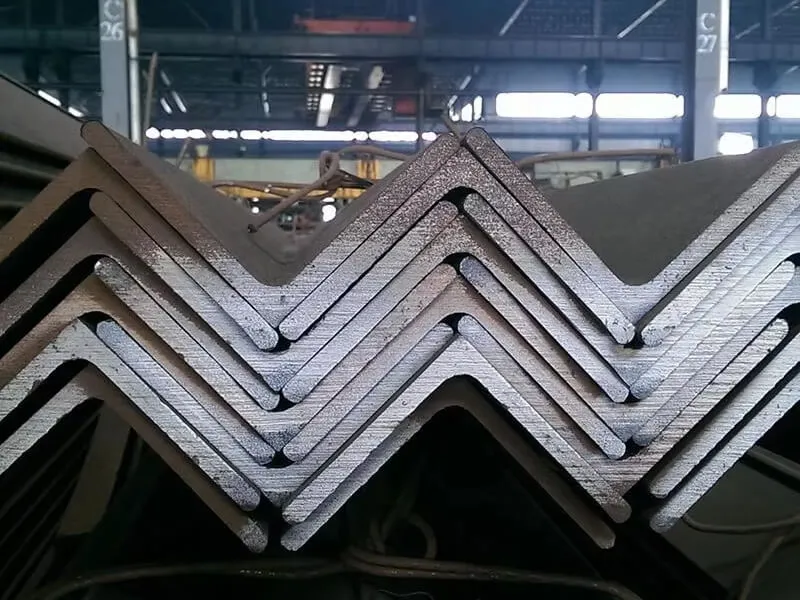
The connection between angle steel and the hull plate is critical. A bad connection fails first. Let me compare the three common methods.
Method 1: Fillet welding1
This is the most common. You run a weld bead along the inside corner of the angle steel where it touches the plate. The weld fills the gap. It is strong and cheap.
Pros:
- Low cost. No extra materials.
- Strong. The weld bonds the steel together.
- No extra weight. Just the weld metal.
Cons:
- Heat causes distortion. The angle steel can warp.
- Difficult to change later. You must cut the weld.
- Requires skilled welders.
Method 2: Bolted connection2
You drill holes in the angle steel and the plate. Then you put bolts through. Nuts and washers on the other side.
Pros:
- Easy to assemble and disassemble. Good for prototypes.
- No heat. No distortion.
- You can reuse the steel.
Cons:
- Heavy. Bolts and nuts add weight.
- Holes reduce the strength of the steel.
- Cost of bolts and labor for drilling.
Method 3: Intermittent welding3
You do not weld the whole length. You weld short sections. Then skip a gap. Then weld again. The weld is 50-70% of the length.
Pros:
- Less heat. Less distortion.
- Faster than continuous welding.
- Good enough for low-stress areas.
Cons:
- Weaker than continuous weld.
- Gaps can trap moisture. Rust starts there.
- Not allowed for high-stress connections.
Comparison table
| Connection method | Strength | Cost | Weight | Distortion risk | Rework difficulty |
|---|---|---|---|---|---|
| Fillet weld (continuous) | Very high | Low | Low | High | Hard |
| Bolted | Medium | High | High | None | Easy |
| Intermittent weld | Medium | Medium | Low | Medium | Medium |
What classification societies4 say
DNV and ABS allow all three methods. But they have rules. For continuous weld, the leg length of the weld must be at least 0.7 times the thickness of the angle steel. For bolted connections, the bolts must be high-strength grade. For intermittent weld, the welded sections must be long enough.
A real example from my customer
Gulf Metal Solutions in Saudi Arabia builds frames for oil tankers. They use continuous fillet welding5 for most connections. But for temporary frames that will be removed later, they use bolted connections. That way they can take the frame apart and reuse the angle steel.
They told me: “We like bolted connections for test assemblies. But for the final ship, we weld everything. Welding is stronger and lighter.”
My advice for designers
Use continuous fillet welding for permanent frames. It is the best balance of strength, cost, and weight. Use bolted connections for areas that need maintenance access. Use intermittent welding only for low-stress parts like handrails or light supports.
Common mistake to avoid
Do not weld both sides of the angle steel. That creates too much heat. The steel will warp badly. Weld only the inside corner. The outside corner is not needed. It adds no strength. It only adds heat and cost.
Also, do not start welding without a plan. Tack weld the angle steel in place first. Then check the alignment. Then do the final welds. This prevents distortion.
My final tip
If you are not sure about the connection, build a small test piece6. Weld a 500mm long sample. Check the distortion. Bend it. Test it. Then decide. A small test costs little. It saves big problems later.
Conclusion
Marine angle steel is strong, light, and easy to design. Pick the right leg length, thickness, and radius. Use unequal leg to save weight. Weld it properly.
-
Explore the benefits of fillet welding, a common method for connecting angle steel, known for its strength and cost-effectiveness. ↩ ↩ ↩
-
Learn about bolted connections, their ease of assembly, and the trade-offs in weight and cost. ↩ ↩ ↩ ↩
-
Discover intermittent welding, a method that reduces distortion and is suitable for low-stress applications. ↩ ↩ ↩ ↩
-
Understand the regulations from classification societies like DNV and ABS regarding welding and bolting methods. ↩ ↩ ↩
-
Find out why continuous fillet welding is recommended for permanent frames due to its strength and efficiency. ↩ ↩
-
Learn the importance of building a test piece to evaluate welding methods and prevent future issues. ↩