
Quantity disputes in marine angle steel deliveries start with vague paperwork and end with frozen payments. They delay hull erection and strain good supplier relationships. The fix is measurement discipline, applied before the steel ever ships.
Prevent quantity disputes in marine angle steel deliveries by fixing four things before shipment: a written weight basis in the contract, an agreed tolerance band, per-bundle packing data, and a documented receiving tally backed by photos and weighbridge records.
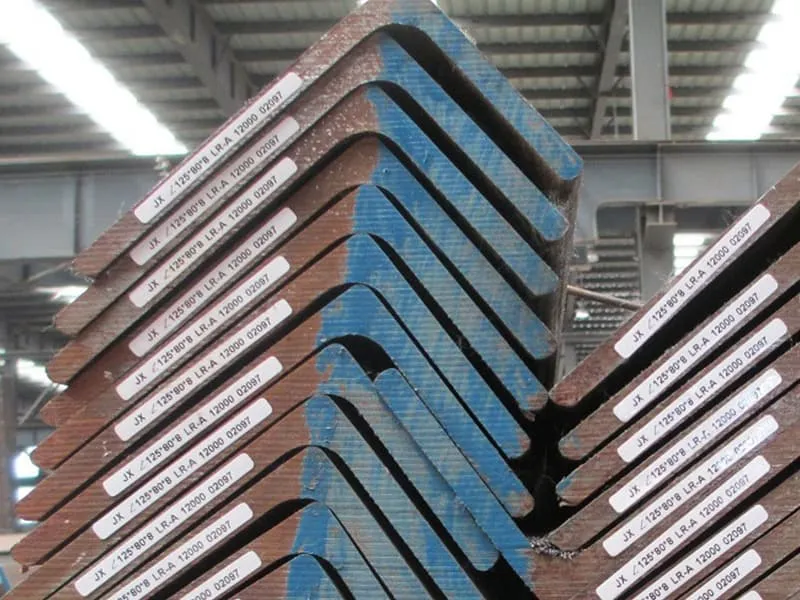
Most buyers I work with check the steel grade twice and the quantity paperwork zero times. Then a delivery lands short, the two sides argue for months, and nobody can prove anything because nobody agreed on how to count. I sell marine angle steel for a living, and I can tell you that almost every quantity dispute I have seen could have been prevented with four decisions made at the quotation stage. Below are the decisions, the numbers behind them, and the receiving routine that keeps both sides honest.
Which Weight Basis Should Decide What You Actually Pay For?
Your contract says price per tonne, but it never says which tonne. Theoretical weight and weighed weight are different commodities, and the gap is real money on a 200-tonne angle order. Declare the basis in writing or the dispute decides itself later.
The weight basis must be stated on the purchase order as either theoretical weight (nominal dimensions times 7,850 kg/m³ from standard section tables) or certified actual weighed weight, never left blank. For recurring marine angle steel contracts, certified weighed weight at the loading port is the fairer basis because it pays for the steel that physically arrives.

Theoretical Weight Is a Calculation, Not a Promise
Theoretical weight comes from the section table. An L100×100×10 angle is 15.0 kg per metre in the EN tables, so a 12-metre bar is 180 kg on paper. Both sides can verify the arithmetic with a calculator, which is why theoretical billing is easy to administer and why small spot orders on standard sizes work fine on this basis. The catch is that the table assumes nominal dimensions, and no mill rolls perfectly nominal. Every rolled section carries a dimensional tolerance. Our own data sheet lists thickness tolerances of ±0.3 mm for sections up to 10 mm and ±0.4 mm above that, plus a length tolerance of ±50 mm on cut bars. A thickness that lands on the positive side makes the bar heavier than the table; a negative side makes it lighter. Steel density is fixed at 7.85 g/cm³, but the volume is not.
There is a second trap hiding inside theoretical billing, and it is the table itself. The same nominal angle size can carry slightly different kg/m values in different standards, because flange radii and root geometry differ between rolling series. If your quotation says L100×100×10 and the mill’s schedule says the same thing but from a different table family, your paper weight and the supplier’s paper weight will not agree before a single bar is cut. So when we quote, we name the standard behind the section table, and I tell buyers comparing offers to do exactly the same. A quotation that names no table is not a quotation. It is a guess with a price on it.
Why Mills Roll to the Thick Side
Here is the part most first-time importers never hear. Rolling mills around the world tend to sit on the positive side of the tolerance band, because thick steel is safe steel and because, on an actual-weight contract, thick steel also pays. Industry experience puts the typical gap between weighed and theoretical weight at roughly two to six percent for sections like angles. On an actual-weight contract that gap flows to the seller. On a theoretical contract it flows to whichever side it disadvantages that month. Neither basis is dishonest. The problem is silence. I have read purchase orders that run pages on price validity and never mention the weight basis at all. I have never seen one of those end well.
The Tolerance Band Clause That Keeps the Peace
The practical fix is a tolerance band agreed in writing. Both sides accept that invoiced weight and independently verified weight may differ by a small, named percentage. Within the band, the invoice stands and nobody argues. Beyond the band, a defined joint check triggers. Industry practice for breakbulk cargo accepts roughly ±0.5 percent as normal measurement noise, and many bulk contracts write 0.5 or 1.0 percent into the clause. For containerised angle steel, the check is simpler: count the bundles against the packing list and weigh a sample. The table below compares the measurement bases and tools you will actually meet on a marine angle steel delivery.
| Measurement basis or tool | Typical accuracy | Who runs it | Best used for |
|---|---|---|---|
| Theoretical weight from section tables | Exact arithmetic, but ±0.3–0.4 mm thickness tolerance underneath | Both sides re-calculate | Small spot orders, standard sizes |
| Mill weighbridge at loading | ±0.3 percent between calibrated scales | Seller, certificate issued | Actual-weight contracts |
| Independent surveyor weighbridge | Same as above, witnessed | Third party, paid by buyer | Large or project contracts |
| Draft survey on breakbulk vessels | ±0.5 percent in good conditions, up to 1.0 percent | Ship’s officers or surveyor | Full-ship steel cargoes |
| Receiving tally against packing list | Piece-count exact | Buyer | Every delivery, always first |
How Should You Tally a Marine Angle Steel Delivery at Receipt?
The container doors open, the bundles come off, and the clock starts. Most shortages reported to us turn out to be counting errors, bundle mix-ups, or missing paperwork rather than missing steel. A fixed receiving routine separates those in twenty minutes.
Verify count before weight: tally each bundle against the packing list at unloading, photograph every layer before anything moves, check bundle tags against the packing list line by line, then weigh the consignment and compare against the certificate, allowing the agreed tolerance band before raising any claim.

Count First, Weigh Second
The sequence matters more than the tools. Count the bundles and, for mixed-size consignments, the bars inside a sample of bundles, before a single piece leaves the discharge area. If the container weight looks light but the piece count is correct, you have a dimension or tolerance question, not a shortage claim. If the count is short, photograph every layer as it comes out, note the discrepancy on the carrier’s delivery receipt or bill of lading remarks, and notify the seller inside the claim window. A clean piece-count shortage against a packing list is the simplest claim in the steel trade, and it settles in weeks. A vague email saying “we believe the shipment is short” can rot in correspondence for months.
The bill of lading remark deserves its own sentence, because buyers skip it and regret it. A clean bill means the carrier received the goods in the stated quantity and apparent condition. If the tally at discharge disagrees with the bill, the discrepancy must go on the carrier’s document at the moment of receipt, in writing, before the surveyor leaves and before the truck rolls. That remark is what turns a private argument with your supplier into a documented logistics fact, and it costs one pen and five minutes at the quay. I have watched a receiving team in Southeast Asia skip it because the port was busy, and that missing remark cost them the whole claim later.
Weighbridge Numbers and What Draft Surveys Can Promise
For actual-weight contracts, the load-port weighbridge certificate is the reference, and buyers are entitled to ask who calibrated the scale. Between two calibrated scales, a ±0.3 percent difference is normal commercial noise. For breakbulk vessel shipments, the bill of lading quantity usually comes from a draft survey at the load port. Draft surveys are accepted worldwide, but they are not an exact science. Done properly, the accuracy is around ±0.5 percent, and P&I club loss-prevention guidance puts the realistic spread at 0.5 to 1.0 percent. The physics behind that spread is worth respecting: a two-centimetre error in reading the mean draft shifts the calculated displacement by roughly 68 tonnes on a Handysize bulk carrier and over 110 tonnes on a Panamax. So when a discharge-port survey differs from the load-port figure by 0.3 percent on a 5,000-tonne angle cargo, that is weather and wave-reading, not theft. When it differs by 2 percent in the same direction on every voyage, that is a pattern, and patterns need investigating.
The Per-Bundle Packing List Habit
One habit from our own shipments has saved more arguments than any clause: per-bundle weights on the packing list. When the receiving crew knows bundle 14 of 22 should weigh about 3.1 tonnes, a light bundle is spotted in minutes with a mobile scale or at the yard weighbridge, and the claim becomes specific: bundle, tag number, listed weight, measured weight. Specific claims settle. Vague ones linger. At Dammam port, our Saudi client Gulf Metal Solutions runs exactly this routine on every angle steel consignment we ship them: tally against the packing list during unloading, tag-by-tag matching, weighbridge slip kept with the file. Their receiving supervisor told us the first supplier who gave them per-bundle numbers was the first supplier they never had to chase over quantities. That is not a coincidence. The paperwork made the dispute impossible.
| Receiving check | What it catches | Evidence to keep | When to do it |
|---|---|---|---|
| Bundle count vs packing list | Missing bundles, mixed shipments | Signed tally sheet, photos of each layer | Before anything leaves discharge area |
| Tag match per bundle | Wrong size or grade mixed in | Tag photos linked to packing lines | During unloading |
| Sample bar count inside bundles | Short bars inside a full-count bundle | Photos of opened bundle | Same day as unloading |
| Weighbridge gross and tare | Underweight consignment | Weighbridge slip number, calibration record | At receipt, before unpacking fully |
| Certificate vs delivery match | MTC and heat numbers not matching delivery | MTC copies, heat-number mapping | Before material enters production |
What Should Your Purchase Order Say Before the Steel Ever Ships?
Every dispute I described above traces back to a sentence somebody did not write. The purchase order is where prevention is cheapest, because at quotation stage words are free and after shipment they cost tonnes.
A marine angle steel purchase order should name the weight basis, the tolerance band, who weighs and who pays, the claim window in days, and the required packing list format with per-bundle weights. If any of these five items is missing, the order is not finished, whatever the price says.
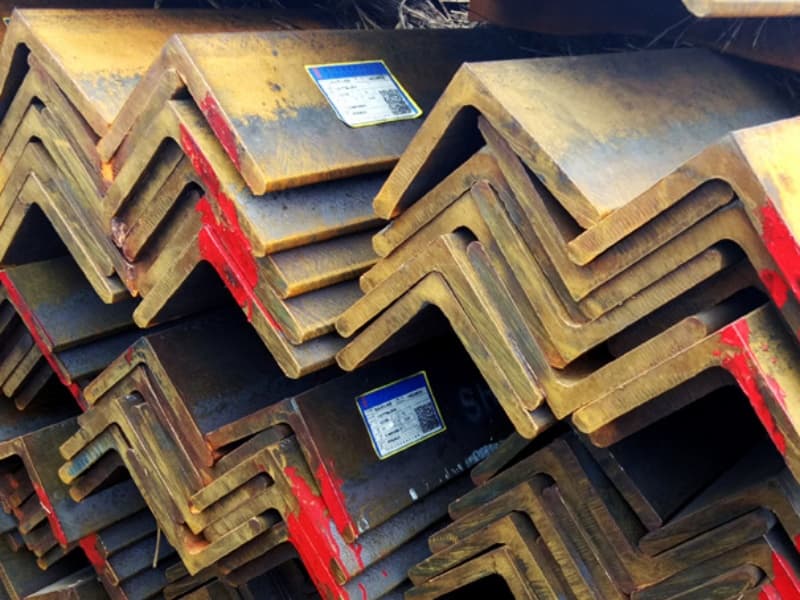
Five Clauses That Do Ninety Percent of the Work
The clauses are short, and each one closes a specific dispute route. Weight basis closes the theoretical-versus-weighed argument. Tolerance band closes the noise argument. Naming who weighs, and on whose scale, closes the whose-number-is-right argument. The claim window closes the late-notification argument, and this one bites harder than buyers expect: a real case in the bulk trade saw the buyer learn of a weight gap on day nineteen of a fifteen-day contractual window, and the window won. Thirty days is a common default in steel contracts, but a default you never negotiated is a default you cannot rely on. The packing-list format clause closes the vague-claim argument, because per-bundle weights and heat numbers turn every future conversation into arithmetic. The table below sets weak wording against wording that holds.
| Clause | Weak wording | Strong wording |
|---|---|---|
| Weight basis | “Payment per ton” | “Invoiced on actual weighed weight certified at loading port” or “invoiced on theoretical weight per EN section tables, density 7.85” |
| Tolerance band | “Reasonable variations accepted” | “Invoiced weight may not deviate from independently verified weight by more than 0.5%” |
| Weighing party | “Supplier to provide weights” | “Weight certified by mill weighbridge, calibration records available on request; buyer may appoint SGS or equivalent surveyor” |
| Claim window | “Timely notification required” | “Written claim with tally sheet and photos within 30 days of vessel arrival” |
| Packing list | “Packing list attached” | “Packing list to show bundle numbers, tag numbers, piece counts and per-bundle weights” |
Protest Early, in Writing, With Numbers
When something does look wrong at receipt, the sequence is simple and it is not optional: photograph, tally, weigh, then write a letter of protest or a formal claim email within the window, attaching the tally sheet, the weighbridge slip, and your own arithmetic against the section tables. A claim with numbers attached is a negotiation about facts. A claim without numbers is a negotiation about feelings, and feelings take months. We answer every quantity query within two hours during working hours, and I will say plainly that response speed matters as much as the clauses: the buyer who raises a documented protest on day two has a very different conversation with any supplier than the buyer who raises a suspicion on day twenty-five. Prevention, in the end, is a habit on both sides of the water. Ours is per-bundle packing data and two-hour replies. Yours is a tally sheet, a camera, and a scale. Between them, quantity disputes stop happening.
Conclusion
Declare the weight basis, write the tolerance band, tally before you weigh, and claim inside the window with numbers. Those four habits prevent nearly every marine angle steel quantity dispute before it starts.