
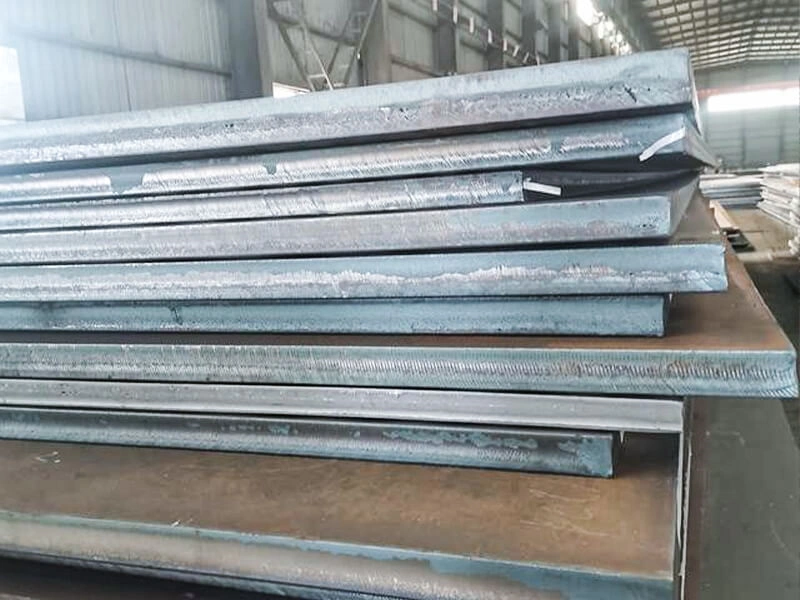
A pile of steel plates on a shipyard can seem anonymous. But misreading a single marking can lead to using the wrong material in a critical hull section, risking safety and compliance.
Marine steel plates are identified by painted markings, stamped codes, and color bands that indicate the grade, heat number, dimensions, and mill origin. The most common grades follow a letter-number system like AH36, where ‘A’ indicates toughness level and ‘36’ indicates yield strength in kg/mm².
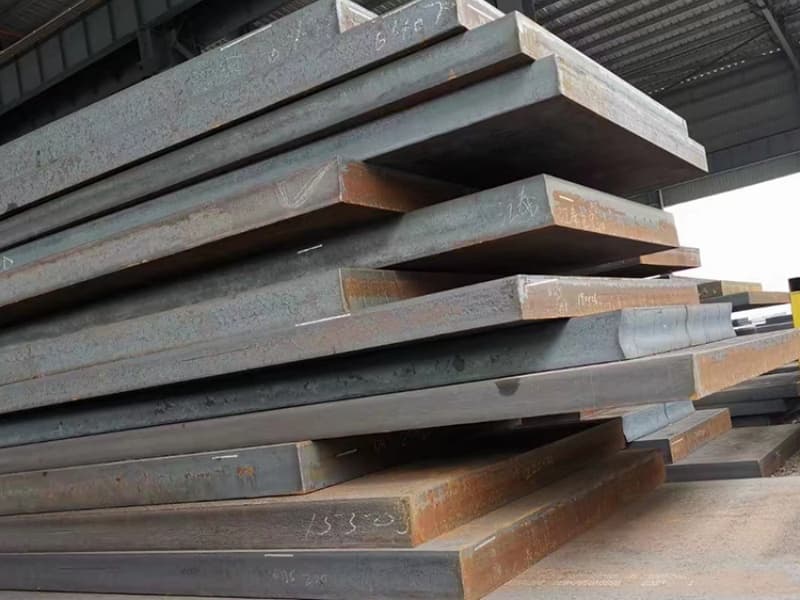
I have seen many project managers and inspectors squinting at faint stamps or trying to match color codes from memory. This confusion can cause project delays. The labels on a steel plate are its passport. They tell its full story from the mill to your yard. Understanding this language is not just for surveyors; it is vital for anyone who sources, receives, or uses marine steel. Let me translate this industrial language for you.
How do you identify the grade of steel?
You are standing in front of a stack of plates. You need to confirm they are the DH36 you ordered, not AH36. You cannot rely on guesswork. You need a reliable method.
You identify the steel grade by checking three things together: the painted or stamped marking on the plate edge, the color code bands on the plate end, and most importantly, the Mill Test Certificate (MTC) that provides the definitive chemical and mechanical analysis linked to the heat number.
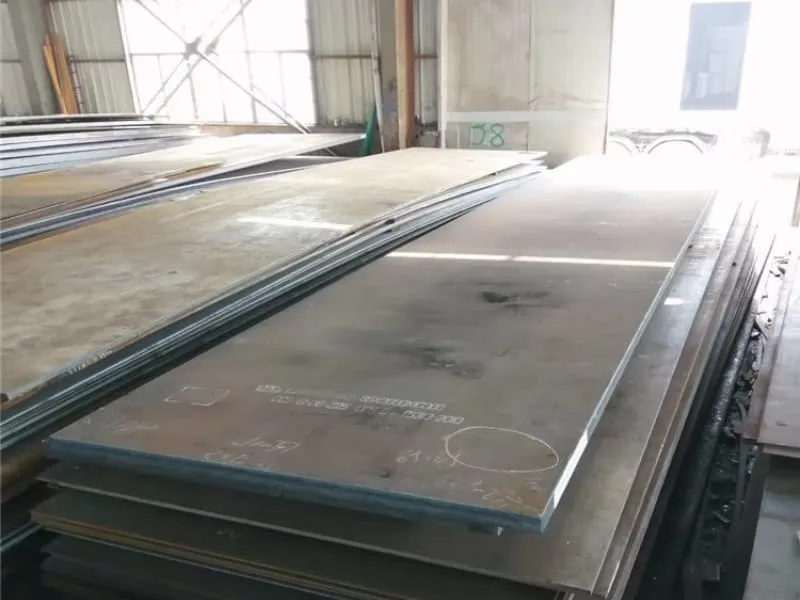
A Three-Step Verification Process: Markings, Color, and Paper
Identifying the grade correctly is a systematic process. It combines visual checks with document verification. Never rely on just one method.
Step 1: Decode the Direct Markings on the Plate.
The steel mill permanently marks each plate. They use paint stencils or, more commonly, die stamps. You will find this information near one edge of the plate. Look for a string of codes. A typical marking might look like this: DH36 | 123456 | 15x2500x12000 | ABC STEEL.
Let’s break this down:
DH36: This is the steel grade. This is the first thing you look for.123456: This is the heat number or melt number. This is the unique identifier for the batch of molten steel from which this plate was made. It is the most important piece of data for traceability.15x2500x12000: These are the plate dimensions (thickness x width x length in millimeters).ABC STEEL: This is the name or logo of the producing mill.
Your first job is to find and read this stamp clearly. If it is painted, ensure it is not smudged. The grade should match your purchase order exactly: AH36, DH36, EH36, etc.
Step 2: Understand the Color Code System.
In addition to stamped markings, mills often paint colored bands on the plate’s end. This provides a quick, visual check from a distance. The colors correspond to the toughness grade letter (A, B, D, E, F), not the strength number. Different mills and standards may have slight variations, but a common system is:
- No band / Green: Grade A
- Yellow: Grade B
- Blue: Grade D
- Red: Grade E
- Brown / White: Grade F
So, a plate marked DH36 should have a blue color band. If you see a plate stamped DH36 but with no color band or a green band, it is a red flag. The visual code and the stamp must agree.
Step 3: Cross-Reference with the Mill Test Certificate (MTC).
This is the non-negotiable final step. The MTC is the legal and technical document that certifies the plate’s properties. You must find the heat number on the plate (123456 in our example) and locate the exact same number on the MTC. The MTC will then list:
- The confirmed grade (DH36).
- The full chemical composition (C, Mn, P, S, etc.).
- The mechanical test results (Yield Strength, Tensile Strength, Elongation).
- The Charpy Impact Test results at the required temperature (-20°C for D-grade).
The markings and color bands tell you what the plate is labeled as. The MTC proves what the plate actually is. Only when all three align—stamp, color, and certificate—can you be 100% sure of the grade.
What are the grades of plate steel?
The term "plate steel" covers a vast range. But in the shipyard, you are dealing with a specific family designed for marine environments. Knowing the family tree helps you understand what you are looking at.
Marine plate steel grades are systematically named. They combine a letter for notch toughness (A, B, D, E, F), sometimes an ‘H’ for High strength, and a number for yield strength (e.g., 36 for 355 MPa). Common grades include A, B, D, and E in both normal strength (235 MPa) and high-strength variants (like AH36, DH36, EH36).
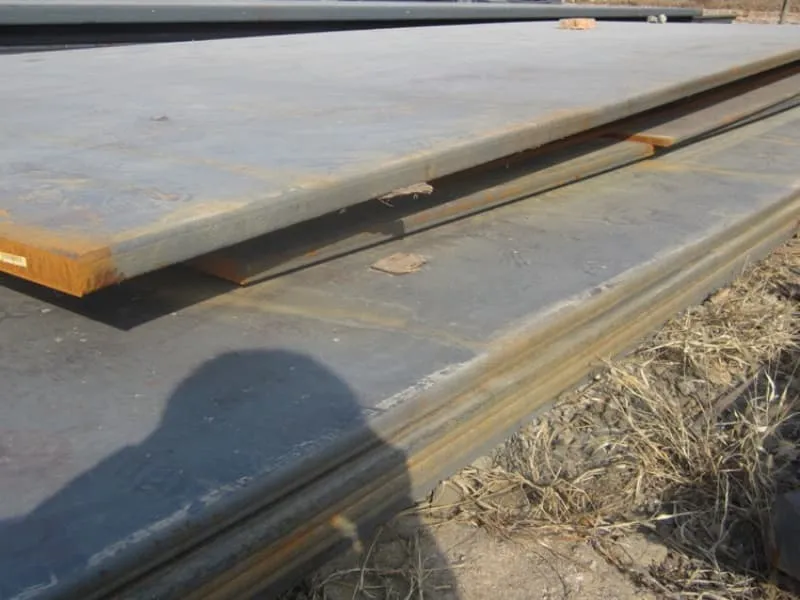
Navigating the Two Main Categories: Normal Strength and High Strength
Marine steel plates are divided into two big families. Each family has its own naming rules. This structure helps you quickly understand a plate’s capability.
Family 1: Normal Strength Steels.
These are the foundational grades. They have a minimum yield strength of 235 Megapascals (MPa). The grade is indicated by a single letter. This letter defines the notch toughness requirement.
- Grade A: This is the standard quality. It is tested for impact toughness at 0°C. It is used for non-critical parts or areas of low stress.
- Grade B: This offers slightly better impact properties than Grade A at 0°C. It often has tighter control on chemical composition, especially for phosphorus and sulfur.
- Grade D: This provides improved toughness. It is tested at -20°C. It is used for many structural parts in oceangoing ships where lower temperatures are expected.
- Grade E: This offers good toughness at even lower temperatures. It is tested at -40°C.
In this family, you will see plates marked simply as A, B, D, or E. The number "235" is implied. You might also see it written as Grade A Shipbuilding Steel according to a standard like ASTM A131.
Family 2: High Strength Steels (HSLA).
These steels have higher yield strengths, allowing for thinner, lighter hull structures. They are identified by adding the letter ‘H’ (for High tensile) and a number indicating the approximate yield strength in kg/mm².
- The Number: The number 32, 36, 40, etc., corresponds to the yield strength: 32 for 315 MPa, 36 for 355 MPa, 40 for 390 MPa.
- The Letter (Before H): This is the same toughness letter from the normal strength family: A, B, D, E, F.
This creates combinations like:
- AH36: High strength (355 MPa), standard toughness (tested at 0°C).
- DH36: High strength (355 MPa), improved toughness (tested at -20°C). This is the most common grade for main hull structures.
- EH36: High strength (355 MPa), high toughness (tested at -40°C) for colder waters.
- FH40: Even higher strength (390 MPa) and exceptional toughness (tested at -60°C) for ice-class vessels.
When you look at a plate marking, you can immediately place it. No ‘H’ and a single letter? It’s a 235 MPa normal strength steel. An ‘H’ with a number? It’s a high-strength steel. The preceding letter tells you its toughness category.
What is marine steel plate grade A?
"Grade A" sounds basic. In many industries, "A grade" means the best. In marine steel, it has a very specific and more limited meaning. This confusion can be costly.
Marine steel plate Grade A1 is a normal strength steel with a yield strength of 235 MPa. Its key characteristic is that it is impact tested at 0°C (32°F). It is the most economical grade and is typically used for less critical parts of a ship’s structure where high toughness is not a primary design requirement.
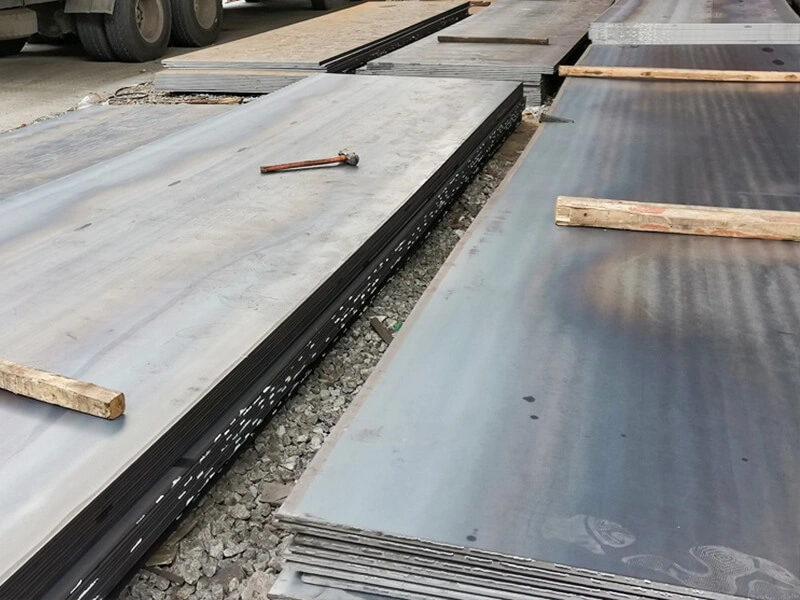
Defining the Role and Limits of Grade A Steel
Calling Grade A "basic" is accurate from a specification viewpoint, but it does not mean "low quality." It means it is designed for a specific set of conditions. Using it correctly is key.
First, let’s clarify its properties. According to standards like ASTM A131 or EN 10225, Grade A steel must meet these main criteria:
- Minimum Yield Strength: 235 MPa. This is its load-bearing capacity.
- Charpy V-Notch Impact Test Temperature2: 0°C. This is its defining toughness parameter. It must absorb a minimum amount of energy (e.g., 27 Joules) at this temperature.
- Chemical Composition: It has limits on carbon, manganese, silicon, phosphorus, and sulfur. The limits are less strict than for higher grades.
Second, understand where it is typically used. Because of its property profile, classification societies restrict its use. You will not find Grade A steel in the keel, bottom plating, or main deck of an oceangoing vessel. Its common applications include:
- Secondary structural components: Interior bulkheads (non-watertight), platforms, ladders, and brackets that are not primary strength members.
- Superstructure: Upper deck houses and parts of the accommodation block that experience lower stresses.
- Smaller vessels: Barges, inland waterway vessels, or workboats operating in always-temperate climates.
- Non-critical parts: Ducting, casings, and non-structural fittings.
Third, recognize the critical limitations.
The main limitation is its low-temperature toughness3. A ship operating in the North Atlantic in winter can see hull temperatures well below 0°C. Grade A steel in such an environment has a significantly higher risk of brittle fracture if subjected to a sudden impact or high stress concentration. This is why rules require tougher grades (D, E) for the hull’s primary structure.
The business implication for buyers.
When a client requests a quote, they often specify the exact grade from their construction drawings. Sometimes, for cost-saving on a non-critical project, they might ask about Grade A. My job is to ensure they understand its applications and limitations. We can supply high-quality Grade A steel from our partner mills, but we always confirm the end use. This prevents a situation where a buyer accidentally uses an inappropriate grade to save money, which could lead to bigger problems later. Our value is in providing the right material for the job, not just the cheapest material.
How to specify a steel plate?
Placing an order for "ship plate" is a sure way to get confused quotes, delays, and potentially the wrong material. Clear specification is the first and most important step in the procurement process.
To specify a steel plate correctly, you must provide the grade standard (e.g., ASTM A131), the exact grade designation (e.g., DH36), the dimensions (thickness, width, length, tolerance), quantity, delivery condition (as-rolled, normalized), and any special requirements (Z-direction properties, ultrasonic testing, edge condition).
Creating a Bulletproof Purchase Specification
A good specification acts as a clear contract between you and the supplier. It leaves no room for interpretation. It covers what the plate is, what it must do, and how it will be delivered and verified.
Part 1: The Core Identity of the Plate.
This is the non-negotiable technical heart of your spec.
- Standard and Grade: This is the most critical line. Example:
[ASTM A131 / DH36](https://www.chapelsteel.com/abs-ah36-dh36-eh36.html)[^1]. The standard (ASTM A131, EN 10225, JIS G 3106) defines the testing methods and acceptable limits. The grade (DH36) is the product within that standard. Always specify both. - Dimensions and Tolerances:
- Thickness (e.g., 15 mm)
- Width (e.g., 2500 mm)
- Length (e.g., 12000 mm)
- Tolerance Class: Specify the tolerance standard (e.g., EN 10029 for thickness/width/length, EN 10163 for surface condition). Do not just say "standard tolerance."
- Delivery Condition: How has the steel been heat-treated? The most common are:
- AR (As-Rolled): The state after hot rolling. Standard for many thicknesses.
- N (Normalized): Heated and cooled in a controlled way to refine the grain structure. Often required for thicker plates or specific grades to ensure toughness.
- TMCP (Thermo-Mechanically Controlled Process): A advanced rolling process for superior properties.
Part 2: Supplementary Requirements and Verification.
These clauses ensure the plate meets your project’s specific needs.
- Special Qualities: Does your design require it?
- Z-direction (Z-steel)2: Resistance to lamellar tearing. Specify the level, e.g., Z25 or Z35.
- Impact Test Temperature: While the grade (D) defines the test temp (-20°C), you can specify a lower test temperature if needed for extra safety.
- Ultrasonic Testing (UT): Specify the testing standard and acceptance level (e.g., ASTM A578, Level II).
- Certification and Documentation:
- Mill Test Certificate3: Mandatory. Specify if you need it originally hard copy or if a PDF with original scan is acceptable.
- Third-Party Inspection: State if you require inspection by SGS, BV, etc., and at what stage (before shipment, at the mill).
- Marking and Labeling: Confirm you require standard mill marking and color coding.
Part 3: Commercial and Logistics Details.
- Quantity: Net weight in metric tons, or number of plates.
- Packaging: Specify packaging for export. For marine plates, this is usually stacked on a wooden skid, protected with waterproof paper or plastic, and secured with steel straps. Good packaging prevents rust and damage, a point our Saudi client specifically praised.
- Delivery Terms: Incoterms 20204 (e.g., FOB Shanghai, CFR Dammam, CIF Manila).
Here is a simplified specification table you can use as a template:
| Specification Category | Your Requirement | Example Entry |
|---|---|---|
| Standard & Grade | Mandatory | ASTM A131 / DH361 |
| Dimensions | Thickness x Width x Length | 15 mm x 2500 mm x 12000 mm |
| Tolerances | Reference Standard | Thickness to EN 10029 Class A |
| Delivery Condition | Heat Treatment State | Normalized (N) |
| Special Qualities | If applicable | Through-thickness property: Z25 |
| Certification | Documentation | Original Mill Certificate (EN 10204 Type 3.1) |
| Inspection | Verification | Pre-shipment inspection by SGS |
| Packaging | Export Protection | Waterproofed, strapped on wooden skids |
| Delivery Term | Incoterms 20204 | CIF Jebel Ali Port |
Providing this level of detail in your initial inquiry allows a professional supplier like us to give you an accurate price and lead time immediately. It shows you are a knowledgeable buyer and helps us ensure we source exactly what you need, avoiding all the problems of "quality inconsistency."
Conclusion
Reading and specifying marine steel plate markings is a fundamental skill. It ensures material traceability, guarantees compliance with design rules, and prevents costly errors in shipbuilding and repair projects.
-
Explore this link to understand the specifications and applications of ASTM A131 / DH36 steel plates, ensuring you make informed procurement decisions. ↩ ↩
-
Learn about Z-direction properties and their significance in preventing lamellar tearing, crucial for high-quality steel plate applications. ↩ ↩
-
Discover the importance of Mill Test Certificates in verifying steel quality and compliance, essential for any serious procurement process. ↩ ↩
-
Understanding Incoterms 2020 is vital for navigating international shipping agreements, ensuring clarity in delivery terms. ↩ ↩