
Buying steel in bulk should lower your cost. But many buyers end up with hidden fees, poor quality, and project delays. A cheap price per ton can become an expensive mistake if you don’t manage the whole process smartly.
To reduce cost when buying L-shaped steel in bulk, focus on these key strategies: negotiate better prices by ordering larger volumes, optimize shipping by consolidating containers, source from certified mills for consistent quality, and work with a supplier who offers flexible MOQ and clear all-in pricing.
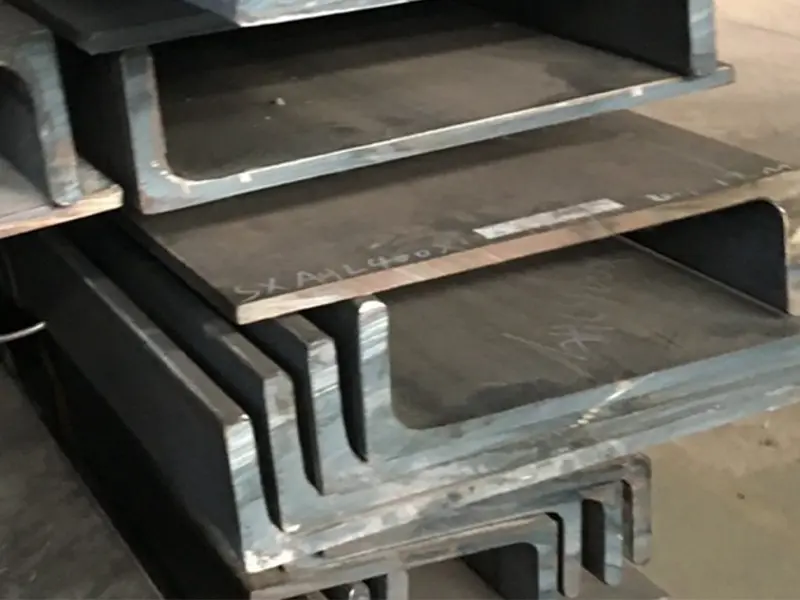
A low unit price is just one piece of the puzzle. True cost saving comes from understanding the total supply chain. Let’s break down the costs and explore practical ways to control them.
How much does 1 ton of steel cost?
You see a price online and think that’s your final cost. But the price for one ton of steel is like an airline ticket—the base fare is just the beginning. Many other charges get added before your steel arrives at the factory.
The cost of 1 ton of steel varies widely. For common structural L-shaped steel (like S235JR), prices can range from $500 to $800 per ton FOB China. However, the final delivered cost includes extras like certifications, processing, shipping, and insurance. Always ask for an all-inclusive quote.
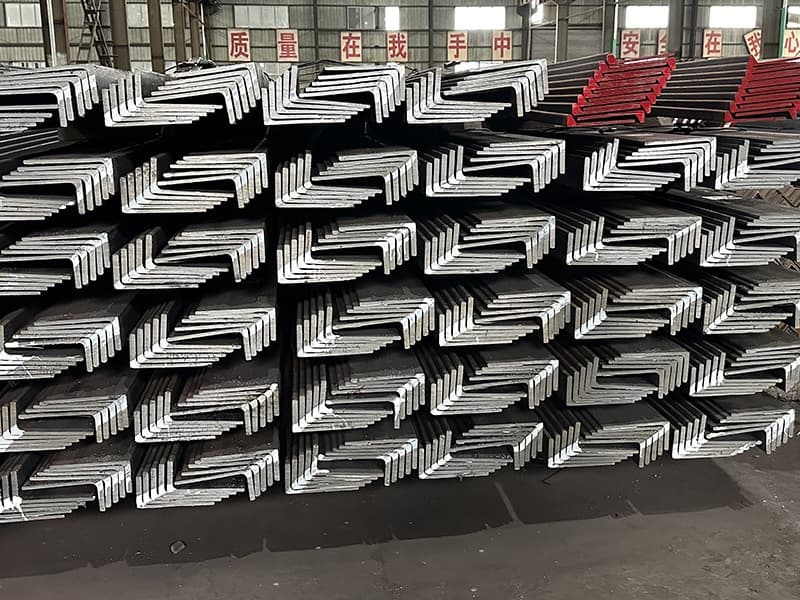
Breaking Down the Total Landed Cost1
The price per ton is a starting point for negotiation, not the final bill. As a bulk buyer, you need to budget for the Total Landed Cost1. This is the full amount you pay to have usable steel at your project site.
Let’s look at the main components that build up this cost:
1. Base Material Price2:
This is the mill’s price for the steel. It changes daily based on:
- Raw Material Costs: The price of iron ore, scrap metal, and coking coal.
- Market Demand: Global and local demand for steel.
- Grade & Specifications: Standard S235JR is cheaper than marine-grade AH36 with classification society certification. Special sizes or tolerances also cost more.
2. Manufacturing & Certification Surcharges3](https://cnmarinesteel.com/how-to-get-the-best-marine-steel-plate-quotation/)[^4]s:
- Mill Certification Fee: If you need an official certificate from ABS, DNV, LR, etc., the mill charges extra. This is non-negotiable for marine projects.
- Testing Fees: Charges for mechanical and chemical tests listed on the certificate.
3. Processing & Preparation Fees:
- Cutting-to-Length: Buying exact lengths reduces your waste but adds a processing fee.
- Surface Treatment: Shot blasting or priming adds cost but can save time and money later.
- Packaging: Proper, seaworthy packaging is not free. Wooden cradles and waterproof wrapping prevent rust and damage during transit.
4. Logistics & Shipping Costs4:
This is where costs can spiral if not managed.
- Inland Freight: Transport from the mill to the Chinese port.
- Ocean Freight: The single largest variable cost after the steel itself. It depends on the route, container availability, and fuel prices.
- Insurance: Marine insurance for your cargo.
- Destination Port Charges: Unloading, customs fees, and local port duties.
- Final Delivery: Trucking the steel from the destination port to your yard.
Here is a simplified table showing how a “$600/ton” price can become a much higher final cost:
| Cost Component | Estimated Cost per Ton (Example) | Notes |
|---|---|---|
| Base Material Price2 (FOB) | $600 | For standard S235JR L-angle, FOB Tianjin port. |
| Certification Surcharge5 | + $15 – $50 | For ABS/DNV certificate. Higher for special grades. |
| Processing & Packaging | + $10 – $30 | For standard bundling and protection. |
| Ocean Freight to Jeddah | + $80 – $150 | Highly variable; bulk shipping can reduce this. |
| Insurance & Port Charges | + $25 – $40 | Approximately 1-2% of cargo value for insurance. |
| Estimated Landed Cost | $730 – $870 | The real price you must budget for. |
Our advice to clients like Gulf Metal Solutions is simple: always request a CIF (Cost, Insurance, and Freight)6 quote to your nearest major port. This gives you one clear number for the biggest parts of the cost and makes budgeting accurate.
What is the cheapest way to make steel?
If you want the lowest possible material cost, you might look at how steel is made. The cheapest process uses recycled scrap. But for structural L-shaped steel in bulk, the real question is about efficient, large-scale production that balances cost with reliable quality.
The cheapest way to make steel on a large scale is the Electric Arc Furnace (EAF) route using recycled scrap steel. However, for primary steel products like L-shaped sections, the integrated Blast Furnace-Basic Oxygen Furnace (BF-BOF) route is often more cost-effective for large volumes due to economies of scale and raw material access.

The Two Major Production Routes: Cost vs. Scale
Understanding these methods helps you know what you are buying and why prices differ.
1. The Integrated Mill Route (BF-BOF):
This is the traditional method used by giant mills like Baowu and HBIS.
- Process: It starts with iron ore. The ore is smelted in a blast furnace to make pig iron. The pig iron is then refined in a basic oxygen furnace to make steel.
- Cost Profile: It requires massive upfront investment in plants and infrastructure. But once running, it is extremely efficient for producing millions of tons. The cost per ton for large batches is very competitive.
- Output: It excels at making large, continuous casts of steel that are perfect for rolling into standard sections like wide plates, beams, and L-shaped angles. The quality is very consistent for high-volume orders.
2. The Mini-Mill Route (EAF):
This method is dominant in regions with good scrap supply.
- Process: It melts recycled scrap steel in an electric arc furnace. The process is simpler and more flexible.
- Cost Profile: The plant cost is lower. The main cost is scrap metal and electricity. When scrap prices are low, this can be the cheapest method. However, scrap prices can be volatile.
- Output: It is excellent for making rebar, merchant bar, and some structural sections. For very specific, smaller batches of special steel, EAFs can be ideal.
So, which is cheaper for bulk L-shaped steel?
For a bulk order of standard structural angles (like 1000 tons of 100x100x10mm), the integrated BF-BOF route from a major Chinese mill usually wins on pure cost-per-ton. Here is why:
- Scale: The mill uses its immense scale to source raw materials (iron ore, coal) cheaply.
- Efficiency: The continuous casting and rolling process is optimized for high volume, reducing unit costs.
- Consistency: You get a uniform product, which reduces waste and problems in your fabrication shop.
However, if you need a small batch of a unique grade or size, a specialized mini-mill using the EAF route might be more cost-effective, as they can set up production for smaller runs.
As a supplier, we work with large integrated mills for our core bulk products. This gives our clients the benefit of that low large-scale production cost. We then add value through consolidated logistics and flexible service, not by competing on the base production cost that the mill already minimizes.
How much does 1 kilogram of steel cost?
Thinking in kilograms is useful for small projects. But for bulk buyers, it can be a misleading metric. The per-kg cost hides the massive impact of shipping and handling, which is where real savings are found.
The cost of 1 kilogram of steel is derived from the ton price. For example, if 1 ton of standard L-angle costs $650, then 1 kg costs about $0.65. However, this simple math ignores the fact that logistics costs are often charged per ton or per container, making the per-unit cost drop significantly with larger shipments.

Why "Cost per Kg" is a Trap for Bulk Buyers
Focusing only on the per-kilogram material price is a common mistake. It makes you negotiate on the smallest part of your total cost. Savvy buyers negotiate on the total landed cost per usable unit1.
The Fixed Cost Problem2:
Many costs in your supply chain are fixed or step-variable. They do not go down linearly with the price per kg.
- Container Cost: Shipping one 20-foot container might cost $1,500, whether it holds 20 tons or 22 tons. Your goal is to maximize the weight in each container (safely, within limits) to lower the shipping cost per ton.
- Administrative Costs: The work for processing an order, arranging inspections, and preparing documents is similar for a 10-ton order and a 100-ton order.
- Port Fees: Many destination port charges are per container or per shipment, not per kilogram.
The Strategy: Maximize Efficiency, Not Just Minimize Unit Price
Here is how smart bulk buyers think:
- Consolidate to Full Container Loads (FCL)3: Instead of shipping several Less than Container Load (LCL) shipments, consolidate your needs into full container orders. The shipping cost per ton in an FCL is much lower.
- Optimize Packing Density5: Work with your supplier to pack the L-shaped steel efficiently. Proper bundling and cradle design can allow you to fit more weight into a container, reducing the freight cost per kilogram.
- Plan for Long-Term Needs: Can you combine the needs of multiple projects? Placing one large order for 500 tons is always cheaper per kilogram than five separate 100-ton orders. This is where a supplier with a flexible MOQ4 and warehousing support becomes a partner, not just a vendor.
Let’s look at an example of shipping cost impact:
| Scenario | Order Quantity | Shipping Method | Freight Cost | Freight Cost per Ton | Material Cost per kg | Estimated Landed Cost per kg6 |
|---|---|---|---|---|---|---|
| Small, Urgent Order | 20 tons | LCL (Shared Container) | $3,000 | $150/ton | $0.65 | $0.80 |
| Planned Bulk Order | 24 tons | FCL (Full Container) | $1,800 | $75/ton | $0.63 (volume discount) | $0.705 |
By ordering slightly more and using FCL, the landed cost per kilogram drops significantly. This is real cost reduction. We help our clients run these calculations. For Gulf Metal Solutions, we planned a consolidated shipment of plates and angles to fill containers for Dammam port. This optimization saved them more than any minor price negotiation on the base kg price ever could.
What is the cheapest steel you can buy?
The absolute cheapest steel is often rebar or non-standard commodity grade. But for L-shaped structural steel, "cheapest" is dangerous. A low price usually means no certification, poor dimensional control, or hidden defects. This leads to high waste, repair costs, and project delays.
The cheapest steel you can buy is typically non-primary, non-certified commodity steel like some rebar or generic merchant bar. For structural L-shaped sections, the most cost-effective option is standard, mill-certified grade steel (like S235JR or S355JR) purchased in bulk from a reliable supplier, which avoids the high hidden costs of poor-quality material.
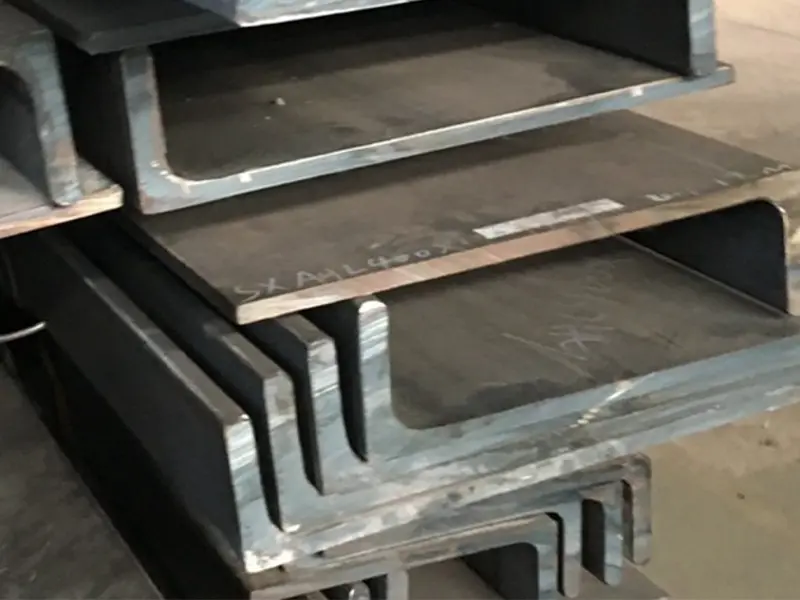
The High Cost of "Cheap" Steel
In bulk buying, the goal is lowest total cost of ownership, not lowest purchase price. Cheap, uncertified steel creates multiple problems that increase your final project cost.
1. The Quality and Consistency Trap:
- Dimensional Variation: Leg lengths and thickness can be out of tolerance. This causes fitting problems during fabrication, requiring grinding, rework, or even cutting new pieces. This wastes labor time and material.
- Surface Defects: Excessive scaling, pitting, or rust requires extra surface preparation before painting or welding.
- Unverified Properties: Without a Mill Test Certificate, you do not know if the yield strength or chemical composition meets the standard. This is a major safety and compliance risk, especially for marine or construction projects.
2. The Certification Void:
For any regulated project (shipbuilding, offshore, construction), you must provide material certificates. Cheap steel without certification is unusable. You would have to pay for expensive third-party testing, which often finds the steel non-compliant, making it worthless.
3. The Supplier Reliability Risk:
Suppliers of the cheapest steel are often traders, not specialists. They may:
- Have no long-term relationship with mills.
- Offer no technical support or consistent communication.
- Disappear if there is a quality claim.
The Smart Choice: Cost-Effective, Certified Steel
For L-shaped steel, the most cost-effective choice is a standard, widely produced grade from a reputable mill. For example:
| Steel Grade | Typical Use | Why It’s Cost-Effective |
|---|---|---|
| S235JR | General construction, non-critical frames, supports. | The most common structural grade. High production volume keeps prices competitive. Good weldability. |
| S355JR | More demanding structural applications, machinery. | Higher strength allows lighter structures. The slight price increase is offset by material savings and better performance. |
| ASTM A36 | General structural purposes (US standard equivalent). | Globally recognized standard. Reliable supply and predictable properties. |
By choosing S235JR or S355JR, you get:
- Predictable Pricing: Market prices are transparent.
- Guaranteed Specifications: The mill certificate confirms the properties.
- Ease of Fabrication: Standard grades are easy to weld and cut.
- Supply Stability: Every major mill produces these grades daily.
Our role is to provide this reliable, certified material at a fair bulk price. We add value through our service—fast response, English-speaking support, SGS inspection coordination, and logistics management. This ensures your "cheapest" steel is actually your most economical and reliable choice over the entire project lifecycle.
Conclusion
True cost reduction in bulk steel buying comes from smart planning: consolidating orders, optimizing logistics, and choosing certified, reliable materials over just the lowest quoted price.
-
Understanding this concept can help you negotiate better deals and save significantly on bulk purchases. ↩ ↩ ↩
-
Exploring this issue can reveal hidden costs that affect your overall pricing strategy. ↩ ↩ ↩
-
Learning about FCL can help you reduce shipping costs and improve efficiency in logistics. ↩ ↩
-
Understanding flexible Minimum Order Quantities can enhance your purchasing strategy and supplier relationships. ↩ ↩
-
Optimizing packing can lead to significant savings in freight costs, making it essential for bulk buyers. ↩ ↩
-
Calculating this cost accurately is crucial for making informed purchasing decisions in bulk buying. ↩ ↩