
Your steel price is perfect, but a 40-foot container costs twice your estimate. The freight cost eats your entire profit margin. This shock is common, and it stems from not planning logistics as part of the purchase.
To reduce freight costs for L-shaped steel, consolidate shipments to maximize container space, optimize packaging to prevent wasted volume, choose the right Incoterms (like FOB), and partner with a supplier who offers bundled logistics solutions and understands dimensional weight pricing.
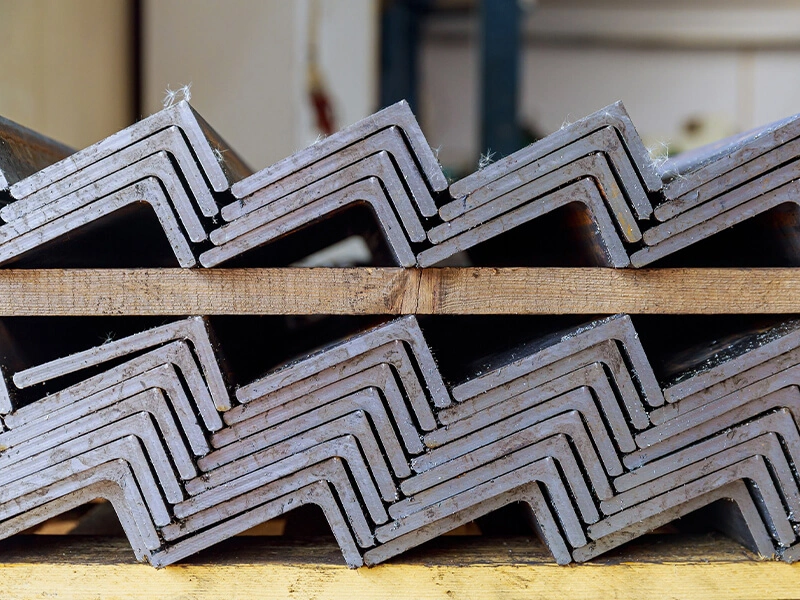
I see this problem with clients from Mexico to Saudi Arabia. They focus on the cost per ton of steel but treat freight as an afterthought. For long, awkward profiles like L-angles, freight strategy is part of the product cost. A smart buyer integrates logistics into the sourcing decision. Let’s explore specific, actionable methods to cut these costs without compromising delivery or quality.
What is one way to minimize freight shipping costs?
You receive a quote for 5 tons of L-angles. The supplier offers to ship it immediately in a half-empty container. You agree. You just paid to ship air. Consolidation is the simplest fix for this waste.
One fundamental way to minimize freight costs is shipment consolidation. This means combining multiple smaller orders into one full container load (FCL) instead of shipping via less than container load (LCL). FCL rates are significantly lower per unit of cargo than LCL rates.
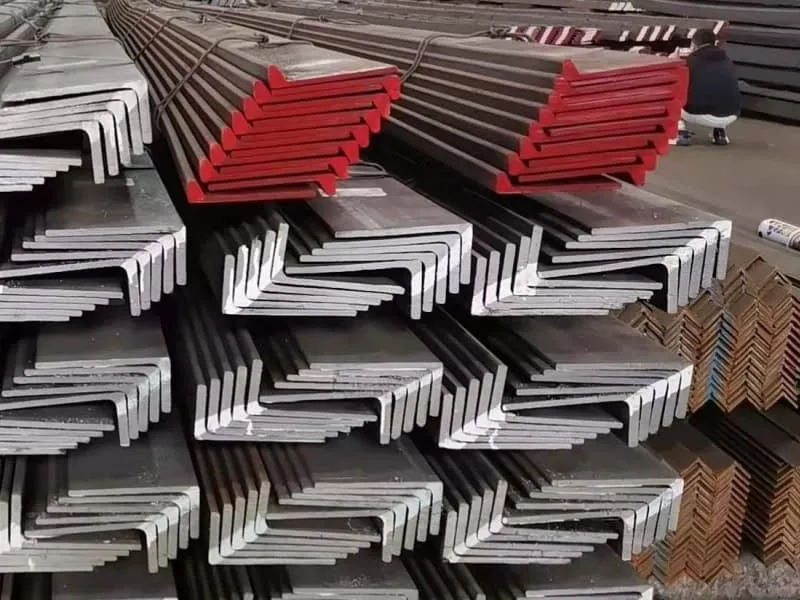
Consolidation seems obvious, but it requires planning and coordination. Many buyers need materials urgently and order piecemeal. This habit is expensive. We need to look at consolidation from different angles to make it work.
A Practical Guide to Effective Shipment Consolidation
| Consolidation Method | How It Works | Specific Application for L-Shaped Steel | Potential Savings |
|---|---|---|---|
| Consolidate Your Own Orders | Plan your project needs ahead. Combine requirements for different projects or phases into a single, larger order to qualify for FCL. | Instead of ordering 8 tons now and 7 tons next month, order a 20-foot container’s worth (approx. 15-22 tons of steel, depending on packing) all at once. | FCL shipping from China to Saudi Arabia can be 30-50% cheaper per ton than LCL. You also save on fixed fees like documentation and handling per shipment. |
| Consolidate with Supplier’s Other Orders | Work with a supplier who has multiple clients in your region. Your order can be combined with others to form a full container. | We often consolidate orders for clients in the same country or region. For example, shipping to Dammam, Saudi Arabia, we might combine an order for L-angles for one client with plates for another. | You get an FCL rate without needing to order a full container yourself. This is a key service for clients with flexible MOQ. |
| Consolidate Product Types | Combine different products from the same supplier into one shipment. Mix L-angles with steel plates, flats, or fasteners. | A fabricator can order the L-shaped steel for framing along with the marine plates for the main structure in one container. This optimizes space and weight distribution. | One set of logistics, one customs clearance, one delivery fee. This reduces total administrative and port handling costs. |
| Use Warehouse Consolidation | For very small orders, use a freight forwarder’s consolidation warehouse. Your cargo is held until enough volume is gathered with other shippers’ goods to fill a container. | This is suitable for sample orders or tiny replacement parts. For main project materials, direct FCL is always more efficient and faster. | Cheaper than direct LCL, but adds transit time. Good for non-urgent, small-volume items. |
The key to making consolidation work is communication and flexible planning. A rational, results-driven buyer understands that a slight delay in ordering to wait for a full container can yield major cost savings. This is part of the procurement strategy.
Our business model supports this directly. We offer flexible MOQ. This does not just mean we accept small orders. It means we work with you to find the most cost-effective shipping volume. If you need 10 tons of L-angles, we might advise that a 20-foot container holds 18 tons. We can then discuss if you have other needs (like bulb flats mentioned by Gulf Metal Solutions) to fill the space, or we can offer to hold your production for a week to combine it with another shipment. This proactive, communicative approach turns freight from a surprise cost into a managed variable.
How to ship freight cheaply?
You find a freight quote that seems cheap. Then you get bills for terminal handling, fuel surcharges, and customs clearance delays. The cheapest freight is not the lowest quote; it is the one with the fewest hidden costs and the most reliable transit.
To ship freight cheaply, you must control the variables. This involves selecting the right Incoterms (like FOB), negotiating all-inclusive freight rates, choosing slower but reliable transit times, ensuring accurate documentation to avoid customs delays, and using packaging that minimizes dimensional weight charges.
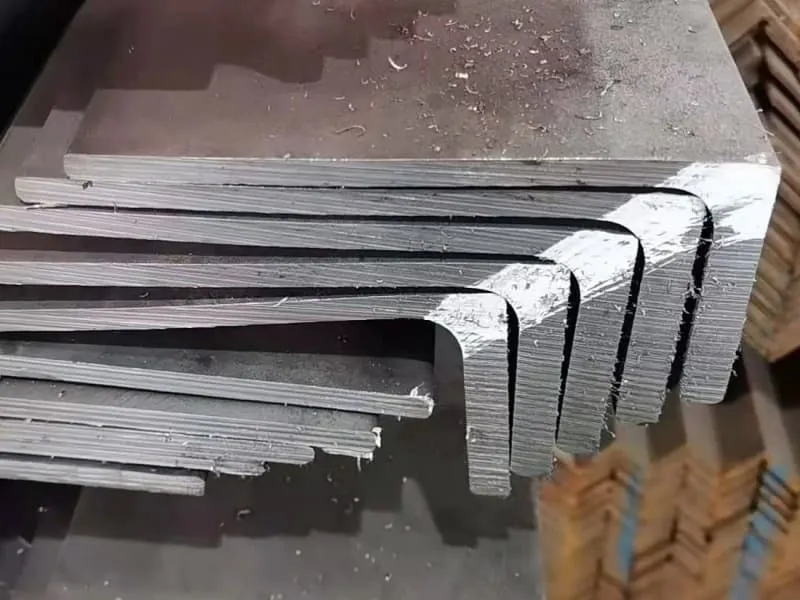
The word "cheaply" often leads people to choose the lowest bidder. In international freight, this is a trap. Cheap can become very expensive if it causes delays, damage, or fines. We need to define "cheap" as lowest total landed cost. Let’s break down the control points.
Control Points for Achieving Low Total Landed Cost1
| Control Point | Strategy for Cost Control | How It Applies to Shipping L-Angles |
|---|---|---|
| Incoterms Selection2 | Use FOB (Free On Board) or similar. You, the buyer, control the main freight and insurance from the port of loading. This allows you to use your own trusted freight forwarder or negotiate rates directly. | With FOB, we deliver the goods to the port in China. You appoint the shipping line. This gives you visibility and control over the ocean freight cost, which is the largest chunk. |
| Freight Rate Negotiation | Get an all-inclusive rate from your forwarder. This rate should cover ocean freight, fuel surcharge (BAF), currency adjustment (CAF), terminal handling charges (THC), and documentation. | L-shaped steel is not hazardous, so rates are standard. A clear, all-in quote prevents nasty surprises. Because we ship regularly, we can often recommend reliable forwarders with good rates to your destination. |
| Transit Time vs. Cost3 | Choose slower transit times if your schedule allows. For example, avoid premium "express" services. Plan your procurement lead time to accommodate standard shipping. | Shipping from Qingdao to Jebel Ali might take 18 days on a standard service vs. 14 days on a premium one, for a 15-20% lower cost. Planning eliminates the need for expensive air freight. |
| Documentation Accuracy4 | Ensure the commercial invoice, packing list, and bill of lading are 100% accurate. Any mistake can cause customs delays, storage fees, and fines. | We prepare all shipping documents meticulously. This is part of our service, especially important for clients in countries with strict customs like Saudi Arabia or Mexico. |
| Packaging for Dimensional Weight5 | For LCL, freight is charged per cubic meter (CBM) or per ton, whichever is greater. Stackable, compact packaging reduces the volume. | We bundle L-angles tightly with steel straps on wooden skids. This creates a solid, rectangular bundle that stacks efficiently in a container, minimizing "dead" air space. |
A critical concept for long goods like L-angles is "dimensional weight." Even if a bundle is light, if it takes up a lot of space, you pay for that space. Our packaging is specifically designed to combat this. As our client Gulf Metal Solutions noted, our packaging is the best they’ve seen. This isn’t about looks; it’s about logistics engineering. Good packaging protects the product and minimizes freight volume, directly reducing cost.
The cheapest freight is the one that arrives on time, intact, and without extra fees. This reliability prevents the enormous hidden costs of project delays. For a project-based fabricator, a delayed steel shipment can idle an entire workshop. Our bundled shipping support to ports like Dammam includes customs clearance assistance. This integrated service ensures a smooth, predictable landing cost, which is far more valuable than a marginally lower but risky freight quote.
What is a common method for reducing transportation costs as a freight broker?
A freight broker offers you a rate. But his profit is the difference between what he charges you and what he pays the carrier. His common method to reduce your cost is to leverage his volume and relationships to get lower base rates from shipping lines.
A common method for freight brokers to reduce transportation costs for clients is aggregating volume1. They combine shipments from multiple clients to negotiate discounted bulk rates with shipping lines, trucking companies, and port terminals, which they can then partially pass on to you.
You might think a broker just adds a middleman cost. A good broker provides value through market access and negotiation power. They operate on a large scale that an individual importer cannot match. Let’s look at the specific levers a professional broker pulls.
How Freight Brokers Actually Lower Your Costs
| Broker’s Leverage Method | Mechanism | Benefit for You as a Steel Importer |
|---|---|---|
| Volume-Based Contract Rates2 | The broker signs an annual contract with a shipping line for a certain number of container slots per month. This guarantees the carrier business, and in return, the broker gets rates far below the spot market. | You get access to these contracted rates. This is especially valuable during peak seasons or when capacity is tight, as spot rates can skyrocket. |
| Mode & Route Optimization3 | Brokers have visibility across many carriers and routes. They can find the most cost-effective combination, like using a feeder service to a transshipment hub instead of a direct call. | For shipments to smaller ports (e.g., in Myanmar or Thailand), a broker can find the cheapest routing via a main hub like Singapore or Port Klang. |
| Reducing Deadhead & Backhaul4 | They fill empty containers on return trips (backhaul). Carriers offer low rates for these trips to avoid moving empty equipment. | If you are shipping from a major import region, a broker might find a cheap backhaul rate from your port back to Asia. |
| Consolidation Services5 | As discussed, they actively consolidate LCL shipments from multiple shippers into FCL containers. They manage the complex break-bulk and documentation. | This is their core service for small shippers. They make FCL rates accessible for orders that are less than a full container. |
| Access to Ancillary Services6 | They have pre-negotiated rates for trucking, warehousing, and customs clearance at destination ports. | When we offer "shipping to Dammam port with customs clearance support," we are often working with our partner brokers who provide these bundled services at a good rate. |
The key for you is to find a broker who is transparent. You want a broker who shows you the all-in cost and explains the breakdown. Some brokers work on a fixed fee, while others work on a margin. Either way, their value should be clear: they save you more than they cost.
For many of our clients, we act as the coordinator. We have long-term relationships with reliable freight forwarders and brokers in all our key export countries. When a client in the Philippines needs a shipment, we don’t just hand them a FOB price. We can provide a door-to-port or even door-to-door quote using our partners. This simplifies the process for the buyer and often results in a better total cost than if they sourced freight independently. For a results-driven buyer who values communication, this one-stop solution is a major advantage. It reduces their workload and management risk.
How to minimize shipping cost?
You have applied all the tactics, but a last-minute change in delivery address adds thousands. Minimizing shipping cost is a continuous process of optimization, from product design and supplier choice to final delivery. It is a system, not a single action.
Minimize shipping cost by treating it as a system. Start with product specification (can a slightly different L-angle size pack better?), work with a supplier who optimizes packaging and consolidation, choose optimal Incoterms, plan shipments well in advance, and use technology for documentation and tracking to avoid errors and delays.

True cost minimization looks at the entire chain. It involves everyone: the designer, the procurement manager, the supplier, and the logistics provider. We can map this system to see where decisions have the biggest impact on final landed cost.
The Systemic Approach to Minimizing Shipping Costs
| Stage in the Supply Chain | Cost-Minimizing Action | Practical Example with L-Shaped Steel |
|---|---|---|
| 1. Design & Specification | Design for Logistics. Can standard, easier-to-pack lengths or sizes be used without compromising the design? | Specifying L-angles in lengths that are multiples of the container’s internal length (e.g., 5.8m instead of 6.1m) can dramatically reduce wasted space and allow more pieces per container. |
| 2. Supplier Selection & Ordering | Choose a supplier who understands logistics and offers consolidation. Plan and place larger, less frequent orders. | Working with us, clients benefit from our consolidation services and flexible MOQ. We advise on optimal order quantities for shipping efficiency. |
| 3. Packaging & Preparation | Demand packaging that is protective, stackable, and volume-efficient. Ensure marks and labels are clear for easy handling. | Our packaging uses wooden skids and tight steel strapping to create uniform, stackable bundles. Clear shipping marks prevent mis-handling at ports. |
| 4. Freight Procurement | Compare all-in rates from multiple forwarders. Book well in advance to secure better rates. Avoid peak seasons if possible. | We provide quotes with a breakdown of EXW, FOB, and CIF costs. This transparency helps clients make informed decisions. |
| 5. Documentation & Compliance | Ensure 100% accurate and timely documentation. Pre-clear customs documents if the destination port allows it. | We handle all export documentation from China. For destinations like Saudi Arabia, we ensure all certificates (SGS, Mill Certs) are in perfect order to prevent clearance delays. |
| 6. Delivery & Receiving | Coordinate the receiving date at the destination port. Have trucks ready to avoid demurrage (container detention fees). | Our logistics support includes advising on lead times and typical port clearance duration, helping clients plan their resource allocation. |
The most powerful lever is often at the beginning: design and specification. A conversation between the engineer and the procurement team can yield surprising savings. For instance, if a design calls for a very long, single-piece L-angle that requires an open-top container, the freight cost is huge. If the design can be modified to use two shorter pieces welded on site, it might fit in a standard container, cutting freight by half.
This systemic view is what separates professional importers from the rest. Our client Gulf Metal Solutions exemplifies this. Their positive feedback on our packaging and logistics support shows they value a supplier who manages this system with them. They don’t just buy steel; they buy a reliable, cost-optimized delivery process. For their next order of L-shaped and bulb flat steel, they know the total landed cost will be predictable and competitive. That confidence is the ultimate result of minimizing shipping costs at every stage.
Conclusion
Reducing freight costs for L-shaped steel demands strategic planning, not just price shopping. Master consolidation, control variables, leverage expert partners, and optimize the entire supply chain from specification to delivery.
-
Understanding aggregating volume can help you see how brokers negotiate better rates, ultimately saving you money. ↩ ↩
-
Exploring this concept reveals how brokers secure lower rates, especially during peak seasons, benefiting your shipping costs. ↩ ↩
-
Learning about this optimization can help you understand how to minimize shipping costs through efficient routing. ↩ ↩
-
This strategy can significantly lower your shipping expenses, making it essential to understand for cost-effective logistics. ↩ ↩
-
Discovering how consolidation services work can help small shippers access better rates and simplify their shipping process. ↩ ↩
-
Understanding these services can provide insights into bundled offerings that enhance shipping efficiency and reduce costs. ↩