
A single delayed shipment of marine angle steel can stop your whole shipbuilding project. That is a risk you cannot afford.
You can reduce procurement risks by using pre‑shipment inspections, verified mill certificates, firm delivery clauses in contracts, multiple suppliers, safety stock, and careful payment terms. These steps protect your quality, time, budget, and customs clearance.
I have worked with many importers who faced the same problems: bad surface finish, late deliveries, or documents that did not match. Let me show you how to avoid these issues based on real orders we handled at CN Marine Steel.
How to Mitigate Quality Risks Through Pre‑Shipment Inspections and Verified Certifications?
Bad quality marine angle steel can crack under stress or rust too fast. That means rejected materials and lost money.
You reduce quality risks by asking for a third‑party inspection like SGS before shipment. You also need mill certificates that match the material grade, dimensions, and heat number. Do not accept photocopies.
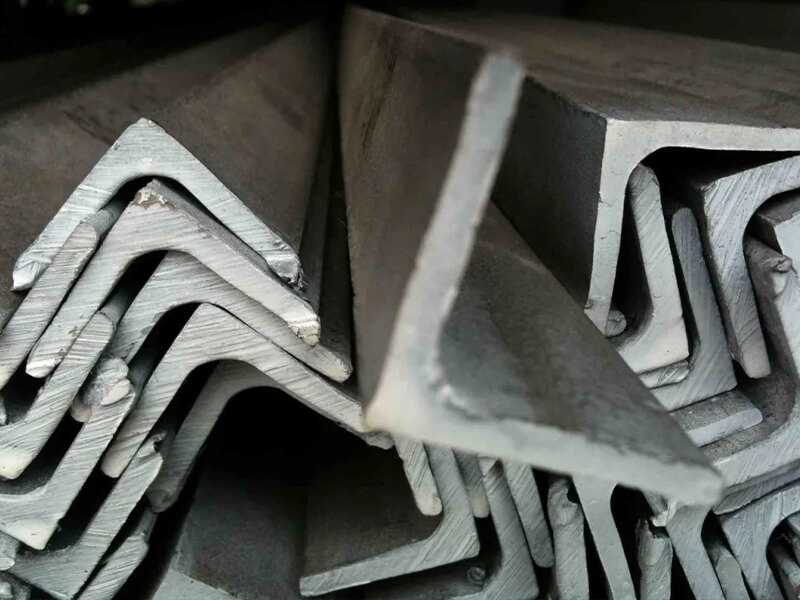
Quality is the number one concern for marine angle steel. Why? Because ships face saltwater, heavy loads, and constant vibration. If the steel has hidden cracks, wrong chemical composition, or uneven thickness, the whole structure becomes unsafe. I remember one customer from the Philippines. He bought from a cheap supplier. The angle steel looked fine on the outside. But during welding, the material kept cracking. Later we found out the carbon content was too high for shipbuilding. He lost three weeks and paid for return shipping.
So how do you check quality before the steel leaves the factory? I suggest a two‑step system.
First: Request a third‑party pre‑shipment inspection.
Companies like SGS, Bureau Veritas, or TÜV can come to the mill. They will check:
- Visual surface (no rust, no cracks, no scale)
- Dimensional accuracy (leg length, thickness, radius)
- Chemical composition (samples taken from actual pieces)
- Mechanical properties (tensile strength, yield point)
The inspector sends you a report. If something fails, you can reject the batch before it ships. This costs some money, but it saves much more.
Second: Verify the mill certificates.
A real mill certificate comes from the steel plant that produced the material. It must show:
- Heat number (unique code for that batch)
- Grade (for example, A36, AH36, DH36)
- Dimensions and weight
- Chemical test results
- Mechanical test results
- Date of production
I always tell my buyers: “Ask for the original PDF from the mill, not a scanned copy that someone may have changed.” Also cross‑check the heat number on the certificate with the stamp on each steel bundle. If they do not match, do not accept the goods.
A quick checklist you can use:
| Quality Risk | Mitigation Action | Who does it |
|---|---|---|
| Wrong steel grade | Check mill certificate & heat number | Buyer or third‑party inspector |
| Surface rust or cracks | Visual inspection + photos before loading | SGS or your own agent |
| Wrong dimensions | Measure random samples (at least 5% of batch) | Inspector |
| Bad chemical composition | Take samples and send to lab | Inspector + accredited lab |
At CN Marine Steel, we support SGS inspection for every order. Many of our clients, like Gulf Metal Solutions in Saudi Arabia, chose us because we offer this service. They told us: “The product quality is stable, and the packaging is the best among all the ship plates we have received.” That did not happen by accident. We check every batch before shipping.
What Contract Clauses Protect You Against Late Delivery and Inconsistent Lead Times?
A promised delivery date that slips again and again. Your production line stops. Your customer gets angry. That is a real nightmare.
You protect yourself with clear delivery terms in the contract. Include a fixed shipping date, a daily penalty for delay, and a force majeure clause that defines what counts as an emergency. Also agree on shipping mode (FOB, CIF) and port.
Late delivery is a common problem when buying steel from overseas. I have heard stories from buyers in Vietnam and Mexico. Their Chinese supplier said “30 days” but then took 60 or 90 days. The reasons were always the same: mill production delay, truck strike, port congestion, or “the weather.” Some of these are real. But many are just excuses.
The truth is, a good supplier plans ahead. They keep inventory of common sizes. They have backup mills. And they agree to written delivery terms before taking your deposit. So what clauses should you put in your purchase contract?
Clause 1: Fixed shipping date vs. “working days”
Many suppliers write “delivery within 30 working days.” This is dangerous because working days exclude weekends and public holidays. A week becomes 5 days, not 7. 30 working days is actually 6 calendar weeks. Always ask for “calendar days” or a specific date, like “shipment completed by May 15, 2026.”
Clause 2: Penalty for delay
Add a sentence like this: “If seller fails to ship by the agreed date, seller pays buyer 0.5% of contract value per week of delay, up to 5% total.” This makes the supplier take the deadline seriously. Most Chinese mills will agree to 0.3-0.5% if you ask politely. Do not accept zero penalty.
Clause 3: Force majeure definition
Force majeure means unexpected events like earthquake, war, or pandemic. But some suppliers try to use it for small problems like “power cut” or “machine breakdown.” So write down exactly what counts. For example: “Force majeure only applies to government‑ordered factory shutdown, natural disaster, or port closure. Seller must provide official proof within 7 days. Any other delay is not force majeure.”
Clause 4: Shipping mode and risk transfer
Decide between FOB (you control freight) or CIF (supplier arranges shipping). Under FOB, the risk transfers to you once the steel is on the vessel. Under CIF, the supplier is responsible until the goods reach your port. I usually recommend FOB for experienced buyers. Why? Because you can choose a reliable freight forwarder. You avoid surprises like slow ships or wrong documentation.
Here is a simple table to compare contract terms:
| Contract Clause | What to ask for | Why it helps |
|---|---|---|
| Delivery date | Specific date (e.g., June 15) or calendar days | No confusion on counting days |
| Delay penalty | 0.3%-0.5% per week, max 5% | Supplier has financial motivation |
| Force majeure | Only major events + proof required | Avoids fake excuses |
| Incoterms | FOB or CIF – clearly stated | Defines who pays and who takes risk |
At CN Marine Steel, we always put clear delivery dates in our contracts. We keep 200-300 tons of common marine angle steel in our Liaocheng warehouse. This means we can ship within 7-10 days for standard sizes. For project orders, we tell the customer the exact week of production. And we update them every Friday. That is why clients like Gulf Metal Solutions say: “The steel company was the first supplier to respond within two hours.”
How Can Supplier Diversification and Safety Stock Reduce Supply Disruption Risks?
One day your only steel supplier stops answering calls. No steel. No production. What do you do next?
You reduce disruption risk by working with at least two qualified suppliers. You also keep safety stock of critical sizes in your warehouse. This way, if one supplier fails, you still have material to keep working.
Many buyers make a simple mistake. They put all their orders with one supplier. Maybe the price is lower. Or the relationship is good. But then something happens. The mill has a fire. The manager leaves. The factory gets audited and shut down for pollution. Suddenly you have no steel for six months.
I saw this happen to a marine steel wholesaler in Qatar. He bought only from one mill in northern China. Then that mill lost its classification society approval. His containers arrived but could not be used for shipbuilding. He had to find a new supplier while his customers waited. The delay cost him almost $100,000 in penalties.
So how do you avoid this? Two main strategies: supplier diversification and safety stock.
1. Supplier diversification
This means you qualify two or three suppliers in different regions. For marine angle steel, do not rely only on one province in China. For example, we are based in Liaocheng, Shandong. That is a major steel hub. But you can also find good mills in Tianjin, Hebei, and Jiangsu. Each region has different mill capacities and price levels.
How to choose a second supplier? Use the same standards:
- Do they have ISO or classification society certificates (ABS, DNV, LR)?
- Can they support SGS inspection?
- Do they speak good English and answer fast?
- What is their typical lead time?
Once you find a qualified backup, give them a small test order. Maybe 20% of your normal volume. See how they perform. If they are good, you can split your orders 60/40 or 70/30 between two suppliers. This does not double your work. You just send two purchase orders instead of one. But it cuts your risk by a lot.
2. Safety stock
Safety stock means you keep extra material in your own warehouse. Not at the supplier’s factory. With you. This is the most powerful way to handle short‑term disruptions.
How much safety stock do you need? That depends on your consumption and lead time. A common formula is:
Safety stock = (maximum daily use × maximum lead time in days) – (average daily use × average lead time)
But for a simple rule: keep at least 15-30 days of your most common sizes. For marine angle steel, the popular sizes are [100x100x10mm], [150x150x12mm], and [200x200x15mm]. If you use 50 tons per month of size 100×100, keep 25 tons as safety stock.
Here is a comparison table for risk management:
| Risk Scenario | Without diversification & safety stock | With diversification & safety stock |
|---|---|---|
| Main supplier stops production | Stop all orders. Wait months. | Switch to backup supplier. Keep production. |
| Port congestion (30‑day delay) | No steel for 30 days. | Use safety stock. Do not stop. |
| Price spike from main supplier | Pay high price or stop buying. | Buy from backup at better price. |
| Quality failure on one batch | Reject batch. Wait for remake. | Use other supplier or safety stock. |
At CN Marine Steel, we have many customers who treat us as their main supplier. But we never ask them to buy only from us. In fact, we sometimes recommend a second supplier for specific sizes. Why? Because we want long‑term trust. When a shipbuilder in Pakistan asked us for a very large order, we told them: “Take 70% from us and 30% from our partner mill. This way you are safe.” They appreciated the honesty.
What Payment Structures and Documentation Checks Minimize Financial and Customs Compliance Risks?
You send a 30% deposit. Then the supplier sends you a fake bill of lading. Your money is gone. That is financial risk.
You minimize financial risk by using LC (letter of credit) for large orders and checking documents before final payment. For customs compliance, verify that the commercial invoice, packing list, bill of lading, and certificate of origin all match exactly.
Money and documents are the two areas where new importers lose the most. I cannot count how many buyers have told me stories: they paid 30% deposit, then the supplier disappeared. Or they received steel, but customs blocked it because the declared weight did not match the actual weight. These problems are completely avoidable if you follow a few rules.
Let me split this into two parts: payment structures and documentation checks.
Payment structures
The safest way is a letter of credit (LC). Under an LC, your bank promises to pay the supplier’s bank after the supplier shows proof of shipment. The proof includes the bill of lading, invoice, and inspection certificate. The bank does not care about quality. It only checks the papers. The supplier only gets paid if the documents are correct. This protects you from fraud.
But LCs cost money and take time to set up. Many suppliers also do not like them because the bank takes fees. For smaller orders ($10,000 to $50,000), a common alternative is 30% deposit and 70% balance against copy of bill of lading. In this case, you pay the balance after the supplier shows you the shipping document. You have not received the goods yet, but at least you know they are on a ship.
What should you avoid? Avoid 100% payment in advance. Also avoid any request to send money to a personal bank account. Always pay to the company’s official account. And ask for a proforma invoice first. Check the company name, address, and bank details.
Recommended payment mix by order size:
| Order Value | Payment structure | Risk level |
|---|---|---|
| Under $10,000 | 100% by T/T after inspection report | Medium – trust needed |
| $10,000 – $50,000 | 30% deposit, 70% against BL copy | Low – standard |
| Over $50,000 | LC at sight or 30% deposit + 70% LC | Very low – bank guaranteed |
Documentation checks for customs
Customs compliance is boring but critical. If your documents do not match, your container can sit at the port for weeks. You pay storage fees. You miss your delivery date. Sometimes the goods are even returned.
Every shipment of marine angle steel needs these five documents:
- Commercial invoice – Shows seller, buyer, product name, quantity, unit price, total amount. The HS code for marine angle steel is usually 7216. The description must say “marine angle steel” or “shipbuilding L‑shaped steel.”
- Packing list – Shows each bundle’s weight, dimensions, and how many pieces.
- Bill of lading – The contract of carriage. It must have the same weight and volume as the packing list.
- Certificate of origin – Proves where the steel was made. For many countries (like Vietnam or Chile), a lower import tax applies if you have this certificate.
- Mill certificate (optional but smart) – Shows material grade and heat number. Customs may ask for it if they suspect wrong classification.
The most common mistake is inconsistent numbers. For example, the invoice says 50.2 tons, the packing list says 50.2 tons, but the bill of lading says 50.5 tons. Why? Someone rounded up. Customs sees a mismatch and holds the shipment. Always double‑check that the weight matches across all three documents: invoice, packing list, and bill of lading.
I also recommend you ask for a draft of the bill of lading before the supplier issues the final one. Review it yourself. Correct any mistakes. Then approve it. This one step saves many hours of email fights later.
At CN Marine Steel, we follow a strict rule: our export team prepares all documents in one folder. Then we send the folder to the customer for review. Only after the customer says “OK” do we release the final documents. We also support customs clearance support to ports like Dammam, Karachi, Ho Chi Minh, and Manila. This is why many project contractors choose us – they know the papers will be right.
Conclusion
Cut marine angle steel risks by inspecting before shipping, locking delivery terms in contracts, using backup suppliers, keeping safety stock, and checking every document twice.