
Pick the wrong angle steel for a high-stress frame. The crack starts small. Then the whole structure fails.
For high-stress areas like bottom frames, side stringers, and web frames, use grade AH36 or DH36 with leg length at least 150mm and thickness 12mm or more. Impact toughness must be 34J at 0°C (or -20°C for cold routes). Carbon equivalent (CEV) below 0.42% ensures good weldability. I have supplied this type of angle steel for tankers and bulk carriers in Vietnam, Mexico, and Saudi Arabia.
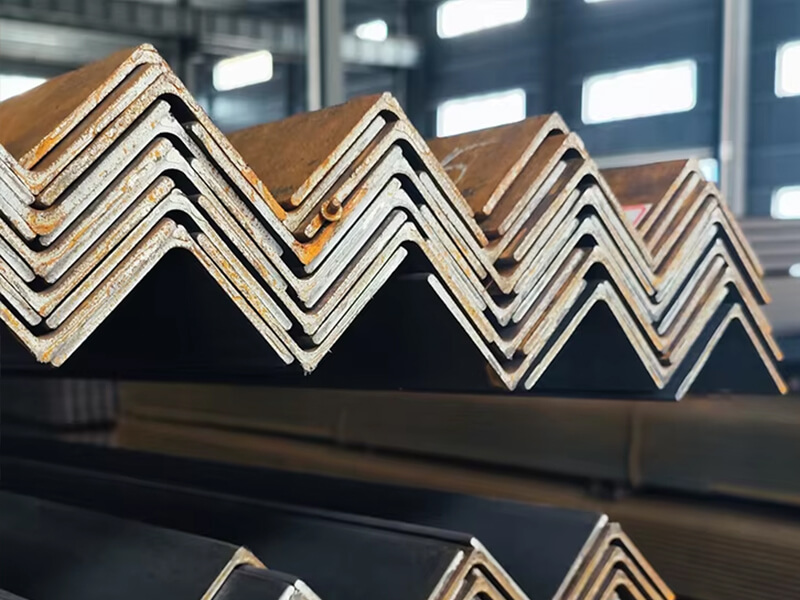
High-stress areas are not forgiving. You need the right grade, the right size, good impact toughness, and weldability. Let me walk you through each choice.
What Steel Grade Delivers the Best Strength for High-Stress Frames?
You see grades like A36, AH361, DH36, and EH36. Which one stops your frame from bending or cracking under heavy wave loads?
For high-stress frames, AH36 is the minimum. It gives 355 MPa yield strength2 – 50% stronger than A36. For vessels that sail to cold regions, use DH36 (same strength, better toughness at -20°C). For Arctic routes, use EH36. Never use Grade A or A36 for bottom frames, side stringers, or web frames on large commercial vessels. I rejected a shipment of A36 angle steel for a buyer in Pakistan who tried to save money. He thanked me later because his ship passed inspection.

Let me compare the grades and tell you where to use each.
I am Zora Guo. I have supplied marine angle steel for more than 50 shipbuilding projects. One buyer in the Philippines wanted to use Grade A for his bottom frames. He said: “It is cheaper.” I told him: “Grade A yield strength is 235 MPa. The design calls for 355 MPa. Your bottom will buckle in the first storm.” He listened. He bought AH36. His ship is still sailing five years later.
Grade A363 (or Grade A) – Not for high-stress
- Yield strength: 235 MPa
- Impact toughness: not required
- Best for: superstructure, non-structural brackets, small vessels under 20m
- Do not use for: bottom frames, side stringers, web frames, or any area with heavy wave loads
Grade AH36 – The standard for high-stress
- Yield strength: 355 MPa
- Impact toughness: 34J at 0°C
- Best for: bottom longitudinal frames, side transverse frames, deck stringers, web frames on vessels up to 200m
- Use for: 90% of commercial vessels
Grade DH36 – For cold-weather high-stress
- Yield strength: 355 MPa
- Impact toughness: 34J at -20°C
- Best for: same areas as AH36, but for vessels that sail to North Atlantic, North Sea, Baltic Sea, or North America in winter
Grade EH364 – For Arctic high-stress
- Yield strength: 355 MPa
- Impact toughness: 34J at -40°C
- Best for: icebreakers, Arctic supply vessels, any ship operating below -20°C
How to choose for your project
| Vessel type and route | Recommended grade for high-stress frames |
|---|---|
| Coastal cargo ship, tropical waters | AH36 |
| Bulk carrier, global routes (including North Atlantic in winter) | DH36 for deck and bottom frames, AH36 for others |
| Oil tanker, Middle East to Europe (winter crossing) | DH36 for exposed frames |
| Container ship, trans-Pacific (winter) | DH36 for bow and bottom |
| Arctic vessel, ice class | EH36 |
What the class society looks for
When the surveyor checks your high-stress frames, he will look at the mill certificate. He wants to see:
- Grade clearly marked (AH36, DH36, or EH36)
- Yield strength ≥355 MPa
- Impact toughness at the correct temperature (0°C, -20°C, or -40°C)
If you use A36 in a high-stress area, he will fail the inspection. You will have to cut out the frames and replace them. That costs 10 times more than buying the right grade upfront.
My rule: For any frame that carries wave load or cargo load, use AH36 as a minimum. Do not compromise.
How to Choose the Right Leg Length and Thickness for Load-Bearing Corners?
You have the grade. Now you need the size. A frame that is too small will bend. A frame that is too big wastes steel and adds weight.
To choose the right leg length and thickness, calculate the required section modulus1 from your design drawings. For bottom frames on a 150m bulk carrier, use 150x150x12mm or 200x200x15mm. For side stringers, 150x150x12mm is common. For web frames, go to 200x200x15mm or larger. The leg length should be at least 1/20 of the frame spacing2. I helped a buyer in Malaysia replace undersized frames (100x100x8mm) with 150x150x12mm. His bottom stopped oilcanning.
[^3]](https://cnmarinesteel.com/wp-content/uploads/2026/01/Marine-angle-steel-47.jpg)
Let me give you a practical sizing guide.
I am Zora Guo. A buyer in Vietnam had a problem. His bottom frames were 100x100x8mm on a 120-meter cargo ship. The plates between the frames were oilcanning (bending in and out) when the ship was loaded. He asked me: “What size should I use?” I looked at his frame spacing (700mm) and his vessel length4. I recommended 150x150x12mm. He replaced the frames. The oilcanning stopped.
Step 1 – Understand the load direction
Angle steel in a frame resists bending. The strength of the frame depends on its section modulus. A larger leg length and thicker steel give a higher section modulus.
Step 2 – Match size to frame spacing
The closer the frames, the smaller the angle can be. The wider the spacing, the larger the angle must be.
| Frame spacing (mm) | Typical angle size for bottom frames (mm) | Typical angle size for side frames (mm) |
|---|---|---|
| 500 – 600 | 120x120x10 | 100x100x8 |
| 600 – 700 | 150x150x12 | 120x120x10 |
| 700 – 800 | 150x150x15 | 150x150x12 |
| 800 – 900 | 200x200x15 | 150x150x15 |
| 900 – 1000 | 200x200x18 | 200x200x15 |
Step 3 – Match size to vessel length
Larger vessels need larger frames, even with the same spacing.
| Vessel length (m) | Bottom frame size (mm) | Side frame size (mm) | Web frame size (mm) |
|---|---|---|---|
| 50 – 80 | 120x120x10 | 100x100x8 | 150x150x12 |
| 80 – 120 | 150x150x12 | 120x120x10 | 150x150x15 |
| 120 – 180 | 150x150x15 | 150x150x12 | 200x200x15 |
| 180 – 250 | 200x200x15 | 150x150x15 | 200x200x18 |
| Over 250 | 200x200x18 | 200x200x15 | 250x250x20 |
Step 4 – Check the design drawings
Your naval architect or class society rules will give a required section modulus (Z) for each frame. For angle steel, the section modulus depends on the leg length, thickness, and orientation. You can find tables online or ask your supplier to provide the Z value.
A common mistake: using equal leg angle when an unequal leg (e.g., 200x150mm) would give more strength for the same weight. The longer leg should be placed in the direction of the load.
Step 5 – Avoid undersizing5
I see many shipyards try to save money by using thinner or smaller angle steel than the design calls for. The frame may pass the initial inspection. But after a few years of wave loads, it will crack. The repair cost is huge.
Here is a quick reference table for common high-stress areas6:
| High-stress area | Minimum recommended size (mm) | Typical grade |
|---|---|---|
| Bottom longitudinal (small vessel) | 120x120x10 | AH36 |
| Bottom longitudinal (large vessel) | 150x150x15 | AH36/DH36 |
| Side transverse frame | 120x120x10 | AH36 |
| Deck stringer | 150x150x12 | AH36 |
| Web frame (medium vessel) | 150x150x15 | AH36 |
| Web frame (large vessel) | 200x200x15 | DH36 |
My advice: When in doubt, go one size larger. The extra steel cost is small compared to the risk of frame failure.
Why Does Impact Toughness Matter for Frames in Slamming Zones?
The bow and the bottom hit waves. The force is sudden. Steel that is strong but brittle can snap like glass.
Impact toughness1 measures how much energy the steel can absorb before breaking. In slamming zones2 (bow, bottom forward area), waves hit the hull with high speed and low temperature. Steel with low impact toughness will crack. Class societies require 34 Joules minimum at the relevant temperature (0°C, -20°C, or -40°C). I have seen a cracked bottom frame in a Romanian bulk carrier. The cause was low impact toughness. The repair cost $50,000.
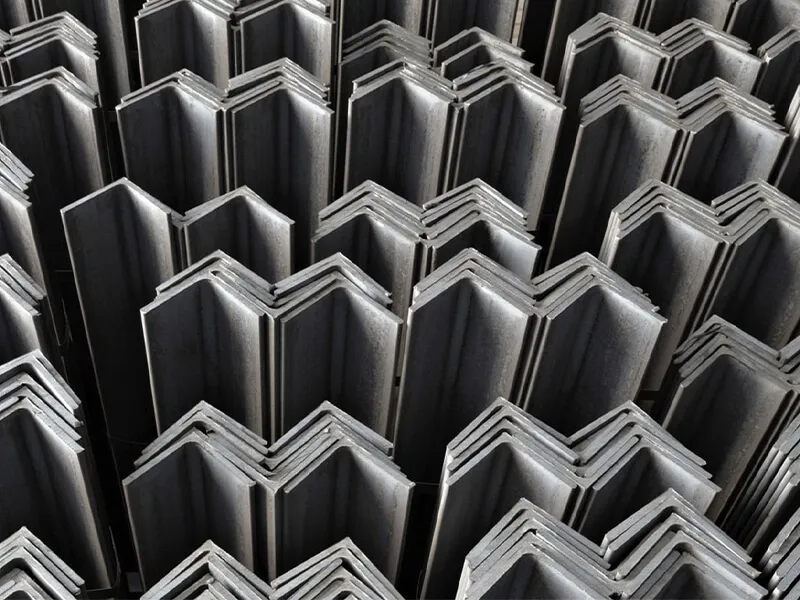
Let me explain what the Charpy test3 tells you.
I am Zora Guo. A buyer in Turkey once told me: “My steel has high yield strength. That is enough.” I asked: “What about impact toughness?” He did not know. Six months later, his ship hit a storm in the Black Sea. The bottom frames4 cracked. The class society investigation found that the steel had low impact toughness (only 18J at 0°C). The supplier had faked the certificate. The buyer lost $200,000 in repairs and downtime.
What is the Charpy V-notch test?
A small piece of steel (10mm x 10mm x 55mm) with a V-shaped notch is placed in a machine. A swinging hammer hits the piece from behind the notch. The machine measures how much energy (in Joules) is absorbed to break the piece.
Higher Joules means the steel is tougher. It can absorb more energy before breaking.
Why slamming zones are different
When a ship slams into a wave, the force is not slow and steady. It is sudden and fast. Brittle steel breaks under sudden force. Tough steel bends and absorbs the energy.
Also, cold water makes steel more brittle5. Steel that is tough at 20°C can become brittle at 0°C or -20°C. That is why class societies require impact testing at the expected operating temperature.
Required impact values for marine angle steel
| Grade | Test temperature | Minimum average energy (Joules) | Minimum single value (Joules) |
|---|---|---|---|
| AH36 | 0°C | 34 | 27 |
| DH36 | -20°C | 34 | 27 |
| EH36 | -40°C | 34 | 27 |
| Grade A | Not required | N/A | N/A |
Note: The test is done on three samples from the same heat. The average must be ≥34J. No single sample can be below 27J.
Which frames need impact toughness?
- Bottom frames in the forward half of the vessel (slamming zone)
- Bow frames (where waves hit first)
- Side frames at the waterline in cold regions
- Any frame that the class society designates as “critical”
Frames in the middle and aft of the vessel (where slamming is less) may not need impact testing if the design allows.
How to verify impact toughness on your steel
Look at the mill certificate. Find the Charpy test results. They should show:
- Test temperature
- Energy absorbed for each of three samples
- Average energy
If the certificate does not show impact test results, the steel is not suitable for slamming zones. Ask the supplier for a certificate with Charpy values.
I always advise my buyers: For any vessel that will sail outside tropical waters, order DH36 or EH36 for the bottom and bow frames. The extra cost is small. The safety benefit is huge.
How to Verify Weldability and Avoid Cracking in Thick Angle Sections?
Thick angle steel (15mm or more) is harder to weld. If you do it wrong, the weld or the steel next to it will crack.
To verify weldability1, check the carbon equivalent (CEV)2 on the mill certificate3. For AH36 angle steel thicker than 15mm, CEV should be below 0.42%. For DH36, below 0.43%. If CEV is higher, you must preheat the steel4 to 100-150°C before welding. Also use low-hydrogen electrodes5. I helped a buyer in Saudi Arabia avoid cracking by insisting on preheating. His competitor did not preheat and had to cut out 20 frames.
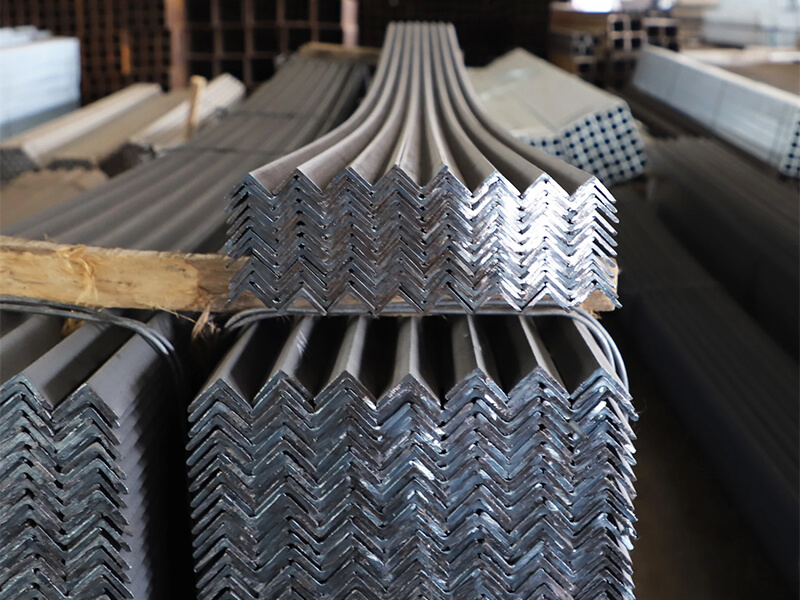
Let me explain CEV, preheating, and good welding practice.
I am Zora Guo. A buyer in Qatar once called me angry. His welders had welded 20mm thick AH36 angle frames. Two days later, cracks appeared next to the welds. I asked: “What was the CEV?” He checked the certificate. It was 0.48%. I asked: “Did you preheat?” He said no. The steel had high carbon equivalent, which made it hard and crack-sensitive. He had to cut out all the frames and redo them with preheating. That cost him $30,000.
What is carbon equivalent (CEV)?
CEV is a number that tells you how weldable the steel is. It combines carbon and other elements (manganese, chromium, molybdenum, vanadium, nickel, copper). A higher CEV means the steel is stronger but more brittle and crack-sensitive.
Formula: CEV = C + Mn/6 + (Cr+Mo+V)/5 + (Ni+Cu)/15
For marine angle steel in high-stress areas:
| CEV range | Weldability | Action needed |
|---|---|---|
| Below 0.40% | Excellent | No special measures |
| 0.40 – 0.42% | Good | Normal welding, low-hydrogen electrodes recommended |
| 0.42 – 0.45% | Fair | Preheat to 100-150°C, use low-hydrogen electrodes |
| Above 0.45% | Poor | Preheat to 150-200°C, special procedure, avoid if possible |
How to avoid cracking in thick angle sections
Use low-hydrogen electrodes – Hydrogen causes cracks. Low-hydrogen electrodes (E7018 for AH36) have less hydrogen. Store them in a dry oven.
Preheat the steel – Preheat the area around the weld to 100-150°C. Use a propane torch or induction heater. Measure the temperature with a contact thermometer or thermal crayon.
Control the interpass temperature6 – Between weld passes, keep the steel between 100°C and 250°C. Do not let it cool down too fast.
Slow cooling after welding – Cover the welded area with an insulating blanket. Let it cool slowly. Do not quench with water.
Avoid too much heat input – Do not use too high amperage. Do not make the weld too big. Both can cause cracking.
What to check on the mill certificate
Look for these numbers:
- CEV: should be ≤0.42% for AH36, ≤0.43% for DH36
- Carbon: ≤0.18%
- Sulfur: ≤0.035% (high sulfur causes hot cracking)
If the certificate shows CEV above 0.45%, ask the supplier to replace the steel. It is not worth the risk.
A simple preheating table for thick angle steel
| Thickness (mm) | CEV <0.40% | CEV 0.40-0.42% | CEV 0.42-0.45% |
|---|---|---|---|
| Up to 12 | No preheat | No preheat | Preheat 100°C |
| 12 – 20 | No preheat | Preheat 50-100°C | Preheat 150°C |
| 20 – 30 | Preheat 50°C | Preheat 100°C | Preheat 150-200°C |
| Over 30 | Preheat 100°C | Preheat 150°C | Preheat 200°C |
I give this table to every buyer who orders thick angle steel. One buyer in Malaysia followed it exactly. His welds passed ultrasonic testing with no cracks. He told me: “Zora, your table saved us from a disaster.”
Conclusion
Use AH36 or DH36 grade. Pick the right size (150x150x12mm or larger). Check impact toughness (34J at 0°C or lower). Verify CEV below 0.42% and preheat if needed.
My Personal Insights (from 10+ years in marine steel export)
I am Zora Guo. My team in Liaocheng supplies marine angle steel for high-stress structural areas. We provide full EN 10204 Type 3.2 certificates with CEV and Charpy values. We also support third-party inspection. Send me an email at sales@chinaexhaustfan.com or visit cnmarinesteel.com. Tell me your vessel size, frame spacing, and route. I will recommend the right grade, size, and welding procedure.
-
Exploring weldability factors helps in selecting the right materials and methods for successful welding. ↩ ↩ ↩ ↩
-
Understanding CEV is crucial for ensuring weldability and preventing cracking in steel. ↩ ↩ ↩ ↩
-
A mill certificate provides essential data for assessing steel quality; understanding it can prevent costly mistakes. ↩ ↩ ↩
-
Preheating is vital for preventing cracks in thick steel; learn the best techniques for effective preheating. ↩ ↩ ↩ ↩
-
Low-hydrogen electrodes reduce the risk of hydrogen-induced cracking, making them essential for quality welds. ↩ ↩ ↩
-
Maintaining the right interpass temperature is key to avoiding weld defects; find out how to control it. ↩ ↩