
You need marine steel. The price from China looks attractive. But stories about quality issues and communication problems make you hesitate. You have a critical shipbuilding project. You cannot afford mistakes. The real question is not if you should buy from China, but how to find the right partner among thousands of factories. A wrong choice costs you time, money, and reputation.
Selecting reliable Chinese marine steel manufacturers requires focusing on third-party certification (like ABS, DNV, BV), verifying production capabilities with mill audits, insisting on transparent material test reports, and partnering with suppliers who offer professional communication and pre-shipment inspection support to ensure quality and specification compliance.
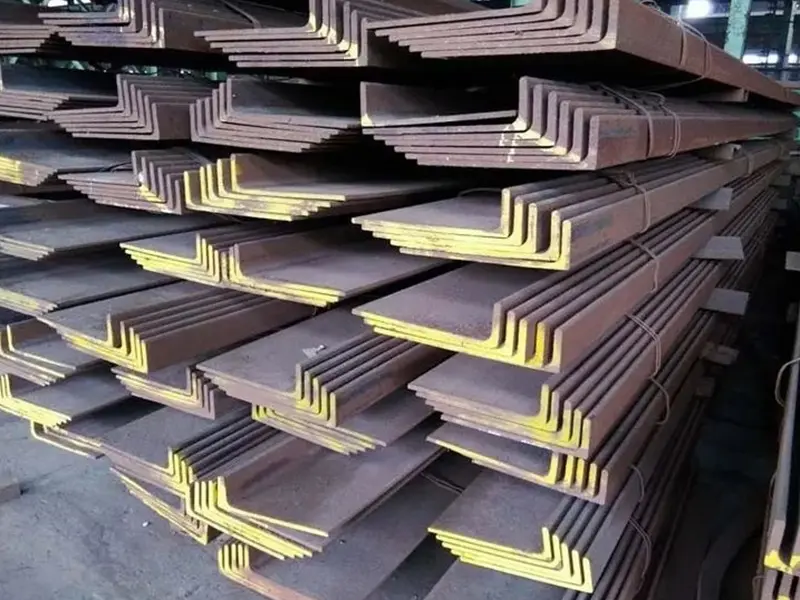
The market is vast and varied. I work here, and I see both world-class producers and unreliable traders every day. The difference between success and failure lies in your selection process. Let’s move beyond general doubts and build a practical framework for making a confident choice.
Can I trust stainless steel1 from China?
This question often comes first. "Stainless steel" implies high corrosion resistance for marine applications. The worry is real. We have all heard about substandard materials that rust quickly. But the answer is not a simple yes or no. You can absolutely trust stainless steel1 from China, but only if you know exactly what to verify. Trust comes from proof, not from a country name.
Yes, you can trust stainless steel from China, but conditionally. Trust must be based on verifiable credentials: the mill’s specific certifications for marine grades (e.g., ASTM A240 316L), complete material test certificates (MTCs), and independent third-party inspection reports that confirm chemistry and corrosion properties.
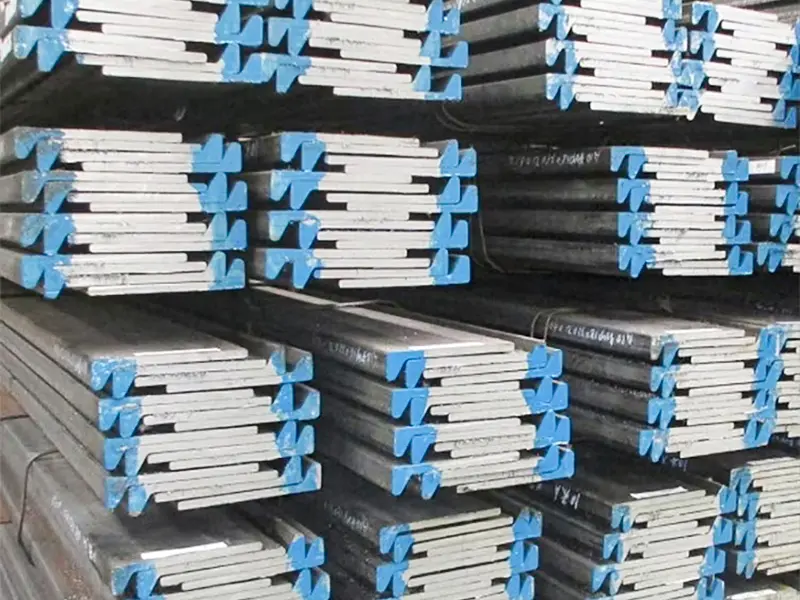
The issue of trust is really about navigating a two-tier market. China has both exceptional manufacturers and low-end workshops. Your job is to filter for the former.
Building Trust: The Verification Checklist for Chinese Stainless Steel
Blind trust is risky. Informed trust, built on evidence, is smart business. Here is how to build that evidence.
1. Start with the Mill, Not Just the Supplier
The supplier you talk to might be a trader or an agent. You must trace the product back to the actual producer.
- Ask for the Mill’s Name and Certification: A reliable supplier will disclose their partner mill. They should provide the mill’s official certifications. For marine stainless steel1, look for:
- Classification Society Approvals2: Does the mill have ABS, DNV, BV, or LR approval for the specific stainless grade you need (e.g., 316L for marine environments)? This is the gold standard.
- ISO 9001 Certification3: This shows a basic quality management system is in place.
- Specialized Approvals: For pressure vessels or specific applications, check for ASME, PED, or other relevant stamps.
- Verify the Certification: You can often check the validity of a classification certificate on the society’s website (e.g., the ABS approval database). A genuine manufacturer is proud of these credentials.
2. Demand Complete and Authentic Documentation
The paperwork tells the story of the steel.
- Material Test Certificate (MTC)4: This is non-negotiable. It must be original or a verified copy from the mill. It must show:
- Exact grade (e.g., ASTM A240 316L5)
- Heat number or batch number
- Full chemical composition (critical for stainless: Cr, Ni, Mo content)
- Mechanical properties (yield strength, tensile strength)
- Results of intergranular corrosion test (if required for marine use)
- Mill’s stamp and signature
- Third-Party Inspection Report: This is your independent check. Companies like SGS, BV, or Intertek can perform a "hold inspection" before shipment. They check the material against the MTC, verify dimensions, and can even witness re-tests. This step directly addresses the fear of receiving a different product than ordered.
3. Evaluate the Supplier’s Transparency and Expertise
The supplier is your guide and quality gatekeeper.
- Technical Knowledge: Can they explain the difference between 304 and 316L stainless? Do they understand PREN (Pitting Resistance Equivalent Number6) for marine corrosion? A knowledgeable supplier indicates a serious operation.
- Sample Policy: Will they provide a material sample for you to test? Reputable mills and suppliers allow this.
- Communication Quality: Are responses professional, clear, and timely? Poor communication often correlates with operational problems later.
Our client Gulf Metal Solutions had prior bad experiences with "quality inconsistency." Our solution was to offer SGS inspection support7 before shipment. This action replaced "trust" with "verification." They no longer had to trust us blindly; they had a globally recognized inspector verify the steel met the ASTM 316L standard. For stainless steel1, trust is built on the transparency of chemistry reports and the credibility of the inspection chain.
Is Chinese steel as good as American steel?
This comparison is common but often too simplistic. It is like asking "Is a German car as good as a Japanese car?" The answer depends on the specific model, factory, and standards it was built to. Steel quality is defined by the standard it meets1, not the country where the furnace is located. A batch of ABS AH36 steel produced in a certified Chinese mill must pass the exact same tests as ABS AH36 steel from an American mill.
Chinese steel produced by major, certified mills to international standards (like ASTM, ABS, EN) is technically equivalent to American steel of the same grade. The quality is defined by adherence to the standard, not geography. The variation comes from the specific mill’s process control and the buyer’s diligence in sourcing from top-tier producers.
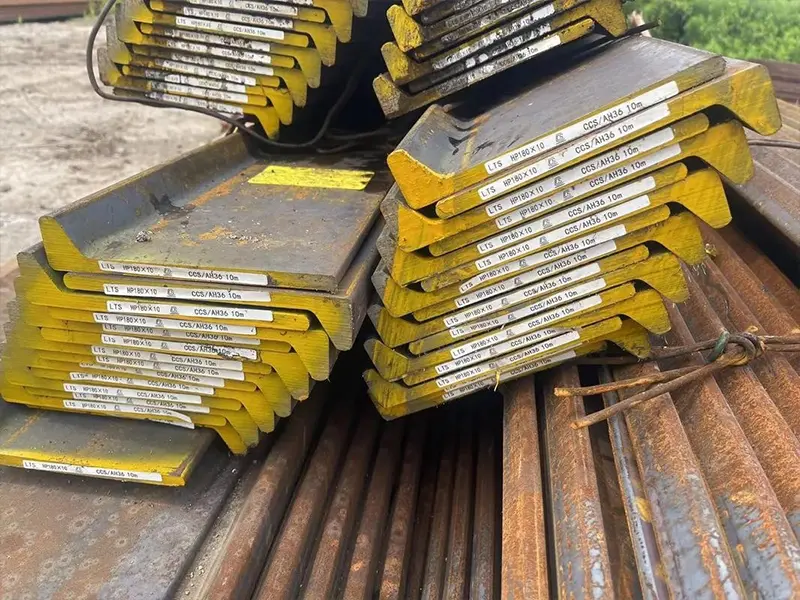
The perception gap exists because China produces the full spectrum, from low-cost commodity rebar to ultra-high-tech plate for LNG carriers. The key is understanding that "Chinese steel" is not one product.
Defining "As Good As": A Standards-Based Comparison
We need to break down "good" into measurable parameters: compliance, consistency, and capability.
Comparing on a Level Playing Field: International Standards
| Quality Parameter | How Chinese Top-Tier Mills Compare | Key Consideration |
|---|---|---|
| Chemical Composition2 | Must meet the same strict limits for C, Mn, S, P, etc., as defined by ASTM, EN, or JIS standards. Certified mills have sophisticated ladle metallurgy for precise control. | A mill’s certification by a Class Society is proof of this capability. An AH36 plate must have the same chemistry range whether from the USA or China. |
| Mechanical Properties3 | Must achieve the same minimum yield strength, tensile strength, and elongation. Modern mills use TMCP (Thermo-Mechanical Control Process) to achieve these properties efficiently. | The mill test certificate provides the actual data. Third-party inspection verifies it. |
| Dimensional Tolerances4 | Must comply with standards like ASTM A6 for plate flatness, thickness, and width. Advanced rolling and levelling equipment ensures this. | This is often a practical pain point. Good suppliers enforce strict tolerance checks before shipment. |
| Surface Quality | Must be free of excessive defects per the standard. This depends heavily on the mill’s process and final inspection. | This was a specific pain point for Gulf Metal Solutions. Consistent surface finish requires high process discipline. |
The Real Differentiators: Consistency and Reliability
Where perceptions diverge is often in these areas:
- Batch-to-Batch Consistency5: Top global mills, regardless of country, excel here. Some smaller or less disciplined Chinese mills may have higher variability. This is why you must select mills with a long history of export and Class approval—they have proven consistency.
- Technical Support and Metallurgical Expertise: Leading American and European mills often have deep R&D roots. The best Chinese mills are catching up rapidly and invest heavily in technology. For most standard marine grades (A, AH, DH series), the technical knowledge is equal. For the most advanced grades, the gap is closing quickly.
- Supply Chain Transparency6: This is a crucial factor. An American mill might have a more straightforward sales channel. In China, the presence of many trading companies can obscure the source. Dealing with a knowledgeable supplier who has direct mill partnerships (like our long-term cooperation with certified mills) cuts through this opacity.
In essence, for a defined grade like ASTM A572 Grade 50 or ABS EH36, if both the Chinese and American producer are certified to the same standard and the material passes third-party inspection, they are functionally identical for the engineering purpose. The question shifts from "Is it as good?" to "Is this specific mill capable and reliable?" Our business model is built on answering "yes" to the latter by only working with mills that meet international benchmarks.
Why is Chinese steel so cheap?
The lower price tag is the primary reason many buyers look to China. But "cheap" can be a dangerous word. It can mean "competitive" due to scale and efficiency, or it can mean "low-quality" due to corner-cutting. Understanding the reasons behind the price is essential to separate good value from high risk. The cost advantage comes from a mix of structural factors, not just lower quality.
Chinese steel is often cheaper due to massive economies of scale, high production efficiency, lower domestic labor and logistics costs, and significant government-backed industrial capacity. However, prices for high-quality, certified marine-grade steel are competitive rather than "cheap," as they involve advanced technology and strict compliance costs.
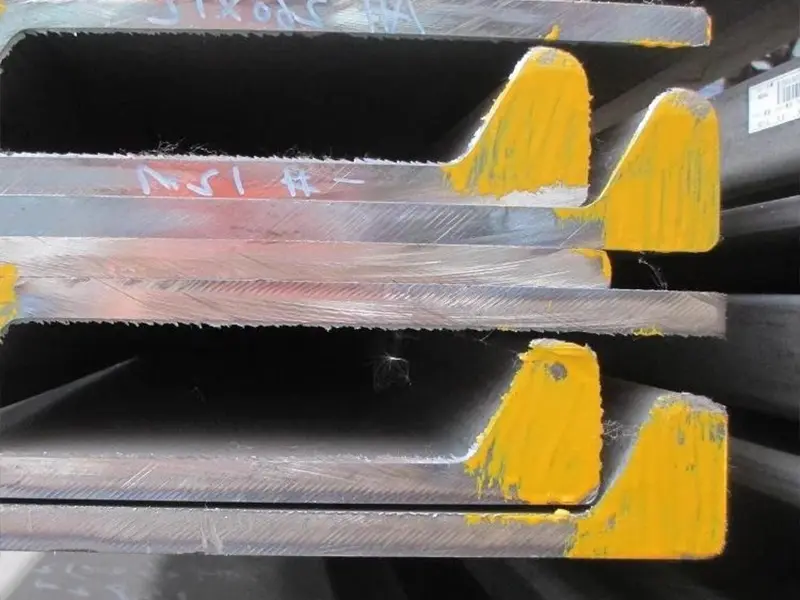
The price equation has several components. Let’s analyze them to understand what you are really paying for.
Deconstructing the Cost: Scale, Efficiency, and Market Dynamics
The price difference isn’t magic. It’s the result of specific conditions and choices.
1. Structural and Economic Factors
These are the fundamental drivers that apply to all steel from China.
- Unmatched Economies of Scale1: China produces over half of the world’s steel. Mills like Baowu, Ansteel, and Shagang are colossal. They benefit from lower per-unit costs on raw materials (iron ore, coking coal), energy, and capital equipment due to their buying power and volume.
- Integrated Production Chains2: Many large mills control everything from the iron ore mine to the finished coil. This vertical integration reduces intermediate costs.
- Government Policy and Subsidy History3: The steel industry has been strategically important. Past policies, including easier access to capital and some energy subsidies, have influenced the cost base. This landscape is changing as China focuses on cutting overcapacity and reducing emissions, but its legacy effect remains.
- Lower Domestic Cost Base4: While rising, costs for skilled labor, plant construction, and domestic logistics are often still lower than in Western Europe or North America.
2. The Quality Spectrum and Its Price Corridor
This is where you must pay close attention. The market has clear tiers.
- Commodity/Non-Certified Steel5: This is the cheapest tier. It may meet a basic GB (Chinese national) standard but not international marine standards. It might have wider chemical tolerances, less strict testing, and no third-party certification. This steel is for non-critical applications. Its low price fuels the "cheap steel" stereotype.
- Certified Marine-Grade Steel6: This is our domain. Producing steel to ABS, DNV, or EN standards costs more.
- The mill pays fees to classification societies for audits and certificates.
- The production process requires tighter controls, better raw materials, and more testing (e.g., impact tests).
- It often uses more advanced (and costly) processes like TMCP.
- The price for this steel is competitive, not dirt-cheap. It is lower than in many Western markets due to the structural factors above, but it reflects the real cost of quality.
3. The Supplier Markup and Value-Added Services7
The final price to you includes the supplier’s role.
- Traders vs. Direct Representatives: A pure trader might offer a low price but has little control over quality or process. A representative with deep mill partnerships (like us) may have a slightly higher price but provides immense value: quality assurance, documentation management, inspection coordination, and logistics support.
- The "Cheap" Trap: An extremely low quote should be a red flag. It may mean:
- The steel is from the commodity tier, misrepresented as marine-grade.
- The supplier is cutting corners on packaging, documentation, or pre-shipment checks.
- There are hidden costs later (poor surface quality causing rework, dimensional errors causing fitting issues).
For a rational buyer like the manager at Gulf Metal Solutions, the goal is not the absolute lowest price. It is the best total cost. A slightly higher price for certified steel with guaranteed inspection and good packaging eliminates the huge hidden costs of project delays, rework, and arguments over quality. Chinese steel is competitively priced because of scale, but reliable marine steel has a fair market price that reflects its certified quality.
Who has the best quality steel in the world?
This is the ultimate question, and it seeks a simple champion. But the global steel industry is not a single race. It is a series of competitions in different categories. There is no one "best." Instead, there are leaders in specific areas: ultra-high-strength grades, corrosion-resistant alloys, consistency for automotive use, or cost-competitiveness for large-volume construction. For marine steel1, "best" is defined by who most reliably meets the stringent, codified standards of classification societies.
There is no single "best" quality steel producer globally. Leaders include specialized mills in Japan and South Korea for advanced high-tech grades, Germany and Sweden for premium specialty steels, and large-scale integrated mills in China for competitive, high-quality standard grades. For marine applications, the best choice is a mill—regardless of location—with a proven track record of certification and consistency for the required class standard.
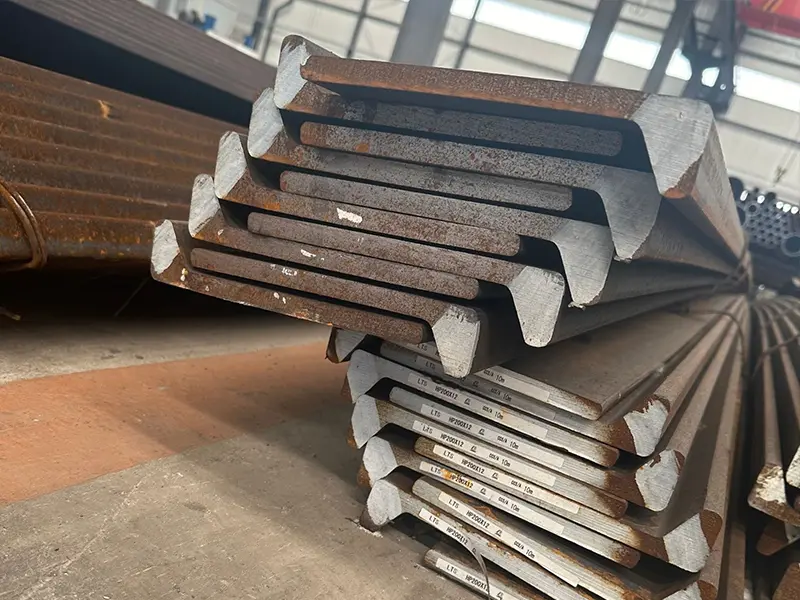
Chasing a mythical "best" can lead to unnecessary cost or complexity. A smarter approach is to define "best for my specific need."
Defining "Best" for Marine Applications: A Situational Analysis
We can evaluate top producers based on different criteria relevant to a marine project.
Leaders in Different Niches of Marine Steel
| Country/Region | Reputation Strengths | Typical Marine Application | Cost Position |
|---|---|---|---|
| Japan & South Korea2 | Ultra-high consistency, advanced R&D, superior surface finish. Excels in ultra-thick plates for large containers, advanced TMCP steels, and special steels for LNG tank membranes. | High-value vessels: LNG carriers, very large container ships, specialized offshore units. | Premium. The price reflects exceptional process control and technology. |
| Germany & Nordic Europe3 | Premium specialty steels, high-performance alloys. Leaders in wear-resistant, corrosion-resistant, and high-purity steels. Strong in offshore wind and specialized maritime components. | Critical components: propeller shafts, high-strength forgings, special corrosion-resistant plates for harsh environments. | Very High. For niche, performance-critical applications. |
| China (Top Tier)4 | Extremely competitive for standard grades, massive scale, rapidly improving technology. Dominant producer of standard ABS/AH/DH series plates, angles, bulb flats. Now producing advanced grades like EH40/EH47. | The majority of global commercial shipbuilding: bulk carriers, tankers, container ships, offshore support vessels. | Competitive to Mid-range. Offers the best value for standard and increasingly advanced marine grades. |
| United States | Strong in certain alloy steels and plate grades, reliable for domestic sourcing. Has several mills with strong Class approvals. | Shipbuilding and repair for the Americas market, naval applications. | Moderate to High. Often higher due to domestic cost structures. |
How to Choose "The Best" for Your Project
The decision matrix should be based on your project’s specific drivers:
- Project Budget and Vessel Type5:
- Building 10 bulk carriers? The "best" is likely a top Chinese mill offering certified AH36 plate at a scale price that makes the project viable.
- Building one bespoke Arctic research vessel? The "best" might be a Japanese mill for its guaranteed low-temperature toughness and consistency.
- Technical Specification Complexity6:
- For standard grades (A, AH, DH), the technical difference between a top Chinese mill and a Korean mill can be minimal once certified. The cost difference may be significant.
- For a cutting-edge grade (e.g., FH550 for lightweight design), you may need to source from the few global masters of that technology.
- Logistics and Supply Chain Stability7:
- "Best" also means reliable delivery. A mill’s location relative to your shipyard matters. China’s proximity to major Asian shipyards is a logistical advantage.
- A supplier’s ability to manage the export process smoothly is part of "quality."
From our position, we see that for most of our clients in Southeast Asia, the Middle East, and Eastern Europe, the optimal blend of quality, price, and availability8 comes from China’s top-tier certified mills. When Gulf Metal Solutions needed reliable ABS-grade plate for projects in the Gulf, a high-quality Chinese mill was the best practical choice. Our role was to be the expert bridge, ensuring they accessed this "best fit" quality without the hassles of communication, inspection, and logistics. The world’s best steel is the steel that meets your precise specification, on time, within budget, and with flawless documentation—and that source can very well be in China.
Conclusion
Selecting a reliable Chinese marine steel manufacturer is a process of diligent verification, not a leap of faith. Focus on mill certifications, demand transparent documentation, insist on third-party inspection, and choose a supplier who acts as your professional partner, not just a seller. This method turns China’s competitive advantage into your project’s success.
-
Explore this link to discover top marine steel producers and their unique strengths for various applications. ↩ ↩ ↩ ↩ ↩ ↩ ↩
-
Learn about the advanced technologies and processes that make Japan and South Korea top choices for high-tech steel grades. ↩ ↩ ↩ ↩
-
Find out how Germany and Nordic Europe excel in producing premium specialty steels for critical marine applications. ↩ ↩ ↩ ↩
-
Discover the competitive edge of top-tier Chinese steel mills in producing high-quality standard and advanced grades. ↩ ↩ ↩ ↩
-
Understand how budget considerations influence the choice of steel for different types of marine vessels. ↩ ↩ ↩ ↩
-
Explore the significance of technical specifications in choosing the right steel for complex marine projects. ↩ ↩ ↩ ↩
-
Learn how logistics and supply chain stability play a crucial role in sourcing steel for marine applications. ↩ ↩ ↩
-
Discover how quality, price, and availability are balanced to find the best steel solutions for marine projects. ↩