
Your project is ready. The drawings list plates, angles, bulb flats, and L-sections. Now you face five different suppliers, five sets of negotiations, and five chances for delay or quality mismatch. Coordinating this chaos eats your time and risks your entire schedule.
You source all marine steel profiles from one supplier by finding a specialist who stocks a full range of certified products—plates, bulb flats, angles, and L-sections. The supplier must act as a single point of contact for quality control, logistics, and documentation, ensuring all materials are compatible and arrive together.
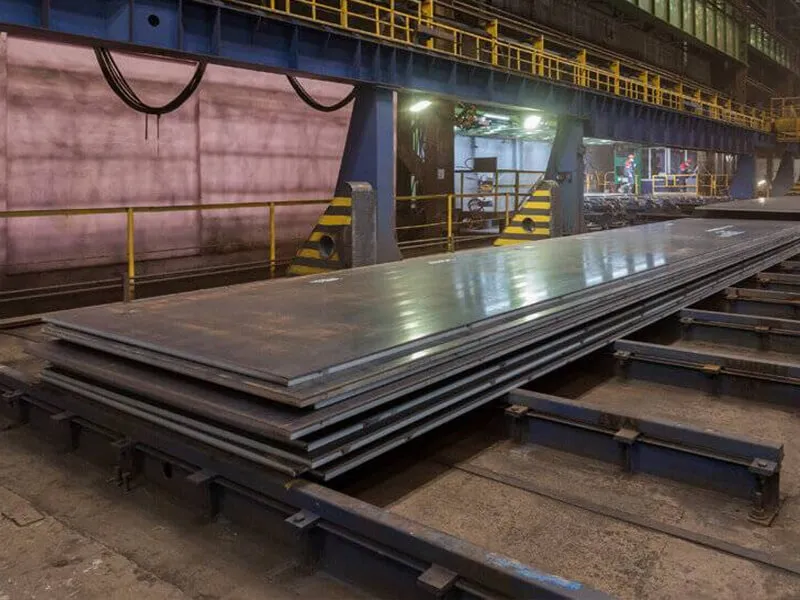
But finding a true one-stop supplier is harder than it sounds. Many companies list products they don’t actually stock. Others lack expertise across different profile types. This guide will show you the real questions to ask and the critical factors to check, so you can consolidate your supply chain with confidence.
Where do steel companies get their raw materials1?
You trust a supplier with your project’s backbone. But do you know where their steel begins? A supplier with weak raw material sources is a house built on sand. Inconsistent raw materials1 mean unpredictable final product quality, no matter how good the factory seems.
Steel companies get their raw materials1 from integrated mills or through trading networks. The primary sources are iron ore2 (for iron), coking coal3 (for carbon), and recycled steel scrap4. Top marine steel5 producers typically use large, integrated mills that control the process from iron ore2 to finished plate, ensuring tight chemistry control.
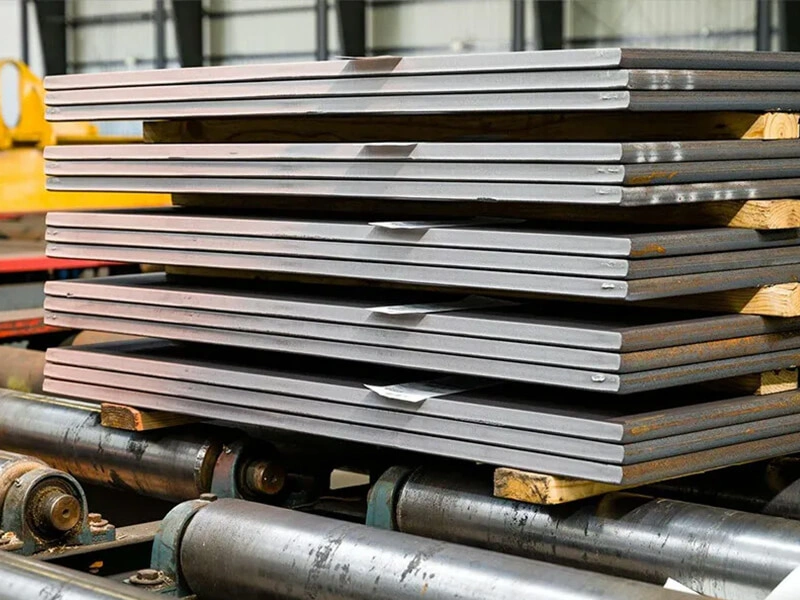
However, not all suppliers have equal access to these premium sources. The origin of raw materials1 directly affects the steel’s purity, consistency, and suitability for marine classification. Let’s trace the supply chain from the ground up.
Tracing the Chain: From Mine to Marine Grade
The journey from raw material to a certified AH36 bulb flat is long and tightly controlled. As a buyer, you need to understand this chain to assess a supplier’s reliability. The key is vertical integration6 and mill partnerships.
The Two Main Production Routes:
There are two primary ways to make new steel, and the choice affects quality and cost.
-
The Blast Furnace-Basic Oxygen Furnace7 (BF-BOF) Route (Integrated Route): This is the traditional method used by large mills.
- Raw Materials: Iron ore, coking coal3, and limestone.
- Process: Iron ore is reduced in a blast furnace to create molten pig iron. This pig iron is then refined in a Basic Oxygen Furnace to become steel. Scrap steel (up to about 30%) can be added here.
- Why it matters for marine steel5: This route allows for excellent control over the chemical composition. Starting from virgin materials lets mills precisely adjust levels of carbon, manganese, silicon, and micro-alloys like niobium and vanadium to hit the strict targets for marine grades. Most high-quality marine plates and sections are produced via this integrated route in large, certified mills.
-
The Electric Arc Furnace8 (EAF) Route (Mini-Mill Route):
- Raw Materials: Primarily recycled steel scrap4 (over 90%).
- Process: Scrap is melted using powerful electric arcs.
- Why it matters: This method is more cost-effective and energy-efficient. However, the chemistry depends heavily on the quality and consistency of the scrap. Residual elements (like copper, tin) from the scrap can accumulate, potentially affecting weldability and toughness. While modern EAFs can produce good quality steel, for the most critical marine applications (like primary hull structures), steel from large integrated BF-BOF mills is often preferred or specified.
The Role of the Supplier:
A reliable supplier like us does not own mines or blast furnaces. Instead, we build long-term cooperative agreements with a select group of certified mills. These mills are approved by classification societies (ABS, DNV, LR, etc.) to produce marine steel5. Our role is to manage the relationship with these mills on your behalf.
Here’s what this partnership means for you:
| Factor | Weak Supplier Model | Strong One-Stop Supplier Model (Our Approach) |
|---|---|---|
| Source of Materials | Buys from the spot market or multiple unknown mills. Sources change based on the lowest price. | Has fixed, long-term agreements with 2-3 major, certified integrated mills. The source is stable and known. |
| Chemistry Control | Limited influence. Gets whatever batch the mill produces. | Works with the mill’s technical team. Can provide input or request specific heat chemistry for custom orders. |
| Traceability | May provide generic mill certificates. Full traceability can be difficult. | Guarantees full traceability from the finished product back to the specific cast (heat number) of the raw steel. This is non-negotiable for marine work. |
| Profile Range | May specialize in only plates or only sections, sourcing from different mills. | Sources all profiles (plates, bulb flats, angles) from the same or closely partnered mills. This ensures consistent metallurgy and quality across your entire order. |
For example, our mill partners in Shandong use the integrated BF-BOF route. They control the process from iron ore2 pellets to the final rolling of plates and sections. This gives us, and you, confidence in every batch. When you order a plate and a bulb flat from us, they come from the same quality-controlled system, not from random factories. This consistency is the first pillar of being a true single-source supplier.
How much is 1m3 of steel?
You are comparing quotes. One supplier gives a price per ton1, another per meter, and a third mentions volume. Confusion over units leads to budgeting errors and unpleasant surprises. Knowing how to convert between weight, volume, and lineal meters is essential for accurate costing and comparing offers fairly.
There is no single price for 1 cubic meter (m3) of steel because steel is sold by weight (ton), not volume. The cost depends entirely on the steel’s density and the current market price per ton1. For marine steel, with an average density of about 7.85 tons/m3, you must first know the price per ton1 to calculate the cost per cubic meter.
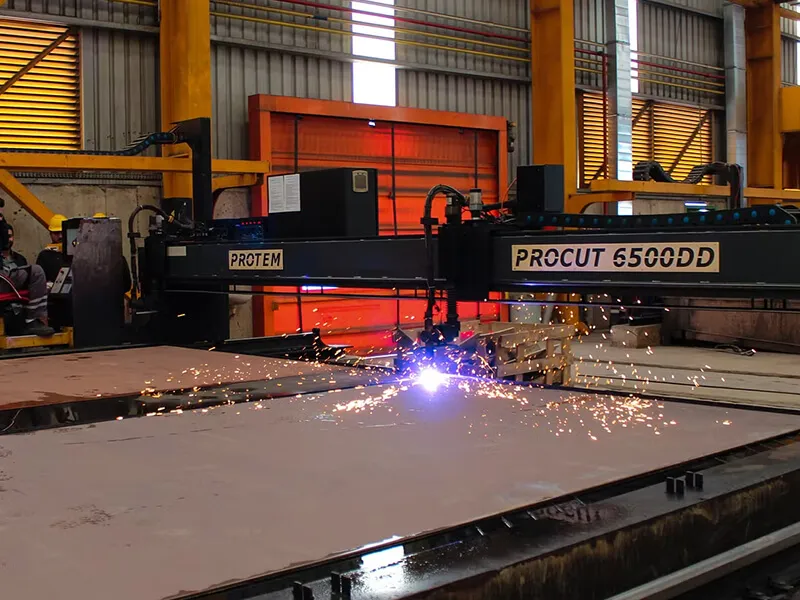
This question reveals a deeper need: buyers want to budget for the physical space their steel will occupy in a structure or ship. But the industry trades in weight. Let’s bridge this gap and turn confusing calculations into a simple, practical tool.
From Volume to Invoice: Demystifying Steel Pricing
The core principle is this: Steel mills sell mass. You are buying strength, which comes from mass. The price per ton1 fluctuates daily based on global factors. But you can easily convert between units if you understand the basic math and the variables involved.
Step 1: The Universal Constant – Density.
The density of carbon and low-alloy steel2 (like marine grades) is approximately 7,850 kilograms per cubic meter (kg/m³), or 7.85 metric tons per cubic meter (t/m³).
This means:
- 1 m³ of solid steel weighs 7.85 metric tons.
- Conversely, 1 metric ton of steel occupies about 0.1274 m³ of solid volume (1 / 7.85).
Step 2: The Variable – Price per Ton.
This is where the cost comes in. Let’s assume a hypothetical market price for ABS AH36 steel plate is $800 per metric ton (USD/MT).
The cost for 1 m³3 would be:
7.85 tons/m³ x $800/ton = $6,280 per m³.
However, this is for a solid block. In reality, you buy plates, beams, and sections. You need to think in terms of the volume of material in that profile.
Step 3: Practical Application – Costing a Plate or Section.
You rarely buy a cubic meter. You buy a plate that is 10mm thick, or a bulb flat that is 6 meters long. Here is the practical calculation method:
For Plates:
Cost = Length (m) x Width (m) x Thickness (m) x Density (7.85 t/m³) x Price per Ton ($/t)
Example: A plate 6m long, 1.5m wide, 20mm (0.02m) thick.
- Volume = 6 x 1.5 x 0.02 = 0.18 m³
- Weight = 0.18 m³ x 7.85 t/m³ = 1.413 tons
- Cost at $800/t = 1.413 x 800 = $1,130.40
For Sections (Angles, Bulb Flats):
Sections have a weight per meter4 listed in standard tables. This is easier.
Cost = Total Length (m) x Weight per Meter (kg/m) / 1000 x Price per Ton ($/t)
Example: You need 100 meters of a bulb flat that weighs 24.2 kg/m.
- Total Weight = 100m x 24.2 kg/m = 2,420 kg = 2.42 tons
- Cost at $800/t = 2.42 x 800 = $1,936
Why a Single-Source Supplier Simplifies This:
When you source all profiles from one supplier, you get one coherent quote. They handle all these calculations for you. You provide the drawings or a list of profiles and quantities. They return a total price in a consistent format (usually by total weight), with a detailed breakdown. This eliminates the risk of you making conversion errors between different suppliers’ quotes.
Our quotes to clients in Saudi Arabia or the Philippines always include:
- Item description (e.g., "ABS AH36 Plate, 10x1500x6000mm")
- Unit weight and total weight.
- Unit price and total price.
This transparency is what rational, results-driven buyers like our client Gulf Metal Solutions value. It allows them to budget accurately and compare offers on a like-for-like basis.
What is the best steel for the marine environment1?
"Best" is a dangerous word. The "best" steel for a ship’s hull is different from the "best" for a handrail or a seawater pump. Choosing based on a general label, not specific performance, leads to over-engineering in some areas and dangerous under-engineering in others.
The best steel for the marine environment1 is the specific grade that meets the exact structural, corrosion, and fabrication requirements of the application at the optimal cost. For primary hull structures, certified marine-grade steels2 like ABS AH36/DH36/EH36 are the standard. For non-structural corrosion resistance, austenitic stainless steels like 316L are often chosen.
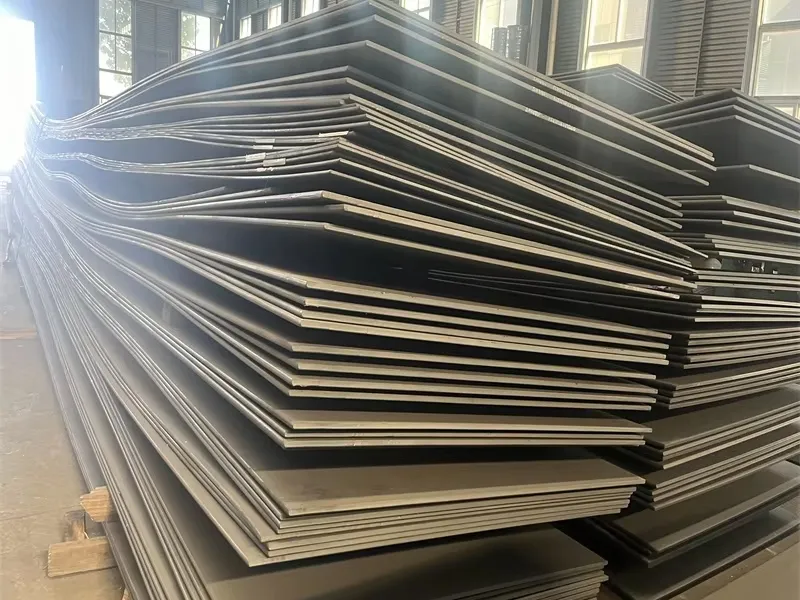
The search for the "best" steel is really a process of matching a material’s properties to a specific set of challenges. Let’s break down the marine environment into zones and match the optimal steel solution to each one.
Matching Steel to the Mission: A Zone-by-Zone Analysis
There is no universal winner. The best choice is always a calculated compromise between strength, toughness, corrosion resistance3, weldability4, and cost. We can make smart decisions by dividing the marine world into three broad application categories.
Category 1: Primary Load-Bearing Structure (Hull, Decks, Frames)
- The Challenge: Must withstand massive dynamic loads (waves, cargo), resist brittle fracture in cold water, and be weldable into huge sections. Corrosion is managed by coatings and cathodic protection5.
- The "Best" Steels: Marine-Grade Normal and High-Strength Steels.
- Grades: A, B, AH32, DH32, AH36, DH36, EH36, AH40.
- Why they win: They offer the perfect balance. Their chemical composition is optimized for toughness (verified by Charpy impact tests6 at low temperatures), weldability4 (low carbon equivalent), and strength. They are produced under strict quality systems certified by classification societies. Their cost is viable for large-scale use.
- Key Property: Not raw corrosion resistance3, but the ability to perform reliably when protected. The steel itself is a strong, tough, and weldable canvas for the anti-corrosion systems.
Category 2: Critical Fittings, Fasteners, and Components in Splash/Immersion Zones
- The Challenge: Exposed to direct saltwater spray or immersion. Coatings are hard to maintain here. Failure of a small component (like a bolt or a valve) can cause major problems.
- The "Best" Steels: Corrosion-Resistant Alloys (Stainless Steels).
- Grades: 316 / 316L (Marine Grade Stainless Steel), Duplex Stainless Steels7 (2205), and higher alloys for extreme cases.
- Why they win: They form a passive chromium oxide layer that "self-heals" in the presence of oxygen, providing excellent resistance to chloride-induced pitting and crevice corrosion.
- Trade-off: They are significantly more expensive than carbon steel and have different welding requirements.
Category 3: Atmospheric and Architectural Elements
- The Challenge: Exposed to salt air but not direct, constant seawater. Needs a balance of durability, appearance, and maintenance cost.
- Possible "Best" Choices:
- Painted Marine-Grade Steel: A cost-effective choice. The steel provides structure, and the coating provides the weather resistance.
- Weathering Steel (e.g., ASTM A588): For some applications, its stable rust patina can be acceptable and reduces painting needs. Caution: Not suitable for saltwater immersion or frequent wetting.
Here is a comparison table to guide selection:
| Application Zone / Component | Primary Requirement | Recommended "Best" Steel Type | Rationale & Notes |
|---|---|---|---|
| Ship Hull Plating (Below Waterline) | High dynamic strength, toughness, weldability4. | AH36 / DH36 / EH36 | The industry standard. Coated + Cathodic Protection (CP) handles corrosion. |
| Ship Deck Plating | High tensile strength, fatigue resistance. | AH36 / EH36 | Resists hull bending stresses. Coated for atmospheric corrosion. |
| Ballast Tank Internals | Severe corrosion fatigue8, wet/dry cycles. | AH36 with approved coating OR Special Corrosion-Resistant Steel | Some mills offer steels with enhanced corrosion resistance3 for tanks. |
| Handrails, Ladders on Deck | Good corrosion resistance3, structural safety. | Galvanized Mild Steel or 316 Stainless Steel | Balance of cost and low maintenance. Stainless offers best longevity. |
| Propeller Shafts, Rudder Stocks | High strength, corrosion fatigue8 resistance. | Forged High-Tensile Steel with Stainless Steel cladding or specialized alloys. | Highly engineered components beyond standard plates/sections. |
| Port Infrastructure (Splash Zone) | Extreme corrosion resistance3, abrasion resistance. | 316L Stainless Steel or Duplex 2205 for critical parts. Often used as cladding or inserts on a carbon steel structure. |
A true one-stop supplier understands these categories. We supply the AH36 plate for the hull, the galvanized angles for the internal fittings, and can also source the 316 stainless round bars for the specific fasteners. We provide the right material for each part of your project, all from a single point of contact.
Is 304 or 316 better for saltwater?
You need a stainless steel railing for an offshore platform. A supplier offers you 304 because it’s cheaper. A few months later, you see ugly brown rust spots and deep pits. Now you face a costly replacement and a safety issue. The wrong choice between these two common grades is a frequent and expensive mistake.
For saltwater environments, 316 stainless steel1 is definitively better than 304. The key difference is the addition of 2-3% Molybdenum2 (Mo) in 316. This element dramatically increases resistance to pitting and crevice corrosion caused by chloride ions, which are abundant in seawater and salt spray.
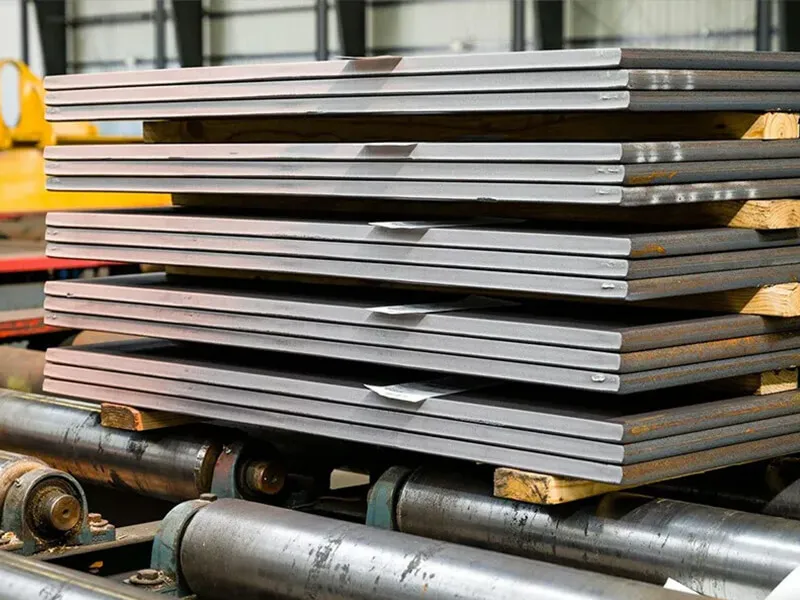
This isn’t a small preference; it’s a fundamental rule for marine applications. But simply knowing "316 is better" isn’t enough. You need to understand why, and when you might consider other, even more resistant options.
The Molybdenum2 Factor: Why 316 Wins in the Marine Arena
Both 304 and 316 are austenitic stainless steels. They look similar and are both magnetic. The critical, invisible difference is in their chemical composition, which dictates their performance in harsh environments.
The Chemistry Breakdown:
- AISI 3043: Contains ~18% Chromium (Cr) and ~8% Nickel (Ni). This is the classic "18/8" stainless. It has good general corrosion resistance.
- AISI 316: Contains ~16% Chromium, ~10% Nickel, and 2-3% Molybdenum2 (Mo), plus slightly higher carbon content in some variants. The "L" grades (304L, 316L) have lower carbon for better weldability.
How Molybdenum2 Works:
Chloride ions (from salt) are aggressive. They can break down the protective chromium oxide layer on stainless steel, especially in areas with little oxygen (like crevices or under deposits). This leads to pitting corrosion4—small, deep holes that can cause failure.
- Molybdenum2 strengthens the passive layer. It makes the steel’s surface more stable and much more resistant to chloride attack.
- It raises the "Pitting Resistance Equivalent Number (PREN)5." This is a formula (PREN = %Cr + 3.3x%Mo + 16x%N) used to rank corrosion resistance. A higher PREN is better.
- Typical 304 PREN: ~19
- Typical 316 PREN: ~24-29
This numerical difference explains the significant gap in real-world performance.
Practical Implications and Limitations:
Even 316 has limits. It is "marine grade," not "marine proof." Its performance depends on conditions.
| Condition / Factor | Effect on 304 vs. 316 | Recommendation |
|---|---|---|
| Intermittent Salt Spray (Deck Fittings) | 304 will likely develop surface rust and pitting over time. 316 will perform well for years. | Use 316/L. |
| Full Immersion in Stagnant Seawater | Both can suffer crevice corrosion. 316 is better but not immune, especially under barnacles or in warm water. | Use 316L, ensure good design (no crevices), and consider cathodic protection for critical parts. |
| High Temperature Seawater (e.g., heat exchangers) | Corrosion rates increase dramatically. 316 may be insufficient. | Consider Duplex 22056 (PREN ~35) or super duplex/austenitic grades. |
| Abrasion or Scratches | Both will "self-heal" if exposed to air. 316 heals more effectively in salty conditions. | Proper passivation after fabrication helps both. |
| Cost Difference | 316 is typically 20-40% more expensive than 304. | For marine use, the extra cost of 316 is almost always justified. The cost of premature failure is far higher. |
For a One-Stop Supplier:
When you ask for "stainless for a marine project," a competent supplier should immediately guide you toward 316 or 316L. They should question the application if you request 304. Our technical support includes this guidance. We help clients avoid the false economy of buying cheaper 304 for a job that demands 316. For a project in Qatar, a client asked for stainless brackets. We confirmed they were for an external, coastal application and recommended 316L, providing the mill certificates to prove the chemistry. This advisory role is part of the complete sourcing solution.
Conclusion
Sourcing all marine steel profiles from one supplier is about finding a partner with deep mill relationships, full product range expertise, and the logistical skill to deliver a coherent, certified package on time.
-
Explore the advantages of 316 stainless steel, especially its resistance to corrosion in marine environments. ↩ ↩ ↩ ↩ ↩ ↩ ↩ ↩ ↩ ↩ ↩
-
Learn how Molybdenum enhances the durability of stainless steel against harsh conditions. ↩ ↩ ↩ ↩ ↩ ↩ ↩ ↩ ↩ ↩
-
Find out why AISI 304 may not be suitable for saltwater applications and its performance issues. ↩ ↩ ↩ ↩ ↩ ↩ ↩ ↩ ↩
-
Understand the dangers of pitting corrosion and how to prevent it in marine applications. ↩ ↩ ↩ ↩ ↩ ↩ ↩
-
Discover how PREN is calculated and why it matters for choosing the right stainless steel. ↩ ↩ ↩ ↩ ↩
-
Learn about Duplex 2205 and its superior performance in extreme marine conditions. ↩ ↩ ↩
-
Find out why Duplex Stainless Steels are a great choice for marine applications. ↩ ↩
-
Learn about corrosion fatigue and its implications for the longevity of marine structures. ↩ ↩ ↩